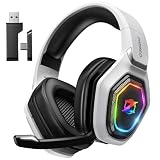
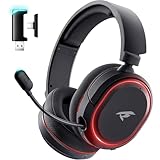
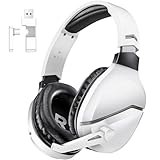
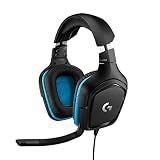
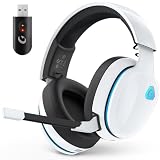
- Top Pick: ASUS ROG Kithara Gaming/Audiophile Open-Back Wired Headphones with Mic – ROG-Tuned HIFIMAN Planar Magnetic Drivers, Adjustable Headband, Extra Ear Pads, Compatible with DACs, Amps, PC, Console, Mobile
- Best Value: FIFINE H18V Lite Wired Open Back Gaming Headset, for PC, Xbox, PS4/5
- Premium Choice: beyerdynamic MMX 330 Pro Wired Open-Back Gaming Headset, Condenser Mic
Affiliate disclosure: As an Amazon Associate we earn from qualifying purchases. This post contains affiliate links — if you buy through them we may earn a small commission at no extra cost to you. This never affects our recommendations.
As an Amazon Associate we earn from qualifying purchases at no extra cost to you.


If you’ve ever put on a pair of open-back headphones for the first time, you know the feeling — it sounds like the audio is coming from around you rather than inside your skull. That’s not marketing fluff. It’s physics. Open-back headphones allow air to flow freely through the ear cups, which eliminates the pressure buildup that gives closed-back headphones their characteristic “in-your-head” presentation. The result is a wider, more natural soundstage, better stereo imaging, and a listening experience that genuinely rivals a good speaker setup.
For gaming — particularly competitive FPS titles like Valorant, Counter-Strike 2, or Escape from Tarkov — these advantages are significant. Pinpointing enemy footsteps, hearing a reload 30 meters away, or distinguishing the direction of an explosion overhead all depend on precise audio imaging. Open-back headphones excel here because their acoustic design closely mimics how sound behaves in open space. By 2026, the gap between dedicated gaming headsets and audiophile-grade open-backs has only widened in favor of the latter: the five picks below offer better transducer technology, superior build quality, and more accurate sound reproduction than most headsets at twice the price. The trade-off is real — you sacrifice noise isolation and your audio leaks outward — so open-backs are best suited to quiet environments: a home office, a dedicated gaming room, or anywhere ambient noise won’t ruin your session.
In a hurry? See the top-rated Open-Back Gaming Headset deals available right now:
🛒 Check Open-Back Gaming Headset Prices on Amazon →🛒 Best Price Today on Amazon
Prime members get fast, free shipping on everything above, plus member-only deals. New members get a 30-day free trial — cancel anytime.
Start 30-Day Prime Free Trial →See Today’s Amazon DealsQuick Comparison Table
| Headset | Impedance | Driver Type | Soundstage | Street Price |
|---|---|---|---|---|
| Sennheiser HD 560S | 120 ohm | Dynamic | Wide, neutral | ~$150 |
| Beyerdynamic DT 990 Pro | 250 ohm | Dynamic | Wide, bright | ~$140 |
| Philips SHP9500 | 32 ohm | Dynamic | Wide, airy | ~$65 |
| Audio-Technica ATH-AD700X | 38 ohm | Dynamic | Exceptional | ~$100 |
| HiFiMan HE400SE | 25 ohm | Planar Magnetic | Expansive | ~$109 |
Our Top Picks
1. Sennheiser HD 560S — Best Overall
The HD 560S sits at the intersection of audiophile performance and gaming practicality, and it earns the top spot on this list for precisely that reason. Sennheiser tuned this headphone with a neutral, reference-leaning sound signature that prioritizes accuracy over coloration. Mids are clear and present, treble is extended without becoming fatiguing, and bass response is tight and controlled — not bloated. In gaming contexts, that neutrality is a weapon. When audio cues are reproduced faithfully rather than exaggerated, your brain can process positional information faster and with less confusion.
At 120 ohms, the HD 560S sits in a comfortable middle ground: it doesn’t need a dedicated amplifier to reach listenable volumes from a PC audio jack or a modern DAC/amp combo, but it does scale noticeably when driven properly. Plug it into a modest $30–$50 USB DAC and you’ll hear the difference immediately. The build is lightweight at 240g, with a self-adjusting headband and velour pads that remain comfortable over multi-hour sessions. Soundstage width is among the best in the sub-$200 category, and stereo imaging precision — the ability to place sound sources accurately in 3D space — is exceptional.
Pros
- Neutral, accurate sound ideal for competitive gaming
- Excellent imaging: precise directional cues in FPS titles
- Lightweight and comfortable for long sessions
- No amp required for desktop use
- Strong build quality relative to price
Cons
- Lacks bass impact for those who prefer a more musical, fun tuning
- Open-back design means significant sound leakage
- Cable is fixed, not detachable
Check Price on Amazon
2. Beyerdynamic DT 990 Pro — Best Detailed Sound
The DT 990 Pro is a German engineering legend that has been in continuous production since the 1980s — and it’s still relevant in 2026 because the core acoustic design is genuinely excellent. Where the HD 560S is neutral, the DT 990 Pro is bright and V-shaped: emphasized treble, elevated bass, and a slightly recessed midrange. That tuning profile divides audiophiles but tends to delight gamers, particularly those who play cinematic single-player titles where explosive bass and crisp, airy highs create an immersive atmosphere.
The 250-ohm version tested here does require amplification. Running it directly from a motherboard audio jack produces thin, underpowered sound. Pair it with a budget DAC/amp like the FiiO K3 or the Schiit Fulla, and the DT 990 Pro opens up dramatically — the soundstage expands, bass tightens, and treble detail becomes addictive rather than harsh. Build quality is exceptional: velour pads, a coiled cable, and a headband that has survived decades of professional studio use. The clamping force is firm, which improves passive isolation slightly relative to other open-backs, but the headphone remains clearly in the open-back category acoustically.
Pros

- Legendary build quality; virtually indestructible
- Bright, detailed treble rewards high-quality audio sources
- Strong bass presence adds weight to explosions and music
- Wide soundstage with good depth perception
- Beyerdynamic offers replacement parts for long-term ownership
Cons
- Requires a dedicated amplifier at 250 ohm
- Bright tuning can cause ear fatigue on extended sessions
- Coiled cable adds bulk and weight
- V-shaped signature is not ideal for those who need midrange clarity
3. Philips SHP9500 — Best Budget Open-Back
At roughly $65, the Philips SHP9500 offers an open-back soundstage that embarrasses headsets at twice the price. The secret is a 50mm neodymium driver tuned for a relatively linear frequency response — not perfectly flat, but far more accurate than the bass-boosted, treble-scooped profiles typical of gaming headsets in this price bracket. Vocals and instrument separation are clean, the soundstage is genuinely wide (Philips rates it as one of the most spacious in their lineup), and the imaging is precise enough to be competitive-viable in most FPS titles.
The 32-ohm impedance means the SHP9500 drives effortlessly from any source: phones, tablets, gaming consoles, PC front-panel audio. No amplifier required, no special consideration needed. The headband uses a double-headband design that distributes weight evenly, and the open grille ear cups keep airflow high enough that extended wearing is genuinely comfortable even in warm environments. Clamping force is deliberately light — some users find it too loose for physical activity, but for seated gaming it simply means zero pressure fatigue after hours of use.
Pros
- Outstanding value: audiophile-adjacent sound at budget pricing
- Drives from any source including phones and consoles
- Very comfortable for long sessions; light clamping force
- Wide, airy soundstage clearly above its price class
- Detachable cable (3.5mm)
Cons
- Light clamping force can feel insecure during movement
- Build quality is plastic-heavy; not premium feel
- Bass rolls off at lower frequencies; sub-bass is thin
- Lacks the imaging precision of pricier options in ultra-competitive play
4. Audio-Technica ATH-AD700X — Best Imaging
If your primary use case is competitive multiplayer — CS2, PUBG, Valorant, Tarkov — and you want the absolute best positional audio you can get without spending over $150, the ATH-AD700X is the answer. Audio-Technica’s 3D Wing Support System replaces a conventional headband with two self-adjusting wings that rest on the top of the head. The fit is unique and initially strange, but it achieves two things: near-zero pressure at the ear cups (the wings bear all the weight) and a stable, consistent placement that keeps the drivers perfectly aligned with your ears every single time.
That driver alignment matters because the ATH-AD700X’s 53mm drivers are tuned specifically for spatial precision. The soundstage is wide, airy, and crucially, it has outstanding depth and height cues that many headphones — even at higher price points — fail to render convincingly. In FPS games, you can reliably distinguish sounds that are above you, below you, in front, and behind. The frequency response is slightly bright, similar to Beyerdynamic’s house sound, with emphasized upper-mids that help footsteps and environmental audio cut through cleanly. At 38 ohms, no amplifier is necessary.
Pros
- Best-in-class imaging for competitive FPS gaming
- 3D Wing Support provides comfortable, pressure-free fit
- No amplifier required; works from any device
- Wide, tall soundstage with convincing height cues
- Excellent upper-mid clarity for footstep detection
Cons

- Wing design is not universally comfortable; requires adjustment period
- Bass is lean and lacks impact for music listening
- Build quality feels plasticky despite mid-range pricing
- Styling is polarizing
5. HiFiMan HE400SE — Best Planar Magnetic Budget Option
Every other headphone on this list uses a conventional dynamic driver — a voice coil attached to a diaphragm, moving back and forth to produce sound. The HiFiMan HE400SE uses a planar magnetic driver: a thin membrane with a printed conductor suspended between two arrays of magnets. The entire membrane moves uniformly, which eliminates the pistonic distortion inherent in conventional drivers and produces a sound that is fundamentally more linear and low-distortion. Until recently, planar magnetic technology was exclusive to headphones costing $300 and above. The HE400SE brings it to around $109.
The sonic character is immediately distinguishable: sound is expansive, open, and spacious in a way that feels different from even the best dynamic drivers. The low end is tight and textured rather than punchy, the midrange is detailed and transparent, and the treble is smooth without the sharpness that can afflict budget dynamics. For gaming, the planar presentation means excellent macro-detail and a sense of space that helps in immersive single-player titles. Competitive imaging is good, though not as pin-sharp as the ATH-AD700X. At 25 ohms, the HE400SE is easy to drive, though a headphone amp will improve dynamics noticeably. Weight is higher than dynamic headphones at this price — a common planar magnetic trade-off.
Pros
- Planar magnetic driver: lower distortion, more linear sound than dynamics
- Expansive, open soundstage with natural presentation
- Smooth, non-fatiguing treble
- Easy to drive at 25 ohm despite planar design
- Exceptional value for planar magnetic technology
Cons
- Heavier than comparably priced dynamic headphones
- Build quality is below average; plastic construction
- Imaging not as precise as the ATH-AD700X for competitive FPS
- HiFiMan’s QC history has some variability between units
Open-Back vs Closed-Back for Gaming: Which Is Right for You?
The choice between open and closed-back headphones comes down to three factors: environment, use case, and personal preference.
Open-back headphones offer a wider, more natural soundstage because the ear cup housing does not create a resonant chamber around the driver. Sound can exit the rear of the headphone freely, which prevents bass buildup and phase anomalies. The result is a more accurate, speaker-like presentation with better stereo imaging. For competitive gaming in a quiet room, these advantages are substantial. The downside: sound leaks outward (your roommates or family can hear your game at moderate volumes) and ambient noise bleeds in (traffic, HVAC, people talking will be audible).
Closed-back headphones seal the driver in an isolated chamber. This improves passive noise isolation — useful in shared spaces, offices, or during travel — and prevents sound leakage that would disturb others. The trade-off is a narrower, more in-your-head soundstage and often elevated bass response due to the pressure chamber effect. For casual gaming, streaming, or any situation requiring isolation, closed-backs are the practical choice.
The verdict for gaming: if you play in a dedicated, quiet space — especially if competitive FPS performance is a priority — open-back headphones deliver a meaningful advantage in spatial awareness. If your environment is variable, shared, or noisy, closed-back headphones are the responsible choice even if they underperform acoustically.

How to Choose an Open-Back Gaming Headset
Impedance and Amplification Requirements
Impedance is a measure of electrical resistance, expressed in ohms. Higher impedance headphones require more voltage from the source to reach a given volume. Most consumer audio devices — smartphones, gaming consoles, PC front-panel audio — output enough power for headphones up to around 80 ohms. Above that threshold, a dedicated headphone amplifier meaningfully improves performance.
- Under 50 ohm (Philips SHP9500 at 32Ω, ATH-AD700X at 38Ω, HE400SE at 25Ω): plug-and-play with any device. No amp required.
- 80–150 ohm (Sennheiser HD 560S at 120Ω): benefits from a DAC/amp but performs adequately from a PC audio output.
- 200–300 ohm (Beyerdynamic DT 990 Pro at 250Ω): a dedicated amp is effectively mandatory for satisfying performance.
Budget DAC/amp combinations from FiiO, Schiit, or JDS Labs start around $30–$75 and will fully unlock the potential of any headphone on this list.
Soundstage Width vs Imaging Precision
These two characteristics are related but distinct:
Soundstage width refers to how far left and right (and how deep front-to-back) the perceived audio space extends. A wide soundstage sounds like you’re in a room; a narrow one sounds like you’re wearing headphones.
Imaging precision refers to how accurately and consistently the headphone places specific sounds within that space. You can have a wide soundstage with vague imaging (sounds exist in a general area but feel smeared) or a narrower but laser-precise image (sounds snap to exact positions with confidence).
For competitive FPS gaming, imaging precision matters more than raw soundstage width. The ATH-AD700X has excellent precision. The HD 560S balances both well. The HE400SE prioritizes width and overall space over pinpoint accuracy.
Gaming vs Music: Different Priorities
Open-back headphones purchased for gaming often become daily drivers for music and media consumption — and the tuning choices matter differently across use cases.
- For gaming: neutral or bright tuning is preferred. Accurate mids and treble help with voice clarity, footstep detection, and environmental cues. Bass-heavy tuning can mask subtle directional audio.
- For music: depends entirely on personal preference. The DT 990 Pro’s V-shaped sound is fun for rock and electronic. The HD 560S’s neutrality suits classical and acoustic. The HE400SE’s planar presentation rewards any genre that benefits from texture and detail.
- For both: the HD 560S is the most versatile pick on this list. It performs superbly in competitive gaming while remaining genuinely enjoyable for music listening — a rare combination at its price.
Final Verdict
The Sennheiser HD 560S is the best overall open-back gaming headphone in 2026. It combines neutral accuracy, excellent imaging, comfortable ergonomics, and a manageable impedance into a package that works for both competitive gaming and everyday listening without requiring significant investment in additional hardware.
For those who want the absolute best competitive FPS imaging, the Audio-Technica ATH-AD700X is the specialist pick — nothing on this list places sounds in 3D space more precisely. Budget shoppers who want to experience open-back sound without commitment should start with the Philips SHP9500: it overdelivers at its price point and represents one of the best value propositions in consumer headphone audio. And if you’re curious about planar magnetic technology, the HiFiMan HE400SE is the most accessible entry point the market has ever offered.
Whatever you choose, the shift from a closed gaming headset to an open-back audiophile headphone is one of the most impactful upgrades a serious gamer can make.
Frequently Asked Questions
Q: Do open-back headphones actually help in competitive gaming?
Yes, meaningfully so. Open-back headphones produce a wider soundstage and more accurate stereo imaging than most closed gaming headsets. In competitive FPS games where directional audio cues — footsteps, reloads, grenades — are critical information, the ability to pinpoint sound sources more precisely translates into a tangible gameplay advantage. Professional esports players and streamers routinely use open-back audiophile headphones over branded gaming headsets for exactly this reason.
Q: Can I use these headphones with a console (PS5, Xbox)?
All five headphones on this list use standard 3.5mm or detachable 3.5mm connections, so they can connect to any controller with a headphone jack, which includes PS5 and Xbox Series controllers. The low-impedance options (SHP9500, ATH-AD700X, HE400SE) will reach full volume easily. The HD 560S at 120 ohms will work but benefits from additional amplification. The DT 990 Pro at 250 ohms is not well-suited to direct controller output and will sound thin and quiet without a dedicated amp.
Q: What microphone should I use with an open-back headphone?
Since open-back headphones have no built-in microphone, you’ll need a separate solution. The most popular options among gamers are: a desktop condenser microphone (Blue Yeti, HyperX QuadCast, or similar) for stationary setups; a boom arm with a cardioid dynamic mic for professional-quality voice chat; or a ModMic attachment that clips directly to the headphone’s ear cup and routes a microphone through a separate cable. Avoid omnidirectional microphones near an open-back headphone — they can pick up the audio bleed from the open ear cups and create echo feedback.
Related Articles
Looking for more on this topic? Browse the hand-picked guides below — each one applies the same scoring rubric used in this review.