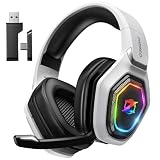
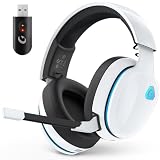
- Top Pick: EPOS H6Pro Open Acoustic Gaming with Mic – Immersive Sound, Lightweight Comfort, and Durable Design – Works with Xbox, PS4/PS5 & PC/Windows – Green
- Best Value: FIFINE H18V Lite Wired Open Back Gaming Headset, for PC, Xbox, PS4/5
- Premium Choice: Turtle Beach Atlas Air Wireless Open-Back Headset for PC, PS5, PS4, Mobile
Affiliate disclosure: As an Amazon Associate we earn from qualifying purchases. This post contains affiliate links — if you buy through them we may earn a small commission at no extra cost to you. This never affects our recommendations.
- Best Open-Back Gaming Headset in 2026: Top 5 Picks for Natural Soundstage
- Quick Comparison: Top 5 Open-Back Gaming Headsets
- The 5 Best Open-Back Gaming Headsets in 2026
- Open-Back vs. Closed-Back for Gaming: The Real Trade-off
- Impedance Guide: Do You Need an Amp?
- Open-Back in Shared Spaces: Noise Leakage Reality
- Conclusion: Which Open-Back Gaming Headset Should You Buy?
- Related Articles
- Frequently Asked Questions
- Related Articles
As an Amazon Associate we earn from qualifying purchases at no extra cost to you.




In a hurry? See the top-rated Open-Back Gaming Headset deals available right now:
🛒 Check Open-Back Gaming Headset Prices on Amazon →🛒 Best Price Today on Amazon
Prime members get fast, free shipping on everything above, plus member-only deals. New members get a 30-day free trial — cancel anytime.
Start 30-Day Prime Free Trial →See Today’s Amazon DealsBest Open-Back Gaming Headset in 2026: Top 5 Picks for Natural Soundstage
Open-back headsets are the best-kept secret in gaming audio. While closed-back headsets dominate the marketing landscape with flashy RGB and “surround sound” gimmicks, serious competitive and immersive gamers have known for years that open-back designs deliver something no amount of DSP can fake: a genuine, three-dimensional soundstage.
If you’ve spent any time playing Helldivers 2, Squad, or a precision FPS like Valorant with a quality open-back headset, you understand immediately. Footsteps have depth. Enemy flanks feel like real spatial events. The audio isn’t happening inside your skull — it’s happening around you.
This guide covers the five best open-back gaming headsets available in 2026, from budget combos under $80 to premium audiophile setups. We’ll also cover the honest tradeoffs: impedance matching, noise leakage, and when a closed-back is actually the smarter pick.
Quick Comparison: Top 5 Open-Back Gaming Headsets
| Headset | Driver Size | Impedance | Soundstage | Mic Type |
|---|---|---|---|---|
| Sennheiser HD 560S + ModMic | 38mm | 120Ω | Exceptional | Attachable boom |
| Audio-Technica ATH-ADG1X | 53mm | 42Ω | Excellent | Retractable built-in |
| Beyerdynamic MMX 300 Pro | Tesla driver | 250Ω | Outstanding | Detachable boom |
| HyperX Cloud Alpha S (semi-open) | Dual chamber | 67Ω | Very Good | Detachable boom |
| Philips SHP9500 + V-MODA boom | 50mm | 32Ω | Very Good | Clip-on boom |
The 5 Best Open-Back Gaming Headsets in 2026
1. Sennheiser HD 560S + Antlion ModMic — Best Audiophile Open-Back for Gaming
Sennheiser HD 560S | Antlion ModMic
The HD 560S is arguably the most compelling case for the “audiophile headphone + clip-on mic” approach to gaming audio. Sennheiser engineered these headphones for neutral, reference-class listening — and that philosophy translates directly into exceptional competitive gaming performance.
Why it excels for gaming: The 38mm transducers with E.A.R. (Ergonomic Acoustic Refinement) angling deliver pinpoint imaging that lets you triangulate sound sources with surgical accuracy. In a game like CS2, you’ll hear the difference between a footstep on one side of a wall versus the other. The soundstage isn’t artificially wide — it’s accurate, which is what actually matters for positioning.
At 120Ω impedance, the HD 560S sits in a middle ground: it works fine from a PC headphone jack but genuinely opens up with a DAC/amp like the FiiO E10K or JDS Labs Atom. If you already own a desktop setup, this pairing is revelatory.
The mic situation: The HD 560S has no built-in mic. The Antlion ModMic Uni or ModMic USB solves this elegantly — a magnetically attachable boom mic that sounds better than most headset mics on the market and can be removed when you’re just listening. It adds roughly $50-60 to the total, but the combo outperforms dedicated gaming headsets costing $300+.
Best for: Competitive FPS players, immersive RPG/sim gamers, anyone who wants reference-quality audio without sacrificing gaming utility.
2. Audio-Technica ATH-ADG1X — Best Dedicated Open-Back Gaming Headset
Audio-Technica built the ATH-ADG1X as a ground-up gaming headset, not a repurposed audiophile product. The result is one of the most refined dedicated open-back gaming experiences available.
Why it excels: The 53mm drivers are large by any standard, delivering a lush, wide soundstage that makes open-world games like Elden Ring and Alan Wake 2 genuinely cinematic. The high-frequency extension is crisp without turning harsh, which is important for extended gaming sessions. Detail retrieval is excellent — ambient environmental sounds that disappear into muddy background noise on lesser headsets become distinct, readable audio cues.
The 3D Wing Support system is one of Audio-Technica’s signature design elements. Instead of adjustable headband pressure, the headset self-adjusts via flexible wing fins. For most head shapes, this results in a lighter, more comfortable fit over long sessions than traditional headband designs.
At 42Ω, the ATH-ADG1X drives easily from any gaming PC, console, or controller without amplification — a practical advantage the HD 560S doesn’t share.

The mic: The retractable boom mic is genuinely good — not just “good for a built-in” — with clear voice reproduction and reasonable background rejection. It locks away cleanly when not needed.
Best for: Gamers who want a purpose-built open-back headset with no extra components, single-cable convenience, and wide soundstage for immersive gaming.
3. Beyerdynamic MMX 300 Pro — Best Premium Open-Back Gaming Headset
Beyerdynamic’s MMX 300 Pro is the choice for gamers who refuse to compromise. German engineering, Tesla driver technology, and broadcast-quality microphone performance — this headset competes with professional studio equipment while remaining a functional gaming peripheral.
Why it excels: The Tesla driver technology uses a uniquely powerful magnet system to achieve extremely low distortion and tight dynamic response. The result is audio that sounds effortlessly precise — not because it emphasizes clarity artificially, but because it resolves transients (the sharp attack of sounds) with a speed and accuracy that cheaper drivers cannot match. In fast-paced competitive environments, this translates to better reaction time because audio cues register cleanly instead of smearing into each other.
At 250Ω, the MMX 300 Pro is the most amp-dependent headset on this list. You will need a DAC/amp — a basic PC audio jack will leave significant performance on the table. This is not a headset you buy without already owning (or budgeting for) proper amplification. Beyerdynamic’s own A20 or the Schiit Magni are natural pairings.
Build quality: Velour earpads, steel headband reinforcement, replaceable parts. This headset is designed to last a decade with proper care. The detachable boom mic is broadcast-grade and the cleanest voice reproduction on this list — streamers and content creators will appreciate it.
Best for: Serious gamers and streamers who own (or will own) a DAC/amp, want the highest available audio quality, and value build longevity over upfront value.
4. HyperX Cloud Alpha S — Best Semi-Open Headset for Competitive Gaming
Technically a semi-open design, the Cloud Alpha S earns its place on this list because it occupies a genuinely useful middle ground that fully open-back designs cannot reach: soundstage improvement over closed-back headsets with meaningfully more environmental isolation than true open designs.
Why it excels: HyperX’s dual-chamber driver technology physically separates bass frequencies from mids and highs using a secondary resonance chamber. The practical result is cleaner mid-frequency detail — which is exactly where footsteps, voices, and positional audio cues live — without the bloated, boomy low end that plagues single-chamber competitors. The soundstage improvement over the original Cloud Alpha is audible and immediate.
The included USB soundcard with 7.1 virtual surround adds software-based spatial processing on top of the semi-open physical design. For competitive shooters where virtual surround is well-implemented (Rainbow Six Siege, Hunt: Showdown), this combination is formidable.
At 67Ω, no amplification is needed. Plug-and-play compatibility with PC, PS5, and Switch via 3.5mm makes this the most versatile pick on the list.
Best for: Competitive gamers in shared spaces who want better soundstage than closed-back but cannot tolerate full noise leakage, or anyone wanting a versatile all-rounder for multiple game genres.
5. Philips SHP9500 + V-MODA BoomPro — Best Budget Open-Back Gaming Combo
Philips SHP9500 | V-MODA BoomPro

The Philips SHP9500 is one of the most recommended budget audiophile headphones in existence, and for good reason: for under $55, it delivers a soundstage and tonal balance that embarrasses gaming headsets at twice the price. Pair it with the V-MODA BoomPro (a 3.5mm inline mic that replaces the SHP9500’s detachable cable) and you have a complete gaming audio solution for under $80 total.
Why it excels: The 50mm neodymium drivers deliver an open, airy soundstage with smooth high-frequency extension. At 32Ω, the SHP9500 runs to full volume from any device without amplification — phones, controllers, portable DACs, onboard audio. It’s the most accessible open-back on this list.
The acoustic open mesh earcups generate a wider perceived soundstage than headphones at significantly higher price points. For players new to open-back audio, the first session with the SHP9500 is often a revelation: environmental audio feels genuinely spatial in a way that was simply absent before.
The mic: The V-MODA BoomPro uses the SHP9500’s standard 3.5mm jack to add an inline microphone and volume control. Voice quality is clean for casual use — Discord, squad coordination, streaming at lower bitrates. It won’t match the ModMic or MMX 300 Pro, but at this price point, the comparison is unreasonable.
Best for: Budget-conscious gamers, students, anyone trying open-back audio for the first time, or secondary setups where spending $200+ isn’t justified.
Open-Back vs. Closed-Back for Gaming: The Real Trade-off
The marketing narrative around gaming headsets almost universally favors closed-back designs — the enclosed ear cup that physically seals sound in and out. This makes sense for casual consumers because isolation is a feature you can feel immediately. You put on a closed-back headset and the world goes quiet.
But for gaming audio specifically, isolation is often solving the wrong problem.
Where open-back wins: Soundstage is the spatial width of perceived audio. Closed-back headsets, by definition, reflect sound waves back against the driver and earcup before they reach your ear. This creates a compressed, “in-head” sound that even premium DSP virtual surround cannot fully overcome. Open-back headsets allow sound waves to dissipate naturally, which produces a more accurate representation of a three-dimensional audio field. For positional audio in FPS games — hearing which corridor an enemy entered, which direction a vehicle approached from — the open-back advantage is significant and reproducible.
Where closed-back wins: Isolation. If you game in a loud environment (open office, apartment with roommates, shared bedroom), closed-back headsets prevent your game audio from bleeding into your microphone and reduce ambient noise distraction. If you’re in a voice chat while your household is awake, a fully open-back headset will pick up environmental sounds clearly in your mic and broadcast your game audio to anyone nearby.
The honest recommendation: Open-back is the right choice for solo immersive gaming and dedicated gaming spaces. Closed-back is the right choice for shared spaces, streaming without a treated room, and late-night sessions where noise leakage is socially problematic.
Impedance Guide: Do You Need an Amp?
Headphone impedance (measured in ohms, Ω) determines how much power a driver requires to reach optimal performance. Higher impedance headphones need more voltage to drive properly — onboard audio often cannot supply it.
32Ω (Philips SHP9500, HyperX Cloud Alpha S): Drives fully from any source. Phone, controller, laptop, PC headphone jack — all work. No amp needed.
42-53Ω (Audio-Technica ATH-ADG1X): Still drives adequately from onboard audio on most modern motherboards. A dedicated DAC/amp improves performance but isn’t required.
120Ω (Sennheiser HD 560S): Functions from PC onboard audio at acceptable volume but benefits clearly from amplification. A $50-100 DAC/amp like the FiiO K3 or JDS Labs Atom moves performance into a different tier. Recommended.
250Ω (Beyerdynamic MMX 300 Pro): Requires amplification to reach design performance. PC headphone jacks and console controllers will drive sound but leave significant dynamics and detail unrealized. Budget for a DAC/amp before purchasing.

A USB DAC/amp in the $70-150 range (FiiO E10K, Schiit Magni + Modi, JDS Labs Atom) transforms a 120-250Ω headphone from “technically functional” to “operating as designed.” If you’re spending $200+ on a headphone and skipping the amp, you’re driving a performance car in second gear.
Open-Back in Shared Spaces: Noise Leakage Reality
This deserves direct, honest treatment. Open-back headsets leak audio. At moderate volume, someone sitting nearby will hear your game audio clearly. This is not a minor characteristic — it’s inherent to the design.
What leakage means in practice:
- Gaming in a bedroom while someone else sleeps nearby: not viable with open-back
- Solo gaming at a desk during the day: typically fine
- Office gaming or LAN events: open-back leaks into microphone pickup and disturbs others
- Streaming from a treated room: manageable, but you’ll want acoustic treatment
The semi-open HyperX Cloud Alpha S reduces but does not eliminate leakage. If leakage is a real constraint in your environment, it compromises the core open-back advantage and a quality closed-back headset (Beyerdynamic DT 770 Pro, Audio-Technica ATH-M50x with gaming mic) is the more practical choice.
If you have a dedicated gaming space or solo setup, this concern largely disappears and the soundstage advantages of open-back become available without lifestyle tradeoffs.
Conclusion: Which Open-Back Gaming Headset Should You Buy?
The best open-back gaming headset depends on your setup, budget, and how seriously you take audio positioning.
Buy the Philips SHP9500 + V-MODA BoomPro if you’re new to open-back, on a tight budget, or want to test the concept before committing to a premium setup. The performance-to-price ratio is unmatched.
Buy the Sennheiser HD 560S + ModMic if you want reference-quality imaging for competitive play and already have or will invest in a basic DAC/amp. This combo outperforms dedicated gaming headsets at much higher price points.
Buy the Audio-Technica ATH-ADG1X if you want a dedicated gaming headset with no extra components — one cable, built-in mic, excellent soundstage, and no amplification required.
Buy the HyperX Cloud Alpha S if you game in a semi-shared space, want versatility across PC and console, and need the value of closed-back isolation with some soundstage improvement over traditional closed designs.
Buy the Beyerdynamic MMX 300 Pro if you already own a DAC/amp, demand the highest available audio quality, and plan to keep your headset for years. This is the definitive premium choice.
Open-back audio is a genuine upgrade for gaming. Once you hear precise positional audio on a quality open-back setup, returning to the compressed soundstage of a closed-back headset feels like a step backward. Start anywhere on this list and you’ll understand why serious gamers make the switch.
Related Articles
Looking for more on this topic? Browse the hand-picked guides below — each one applies the same scoring rubric used in this review.
Frequently Asked Questions
What is the best gaming headset open back in 2026?
The best gaming headset open back depends on your budget and how you plan to use it. The options compared above are our top-rated picks based on real customer ratings, build quality, and overall value — start with the highest-rated model that fits your budget.
How much should I expect to spend on a gaming headset open back?
Prices vary by brand and features. Budget options cover the essentials, while mid-range and premium models add durability, performance, and extra features. Compare the prices in the list above to find the best value for your needs.
What should I look for when buying a gaming headset open back?
Focus on what matters most for your use case — build quality, compatibility, performance, warranty, and verified customer reviews. Every pick above is selected to balance these factors.
Are budget gaming headset open back options worth it?
Yes. For most people a well-reviewed budget or mid-range gaming headset open back delivers excellent value. You only need to spend more if you specifically require premium materials or top-tier performance.
How did we choose these gaming headset open back picks?
We compare current Amazon ratings, review counts, key features, and price to surface the options with the best real-world value. The list is refreshed as ratings and availability change.