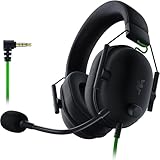
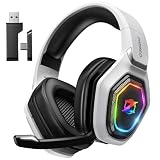
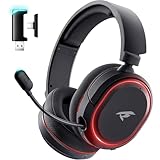
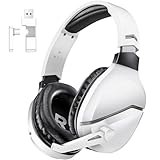
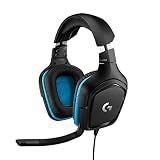
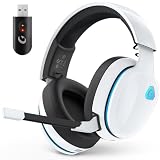
- Top Pick: Razer BlackShark V2 X Gaming Headset: 7.1 Surround Sound – 50mm Drivers – Memory Foam Cushion – For PC, PS4, PS5, Switch – 3.5mm Audio Jack – Black
- Best Value: AOC Wireless Gaming Headset for PS5, PS4, Nintendo Switch, PC- Black
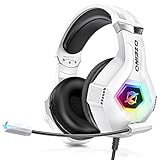
- Premium Choice: Ozeino Gaming Headset for PC, Ps4, Ps5, Xbox Headset with 7.1 Surround Sound Gaming Headphones with Noise Canceling Mic, LED Light Over Ear Headphones for Switch, Xbox Series X/S, Laptop, Mobile White
Affiliate disclosure: As an Amazon Associate we earn from qualifying purchases. This post contains affiliate links — if you buy through them we may earn a small commission at no extra cost to you. This never affects our recommendations.
A great gaming headset transforms every session — from hearing enemy footsteps in competitive shooters to getting lost in an open-world soundtrack. Whether you game on PC, PS5, or Xbox, there is an option here for you.
In a hurry? See the top-rated Gaming Headsets deals available right now:
🛒 Check Gaming Headsets Prices on Amazon →🛒 Best Price Today on Amazon
Prime members get fast, free shipping on everything above, plus member-only deals. New members get a 30-day free trial — cancel anytime.
Start 30-Day Prime Free Trial →See Today’s Amazon DealsTop Picks at a Glance
| Product | Best For |
|---|---|
| SteelSeries Arctis Nova 7 | Overall best / multi-platform |
| HyperX Cloud III Wireless | Comfort-focused gamers |
| Razer BlackShark V2 Pro | Competitive / esports |
| Logitech G Pro X 2 | Pro-level audio quality |
| Turtle Beach Stealth 600 Gen 3 | Budget wireless |
As an Amazon Associate we earn from qualifying purchases at no extra cost to you.


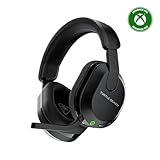
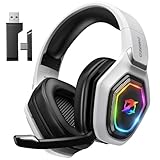


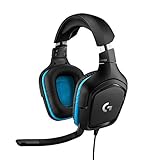
SteelSeries Arctis Nova 7 — Best Overall
- Connectivity: 2.4GHz wireless + Bluetooth dual connection
- Battery life: Up to 38 hours per charge
- Driver size: 40mm neodymium with Tempest spatial audio support on PS5
- Pros: Exceptional build quality, simultaneous dual connection lets you take calls while gaming, retractable ClearCast Gen 2 mic is among the clearest at this price
- Cons: Slightly V-shaped sound signature may not suit audiophiles; USB-C dongle required for 2.4GHz
HyperX Cloud III Wireless — Best for Comfort
- Connectivity: 2.4GHz USB-A wireless
- Battery life: Up to 120 hours (wired passthrough available)
- Driver size: 53mm angled drivers
- Pros: Industry-leading 120-hour battery is a genuine differentiator; memory foam ear cups feel premium after hours of use; wide, spacious soundstage
- Cons: No Bluetooth; bulkier frame than competitors; mic audio is good but not best-in-class
Razer BlackShark V2 Pro — Best for Competitive Gaming
- Connectivity: 2.4GHz HyperSpeed wireless + Bluetooth
- Battery life: Up to 70 hours
- Driver size: 50mm TriForce Titanium drivers
- Pros: Razor-sharp positional audio excels in FPS titles; THX Spatial Audio adds depth in supported games; detachable HyperClear mic with cardioid pattern reduces background noise effectively
- Cons: Premium price for a headset without flashy RGB; earcup swivel range is somewhat limited
Logitech G Pro X 2 — Best Audio Quality
- Connectivity: LIGHTSPEED 2.4GHz wireless + Bluetooth + 3.5mm
- Battery life: Up to 50 hours
- Driver size: 50mm graphene drivers (custom Logitech design)
- Pros: Graphene drivers produce the most accurate, balanced sound on this list; Blue VO!CE mic technology is broadcast-quality; ultra-light 345g frame defies its feature set
- Cons: Most expensive option; DTS:X Ultra requires a subscription for full features; no USB-C charging (uses Micro-USB)
Turtle Beach Stealth 600 Gen 3 — Best Budget Wireless
- Connectivity: 2.4GHz USB-C wireless
- Battery life: Up to 80 hours
- Driver size: 40mm Nanoclear drivers
- Pros: Outstanding value at under $80; 80-hour battery rivals headsets twice the price; SwiftConnect lets you switch between PC and console without re-pairing
- Cons: Plastic build feels budget-appropriate; mic lacks noise-canceling sophistication of premium picks; bass-heavy tuning not ideal for all genres
Buying Guide: How to Choose the Right Gaming Headset
Wired vs. Wireless
Wireless headsets have closed the quality gap significantly. In 2026, 2.4GHz dongles deliver sub-5ms latency that is imperceptible during gameplay. The main trade-offs are battery management and slight cost premium. Wired headsets are still preferred by tournament players who want zero-latency reliability, but for home gaming wireless is a comfortable default choice.
Stereo vs. Surround Sound
True stereo from quality drivers often outperforms software-processed surround for pinpointing directional audio. Virtual 7.1 or spatial audio formats like DTS:X and Dolby Atmos can add a sense of space and immersion in single-player games, but they can smear the precise left/right cues competitive players rely on. Many headsets let you toggle between modes — try both before committing to one setting.
Microphone Quality Matters
If you play team-based games regularly, microphone clarity matters as much as speaker quality. Look for headsets with detachable or retractable mics, cardioid pickup patterns, and noise-rejection features. Headsets marketed with Discord certification or “broadcast-quality” specs typically deliver noticeably cleaner voice pickup than entry-level options.
Fit and Long-Session Comfort
Clamping pressure and ear cup depth are the two factors most people overlook before buying. If you wear glasses, prioritize headsets with soft memory foam and shallow cups that reduce pressure on the temple arms. Weight matters too — anything above 400g becomes noticeable after two to three hours. Check the headset weight spec before purchasing if long sessions are the norm for you.

FAQ
Q: Can I use a PC gaming headset on PS5 or Xbox?
A: Most modern gaming headsets support multiple platforms. USB wireless dongles work on PC and PS5; Xbox requires either a headset with a proprietary Xbox wireless dongle or a 3.5mm connection via the controller. Always check the compatibility list on the product page before buying.
Q: Is 7.1 surround sound worth it for gaming?
A: It depends on the game type. In immersive single-player titles, virtual surround adds atmosphere. In competitive FPS games, a well-tuned stereo headset often gives better directional precision. Many headsets offer software toggles so you can switch based on what you are playing.
Q: How important is battery life for a wireless gaming headset?
A: For most gamers, anything above 20 hours is sufficient for several sessions between charges. If you frequently forget to charge, prioritize headsets with 40+ hour batteries or USB-C fast-charge support that can give a few hours of use from a 15-minute charge.

Q: What is the difference between 2.4GHz and Bluetooth wireless?
A: 2.4GHz dongles deliver lower latency (typically under 5ms) and are optimized for gaming. Bluetooth is more versatile — you can connect to phones and tablets — but introduces higher latency (around 20–40ms) that can cause audio sync issues in fast games. Premium headsets often include both options.
Q: Do I need software to get the most out of a gaming headset?
A: Not necessarily, but manufacturer software unlocks EQ customization, mic monitoring, and spatial audio modes. SteelSeries GG, Razer Synapse, and Logitech G Hub are all free downloads that meaningfully expand what their respective headsets can do.
Final Verdict
The SteelSeries Arctis Nova 7 remains the headset we recommend most often in 2026 — it strikes the best balance of audio quality, wireless reliability, battery life, and multi-platform compatibility. If budget is the priority, the Turtle Beach Stealth 600 Gen 3 delivers wireless freedom and an 80-hour battery at a price that is hard to argue with. For audiophile-level accuracy and a mic that rivals dedicated streaming setups, the Logitech G Pro X 2 justifies its premium price for serious gamers who want the best on every front.

Related Articles
Looking for more on this topic? Browse the hand-picked guides below — each one applies the same scoring rubric used in this review.
Frequently Asked Questions
Will one headset work on PC, PS5 and Xbox?
Not automatically. Xbox uses a proprietary wireless protocol, so wireless headsets need explicit Xbox Wireless support or must connect via the controller’s 3.5mm jack. PS5 and PC both accept standard USB dongles. A wired 3.5mm headset is the only option guaranteed to work across all three, at the cost of wireless freedom.
Is surround sound in a headset real or a gimmick?
Virtual surround uses head-related transfer functions to simulate directional cues through two drivers, and quality varies enormously. Good implementations such as Sony’s Tempest, Dolby Atmos for Headphones or Windows Sonic genuinely improve vertical positioning. Cheap built-in surround modes often just add reverb and muddy the stereo image, so many players disable them.
How good are gaming headset microphones?
Good enough for team chat, rarely good enough for streaming or recording. A boom mic close to your mouth rejects room noise well, which is its main advantage. Detachable boom mics on mid-range and premium models sound noticeably cleaner than the tiny flip-down mics on budget headsets, but a standalone USB mic still beats both.
Wireless or wired for competitive play?
2.4GHz wireless via a dedicated dongle adds latency measured in single-digit milliseconds, which no player will perceive. Bluetooth is a different story and should be avoided for gaming. The practical case for wired is price and never worrying about charge; the case for wireless is comfort and cable-free movement.
How do I stop a headset from hurting after two hours?
Check clamping force and pad depth first. Gently widening the headband over a stack of books for a day reduces clamp. Swapping to thicker hybrid or velour pads increases ear clearance and improves airflow. If you wear glasses, look for pads with a channel or softer memory foam that lets the arms sit without pressure points.
Ready to decide? Our #1 pick for 2026 is the SteelSeries Arctis Nova 7.
Live price & availability on Amazon.