Affiliate disclosure: As an Amazon Associate we earn from qualifying purchases. This post contains affiliate links — if you buy through them we may earn a small commission at no extra cost to you. This never affects our recommendations.
Under $100 is where gaming headsets stop being budget purchases and start being serious audio investments. At this price tier you get genuine wireless options, premium memory foam ear cushions, high-fidelity 53mm drivers, and microphone technology borrowed from studio recording gear. The HyperX Cloud II has dominated this category for years, and for good reason — it remains a benchmark product. But in 2025, it has real competition from wireless options and feature-rich alternatives that have pushed into this price band.
The five picks below were evaluated on audio quality (stereo and virtual surround), microphone performance (especially for voice chat and streaming), comfort during 4+ hour gaming sessions, build quality, and whether their software ecosystems add genuine value. If you’ve been gaming on a sub-$50 headset, moving to any of these will be an immediately noticeable upgrade.
In a hurry? See the top-rated Gaming Headsets Under $100 deals available right now:
🛒 Check Gaming Headsets Under $100 Prices on Amazon →🛒 Best Price Today on Amazon
Prime members get fast, free shipping on everything above, plus member-only deals. New members get a 30-day free trial — cancel anytime.
Start 30-Day Prime Free Trial →See Today’s Amazon DealsTop Picks at a Glance
| Product | Best For |
|---|---|
| HyperX Cloud II 7.1 | Best overall under $100 |
| Redragon H510 Zeus 7.1 | Best value with surround |
| Razer BlackShark V2 X Special Edition | Best sub-$40 option |
| FIFINE USB 7.1 | Best mic for streaming |
| Gtheos 2.4GHz Wireless | Best wireless value |



HyperX Cloud II 7.1
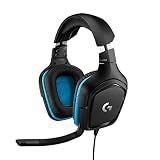
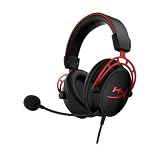
The HyperX Cloud II is the defining gaming headset of its generation, and it remains the top pick under $100 in 2025. The 53mm drivers with neodymium magnets produce a rich, detailed soundstage that outperforms most headsets in this price range. The detachable noise-canceling microphone is studio-quality for its tier — voice chat teammates will hear you clearly and without excess noise. Memory foam ear cushions with leatherette or velour options maintain comfort through marathon sessions. The USB audio control box enables virtual 7.1 surround and onboard volume/mic mute control. Build uses aluminum frame construction — this headset is built to last.
- Pros: 53mm neodymium drivers, aluminum build, detachable studio-quality mic, memory foam cushions, USB control box with 7.1
- Cons: Wired only, leatherette can get warm in extended sessions, older design aesthetic
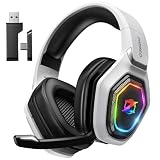
Gtheos 2.4GHz Wireless PS5/PS4
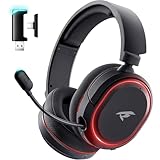
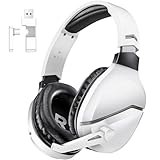
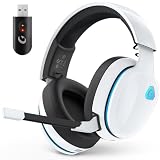
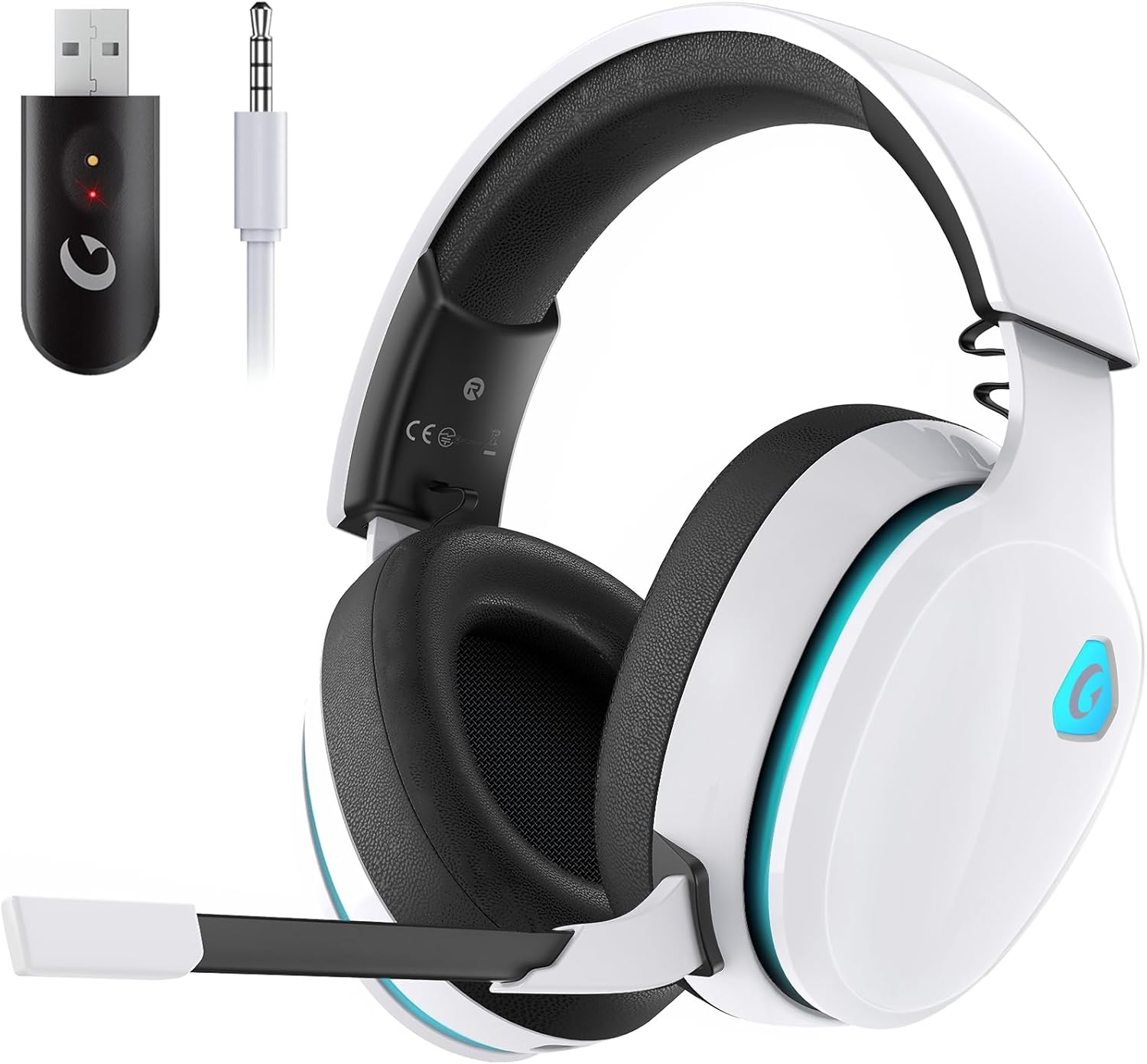
The Gtheos is the wild card on this list: a 2.4GHz wireless headset at $29.99 that punches far above its price. Wireless connectivity via USB dongle delivers low-latency audio without the cable management headache. Battery life hits approximately 15 hours per charge, which covers most gaming sessions. Audio quality is solid for the price with a warm sound signature. The mic is a fixed boom style with basic noise reduction. Build is plastic but lightweight and comfortable for 2–3 hour sessions. Primary compatibility is PS5/PS4 but works on PC via USB dongle.
- Pros: 2.4GHz wireless at $29.99, 15-hour battery, low latency, PS5/PC compatible
- Cons: Fixed mic (non-detachable), plastic build, audio quality below HyperX Cloud II, shorter battery than premium wireless
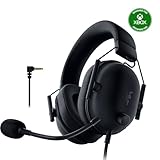
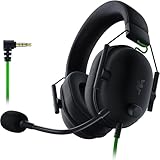
Razer BlackShark V2 X Special Edition
Included as the premium lower-cost option within this range. The BlackShark V2 X’s TriForce 50mm titanium drivers and HyperClear detachable mic represent Razer’s best engineering at accessible pricing. If budget is tight within this $100 range and you want to allocate toward other peripherals, the V2 X at $34.99 leaves room in the budget while still delivering excellent audio. Full review in our under-$50 guide.

- Pros: TriForce drivers, detachable HyperClear mic, Razer Synapse support, esports-tuned sound
- Cons: 3.5mm only on base model, no memory foam on standard version
Redragon H510 Zeus 7.1
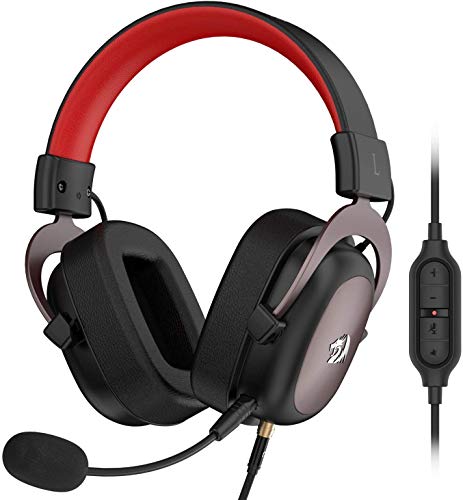
The Redragon H510 Zeus is the closest competitor to the HyperX Cloud II at a similar price. It uses 53mm drivers and delivers genuine 7.1 virtual surround via USB. The detachable mic uses a cardioid pattern with better-than-average noise rejection for the price. Build quality is a mix of plastic and metal, with a braided cable that resists tangling. Sound signature is slightly more V-shaped than the Cloud II — stronger bass and treble with a slight mid-range dip. Good for gaming; less ideal for music listening.
- Pros: 53mm drivers, 7.1 surround, detachable mic, braided cable, competitive pricing
- Cons: V-shaped EQ less accurate for positional audio, software basic compared to HyperX Ngenuity
FIFINE USB 7.1
FIFINE’s USB headset brings their microphone expertise into the gaming space, and it shows. The mic on this unit is cleaner and more natural-sounding than most gaming headsets at this price tier — a major advantage for streamers and content creators who also game. 50mm drivers deliver solid audio, and the 7.1 virtual surround adds useful spatial context. Build is reliable. If voice quality is your primary concern and you stream or record, this is the pick.
- Pros: Best mic quality under $50, 7.1 virtual surround, FIFINE reliability, streaming-friendly
- Cons: USB only, audio quality trails HyperX Cloud II at nearly half the price
Buying Guide
The sub-$100 tier involves real decisions between wired and wireless, driver size, and software ecosystem. Here’s what matters most:
Why the HyperX Cloud II Still Wins
The Cloud II has been competing and winning in this category for nearly a decade because HyperX nailed the fundamentals: large neodymium drivers, premium ear cushion materials, a genuinely good detachable mic, and an aluminum build that survives real-world use. Competitors at similar prices typically win on one or two features but trail on others. The Cloud II remains the most balanced package under $100.
Wireless at This Price Point
Genuine 2.4GHz wireless under $100 is scarce and involves trade-offs. The Gtheos at $29.99 achieves wireless at an astonishing price but sacrifices build quality and mic performance. If wireless is a must-have, you’re better served saving for the Logitech G733 at $119.99 or looking for sales on the HyperX Cloud II Wireless. Budget wireless headsets often compromise on audio quality, battery life, or build longevity in ways wired headsets at the same price avoid.
Driver Size and Material
53mm drivers with neodymium magnets (as in the HyperX Cloud II and Redragon H510 Zeus) represent the upper ceiling of what this price tier offers. The larger magnetic structure drives more air movement, which translates to fuller bass and better dynamic range. 50mm drivers are perfectly capable, but if you’re choosing between otherwise similar headsets, the 53mm option typically sounds more impactful.

Memory Foam vs Standard Foam
All serious contenders in this range should offer memory foam ear cushions. Memory foam distributes pressure evenly across your ear, reducing hotspots during long sessions. The HyperX Cloud II’s ear cushions are removable and replaceable — a longevity advantage that extends the headset’s usable life by years. When buying, confirm whether replacement cushions are available for the model you choose.
Software Features Worth Using
HyperX Ngenuity and Razer Synapse both offer genuine value at this tier. Ngenuity’s EQ presets are well-tuned for different game genres. Synapse enables per-game audio profiles. Both apps offer mic monitoring (hearing your own voice in the headset), which prevents the tendency to shout into the mic when gaming with noise-canceling earcups. Look for this feature when comparing options — it matters for session comfort.
Frequently Asked Questions
Is the HyperX Cloud II worth buying in 2026?
Absolutely. Despite its age, the Cloud II’s audio fundamentals remain competitive with headsets released in 2024–2025. HyperX has kept the price accessible, the build holds up, and replacement ear cushions are widely available. It’s one of the few gaming headsets where “buy it used” advice also applies — a well-maintained used Cloud II at $35–$40 is still an excellent purchase.
What’s the difference between 7.1 virtual surround and real surround sound?
Real surround sound requires multiple physical speakers. Gaming headsets use stereo drivers (one per ear) and apply digital signal processing (DSP) to simulate multichannel surround. This virtual surround creates a wider perceived soundstage and better positional audio cues, but accuracy depends heavily on the quality of the DSP algorithm. Premium implementations like Windows Sonic, Dolby Atmos, and DTS Headphone:X are meaningfully better than basic virtual 7.1 processing in budget headsets.
Can I use the HyperX Cloud II on PS5 and Xbox?
Yes via 3.5mm into the controller on both platforms. The USB audio control box provides 7.1 surround on PC only. On consoles you get excellent stereo audio — which is still better than virtual 7.1 on budget headsets. The Cloud II is one of the most cross-platform compatible headsets available.
Should I buy wireless or wired under $100?
For most users, wired under $100 is the smarter choice. The audio and build quality you get from a wired $60 headset (like the Cloud II) outperforms what’s available wirelessly at the same price. Save wireless for when your budget reaches $100–$150+, where wireless quality matches premium wired options.
Verdict
The HyperX Cloud II at $59.99 is the best gaming headset under $100 and one of the best gaming headsets at any price for its combination of audio quality, comfort, and durability. The Redragon H510 Zeus is a solid alternative if the Cloud II is out of stock or you want to save a few dollars. For wireless on the absolute tightest budget, the Gtheos 2.4GHz headset at $29.99 is a surprising achiever. Any of these picks will be a marked upgrade from sub-$30 gear.
Related Articles
Looking for more on this topic? Browse the hand-picked guides below — each one applies the same scoring rubric used in this review.
Ready to decide? Our #1 pick for 2026 is the HyperX Cloud II 7.1.
Live price & availability on Amazon.