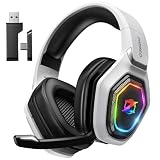
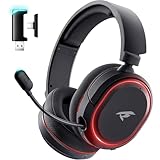
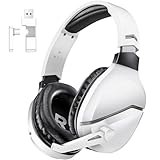
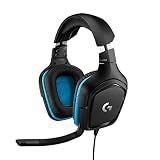
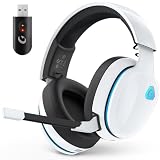
- Top Pick: Wireless Gaming Headset for PC PS5 PS4 Mac Switch 7.1 Surround Sound 100-Hr
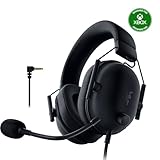
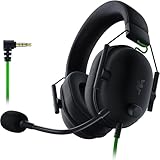
- Best Value: Razer BlackShark V2 X Gaming Headset: 7.1 Surround Sound – 50mm Drivers – Memory Foam Cushion – For PC, PS4, PS5, Switch – 3.5mm Audio Jack – Black
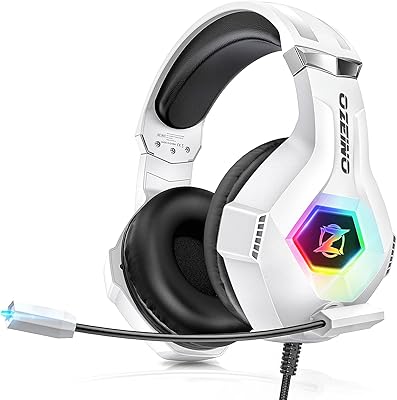
- Premium Choice: Ozeino Gaming Headset for PC, Ps4, Ps5, Xbox Headset with 7.1 Surround Sound Gaming Headphones with Noise Canceling Mic, LED Light Over Ear Headphones for Switch, Xbox Series X/S, Laptop, Mobile White
Affiliate disclosure: As an Amazon Associate we earn from qualifying purchases. This post contains affiliate links — if you buy through them we may earn a small commission at no extra cost to you. This never affects our recommendations.
Virtual 7.1 surround sound gives gaming headsets the ability to simulate multichannel speaker setups through two physical drivers. Done well, it widens the perceived soundstage, improves positional audio accuracy, and lets you pinpoint enemy footsteps, distant gunfire, and environmental audio cues that stereo misses. Done poorly, it adds hollow reverb that muddies the mix and makes positioning harder, not easier.
The headsets on this list implement 7.1 surround in meaningfully different ways — from HyperX’s USB dongle processing to SteelSeries’ Sonar software implementation to budget virtual surround chips in the Ozeino and VersionTECH. Understanding these differences will help you pick the right level of surround implementation for your gaming style and budget.
In a hurry? See the top-rated Gaming Headsets with 7.1 Surround Sound deals available right now:
🛒 Check Gaming Headsets With 7.1 Surround Sound Prices on Amazon →🛒 Best Price Today on Amazon
Prime members get fast, free shipping on everything above, plus member-only deals. New members get a 30-day free trial — cancel anytime.
Start 30-Day Prime Free Trial →See Today’s Amazon DealsTop Picks at a Glance
| Product | Best For |
|---|---|
| HyperX Cloud II 7.1 | Best overall 7.1 headset |
| Redragon H510 Zeus 7.1 | Best 7.1 value |
| Logitech G PRO X Wireless | Best wireless 7.1 |
| Ozeino 7.1 Gaming | Best budget 7.1 |
| VersionTECH G2000 Bass Surround | Best sub-$25 surround |
As an Amazon Associate we earn from qualifying purchases at no extra cost to you.




HyperX Cloud II 7.1
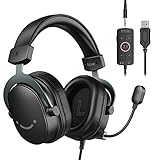
The Cloud II’s USB audio control box does the 7.1 processing on hardware rather than relying entirely on software — a key advantage. The virtual surround implementation widens the soundstage noticeably compared to the 3.5mm-only mode, and positional accuracy in shooters like CS2 and Valorant is genuinely competitive. The 53mm neodymium drivers have enough resolution to render the spatial cues clearly, which is the other half of the equation: a good surround algorithm on mediocre drivers still sounds compressed. Here, both halves are excellent for the price.
- Pros: Hardware USB 7.1 processing, 53mm neodymium drivers, excellent positional accuracy, detachable mic
- Cons: 7.1 only active via USB (3.5mm is stereo), older design, wired only
Ozeino 7.1 Gaming
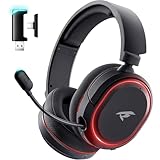
At around $19, the Ozeino delivers functional virtual 7.1 via USB. The surround effect is more atmospheric than precisely positional — great for single-player RPGs and open-world games where spatial immersion matters more than pinpoint accuracy. For competitive FPS, the surround processing at this price can introduce slight reverb that blurs directionality. Switching to the 3.5mm stereo connection often works better for ranked play. As a budget introduction to surround sound gaming, though, it absolutely delivers.
- Pros: 7.1 virtual surround under $20, dual USB+3.5mm connections, LED lighting, wide platform support
- Cons: Surround accuracy limited vs premium implementations, basic surround chip, plastic build
VersionTECH G2000 Bass Surround
The VersionTECH G2000 uses the term “surround” loosely — it’s a stereo headset with enhanced bass processing rather than true virtual 7.1. That said, its 50mm drivers with bass enhancement create an immersive sound that works well for action games and open-world titles. Genuine 7.1 processing is not present here; if accurate directional audio is your priority, look at the Cloud II or Redragon H510. For casual gaming where bass impact matters more than positional accuracy, the G2000 delivers satisfying results.

- Pros: Strong bass response, proven brand reliability, omnidirectional mic on flexible arm, wide compatibility
- Cons: Not true 7.1 virtual surround — bass-enhanced stereo, less useful for competitive positional audio
Redragon H510 Zeus 7.1
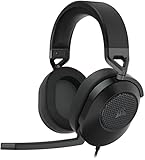
The H510 Zeus is Redragon’s flagship headset and offers genuine 7.1 virtual surround processing competitive with the HyperX Cloud II. The 53mm drivers resolve spatial cues well, and the USB connection enables surround without additional software — plug in and it works. Sound signature is more V-shaped than the Cloud II (more bass and treble, slightly recessed mids), which makes the surround effect feel more dramatic but slightly less accurate for precise footstep tracking. An excellent alternative if the Cloud II is unavailable.
- Pros: True 7.1 surround, 53mm drivers, plug-and-play USB surround, detachable mic, braided cable
- Cons: V-shaped EQ less accurate for competitive play, Redragon software less refined than HyperX Ngenuity
Logitech G PRO X Wireless
The G PRO X Wireless implements 7.1 through Logitech G HUB with DTS Headphone:X 2.0 — one of the most sophisticated virtual surround algorithms available in a gaming headset. The combination of premium 50mm Pro-G drivers and DTS processing creates the most accurate directional audio on this list. The wireless 2.4GHz connection adds no latency to the surround processing. For competitive players who want the best positional audio their headset can deliver wirelessly, this is the pick.
- Pros: DTS Headphone:X 2.0 surround, Pro-G 50mm drivers, LIGHTSPEED wireless, 20-hour battery
- Cons: around $180 premium pricing, DTS requires G HUB software active, PC-centric surround features
Buying Guide
Virtual 7.1 vs Physical Surround
No gaming headset uses actual 7.1 physical speaker arrays (some older designs did, but they’re discontinued). All “7.1 surround” in gaming headsets is virtual — digital signal processing applied to stereo drivers to simulate multichannel audio. The algorithm quality varies enormously. DTS Headphone:X 2.0, Dolby Atmos for Headphones, and Windows Sonic are the leading implementations. Budget USB chips use proprietary algorithms of varying quality.
Software vs Hardware Processing
Hardware-based virtual surround (like HyperX’s USB control box) processes audio on a dedicated chip before it reaches your ears — no software dependency, lower CPU overhead, consistent results. Software-based surround (DTS Headphone:X via G HUB, THX Spatial Audio via Synapse) uses your PC’s CPU to process audio, offering better algorithm quality and updateability but requiring software to be running. Both approaches work; hardware is more reliable for plug-and-play setups.

When to Disable 7.1 Surround
Some competitive players disable virtual surround and use stereo for ranked play. This is because certain surround algorithms, especially budget ones, add reverb that makes pinpointing exact sound positions harder. If you’re experiencing this, try stereo mode for a session and compare. Premium surround implementations like DTS Headphone:X 2.0 rarely have this issue — they’re designed specifically for competitive accuracy.
Game Genre Matching
Virtual surround provides the most benefit in: open-world games (ambient immersion), horror games (directional tension building), and multiplayer shooters (footstep/gunfire positioning). It provides less benefit in: MOBAs (top-down audio mix doesn’t use full surround space), racing games (primarily directional L/R audio), and fighting games (stereo is perfectly suited). Match your choice of surround headset to your primary game genres.
Frequently Asked Questions
Is 7.1 surround actually useful for gaming or is it marketing?
Quality virtual 7.1 surround provides measurable competitive advantages in games with complex 3D audio. Studies and pro player feedback consistently show that positional audio accuracy improves with premium surround implementations. Budget surround is more hit-or-miss — the algorithm quality matters more than the “7.1” marketing claim. DTS Headphone:X 2.0 and Dolby Atmos are reliably beneficial; generic budget 7.1 chips vary.
Do I need special headphones for 7.1 surround?
No — any headset with a USB connection can receive 7.1 virtual surround processing from a software or hardware implementation. The driver quality affects how well you hear the spatial cues, but there’s no special hardware requirement beyond a USB connection for most implementations. Some software surround works with 3.5mm connected headsets via PC audio settings.
Does 7.1 work on consoles?
Not in the same way as PC. PS5 has its own Tempest 3D Audio engine that processes spatial audio natively — compatible headsets (connected via USB or 3.5mm into DualSense) benefit from this. Xbox supports Dolby Atmos and DTS Headphone:X via its audio app with compatible headsets. Budget USB 7.1 headsets designed for PC typically don’t activate their surround mode when connected to consoles.
Should I use virtual surround for competitive FPS?
Premium implementations: yes. Budget implementations: test it and decide. The best approach is to play a session with surround on and one with it off, then judge your footstep awareness and positional accuracy objectively. Many pro players use Windows Sonic or Dolby Atmos and find them beneficial; others prefer stereo. Individual preference and game audio design both factor in.
Verdict
The HyperX Cloud II 7.1 at around $59 remains the best value for quality virtual surround sound in a gaming headset. Its hardware USB processing and 53mm neodymium drivers combine to create the most accurate positional audio under $100. For budget-constrained buyers, the Ozeino 7.1 at around $19 delivers a genuine introduction to virtual surround at minimal cost. Premium wireless surround is best served by the Logitech G PRO X Wireless with DTS Headphone:X 2.0.
Related Articles
Looking for more on this topic? Browse the hand-picked guides below — each one applies the same scoring rubric used in this review.