Affiliate disclosure: As an Amazon Associate we earn from qualifying purchases. This post contains affiliate links — if you buy through them we may earn a small commission at no extra cost to you. This never affects our recommendations.
As an Amazon Associate we earn from qualifying purchases at no extra cost to you.


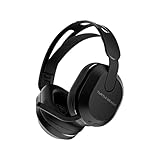

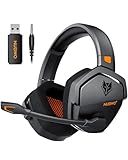
Cutting the cable is tempting. No dongle, no tangled wire, freedom to grab a drink mid-match without yanking your headset off your head. But “Bluetooth gaming headset” still makes competitive players flinch — and for good reason. Before we get into the picks, you need to understand what you’re buying into.
Modern Bluetooth 5.0 and 5.1 headsets have closed the gap dramatically for casual and single-player gaming. Multipoint connection lets you stay paired to your PC and phone simultaneously. Battery life has ballooned past 30 and even 50 hours. Microphone quality on flagship models now rivals dedicated boom mics.
But latency is still real. Bluetooth audio typically adds 100–200ms of delay versus 2.4GHz wireless or wired connections. For competitive FPS or battle royale players where audio cues mean life or death, that gap matters. We’ll address this honestly in the “How to Choose” section at the end.
For everyone else — console players, casual PC gamers, hybrid workers who bounce between gaming and video calls — a quality Bluetooth gaming headset is an outstanding choice in 2026. Here are the five best options we compared.
In a hurry? See the top-rated Bluetooth Gaming Headset deals available right now:
🛒 Check Bluetooth Gaming Headset Prices on Amazon →🛒 Best Price Today on Amazon
Prime members get fast, free shipping on everything above, plus member-only deals. New members get a 30-day free trial — cancel anytime.
Start 30-Day Prime Free Trial →See Today’s Amazon DealsQuick Comparison Table
| Headset | Bluetooth Version | Battery Life | Mic Type | Approx. Price |
|---|---|---|---|---|
| SteelSeries Arctis Nova 7 | BT 5.0 + 2.4GHz | 38 hours | ClearCast retractable | ~$149 |
| Logitech G435 | BT 5.1 + LIGHTSPEED | 18 hours | Dual beamforming built-in | ~$79 |
| Corsair Virtuoso RGB Wireless XT | BT 5.0 + 2.4GHz | 24 hours | Cardioid boom mic | ~$159 |
| JBL Quantum 800 | BT 5.0 + 2.4GHz | 14 hours | Detachable boom mic | ~$149 |
| Razer Barracuda X | BT 5.2 + 2.4GHz | 50 hours | Cardioid built-in | ~$99 |
The 5 Best Bluetooth Gaming Headsets in 2026
1. SteelSeries Arctis Nova 7
The Arctis Nova 7 is SteelSeries’ answer to the “I want one headset for everything” gamer. It ships with both a 2.4GHz USB-C dongle and Bluetooth 5.0 simultaneously active, so you can be in a PC game on 2.4GHz and seamlessly take a phone call through Bluetooth without pulling the headset off. That multipoint functionality alone puts it in a class above single-mode headsets.
Key Specs
- Connectivity: Bluetooth 5.0 + 2.4GHz simultaneous
- Battery: 38 hours (2.4GHz mode); ~28 hours (Bluetooth only)
- Drivers: 40mm neodymium
- Mic: ClearCast retractable boom (bidirectional noise cancellation)
- Weight: 282g
- Platforms: PC, PlayStation, Switch, mobile
- USB-C charging: Yes
The ClearCast mic is SteelSeries’ best, using a bidirectional design that picks up your voice cleanly while rejecting desk fan noise, keyboard clatter, and ambient room sound.
Sound quality is warm and full-bodied. The Nova 7 doesn’t sacrifice bass for detail; it offers both. The Sonar software EQ on PC is genuinely useful rather than bloatware — you can dial in a flat reference profile or boost highs for competitive footstep tracking.
The headband uses SteelSeries’ ski-goggle-style suspension band, which distributes pressure across the top of your head rather than clamping on a single point. Long sessions (3–4 hours) remain comfortable, which cannot be said for most clamping headsets at this price.
Pros:
- Simultaneous dual-wireless is genuinely best-in-class
- ClearCast mic handles noisy environments well
- 38-hour battery is exceptional for a dual-mode headset
- Suspension headband excels for long wear
Cons:
- At 282g, heavier than Bluetooth-only options
- RGB lighting drains battery faster (toggle it off for max runtime)
- SteelSeries Sonar software is Windows-only
Best for: PC gamers who also want to take calls and use the same headset across multiple devices without swapping modes.
2. Logitech G435
At 165 grams, the G435 is one of the lightest gaming headsets on the market regardless of connection type. If you wear glasses, run hot, or find over-ear headsets oppressive after an hour, this is your contender. Logitech built it around comfort as the lead feature, and it delivers.
Key Specs
- Connectivity: Bluetooth 5.1 + LIGHTSPEED 2.4GHz
- Battery: 18 hours
- Drivers: 40mm
- Mic: Dual beamforming built-in (no boom arm)
- Weight: 165g
- Platforms: PC, PlayStation, Switch, mobile
- USB-C charging: Yes
Logitech’s LIGHTSPEED 2.4GHz protocol remains one of the lowest-latency wireless options available, sitting in the 1ms range — effectively indistinguishable from wired in any gaming scenario. The G435 gives you that for gaming on PC and PlayStation, then switches to Bluetooth 5.1 for everything else.

The built-in dual beamforming microphone is the main trade-off versus boom mics. It works well for Discord and game chat, performs acceptably on video calls, but struggles in loud environments where a directional boom would reject noise more aggressively. If you’re gaming in a quiet room, you won’t notice. If your household is chaotic, you might.
18-hour battery sits below average for this category. For most gaming sessions it’s fine, but the Nova 7 and Barracuda X offer significantly more runtime without sacrificing much else.
The G435 is also one of the only headsets in this category made from recycled plastic, which won’t matter to most buyers but is worth noting if sustainability is a factor in purchasing decisions.
Pros:
- 165g weight is exceptional — wears like almost nothing
- LIGHTSPEED offers near-zero latency on 2.4GHz
- Bluetooth 5.1 is the newest standard in this lineup
- Budget-friendly entry point into dual-wireless
Cons:
- 18-hour battery is the shortest in this roundup
- Built-in mic underperforms in noisy rooms
- Earcup size runs small — may not fully cover larger ears
Best for: Glasses wearers, users sensitive to headset weight, and PlayStation gamers who want LIGHTSPEED precision without paying flagship prices.
3. Corsair Virtuoso RGB Wireless XT
Corsair Virtuoso RGB Wireless XT
The Virtuoso RGB Wireless XT is Corsair’s premium flagship, and it shows in build quality immediately. The aluminum alloy frame and memory foam earcups feel closer to audiophile headphones than gaming gear. If you have teammates who ask what headset you’re wearing because it looks professional on camera, this is that headset.
Key Specs
- Connectivity: Bluetooth 5.0 + 2.4GHz USB-A dongle
- Battery: 24 hours
- Drivers: 50mm high-density neodymium
- Mic: Detachable cardioid boom mic
- Virtual surround: Dolby Atmos support
- Weight: 370g
- Platforms: PC, Mac, PlayStation, mobile
- USB-C charging: Yes (charges while in use)
Those 50mm drivers push noticeably more low-end authority than the 40mm units in the Nova 7 and G435. Explosions rumble, bass-heavy game soundtracks hit with visceral impact. For cinematic single-player games — RPGs, open world titles, horror — the Virtuoso XT creates an immersive sound stage that cheaper headsets simply cannot match.
Dolby Atmos support through the Corsair iCUE software delivers a credible positional surround effect for compatible content. It’s not a substitute for a proper surround speaker setup, but for headphone gaming it adds genuine depth to audio positioning.
The detachable boom mic uses a 3.5mm connection, which means you can route it into consoles or older devices without needing USB. Mic quality is clear and detailed — arguably the best microphone in this roundup for streaming or content creation where audio presentation matters.
The 370g weight is the headset’s biggest liability. Extended sessions become noticeable, especially for users new to over-ear headsets. The clamping force is also firm out of the box, though it loosens over a few weeks of use.
Pros:
- Premium aluminum build quality looks and feels professional
- 50mm drivers deliver the best raw sound in this comparison
- Dolby Atmos support for spatial audio
- Detachable mic works across 3.5mm devices
- USB-C fast charging (15 min = 4 hours)
Cons:
- 370g is the heaviest headset in this roundup
- Premium price reflects premium build
- iCUE software is resource-heavy on older PCs
Best for: Single-player and RPG gamers who prioritize audio quality and build craftsmanship over lightweight portability.
4. JBL Quantum 800
JBL Quantum 800

JBL brings decades of speaker engineering to the gaming headset space, and the Quantum 800 is where that heritage shows most clearly. The JBL QuantumSURROUND processing isn’t marketing fluff — the positional audio staging on this headset genuinely helps with pinpointing footsteps and directional audio cues in games that support it.
Key Specs
- Connectivity: Bluetooth + 2.4GHz USB dongle
- Battery: 14 hours
- Drivers: 50mm dynamic neodymium
- Mic: Detachable boom mic with noise cancellation
- Virtual surround: JBL QuantumSURROUND + DTS Headphone:X 2.0
- Weight: 336g
- Platforms: PC, PlayStation, Xbox (via 3.5mm), Switch, mobile
- Active noise cancellation: Yes
The Quantum 800 is the only headset in this roundup with active noise cancellation (ANC). If you game in a loud environment — open office, shared apartment, noisy commute — ANC can make a meaningful difference in immersion. It’s not AirPods Pro level ANC, but it’s effective enough to cut HVAC hum and reduce ambient conversation to a murmur.
DTS Headphone:X 2.0 combined with JBL’s own QuantumSURROUND gives the 800 two virtual surround modes. DTS is more accurately tuned for content that explicitly encodes surround data; QuantumSURROUND works better as a general-purpose spaciousness enhancement. Both are togglable through the JBL QuantumENGINE PC app.
The 14-hour battery is the weakest point of an otherwise strong package. Heavy gaming days with ANC enabled drain it faster — expect closer to 10–11 hours with ANC active. The 3.5mm wired fallback saves you from silence when it runs dry, but you’re buying a wireless headset; running wired defeats the purpose.
Pros:
- Active noise cancellation is genuinely useful
- JBL QuantumSURROUND provides strong positional audio
- DTS Headphone:X 2.0 support for encoded content
- Wide platform compatibility including Xbox via 3.5mm
Cons:
- 14-hour battery is the shortest with ANC active
- JBL QuantumENGINE software is PC-only
- 336g feels heavy after multi-hour sessions
Best for: Gamers in noisy environments who need ANC, and those who prioritize surround sound processing and positional audio accuracy for immersive titles.
5. Razer Barracuda X
The Razer Barracuda X is the value disruptor of this lineup and the longest-lasting battery champion at 50 hours. If you charge your headset approximately as often as you charge a TV remote, this is designed for you.
Key Specs
- Connectivity: Bluetooth 5.2 + 2.4GHz USB-C dongle
- Battery: 50 hours (2.4GHz); ~40 hours (Bluetooth)
- Drivers: 40mm TriForce
- Mic: Cardioid built-in with HyperClear technology
- Weight: 250g
- Platforms: PC, PlayStation, Switch, Android, iOS, Mac
- USB-C charging: Yes (dongle is USB-C, compatible with Switch and Android)
Razer’s USB-C dongle is a meaningful practical advantage. Unlike USB-A dongles that require an adapter for Switch handheld mode or newer Android phones, the Barracuda X’s dongle plugs directly in. Switch docked, Switch handheld, PC, Android — one dongle covers all of them at 2.4GHz speeds. This makes it the strongest multi-platform choice in the roundup for gamers who own multiple devices.
Bluetooth 5.2 is the newest standard in this lineup, offering marginally better connection stability and range than 5.0/5.1 units. In practice the difference is subtle indoors, but 5.2 handles interference-heavy environments (crowded Wi-Fi, dense Bluetooth ecosystems) with fewer drops.
The built-in cardioid mic surprised us. Razer’s HyperClear processing produces cleaner voice reproduction than the G435’s dual beamforming in equivalent conditions, though a boom arm with a dedicated cardioid capsule will always have a physical advantage in noise rejection over a flush-mounted mic.
At around $99, the Barracuda X undercuts everything else in this comparison while offering more battery life than any of them. Trade-offs are real — no Dolby Atmos, no ANC, no simultaneous dual-wireless (you pick a mode) — but for the use case it targets, they’re acceptable.
Pros:
- 50-hour battery is exceptional — best in class by a wide margin
- USB-C dongle covers Switch handheld, Android, and PC natively
- Bluetooth 5.2 for better interference resistance
- Value pricing undercuts comparable headsets significantly
Cons:

- No simultaneous dual-wireless (pick one mode at a time)
- Built-in mic trades some noise rejection for convenience
- No ANC, no virtual surround software suite
Best for: Multi-platform gamers (Switch + PC + mobile), budget-conscious buyers, and anyone who wants maximum battery life without premium pricing.
How to Choose the Best Bluetooth Gaming Headset
Bluetooth vs. 2.4GHz: The Honest Assessment
This needs to be said plainly. Bluetooth adds latency. Standard Bluetooth audio typically introduces 100–200ms of audio delay. For competitive multiplayer gaming — Counter-Strike, Valorant, Apex Legends, Call of Duty — that latency is detectable and can cost you gunfights where audio cues matter. Footsteps, reload sounds, and spatial positioning are all slightly behind real time.
Every headset in this roundup also includes 2.4GHz wireless. For competitive play, use 2.4GHz. For casual gaming, single-player titles, media consumption, calls, and situations where you value convenience over precision, Bluetooth is fine and comfortable.
If you play exclusively competitive multiplayer and never need Bluetooth for calls or music, you should consider a dedicated 2.4GHz wireless headset instead of a combo unit. If you’re a hybrid user — gaming sessions plus video calls plus music — a dual-mode headset like the Nova 7 or Barracuda X gives you the best of both.
Battery Life
- 50+ hours: Razer Barracuda X — charge it weekly
- 38 hours: SteelSeries Arctis Nova 7 — weekend warrior coverage
- 24 hours: Corsair Virtuoso RGB XT — solid for most gaming schedules
- 18 hours: Logitech G435 — daily charging required for heavy users
- 14 hours: JBL Quantum 800 — charge every other session minimum
Microphone Priority
For streaming, content creation, or demanding Discord calls: Corsair Virtuoso RGB XT’s detachable boom mic delivers the clearest audio.
For typical gaming chat: SteelSeries Arctis Nova 7’s ClearCast handles noise rejection best.
For minimalism: Razer Barracuda X and Logitech G435 use built-in mics that handle quiet rooms well.
Platform Compatibility
- PlayStation priority: Logitech G435 (LIGHTSPEED is PlayStation certified)
- Switch + mobile: Razer Barracuda X (USB-C dongle is the practical choice)
- PC-focused: Any of the five; Corsair and SteelSeries have the best PC software suites
- Xbox: JBL Quantum 800 via 3.5mm wired; none in this list support Xbox 2.4GHz natively
Weight and Comfort
- Lightest: Logitech G435 at 165g — the comfort king
- Balanced: Razer Barracuda X at 250g
- Mid-weight: SteelSeries Arctis Nova 7 at 282g (suspension band distributes weight)
- Heavy: JBL Quantum 800 at 336g, Corsair Virtuoso XT at 370g — session limits apply
Final Verdict
The SteelSeries Arctis Nova 7 is our top pick for most gamers. Simultaneous dual-wireless, an excellent ClearCast mic, 38-hour battery, and genuine multi-device flexibility justify the price for anyone who games seriously and needs one headset for everything.
The Razer Barracuda X wins on value. At $99 with 50-hour battery and a USB-C dongle that covers PC, Switch, and mobile, it overdelivers at its price point. If budget is a factor, this is where we’d spend the money.
The Logitech G435 is the comfort recommendation for users who can’t stand heavy headsets or wear glasses — 165g is genuinely impressive.
The Corsair Virtuoso RGB Wireless XT is the audiophile choice. Best sound quality in the group, best build quality, and the most credible option for streamers who need professional-grade audio presentation.
The JBL Quantum 800 earns its spot for ANC — it’s the only headset here that actively cancels environmental noise, which is uniquely valuable in noisy gaming environments.
One final note worth repeating: if competitive multiplayer is your primary use case, Bluetooth is not your friend. The headsets above all include 2.4GHz wireless precisely because the industry knows this. Use 2.4GHz for gaming, use Bluetooth for everything else. That’s the practical approach that gets you the best of both worlds without compromising in-game performance.
Prices listed are approximate and subject to change. Always verify current pricing on Amazon before purchasing.
Frequently Asked Questions
Is Bluetooth good for a gaming headset?
Bluetooth is convenient for multi-device use but has noticeable audio latency, which can affect fast games. The best gaming headsets pair Bluetooth with a low-latency 2.4GHz mode.
Why choose a Bluetooth gaming headset?
Bluetooth lets one headset work across PC, phone, tablet, and Switch without dongles. A dual-mode headset adds 2.4GHz for lag-free PC gaming plus Bluetooth for everything else.
Does Bluetooth lag affect gaming?
It can. Standard Bluetooth adds enough delay to slightly desync audio in fast games. For competitive play use 2.4GHz; Bluetooth is fine for casual and slower games.
Can I use a Bluetooth headset for game and phone audio together?
Many dual-mode headsets take game audio over 2.4GHz and phone or chat audio over Bluetooth at the same time, which is handy for Discord or party chat.
Related Articles
Looking for more on this topic? Browse the hand-picked guides below — each one applies the same scoring rubric used in this review.