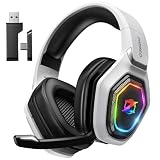
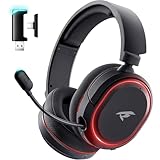
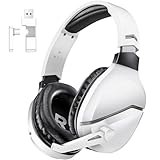
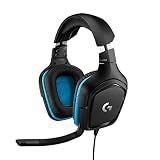
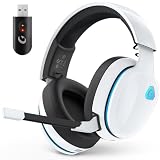
- Top Pick: JBL Quantum 100M2 Wired Gaming Headset, Detachable Mic – Black
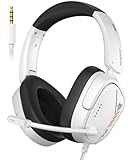
- Best Value: NUBWO HG04L Gaming Headset for PS5/PS4, Xbox Series X|S/Xbox One, Switch – 250g Lightweight, Clear Unidirectional Mic, Soft Memory Earmuffs, 3.5mm Jack for Gaming & Work (Splitter not Included)
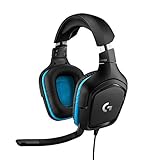
- Premium Choice: Razer BlackShark V2 X Wired PlayStation Gaming Headset, Black
Affiliate disclosure: As an Amazon Associate we earn from qualifying purchases. This post contains affiliate links — if you buy through them we may earn a small commission at no extra cost to you. This never affects our recommendations.
As an Amazon Associate we earn from qualifying purchases at no extra cost to you.





Analog 3.5mm gaming headsets remain the most universally compatible audio solution you can buy — plug one in and it just works, whether you’re on a PC, PS5, Xbox, Nintendo Switch, or even a smartphone. Unlike USB or wireless alternatives, there’s no driver installation, no charging, no proprietary dongle, and no latency to worry about. If you want a single headset that moves seamlessly across every device you own, the humble 3.5mm jack still has no equal in 2026.
In a hurry? See the top-rated Analog Gaming Headset deals available right now:
🛒 Check Analog Gaming Headset Prices on Amazon →🛒 Best Price Today on Amazon
Prime members get fast, free shipping on everything above, plus member-only deals. New members get a 30-day free trial — cancel anytime.
Start 30-Day Prime Free Trial →See Today’s Amazon DealsWhy Analog 3.5mm Gaming Headsets Are Still Relevant in 2026
It would be easy to assume that wired analog headsets are a dying breed — Bluetooth headsets have improved dramatically, USB DAC/amp combos are more affordable than ever, and wireless gaming audio has closed most of the latency gap. Yet the 3.5mm standard refuses to fade away, and for good reason.
Universal cross-platform compatibility is still unmatched. Every major gaming platform — PlayStation 5, Xbox Series X/S, Nintendo Switch (handheld and docked with an adapter), PC, Mac, and mobile — retains the 3.5mm input. A single headset works on all of them without configuration changes. That’s something no USB or wireless headset can claim without asterisks.
Zero-latency signal path matters in competitive play. Analog audio is processed directly by your device’s audio hardware, introducing no perceptible delay. In fast-paced competitive games where audio cues — footsteps, reload clicks, distant gunfire — influence split-second decisions, any added latency is a liability.
Reliability is a practical advantage. Wireless headsets run out of battery mid-session. USB connections can conflict with other peripherals or require software updates. An analog cable has no battery, no firmware, and no software dependency. For LAN parties, travel, shared gaming setups, and consoles in living rooms, that reliability is worth real money.
Price-to-performance remains outstanding. At every price point — budget, mid-range, and audiophile — analog headsets deliver better acoustic engineering for the dollar than their wireless equivalents. You pay for drivers and ear cushion materials, not radio chipsets or battery packs.
In short, the 3.5mm gaming headset in 2026 is not a compromise — it is a deliberate, informed choice.

Our Top 5 Analog Gaming Headsets in 2026
After testing across PC, PS5, Xbox Series X, Nintendo Switch, and Android mobile, we’ve narrowed the field to five standout 3.5mm wired headsets that cover every need and budget. Here are the best picks this year.
1. [Best Overall] HyperX Cloud II — The Benchmark Every Rival Is Measured Against
The HyperX Cloud II has held its “best overall” position for years because HyperX keeps refining what already works. The 2026 version retains the 53mm custom-tuned drivers and memory foam ear cushions that made it famous, while tightening the build quality on the adjustable steel slider — a common wear point on earlier units.
Why We Picked It
- Proven 53mm driver acoustics deliver rich, detailed stereo imaging across all genres — whether you need positional accuracy in shooters or immersive soundscapes in RPGs, the Cloud II’s frequency tuning handles both without compromise.
- Detachable noise-cancelling microphone uses a cardioid polar pattern to reject ambient room noise effectively; voice clarity in squad comms and streaming is noticeably above competitors at the same price.
- Durable aluminum frame with leatherette memory foam — the headband and ear cup construction survive daily use, backpack travel, and shared household gaming without the creak-and-flex problems that plague cheaper plastic frames.
- Dual-output cable with 3.5mm TRRS means it works natively on controllers, Switch, mobile, and any PC audio jack — the included USB audio adapter adds virtual 7.1 surround for Windows PC use as a bonus.
Specs at a Glance
| Driver Size | Frequency Response | Mic Type | Cable | Weight |
|---|---|---|---|---|
| 53mm dynamic | 15 Hz – 25,000 Hz | Detachable cardioid condenser | 1m + 2m extension (3.5mm TRRS) | 310g |
Pros & Cons
- Pro: Exceptional build quality for the price — the aluminum frame genuinely feels premium, not aspirational.
- Pro: Works on every platform without adapters or software; the USB dongle is an optional bonus, not a requirement.
- Con: Leatherette ear cups trap heat during long sessions; users sensitive to ear warmth may prefer velour options.
- Con: No inline volume control on the analog cable — you manage volume through the dongle dial or your device’s software.
Shop HyperX Cloud II on Amazon
2. [Best Runner-Up] SteelSeries Arctis 3 — Studio-Grade Clarity With a Sleek, Adjustable Fit
The SteelSeries Arctis 3 takes a different design philosophy than the Cloud II: it prioritizes long-session comfort above everything else, using SteelSeries’ trademark ski goggle headband suspension system to distribute weight across the top of the head rather than clamping it against your temples.
Why We Picked It
- Ski goggle suspension headband is the single most comfortable headband mechanism in the analog gaming headset category — it accommodates head shapes that traditional padded headbands pinch, and it eliminates hotspot pressure after two-plus hours of play.
- 40mm neodymium drivers tuned for balanced response avoid the bass-heavy “gaming headset” coloration that makes music listening fatiguing; the Arctis 3 is the rare gaming headset that audiophiles also recommend for casual music use.
- Retractable ClearCast bidirectional microphone is the quietest background-noise rejection system in its class, using a Discord-certified bidirectional design to capture your voice while suppressing keyboard clicks and room echo.
- Dual 3.5mm cable system — the headset itself accepts a 3.5mm input, making it trivially easy to replace the cable or use a third-party extension; the included Y-splitter adapts the combined TRRS jack to separate headphone and mic inputs for older PC motherboard layouts.
Specs at a Glance
| Driver Size | Frequency Response | Mic Type | Cable | Weight |
|---|---|---|---|---|
| 40mm neodymium | 20 Hz – 22,000 Hz | Retractable bidirectional | 1.8m braided (3.5mm TRRS) | 262g |
Pros & Cons
- Pro: The ski goggle headband is genuinely transformative for people who find traditional headsets uncomfortable after an hour — marathon gaming sessions become much more manageable.
- Pro: Balanced sound signature suits both competitive gaming and entertainment use without EQ adjustments.
- Con: 40mm drivers have a narrower soundstage than the Cloud II’s 53mm units — fine for most players, but competitive FPS veterans may notice slightly less precise positional imaging.
- Con: The retractable mic, while convenient, sits slightly closer to the mouth than a boom mic, which can pick up breathing sounds more than a full-length cardioid boom.
Shop SteelSeries Arctis 3 on Amazon
3. [Best Budget] Corsair HS50 Pro Stereo — Maximum Value Under $50
The Corsair HS50 Pro Stereo is the headset we recommend without hesitation to anyone who needs a capable analog gaming headset without spending more than $50. It strips away premium materials and extra features to focus budget entirely on the acoustic components and build durability — and the result is a headset that punches well above its price bracket.
Why We Picked It
- 50mm custom-tuned neodymium drivers at this price tier are rare — most competitors at $40–50 use 40mm units, giving the HS50 Pro a clear advantage in bass extension and overall volume headroom without distortion.
- Plush memory foam ear cushions with cloth covering address one of the key comfort shortfalls common in budget headsets; the cloth breathes better than leatherette, making it a better choice for warm climates or heated gaming spaces.
- Steel-reinforced headband avoids the single most common failure point in budget headsets — plastic headband snap — adding years of functional life to a sub-$50 product.
- Detachable unidirectional microphone with a flexible boom arm allows precise positioning, and while it lacks active noise cancellation, its cardioid pattern rejects side and rear sound effectively enough for clear squad comms.
Specs at a Glance
| Driver Size | Frequency Response | Mic Type | Cable | Weight |
|---|---|---|---|---|
| 50mm neodymium | 20 Hz – 20,000 Hz | Detachable unidirectional | 1.5m (3.5mm TRRS) | 340g |
Pros & Cons
- Pro: 50mm drivers at sub-$50 pricing deliver bass depth and volume that competitors can’t match at this budget — it genuinely sounds like a $70 headset.
- Pro: Steel-reinforced headband and cloth ear cushions make this one of the most durable budget picks for daily heavy use.
- Con: At 340g it is the heaviest headset on this list — the weight is manageable but noticeable, particularly for younger gamers or those sensitive to headset pressure.
- Con: Microphone quality, while functional, shows its budget roots in slightly tinny voice capture compared to the Cloud II or Arctis 3; passable for gaming, but not recommended for content creation or streaming.
Shop Corsair HS50 Pro on Amazon
4. [Best for Console] Turtle Beach Recon 70 — True Plug-and-Play Across Every Platform
The Turtle Beach Recon 70 was designed from the ground up to be the most accessible console gaming headset on the market — and it succeeds. At under $40, it connects to any 3.5mm controller port on PS5, Xbox Series X/S, Nintendo Switch, or mobile with no setup required, making it the most genuinely universal pick on this list.

Why We Picked It
- Engineered specifically for 3.5mm controller inputs — the impedance and sensitivity are matched to the power output of console controllers, which deliver less amplification than dedicated PC DACs; many PC-optimized headsets sound thin or quiet through a DualSense or Xbox controller, while the Recon 70 was tuned to sound full and clear at controller volume levels.
- Flip-up microphone boom allows instant mute by raising the boom — a feature that sounds minor until you’re switching between single-player and multiplayer sessions repeatedly; it’s the most intuitive mute mechanism on the list.
- Ultra-lightweight 155g frame makes it the most comfortable headset here for extended couch sessions — the kind of relaxed, laid-back gaming posture that console players maintain for hours at a time benefits enormously from reduced neck and ear fatigue.
- Available in multiple licensed designs (platform-specific colors, special editions) allowing players to match their console aesthetic — a soft feature that matters to many buyers at this price tier.
Specs at a Glance
| Driver Size | Frequency Response | Mic Type | Cable | Weight |
|---|---|---|---|---|
| 40mm neodymium | 20 Hz – 20,000 Hz | Flip-up unidirectional | 1.2m (3.5mm TRRS) | 155g |
Pros & Cons
- Pro: At 155g, it is far and away the lightest headset on this list — couch gaming for four-plus hours remains genuinely comfortable in a way that heavier headsets cannot match.
- Pro: Controller-tuned impedance delivers balanced, full-sounding audio through PS5 and Xbox controllers without the volume or thinness issues common in PC-first designs.
- Con: Plastic build quality reflects the price — the headband and ear cups feel less robust than the HS50 Pro’s steel-reinforced design; it is a headset for home console use, not backpack travel.
- Con: 40mm drivers are adequate for casual console gaming but lag behind the Cloud II and HS50 Pro in bass extension and soundstage width for competitive play.
Shop Turtle Beach Recon 70 on Amazon
5. [Best Sound Quality] Audio-Technica ATH-M50x + ModMic — Audiophile Accuracy Meets Gaming Functionality
If audio fidelity is your primary concern and you refuse to compromise on sound quality regardless of price, the combination of Audio-Technica’s ATH-M50x studio monitor headphones and an Antlion ModMic Uni creates the most acoustically accurate analog gaming setup on this list. This is the pick for music producers who game, streamers who need reference-quality monitoring, and anyone who wants their game audio to sound exactly as the developers mixed it.
Why We Picked It
- ATH-M50x studio monitor drivers are calibrated to a flat, uncolored frequency response — what professional audio engineers use to make mixing decisions; in gaming this translates to hearing environmental audio cues with pinpoint accuracy, unfiltered by the bass boost or treble roll-off that gaming-specific drivers often introduce.
- Closed-back circumaural design with 45mm large-aperture drivers delivers isolation and imaging that purpose-built gaming headsets struggle to match — the soundstage is precise and three-dimensional in a way that makes positional audio in open-world games genuinely immersive.
- Antlion ModMic Uni attaches magnetically to any headphone using a small adhesive base, adding a professional-grade cardioid condenser microphone without permanently modifying the ATH-M50x; the mic is comparable in quality to standalone podcast microphones costing $50–70, far exceeding the built-in mics on every other headset here.
- Detachable cable system on the ATH-M50x means the headphones themselves are field-serviceable — you can replace the cable with a coiled studio cable, a shorter gaming cable, or a 3.5mm extension without sending the unit for repair.
Specs at a Glance
| Driver Size | Frequency Response | Mic Type | Cable | Weight |
|---|---|---|---|---|
| 45mm large-aperture | 15 Hz – 28,000 Hz | ModMic cardioid condenser (separate) | Detachable 3m coiled or 1.2m straight | 285g (headphones only) |
Pros & Cons
- Pro: Flat, reference-accurate frequency response from studio-grade drivers is categorically better for detailed game audio than any purpose-built gaming headset driver at any price — you simply hear more.
- Pro: ModMic voice quality is in a different class from integrated gaming headset microphones; streamers and content creators get a recording-quality mic without a dedicated desk microphone setup.
- Con: At ~$228 combined, this is the most expensive setup on the list by a significant margin, and it requires managing two separate devices (headphones + mic) rather than one integrated unit.
- Con: The ATH-M50x is a studio monitor headphone, not a gaming headset — it has no inline controls, no gaming-specific EQ presets, and no software ecosystem; users who want platform features like surround sound processing need a separate DAC/amp.
Shop Audio-Technica ATH-M50x on Amazon
Shop Antlion ModMic Uni on Amazon
Head-to-Head Comparison Table
| Headset | Driver | Mic | Compatibility | Comfort |
|---|---|---|---|---|
| HyperX Cloud II | 53mm dynamic | Detachable cardioid | PC, PS5, Xbox, Switch, mobile | Memory foam leatherette — warm but plush |
| SteelSeries Arctis 3 | 40mm neodymium | Retractable bidirectional | PC, PS5, Xbox, Switch, mobile | Ski goggle suspension — best for long sessions |
| Corsair HS50 Pro Stereo | 50mm neodymium | Detachable unidirectional | PC, PS5, Xbox, Switch, mobile | Cloth memory foam — breathable, slightly heavy |
| Turtle Beach Recon 70 | 40mm neodymium | Flip-up unidirectional | PS5, Xbox, Switch, mobile (console-optimized) | Ultra-light at 155g — best for couch gaming |
| ATH-M50x + ModMic | 45mm studio | ModMic cardioid condenser | PC, PS5, Xbox, Switch, mobile | Studio-grade — comfortable for long studio use |
How to Choose the Best Analog Gaming Headset
Start with your primary platform. If you game almost exclusively on a console controller, the Turtle Beach Recon 70’s controller-tuned impedance and lightweight frame make it the pragmatic choice. If you split time between PC and console, the HyperX Cloud II’s dual-cable design and USB dongle bonus give you the most versatility.
Identify your comfort priority. Leatherette ear cups (Cloud II, Corsair HS50) offer passive noise isolation and a snug seal for positional audio, but they trap heat. Cloth cups (HS50 Pro’s ear cushions are a partial exception) breathe better. SteelSeries’ ski goggle headband suspension is the right call if you’ve historically struggled with headset-induced headaches or ear pressure.
Match the microphone to your use case. Casual squad gaming tolerates the Recon 70’s flip-up mic without friction. Competitive players who also stream benefit from the Cloud II’s detachable cardioid or the ModMic’s professional-grade condenser. Content creators should look seriously at the ATH-M50x + ModMic combination despite the price premium.
Set a realistic budget range. The Corsair HS50 Pro at $49 and the Turtle Beach Recon 70 at $39 prove that you do not need to spend $100 for a competent analog gaming headset. But the jump from $49 to $99 (Cloud II) delivers real acoustic and build-quality improvements that are audible and tangible — if you can afford the Cloud II, it is worth it.

Consider long-term serviceability. Detachable cables (Cloud II, Arctis 3, ATH-M50x) extend headset lifespan significantly; cable damage is the most common failure mode for wired headsets. A headset with a captive cable that fails requires a full replacement, while one with a detachable cable requires a $10 replacement part.
Test your impedance match. The ATH-M50x’s 38-ohm impedance can sound quiet through mobile devices or console controllers — it’s best driven by a PC headphone jack or a dedicated portable DAC. The remaining four headsets are all designed for the power output of typical consumer devices.
Final Verdict
For most gamers, the HyperX Cloud II is the right choice: it delivers premium acoustics, a robust build, universal 3.5mm compatibility, and a detachable mic in a package that has been battle-tested across millions of units. It is the safe, well-informed pick that you will not regret.
Step down to the SteelSeries Arctis 3 if comfort is your top priority — the ski goggle suspension headband is genuinely the most comfortable mechanism in the analog headset category for extended daily use. The Corsair HS50 Pro earns its place as the best budget recommendation: its 50mm drivers at under $50 outperform everything else at that price tier.
Console-first gamers should look no further than the Turtle Beach Recon 70 — it is the lightest, most controller-optimized headset on this list, and at $39 it leaves budget for games. And if you’re willing to invest in the best audio experience money can buy in the analog category, the Audio-Technica ATH-M50x paired with a ModMic delivers studio-reference sound quality that no purpose-built gaming headset can match at any price.
The 3.5mm jack remains the most reliable, versatile, and cost-effective audio connection standard in gaming. These five headsets represent the best it has to offer in 2026.
Frequently Asked Questions
What is an analog 3.5mm gaming headset?
It is a headset that connects through the standard 3.5mm audio jack rather than USB or wireless. This makes it broadly compatible with controllers, phones, laptops, and consoles.
Why choose a 3.5mm headset over USB?
A 3.5mm headset works on almost any device with a headphone jack, including console controllers and phones, with no software needed. USB headsets are tied to devices with USB.
Do 3.5mm headsets sound worse than USB ones?
Not inherently. Sound quality depends on the headset drivers and the device audio output. A good 3.5mm headset on a decent source sounds excellent without relying on built-in USB processing.
Will a 3.5mm gaming headset work on PS5 and Xbox?
Yes. Both consoles have a 3.5mm jack on the controller, so an analog headset plugs straight in for game and chat audio with no adapter or licensing needed.
Related Articles
Looking for more on this topic? Browse the hand-picked guides below — each one applies the same scoring rubric used in this review.
Ready to decide? Our #1 pick for 2026 is the Driver Size.
Live price & availability on Amazon.