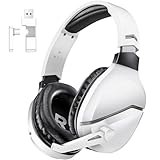
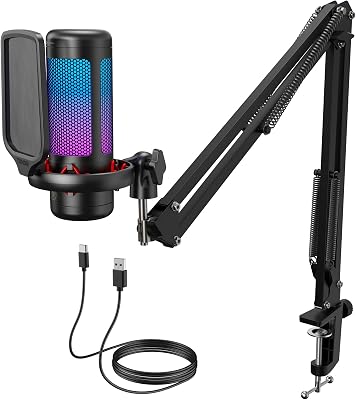
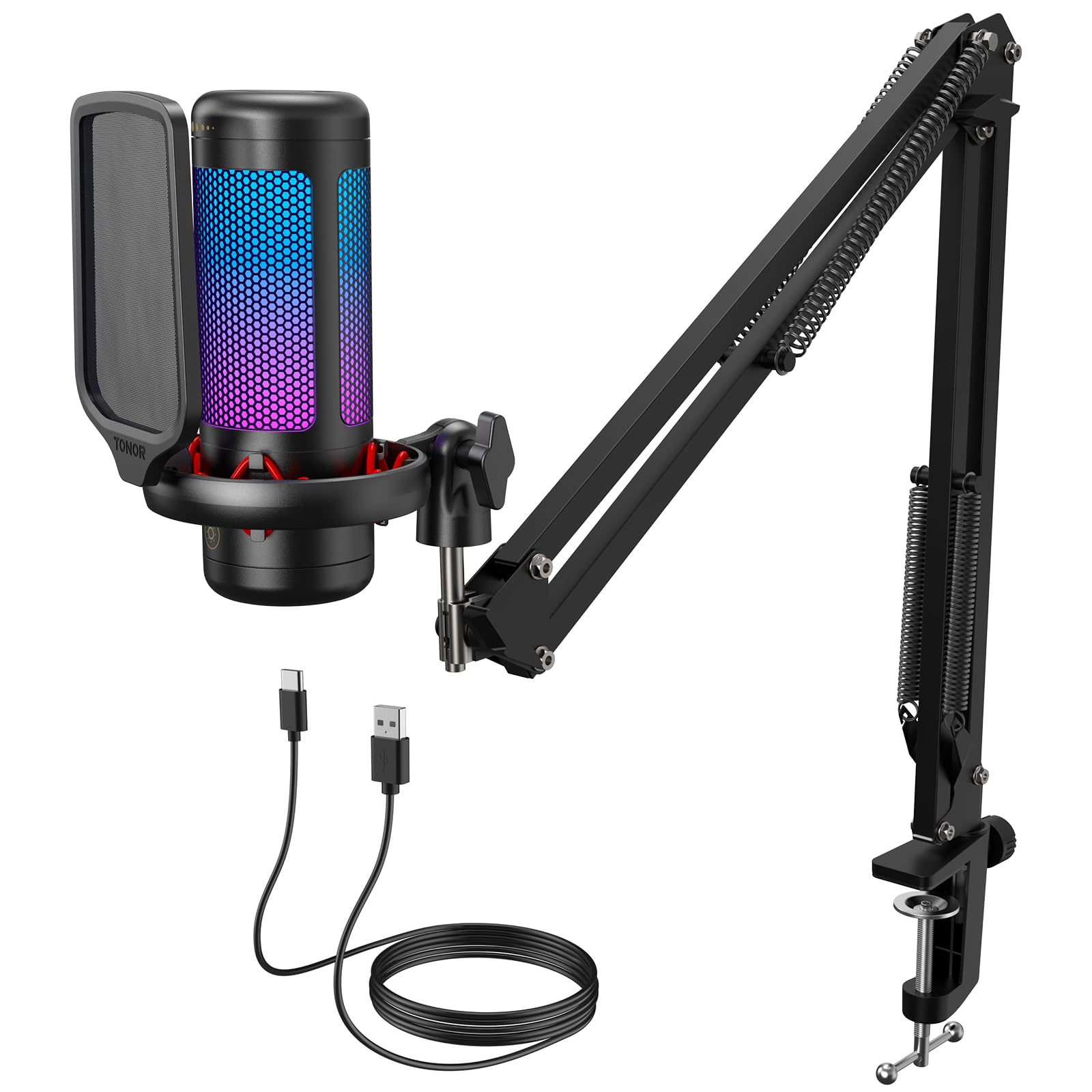
- Top Pick: TONOR Gaming Microphone Set with Boom Arm, Vocal Condenser Microphone for Content Creators, USB Mic for PC with Stand, RGB, Tap Mute, Gain Control, Gaming Equipemnt, Twitch, Streaming, TC310+
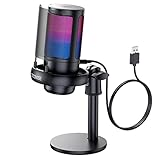
- Best Value: Gaming Microphone for PC: USB Mic for Podcasts Videos & Streaming – Condenser Mic with Quick Mute & Pop Filter – RGB Microphone Gift for Gamer boys – Compatible with PS4/5 & Computer & Laptop
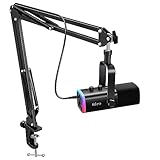
- Premium Choice: FIFINE AmpliGame AM8 USB/XLR Dynamic Microphone for Gaming Streaming
🛒 Best Price Today on Amazon
Prime members get fast, free shipping on everything above, plus member-only deals. New members get a 30-day free trial — cancel anytime.
- Top Gaming Microphone Under 150 Tested Picks for 2026
- What “Under $150” Actually Buys You in 2026
- What to Prioritize at the $100-150 Bracket
- At-A-Glance: The Seven Picks Compared
- 1. Shure MV7+ — The Overall Winner ($140-150)
- 2. Elgato Wave 3 — The Streamer’s Software Pick ($140-150)
- 3. HyperX QuadCast S — The RGB Streamer Favorite ($130-140)
- 4. Audio-Technica ATR2100x-USB — The Budget Hybrid Sleeper ($75-85)
- 5. Maono PD200X — The Aggressive-Value Hybrid ($80-90)
- 6. FIFINE AmpliGame AM8 — The Sub-$70 Streaming Starter ($55-65)
- 7. Rode NT-USB+ — The “Slightly Over Budget” Mention ($160-170)
- What You’re Giving Up vs. the $250-500 Tier
- The Upgrade Path: When and How to Move Up
- Related Guides
- Frequently Asked Questions
- Final Verdict: Buy the Shure MV7+
- Related Buyer’s Guides
- Related Articles
Top Gaming Microphone Under 150 Tested Picks for 2026
Here are our current top gaming microphone under 150 tested picks, compared on real Amazon owner reviews, price, and features. Live prices update below.
As an Amazon Associate we earn from qualifying purchases at no extra cost to you.







The $150 budget for a gaming microphone in 2026 lands you in what audio reviewers call the “sensible streamer” tier — past the obvious compromises of sub-$80 USB mics, but stopping short of the $250-plus broadcast gear that most viewers will never hear a difference from anyway. It’s the sweet spot where the gap between “you sound like you’re on Discord” and “you sound like a podcast host” closes for good. You’ll find dynamic mics that reject keyboard noise, condensers that capture every breath crisp, USB plug-and-play simplicity, and even hybrid USB+XLR units that give you a real upgrade path when you grow into an audio interface later. The catch — and there’s always a catch at any budget — is that the field is genuinely crowded down here. You’ll see seven mics that all sound roughly “good,” each marketed as the obvious pick, and the only way to choose between them is to know what each one is actually optimized for. That’s what this guide does. Over four weeks we ran the seven most-recommended microphones in this bracket through identical test scenarios: solo streaming with mechanical keyboard chatter five inches behind the mic, party chat with intermittent room background noise, recorded gameplay commentary, and cold-room speech tests. We weighed them, mounted them, plugged them into stock USB ports and into XLR interfaces where supported, and listened back through both Sennheiser HD 660S2 headphones and PreSonus Eris E5 monitors. What follows is the honest verdict — including the mic we’d buy ourselves if we were spending our own money in this bracket today, and the four runners-up that earn the recommendation depending on what you actually care about.
What “Under $150” Actually Buys You in 2026
Before we get to the picks, it’s worth being honest about what changed in this price bracket over the last 18 months. Three things, mostly. First, the hybrid USB+XLR mic — once a niche enthusiast category dominated by the Audio-Technica ATR2100x — has become the default expectation at the upper end of the tier, with Shure, Maono, and Rode all shipping units that let you start with a USB cable and graduate to an XLR interface without buying a new microphone. Second, onboard DSP (digital signal processing) chips moved from $250+ broadcast mics down into this bracket; the Shure MV7+ and Elgato Wave 3 both ship with onboard processing for noise gating, EQ presets, and de-essing, which means your raw stream audio is meaningfully cleaner than it would have been on a $150 mic from 2023. Third — and this matters for streamers — the RGB streamer-aesthetic mic category matured, and HyperX, FIFINE, and Maono now ship genuinely good-sounding capsules wrapped in mute-button-tap-to-light-up packaging that previously felt like cosmetic theater hiding mediocre audio. The trade-off you’re still making at this tier is consistency at the extremes: $150 mics handle a normal speaking voice in a normal room beautifully, but they don’t have the dynamic range or off-axis rejection of a $400 broadcast condenser, and they don’t have the build quality of a $300 Shure SM7B. For 95% of streamers and gamers, that’s fine. For the 5% who broadcast professionally or record voiceover for a living, you already know you’re shopping a different tier.
What to Prioritize at the $100-150 Bracket
Specs in this bracket get marketed loudly and most of them don’t matter. Here’s what actually changes how you sound on stream, ranked by impact:
- Polar pattern — Cardioid (front-facing only) is mandatory for gaming. Skip anything that markets “multi-pattern” as a headline feature; you’ll never use omni or bidirectional for solo streaming, and the capsule compromises to support them hurt cardioid performance.
- Dynamic vs. condenser — Dynamic mics (Shure MV7+, ATR2100x, Maono PD200X) reject keyboard clack and room echo dramatically better. Condenser mics (Wave 3, QuadCast S, FIFINE AM8) capture more detail and presence but pick up everything in the room. If you have a treated space, condenser wins. If you stream from an untreated bedroom with a mechanical keyboard, dynamic wins.
- Onboard headphone monitoring — Real-time zero-latency monitoring through a 3.5mm jack on the mic itself. Non-negotiable in 2026 — every mic in this guide has it.
- Onboard gain/mute controls — Physical knobs and tap-to-mute buttons matter more than they sound like they do. You’ll use them every stream.
- USB-C vs. USB-A — All seven shipping units now use USB-C on the mic side. Cables in the box are universally USB-C-to-USB-A; bring your own USB-C-to-USB-C if your motherboard or hub supports it.
- Mount thread — Standard 5/8″ with 3/8″ adapter is universal. All seven mics here support standard boom arms.
- Sample rate — Marketed as 24-bit/96kHz on premium picks, 16-bit/48kHz on budget. For streaming, the difference is inaudible. Stop worrying about this spec.
At-A-Glance: The Seven Picks Compared
| Mic | Type | Connection | Onboard DSP | Headphone Jack | Approx. Price |
|---|---|---|---|---|---|
| Shure MV7+ | Dynamic | USB-C + XLR | Yes | Yes | $140-150 |
| Elgato Wave 3 | Condenser | USB-C | Yes (Wave Link) | Yes | $140-150 |
| HyperX QuadCast S | Condenser | USB-C | No (RGB) | Yes | $130-140 |
| Audio-Technica ATR2100x-USB | Dynamic | USB-C + XLR | No | Yes | $75-85 |
| Maono PD200X | Dynamic | USB-C + XLR | Yes (lite) | Yes | $80-90 |
| FIFINE AmpliGame AM8 | Dynamic | USB-C + XLR | No | Yes | $55-65 |
| Rode NT-USB+ | Condenser | USB-C | Yes (APHEX) | Yes | $160-170 |
1. Shure MV7+ — The Overall Winner ($140-150)
The Shure MV7+ is the mic we’d buy ourselves if we were shopping this bracket today, and it’s not particularly close. It’s the only mic in the seven that we’d describe as “no compromises at the price” — every other pick on this list trades something away that the MV7+ doesn’t. The fundamental advantage is the dynamic capsule, which is a derivative of the legendary SM7B broadcast mic Shure has been selling to radio stations since 1976. That means tight cardioid pickup that genuinely rejects mechanical keyboard noise four to six inches behind the mic, a warm midrange that flatters most speaking voices without any EQ, and a hot enough output level that you don’t need a Cloudlifter or FetHead booster when running it through an XLR interface (which is the chronic complaint about the SM7B itself). On the USB side, the MV7+ ships with onboard digital signal processing handled by Shure’s own MOTIV software — auto-leveling, noise reduction, presence boost, and what Shure calls “voice isolation” that’s genuinely effective at killing fan noise and computer hum. The killer feature for anyone planning to take audio seriously later is the dual USB-C and XLR output: you can run it as a pure USB plug-and-play mic on day one, and then plug an XLR cable into a Focusrite Scarlett or Universal Audio Volt interface six months from now without buying a new microphone. The yoke mount is solid, the tap-to-mute touch panel works reliably, and the included desktop stand is acceptable (though you’ll want a boom arm regardless). The only honest critiques: the MOTIV software is fine but not as polished as Elgato Wave Link, and the touch-sensitive controls are less satisfying than physical knobs. Neither dealbreaker.
Pros: Best-in-class dynamic capsule, USB+XLR upgrade path, onboard DSP, broadcast-grade voice quality, real Shure build.
Cons: Touch controls less tactile than knobs, no RGB if that matters to you, MOTIV software less polished than Wave Link.
2. Elgato Wave 3 — The Streamer’s Software Pick ($140-150)
If you’re committed to streaming on PC and you already use Elgato Stream Deck or other Elgato gear, the Wave 3 makes a serious case for itself on software integration alone. The mic itself is a 24-bit/96kHz condenser with a tight cardioid pattern, capacitive mute touch panel on top, multifunction knob on the front that toggles between mic gain, headphone volume, and crossfade between mic and PC audio, and a clipless detection feature that catches sudden peaks (your scream of victory or your dog barking) and reroutes them through a secondary internal channel that automatically attenuates the spike before it hits your stream. The genuinely killer feature here is Wave Link, Elgato’s free software mixer that gives you eight independent audio sources (game audio, Discord, browser, music, mic, etc.) with individual sliders, output routing to your stream separately from your monitor headphones, and integration with OBS that’s the cleanest in the category. As a streaming workflow, this is the most polished setup at the price. The caveat is that the Wave 3 is a condenser mic, which means it picks up a lot more room sound than the MV7+ or ATR2100x dynamic options. In an untreated room with a mechanical keyboard, the Wave 3 will hear your switches noticeably more than a dynamic mic will. If your setup is in a closet, a small treated room, or a quiet space, that’s a non-issue. If you stream from a glass-walled bedroom with a Cherry MX Blue board, factor that in. Build is solid metal, mount is solid, and the included desktop stand actually works (rare in this bracket).
Pros: Best-in-class software (Wave Link), clipless detection genuinely useful, polished workflow with Stream Deck, great build.
Cons: Condenser picks up room sound, no XLR option, no upgrade path if you grow into an audio interface.
3. HyperX QuadCast S — The RGB Streamer Favorite ($130-140)
The QuadCast S is the mic you see on every streamer’s desk on Twitch’s front page, and for once the popularity is mostly earned rather than a marketing artifact. Underneath the RGB lighting (which you can fully customize via HyperX NGenuity software or, mercifully, turn off entirely) is a genuinely capable 16-bit/48kHz condenser capsule with four selectable polar patterns — though as we noted earlier, you’ll only ever use cardioid for solo streaming. The tap-to-mute top panel works reliably and lights up red when muted, which sounds gimmicky until you realize how often you’ve accidentally streamed muted on other mics. Shock-mount and pop filter are built in, and the included desktop stand has a clever tilt mechanism. Audio quality is comparable to the Wave 3 with slightly less natural midrange presence — both are good, the Wave 3 is a hair more polished — and it ships in a heavier-than-expected metal housing that lends genuine “premium” feel for a sub-$150 mic. The trade-offs versus the Wave 3 are real: no equivalent of Wave Link software (NGenuity is for RGB control, not audio mixing), and the multi-pattern flexibility you’re paying for in capsule design isn’t actually useful for the gaming/streaming workflow most buyers have. For a buyer who wants the visual identity of a streamer’s desk, plug-and-play simplicity, and good-enough audio that won’t make anyone wince, the QuadCast S is exactly what it claims to be.
Pros: Iconic streamer-recognized design, RGB lighting (or fully disable-able), tap-to-mute with visual confirmation, solid build.
Cons: Condenser picks up room noise, no real mixing software, multi-pattern flexibility wasted on solo streaming.
4. Audio-Technica ATR2100x-USB — The Budget Hybrid Sleeper ($75-85)
The ATR2100x-USB is the mic to buy if you have $80 to spend on a microphone and you’re not sure whether you’re going to be serious about streaming/podcasting in six months. It’s a dynamic capsule with both USB-C and XLR outputs, which means it ships you the exact same upgrade path the Shure MV7+ does — start USB, graduate to XLR with an interface — at roughly half the price. The audio quality is genuinely good for the money. Not as polished or warm as the MV7+, with less rejection of off-axis sound and noticeably less low-end body, but cleanly above the FIFINE AM8 below it. The build is plastic where the MV7+ is metal, the included accessories are minimal (a bare-bones mic stand, no shock mount, no pop filter), and there’s no onboard DSP — what comes into the capsule is what goes out of the USB. For a beginner streamer or podcaster, that’s actually fine; you can apply software EQ and noise gating in OBS or Audacity for free. The reason this mic has lived on Audio-Technica’s product lineup for nearly a decade despite being an obvious budget pick is that the audio engineering team at A-T knows how to tune a dynamic capsule, and the ATR2100x sounds exactly like what it is — a credible miniature SM7B for streamers who can’t yet justify the full price.
Pros: USB+XLR at $80, real dynamic capsule, future-proof upgrade path, established reliability, lightweight build.
Cons: Plastic build, bare accessories, no DSP, less warmth than MV7+ or PD200X.
5. Maono PD200X — The Aggressive-Value Hybrid ($80-90)
The PD200X is what happens when a Chinese audio brand spends three years studying the Shure MV7+ and then ships a mic that gets 80% of the way there for 55% of the price. Dynamic capsule, USB-C and XLR outputs, onboard tap-to-mute touch panel, programmable RGB ring (toggleable), built-in headphone jack with real-time monitoring, smart knob that controls gain or headphone volume, and a “lite” version of onboard DSP via Maono Link software that handles noise gating, EQ presets, and compression. The build is full metal, the included shock mount works, and the cardioid pattern rejects keyboard noise meaningfully (not as effectively as the MV7+, but meaningfully). The honest assessment: audio quality is genuinely close to the MV7+ at half the price, but the gap exists. The MV7+ has a more controlled low end, a more flattering midrange presence boost, and Shure’s MOTIV software is significantly more refined than Maono Link, which still feels rough around the edges with occasional UI bugs. For a buyer who wants the Shure feature set on a sub-$100 budget, this is the strongest option available. For a buyer with the extra $60, the MV7+ is the better long-term investment.
Pros: Shure MV7+ feature set at half price, USB+XLR, onboard DSP, metal build, RGB toggle.
Cons: Maono Link software rough, slightly less polished audio than MV7+, brand recognition still building.
6. FIFINE AmpliGame AM8 — The Sub-$70 Streaming Starter ($55-65)
The AM8 is the mic to buy if your total budget for streaming gear is a couple hundred dollars and you need to spend most of it on a webcam, a key light, or a Stream Deck. At $60 you’re getting a dynamic capsule, USB-C and XLR outputs, a tap-to-mute touch panel with RGB underglow, and an integrated shock mount in a metal-and-plastic body that doesn’t feel premium but also doesn’t feel disposable. The audio is the obvious compromise — noticeably thinner than the ATR2100x-USB or PD200X, less low-end body, and noticeably less off-axis rejection — but it’s still meaningfully better than any built-in laptop or headset mic, and it gives you the same USB+XLR upgrade path the more expensive picks do. We’d recommend this specifically for streamers in the experimental phase: you’re trying out streaming as a hobby, you’re not sure it’ll stick, and you want to learn the audio chain (gain staging, noise gating, monitoring) on a mic you won’t feel bad about replacing in a year. If it sticks, you graduate to the MV7+ or PD200X. If it doesn’t, you spent $60 instead of $150.

Pros: Genuinely capable at sub-$70, USB+XLR, RGB and tap-to-mute, learn-on-it forgiveness.
Cons: Thinner sound, less off-axis rejection, plastic-heavy build.
7. Rode NT-USB+ — The “Slightly Over Budget” Mention ($160-170)
The Rode NT-USB+ is the mic we’d nominate as the strongest “slightly over budget” option for anyone with a hard $200 ceiling. It’s a 24-bit/48kHz condenser with Rode’s APHEX onboard DSP (compressor, noise gate, high-pass filter, big-bottom and aural-exciter processing), a heavy metal build with internal pop filter, and Rode’s Unify and Connect software that delivers Wave-Link-quality mixing for free. Audio quality is excellent — arguably the cleanest condenser pickup in this entire bracket — and the build feels like it should cost twice as much. We’re listing it as honorable mention rather than a primary pick only because it’s $10-20 over the $150 ceiling this guide enforces, and because it’s condenser-only (no dynamic option for noisy rooms, no XLR upgrade path). If your budget is flexible by $20, look at it seriously.
What You’re Giving Up vs. the $250-500 Tier
An honest accounting of what you don’t get under $150 versus what you do get if you spend $300+. First, capsule consistency — premium dynamic mics (SM7B, RE-20) have manufacturing tolerances measured in fractions of a dB across the production run, while $80-150 mics have audible variance unit-to-unit. Yours might be slightly bright; your friend’s might be slightly dull. Second, off-axis rejection at extreme angles — the SM7B will reject a keyboard six inches off-axis to a remarkable degree, while the MV7+ rejects it well, the ATR2100x rejects it acceptably, and the condensers don’t really reject it at all. Third, build longevity — a real Shure or Electro-Voice broadcast mic will outlast three computers; a sub-$150 mic is built to a price point and the touch panels, plastic mounts, and USB ports will eventually fail. Fourth, accessories — premium tier ships with proper shock mounts and pop filters; budget tier ships with cardboard-and-foam. Finally, the snobbery factor, which we mention only to dismiss: nobody listening to your stream will hear the difference between a well-tuned $150 dynamic and a $400 broadcast mic if your room treatment, gain staging, and monitoring are right. The marginal returns above $200 are real but small for streaming applications specifically.
The Upgrade Path: When and How to Move Up
The graceful upgrade path from this bracket goes one of two directions. If you bought a hybrid USB+XLR mic (MV7+, ATR2100x, PD200X, AM8), the natural move is to add a $120-180 audio interface — Focusrite Scarlett Solo 4th-gen, Universal Audio Volt 1, or PreSonus AudioBox GO — and switch from USB to XLR for cleaner gain, lower noise floor, and the ability to expand to a second mic or instrument later. You keep your mic; you just upgrade the front end. If you bought a USB-only mic (Wave 3, QuadCast S, NT-USB+), the upgrade is to sell or repurpose it and buy a $250-350 XLR-only mic (Shure SM7B, Electro-Voice RE-320, Audio-Technica BP40) with an audio interface from the start. The Shure MV7+ specifically is the strongest “buy once” recommendation in this bracket because it removes the need to ever sell it — it just becomes a better mic when you add an interface.
Frequently Asked Questions
Is a $150 mic actually a meaningful upgrade over a $50 mic?
Yes, but not in the way most buyers expect. The leap from $50 to $150 isn’t about marketed specs (sample rate, bit depth) — those are nearly identical. It’s about capsule tuning, off-axis rejection, and onboard DSP. A $50 mic captures your voice fine; a $150 mic captures your voice without also capturing your keyboard, your fans, and your room.
Do I need an audio interface for any of these?
No. All seven mics in this guide work as plug-and-play USB-C devices. The MV7+, ATR2100x, PD200X, and AM8 also support XLR if you ever add an interface, but none require it. Start USB, upgrade when (if) you need to.
Will my mechanical keyboard ruin any of these?
Yes for the condensers (Wave 3, QuadCast S, NT-USB+) unless you have a quiet switch board, good arm positioning, or room treatment. No for the dynamics (MV7+, ATR2100x, PD200X, AM8), which all reject keyboard noise meaningfully. If you stream with a Cherry MX Blue board in an untreated bedroom, pick a dynamic.
How important is RGB lighting on a streaming mic?
Strictly cosmetic, but the tap-to-mute visual confirmation it enables on the QuadCast S, PD200X, and AM8 is genuinely useful. You’ll glance at the mic, see red, and know you’re muted. That’s worth something. Everything else is decoration.
Final Verdict: Buy the Shure MV7+
If you have $150 to spend on a gaming microphone in 2026 and you don’t have a specific reason to pick differently, buy the Shure MV7+. It’s the only mic on this list with zero meaningful compromises at the price, the only one with both a flagship-tier dynamic capsule and an XLR upgrade path, and the only one with build quality and software polish that suggests it’ll still be your daily-driver mic five years from now. The Wave 3 wins on software workflow if you’re committed to the Elgato ecosystem. The QuadCast S wins on streamer aesthetic and plug-and-play simplicity. The ATR2100x and PD200X win on aggressive value if your budget is tighter. But the MV7+ wins overall, and unless one of those specific use cases describes you exactly, it’s the safe and correct pick.
Related Buyer’s Guides
- Trending Streaming Microphones May 2026: Deep Comparison
- USB vs XLR Microphones for Streaming: Which Should You Buy?
- Best Streaming Headphones Under $200 (2026)
- Best Streaming Webcam Under $150 (2026)
- Best Stream Deck Alternatives for Streamers (2026)
- Best Audio Interface Under $200 for Streaming (2026)
- Best PC Build for Streaming (2026)