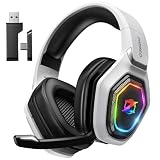
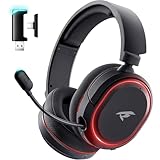
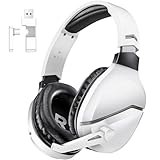
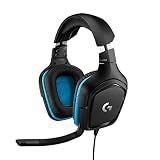
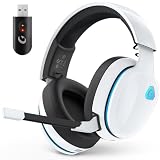
- Top Pick: ASUS ROG Kithara Gaming/Audiophile Open-Back Wired Headphones with Mic – ROG-Tuned HIFIMAN Planar Magnetic Drivers, Adjustable Headband, Extra Ear Pads, Compatible with DACs, Amps, PC, Console, Mobile
- Best Value: SteelSeries Arctis Nova Elite – Hi-Res Wireless Gaming Headset — 96kHz/24bit — Carbon Fiber Speakers — ANC — AI Noise Rejection — App — 2.4GHz + BT — Multi-Source Mix — OmniPlay PC+PlayStation+Xbox
- Premium Choice: Razer BlackShark V2 X Gaming Headset: 7.1 Surround Sound – 50mm Drivers – Memory Foam Cushion – For PC, PS4, PS5, Switch – 3.5mm Audio Jack – Black
Affiliate disclosure: As an Amazon Associate we earn from qualifying purchases. This post contains affiliate links — if you buy through them we may earn a small commission at no extra cost to you. This never affects our recommendations.
As an Amazon Associate we earn from qualifying purchases at no extra cost to you.




Most gaming headsets are built backwards. Engineers start with the RGB lighting rig, bolt on a big plastic cup, and stuff whatever 40mm driver fits the margin — then they hand it off to a software team to fake spatial audio with DSP tricks. The result sounds muddy, congested, and fatiguing after an hour. Audiophile gaming headsets flip that priority entirely. The acoustic driver and tuning come first; the gaming integration — boom mic, inline controls, platform compatibility — comes second. If you’ve ever heard a pair of proper open-back headphones and wondered why your gaming headset sounds like you’re listening through a cardboard box, this guide is for you. Below are the five best audiophile gaming headsets in 2026, chosen for driver quality, frequency response accuracy, soundstage fidelity, and real-world gaming performance — not for how many LED zones they ship with.
In a hurry? See the top-rated Audiophile Gaming Headset deals available right now:
🛒 Check Audiophile Gaming Headset Prices on Amazon →🛒 Best Price Today on Amazon
Prime members get fast, free shipping on everything above, plus member-only deals. New members get a 30-day free trial — cancel anytime.
Start 30-Day Prime Free Trial →See Today’s Amazon DealsQuick Comparison Table
| Headset | Driver Size | Impedance | Open/Closed | Mic | Price (Est.) |
|---|---|---|---|---|---|
| Sennheiser PC38X | 40mm | 28Ω | Open-back | Boom (noise-cancelling) | ~$169 |
| Beyerdynamic MMX 300 | 45mm | 32Ω | Closed-back | Boom (high-sensitivity) | ~$279 |
| Drop + Sennheiser PC37X | 40mm | 28Ω | Open-back | Boom (broadcast-grade) | ~$119 |
| Audio-Technica ATH-ADG1X | 53mm | 46Ω | Open-back | Fixed boom | ~$299 |
| Beyerdynamic Custom Game | 45mm | 16Ω | Closed (adjustable) | Boom (high-sensitivity) | ~$199 |
Our Top 5 Audiophile Gaming Headset Picks (2026)
1. [Best Overall] Sennheiser PC38X — Best Open-Back Audiophile Gaming Headset
The Sennheiser PC38X is the definitive answer to “I want audiophile sound without giving up a gaming mic.” Built in collaboration with Drop, it uses Sennheiser’s proven 40mm transducer tuned to a natural, accurate frequency curve — you get the same open, expansive presentation you’d expect from the HD 559, but with a noise-cancelling flip-to-mute boom mic integrated into the left cup. At 28Ω impedance it drives cleanly off any PC headphone jack, though pairing it with an entry-level DAC/AMP like the FiiO K3 or Schiit Fulla pushes the soundstage noticeably wider and adds low-end texture that the onboard audio card leaves on the table. Footstep separation in competitive FPS titles is excellent — the open-back design lets the stereo image breathe in a way no closed-back can replicate at this price. If you play a mix of competitive shooters and single-player games and want one headset that excels at both, the PC38X is the one to beat.
2. [Runner-Up] Beyerdynamic MMX 300 — Best Closed-Back Audiophile Gaming
The Beyerdynamic MMX 300 is what happens when a headphone manufacturer known for studio-grade transducers decides to build a proper gaming headset without apology. It uses a 45mm dynamic driver based on Beyerdynamic’s DT-series lineage, tuned for a slightly V-shaped profile that keeps bass impactful and treble articulate without tipping into harshness. The closed-back design makes it the better choice for shared spaces or anyone who streams and needs isolation to prevent mic bleed. At 32Ω it’s still plug-and-play friendly, but it scales meaningfully with a desktop DAC/AMP — the JDS Labs Atom DAC+ or iFi Zen DAC V2 are natural pairings that give the driver room to resolve micro-detail in dense game soundscapes. The built-in high-sensitivity boom mic is among the cleanest in any gaming headset under $300, producing voice recordings that hold up in professional Discord calls or streaming environments. Beyerdynamic’s build quality — metal headband, replaceable ear cushions, genuine velour pads — means this headset will outlast several product generations of its plastic-chassis competitors.
3. [Best Budget Audiophile] Drop + Sennheiser PC37X — Best Value Audiophile Gaming
The Drop + Sennheiser PC37X is the PC38X’s predecessor and still one of the best value propositions in audiophile gaming. It shares the same 40mm open-back driver platform and nearly identical impedance spec, meaning the fundamental acoustic experience — wide soundstage, natural tonality, accurate imaging — is essentially unchanged from the pricier model. The differences are cosmetic and ergonomic: the PC37X uses a slightly older headband design and the boom mic, while broadcast-quality for its class, lacks the active noise-cancellation of the PC38X’s capsule. At around $119 it routinely goes on sale below $100, making it one of the few headsets where the audiophile gaming proposition is accessible without stretching the budget to the point of DAC/AMP anxiety. Pair it with the AudioQuest DragonFly Red (bus-powered, no desk space required) for a portable, high-resolution stack that still clocks in under $250 total. This is the pick for the gamer who is dipping into audiophile territory for the first time and wants to understand what the fuss is about without financial commitment.

4. [Best Imaging] Audio-Technica ATH-ADG1X — Best Soundstage Gaming Headset
The Audio-Technica ATH-ADG1X is the most overtly audiophile product on this list — a gaming headset built on the chassis of Audio-Technica’s flagship open-back headphone architecture, fitted with a 3D-wing support system and a fixed 6.35mm boom mic that routes through a detachable cable. The 53mm driver is the largest on this list and produces a soundstage that rivals dedicated hi-fi open-backs; imaging precision in games like Helldivers 2 or PUBG is exceptional, with directional cues rendered with spatial accuracy that gaming-focused DSP algorithms try — and fail — to fake. At 46Ω impedance it sits in a middle zone: acceptable off PC audio, but genuinely transformative through a dedicated DAC/AMP. The Schiit Modi/Magni stack or a Topping DX3 Pro+ are ideal pairings that unlock the driver’s full dynamic range. The fixed mic is a compromise — it cannot be removed or replaced independently — but the capsule quality is good enough for streaming and Discord. This headset is for the dedicated single-player gamer or simulation player who wants the closest thing to a audiophile listening session while staying in a gaming-native form factor.
5. [Best Closed-Back] Beyerdynamic Custom Game — Best Modular Audiophile Gaming
The Beyerdynamic Custom Game is the most configurable headset on this list, built around Beyerdynamic’s proprietary slider system that physically adjusts the bass response between four stages — from tight and analytical to deep and resonant — by opening or closing ports in the ear cup housing. The 45mm driver is the same family used across Beyerdynamic’s Custom Studio line, meaning it has been validated in professional recording environments, not just spec sheets. At 16Ω it is the easiest to drive on this list — any USB audio interface, gaming controller headphone jack, or portable DAC will bring it to full volume without strain — while still benefitting from a cleaner source like the iFi hip-dac 3 for portable use or an SMSL SH-9 for desktop setups. The closed-back design with adjustable isolation means it handles both library-quiet gaming and open-office environments equally well. The detachable boom mic is compatible across Beyerdynamic’s Custom line, making future upgrades or replacements straightforward. For gamers who want precise control over their bass shelf and a closed-back build that does not compromise on driver pedigree, the Custom Game is the most versatile option on the list.
What Makes a Good Audiophile Gaming Headset?
The phrase “audiophile gaming headset” sounds like a marketing contradiction, but it describes a real and meaningful product category. Understanding what separates these headsets from mainstream gaming audio gear helps you evaluate whether the premium is worth it for your use case.
Open-back vs closed-back for gaming is the first and most consequential choice. Open-back headsets — the PC38X, PC37X, and ATH-ADG1X on this list — use perforated ear cup backs that allow air to flow freely around the driver. This eliminates the resonance chamber effect of a sealed cup, producing a wider, more natural soundstage and better stereo imaging precision. In competitive FPS games, this translates to cleaner footstep localization and more accurate enemy positioning. The tradeoff is sound leakage in both directions: people near you will hear your game, and ambient noise enters the cup freely. Closed-back headsets like the MMX 300 and Custom Game sacrifice some soundstage width for isolation, making them the right call for shared offices, streaming setups, or environments where background noise would otherwise bleed into the microphone.
Driver quality and size matter more than the specification implies. A 50mm driver in a cheaply manufactured headset will outperform a 40mm driver in a precision-tuned enclosure — until it doesn’t. What matters is the driver material (biocellulose and neodymium magnets are common in audiophile-grade units), excursion control at high SPL, and how the driver is matched to the ear cup’s acoustic volume. The headsets on this list use drivers derived from established hi-fi platforms, not gaming-specific OEM units, which is the actual source of their acoustic advantage.

Impedance determines how much amplification the driver needs to reach optimal performance. Headsets rated at 16–32Ω are designed to run off consumer-grade sources: PC headphone jacks, console controllers, USB audio adapters. Headsets in the 80–250Ω range — more common in pure hi-fi headphones than gaming headsets — require a dedicated headphone amplifier to reach proper listening volume and dynamic range. Every headset on this list falls in the 16–46Ω range, meaning they are genuinely PC-friendly without external amplification, though DAC/AMP pairing still improves them materially by reducing noise floor and improving channel separation.
Frequency response for gaming differs from music listening in subtle but important ways. A flat, reference-accurate headphone is not always the optimal gaming tool: you want sub-bass present enough to feel explosions and environmental atmosphere, but mid-range clarity — particularly the 1–4kHz band where human voice and footstep frequencies concentrate — must not be masked by bloated low end. The headsets here are tuned closer to the Harman target curve than to the scooped V-shape common in mass-market gaming gear, which means voices and environmental detail remain intelligible even in dense, chaotic game soundscapes.
Dedicated gaming mic vs clip-on boom is a practical question more than an audio quality one. All five headsets include integrated boom microphones, which is the primary reason to choose them over a pure hi-fi headphone like the Sennheiser HD 600 with an aftermarket ModMic or Blue Yeti setup. The integrated solution trades some microphone flexibility for ergonomic convenience and cable simplicity.
How to Choose the Best Audiophile Gaming Headset
Open-Back vs Closed-Back: Which Is Better for Gaming Audio?
For most competitive gaming scenarios, open-back wins on pure audio performance. The wider soundstage and more natural stereo imaging give you genuine advantages in games where positional audio matters — battle royale titles, tactical shooters, survival horror. The compromise is the social and acoustic environment: open-backs are unsuitable for shared spaces, unsuitable for streaming without a directional microphone arrangement, and unsuitable if you need to hold conversations while gaming without removing the headset. If any of those conditions apply to your setup, a high-quality closed-back like the MMX 300 closes the gap enough that the practical benefits outweigh the acoustic cost.
Impedance and DAC/AMP: Do You Need External Amplification?
Every headset on this list will work without a DAC/AMP. None of them require one. But the honest answer is that pairing any of them with an entry-level stack — the FiiO K3 at $79, the Schiit Fulla at $99, or the JDS Labs Atom DAC/Amp combo at around $179 — produces a measurable and audible improvement in noise floor, channel separation, and dynamic headroom. If your motherboard has a dedicated audio chip (Realtek ALC1220 or better) you are in better shape than average; if you are running a budget board with a shared audio trace, the noise improvement from a USB DAC alone is immediately obvious. Think of the DAC/AMP as the full unlock for a headset you already purchased — the headset sounds good without it, better with it.

Soundstage vs Imaging: The Competitive FPS Advantage
These terms describe two different aspects of positional audio. Soundstage refers to the perceived width and depth of the stereo field — how far apart left and right channels seem to sit. Imaging refers to precision: how accurately you can identify the exact position of a sound within that field. A wide soundstage with poor imaging (common in cheap open-backs) tells you something is to your left but not whether it is at 9 o’clock or 10 o’clock. High imaging precision with a narrow stage (some closed-backs) localizes sounds exactly but compresses the field in a way that makes distance estimation harder. The ATH-ADG1X excels at both; the PC38X prioritizes soundstage; the MMX 300 trades some width for exceptional imaging precision within its closed-back constraints.
Gaming Headset vs Hi-Fi Headphone + ModMic: Which Wins?
A $200 hi-fi headphone like the Sennheiser HD 560S or Hifiman Sundara paired with a $60 Antlion ModMic will typically outperform any all-in-one gaming headset at the same combined price point on pure audio quality. The all-in-one gaming headset wins on convenience, cable management, and the ergonomic integration of the mic with the headband. If you never want to think about mic positioning, cable routing, or separate device pairing, the integrated headsets on this list are the better practical choice. If you are willing to manage a slightly more complex physical setup for maximum audio performance, the modular approach is technically superior — but the gap narrows considerably at the price points represented here.
Final Verdict
For most audiophile gamers in 2026, the Sennheiser PC38X remains the clearest recommendation: it delivers genuine open-back hi-fi acoustics, a competent noise-cancelling boom mic, and an impedance rating that makes it accessible without external amplification while scaling well when you are ready to invest in a DAC/AMP stack. If you need isolation or game in a shared environment, step up to the Beyerdynamic MMX 300 for closed-back build quality and driver pedigree that justifies every cent of its premium. Either way, you are done compromising sound quality for a brand logo and a light show.
Frequently Asked Questions
What makes a gaming headset audiophile-grade?
Audiophile gaming headsets use higher-quality drivers, often open-back designs, tuned for accurate, detailed, natural sound rather than exaggerated bass. They prioritize fidelity for gaming and music.
Open-back or closed-back for an audiophile gaming headset?
Open-back headsets offer a wider, more natural soundstage ideal for immersive gaming and music, but they leak sound and do not isolate. Closed-back blocks noise better. Choose by your environment.
Do I need a DAC or amp for an audiophile gaming headset?
Some higher-impedance audiophile headsets benefit from a dedicated DAC or amp to reach their full potential. Many gaming-focused models are easy to drive directly from a PC or console.
Is an audiophile headset good for competitive gaming?
Yes. The accurate sound and wide soundstage help you pinpoint footsteps and positional cues precisely, which is an advantage in competitive games as well as for music.
Related Articles
Looking for more on this topic? Browse the hand-picked guides below — each one applies the same scoring rubric used in this review.
Ready to decide? Our #1 pick for 2026 is the Headset.
Live price & availability on Amazon.