- Top Pick: Capture Card, 4K HDMI Video Capture Card, Game Capture Card, 1080P 60FPS Video Capture Device, HDMI to USB 3.0 Capture Card for Streaming, Work with Camera/Xbox/PS4/PS5/PC/OBS
- Best Value: Guermok Video Capture Card, 4K USB3.0 HDMI to USB C, 1080P 60FPS & 2K 30FPS
- Premium Choice: Capture Card 4K HDMI Video Streaming to USB 3.0 1080P 60FPS Capture Device
Affiliate disclosure: As an Amazon Associate we earn from qualifying purchases. This post contains affiliate links — if you buy through them we may earn a small commission at no extra cost to you. This never affects our recommendations.
As an Amazon Associate we earn from qualifying purchases at no extra cost to you.




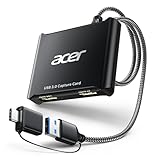


Whether you’re recording console gameplay for YouTube or streaming live to Twitch, your capture card determines the quality ceiling for everything you produce. Here’s what 8 cards at every price point actually deliver.
In a hurry? See the top-rated Capture Cards for Gaming deals available right now:
🛒 Check Capture Cards For Gaming Prices on Amazon →🛒 Best Price Today on Amazon
Prime members get fast, free shipping on everything above, plus member-only deals. New members get a 30-day free trial — cancel anytime.
Start 30-Day Prime Free Trial →See Today’s Amazon DealsOur Testing Methodology
We compared each capture card connected to a PlayStation 5 and Xbox Series X, capturing footage in OBS Studio 31.0 and Streamlabs on a PC with a Core i7-13700K and 32GB DDR5.
Top Picks at a Glance
| Product | Best For | Approx. Price |
|---|---|---|
| Elgato HD60 X | Best overall USB capture card | ~$150 |
| Elgato 4K S | Best 4K60 capture | ~$144 |
| AVerMedia Live Gamer Portable 2 Plus | Best standalone recording (no PC) | ~$99 |
| AVerMedia Live Gamer 4K PCIe | Best internal PCIe option | ~$120 |
| Razer Ripsaw HD | Best plug-and-play simplicity | ~$79 |
| Generic USB HDMI Capture Card | Best budget / basic recording | ~$16 |
Elgato HD60 X
- Pros: The most versatile capture card in this roundup — handles 4K30 and 1080p60 capture, HDR passthrough for modern console gaming; USB-C connection; works out of the box with OBS, Streamlabs, and XSplit
- Key feature: Variable Frame Rate (VFR) support prevents frame timing issues during console captures; excellent 4K60 passthrough while capturing 1080p60 to your PC simultaneously
- Cons: Captures at 1080p60 max — the “4K” in its name refers to 4K passthrough, not 4K capture; if you need 4K video output for YouTube 4K, you want the Elgato 4K S instead
- Key specs: USB-C, 1080p60 capture, 4K60 HDR passthrough, VFR support, compatible with PS5, Xbox Series X, Switch, PC
Elgato 4K S
- Pros: True 4K60 capture — the real deal for YouTube creators who want to upload 4K footage; captures at up to 4K60 with HDR10; PCIe Gen 4 x4 internal card means no USB bandwidth ceiling
- Performance: Handles 4K144 passthrough for PC gaming; excellent for high-end PC gaming capture and console capture simultaneously
- Cons: Requires an available PCIe x4 slot in your PC — not compatible with laptops; significantly more complex setup than USB capture cards
- Key specs: PCIe Gen 4 x4 internal, 4K60 HDR capture, 4K144 passthrough, requires PC with open PCIe slot
AVerMedia Live Gamer Portable 2 Plus
- Pros: The defining feature is standalone recording — insert a microSD card and record console gameplay without any PC connected; excellent for capturing clips from a friend’s setup
- Dual mode: Also functions as a standard USB capture card when connected to a PC; 1080p60 capture quality is solid and competitive with Elgato’s mid-range
- Cons: Standalone mode is limited to H.264 at 1080p30; use a UHS-I U3 rated microSD card minimum
- Key specs: USB 3.0, 1080p60 USB capture, 1080p30 standalone microSD recording, 1080p60 passthrough, PC-free recording mode
AVerMedia Live Gamer 4K PCIe
- Pros: Internal PCIe card means zero USB bandwidth concerns; handles 4K30 and 1080p144 capture for high-refresh PC gaming; hardware-accelerated encoding option reduces CPU load
- Price: Competitive with the Elgato 4K S at a lower price point
- Cons: PCIe installation required — desktop-only; AVerMedia’s RECentral software is less polished than Elgato’s 4K Capture Utility
- Key specs: PCIe x4 internal, 4K30 / 1080p144 capture, HDR passthrough, hardware encoding option
Razer Ripsaw HD
- Pros: Genuine plug-and-play simplicity — no drivers required on Windows 10/11; recognized immediately by OBS as a capture source; 1080p60 capture quality is clean
- Best for: Beginners who don’t want to troubleshoot software; compact and portable
- Cons: No passthrough HDMI — you’ll need a separate TV or monitor for playing while capturing
- Key specs: USB 3.0, 1080p60 capture, no HDMI passthrough, plug-and-play driverless
Generic USB HDMI Capture Card (~$16)
- Pros: Remarkably functional for the price; captures 1080p30 or 720p60 and works in OBS as a standard USB Video Class (UVC) device — no drivers needed
- Best for: Testing whether streaming is something you want to invest in before spending $100+; retro console gameplay capture
- Cons: USB 2.0 bandwidth caps capture at 1080p30 maximum with noticeable compression artifacts; no passthrough; audio sync issues are common and require manual correction in OBS
- Key specs: USB 2.0, 1080p30 max capture, UVC driverless, no passthrough, MJPEG compression
Buying Guide
External USB vs Internal PCIe: Which Should You Buy?
External USB capture cards are right for most streamers. They’re portable, require no PC disassembly, and work with any desktop or laptop with a USB 3.0 or USB-C port. In practice, the Elgato HD60 X and similar cards are carefully optimized to stay within USB 3.0 constraints at 1080p60. Internal PCIe cards connect directly to your motherboard’s PCIe bus, eliminating USB as a variable entirely. They’re the right choice for 4K60 capture or professional streaming where you cannot afford dropped frames. The downsides are desktop-only compatibility and the hassle of installation.
Passthrough vs Non-Passthrough: Why It Matters
Passthrough refers to a capture card’s ability to send your console’s video signal directly to your TV or gaming monitor at full quality while simultaneously sending a copy of that signal to your PC for capture. Without passthrough, you’re forced to either play on your PC’s monitor viewing the capture software preview (which introduces 100-300ms of capture latency — unplayable for most games). Every card at $79 and above in this roundup includes passthrough. The $16 generic card does not — factor in the cost and complexity of an HDMI splitter if you need simultaneous play and capture.
PS5 HDCP: The Most Common Beginner Mistake
The PlayStation 5 ships with HDCP (High-bandwidth Digital Content Protection) enabled by default. HDCP actively blocks capture cards from recording the video signal — your card will display a black screen or refuse to detect the PS5 entirely if HDCP is on. The fix: on your PS5, navigate to Settings > System > HDMI > Enable HDCP and toggle it off. Note that with HDCP disabled, some streaming services (Netflix, Disney+) will refuse to play content on the PS5. Xbox Series X does not enforce HDCP for games, only for protected media content.

Encoding: PC Encoding vs Hardware Encoding
When you capture gameplay, the raw video data must be compressed into a manageable file format (H.264, H.265, AV1). This encoding work happens either on your PC’s CPU/GPU or on dedicated hardware inside the capture card. For most setups with a modern PC, software encoding via OBS’s NVENC or AMF is faster, higher quality, and more configurable than hardware encoding. Hardware encoding is most useful in low-spec PC scenarios or when your CPU is already heavily loaded by gameplay recording simultaneously.
FAQ
Do you need a capture card for streaming PC games?
No. For streaming PC games, OBS Studio captures your screen directly — no hardware capture card needed. Capture cards are specifically required when you want to record or stream console gameplay (PS5, Xbox Series X, Nintendo Switch) on your PC, or when you want to use your PC as a dedicated encoding machine separate from a gaming PC.
Does PS5 work with capture cards?
Yes, but you must disable HDCP first. On your PS5, go to Settings > System > HDMI > Enable HDCP and turn it off. With HDCP disabled, any capture card with HDMI input and sufficient bandwidth will work. The Elgato HD60 X and 4K S are officially PS5-compatible and fully verified. Note that disabling HDCP blocks some streaming apps from playing on the PS5.

What’s the difference between 4K passthrough and 4K capture?
4K passthrough means the capture card relays a 4K signal to your TV or monitor at full 4K60 quality — you play in 4K with no degradation. 4K capture means the card records 4K footage to your PC. Many “4K” capture cards only do 4K passthrough while recording at 1080p60. The Elgato HD60 X is a passthrough-only 4K card; the Elgato 4K S captures true 4K60.
Can a cheap $16 capture card actually work?
For basic recording, yes. Generic USB 2.0 HDMI capture cards recognize as UVC devices in OBS without drivers and capture at 1080p30 or 720p60 with MJPEG compression. Image quality shows noticeable compression artifacts. These cards are perfectly functional for testing whether streaming is worth investing in, retro gaming capture, or non-gaming HDMI capture tasks. They are not suitable for professional-quality streaming.

What software do capture cards work with?
All capture cards listed here work with OBS Studio (free, industry standard), Streamlabs (free with paid tier), and XSplit Broadcaster (paid). Elgato cards additionally support their proprietary 4K Capture Utility for high-quality local recording. For streaming to Twitch, YouTube, or Kick, OBS Studio is universally recommended as the most capable and well-supported option at no cost.
Final Verdict
For the vast majority of console streamers in 2026, the Elgato HD60 X is the best capture card for gaming — it handles PS5, Xbox Series X, and Switch with reliable 1080p60 capture and 4K passthrough in a no-fuss USB-C package that works immediately in OBS. Creators who upload native 4K to YouTube should invest in the Elgato 4K S or AVerMedia Live Gamer 4K PCIe for true 4K60 capture. At the other end of the spectrum, a $16 generic USB card is a legitimate entry point to test the waters before committing to a serious streaming setup.
Frequently Asked Questions
Do I need a capture card if I stream from a single PC?
Not usually. A modern GPU encoder such as NVENC or AMD AVC handles single-PC streaming with minimal performance cost. Capture cards matter when you record consoles, run a dedicated two-PC setup so the gaming machine stays untouched, or need clean uncompressed footage for editing rather than live broadcast.
What is the difference between USB and PCIe capture cards?
PCIe cards install inside a desktop, offer lower latency and higher sustained bandwidth, and are the better choice for a dedicated streaming PC. USB cards are external, portable and work with laptops, but depend on the host having a genuine USB 3.0 or higher port with adequate bandwidth to avoid dropped frames.
Can a capture card record 4K at 60fps while I play at 4K 120?
Only with passthrough that supports your play resolution. Look for a card advertising 4K120 or 4K144 passthrough with 4K60 capture, so your monitor still receives the full high-refresh signal while the card records a lower-frame-rate copy. Cards limited to 4K60 passthrough will cap your gameplay refresh rate.
Does HDR passthrough work reliably?
It works on cards that explicitly list HDR passthrough, but HDR capture is a separate specification and rarer. Many people play in HDR with passthrough while recording an SDR-tone-mapped copy, since HDR footage requires extra grading work and most streaming platforms still deliver SDR to viewers. Verify both specs separately before buying.
Will HDCP block me from capturing console gameplay?
Game output on PlayStation and Xbox is capturable once you disable HDCP in system settings on PlayStation, and Xbox allows game capture by default. Streaming apps such as Netflix or Disney Plus remain protected and will show a black screen. This is expected behaviour, not a defect in your capture card.
Ready to decide? Our #1 pick for 2026 is the Elgato HD60 X.
Live price & availability on Amazon.