Affiliate disclosure: As an Amazon Associate we earn from qualifying purchases. This post contains affiliate links — if you buy through them we may earn a small commission at no extra cost to you. This never affects our recommendations.
- The Best Gaming Headsets for PC in 2026: 5 Picks That Actually Deliver
- Quick Comparison: Top 5 Gaming Headsets for PC
- The Top 5 Gaming Headsets for PC in 2026
- Gaming Headset vs. Audiophile Headphones + DAC/AMP + Mic
- Virtual Surround vs. Stereo: When Spatial Audio Actually Helps
- USB vs. 3.5mm vs. Wireless: Which Connection Should You Choose?
- Conclusion: Which Gaming Headset Is Right for Your Setup?
- Frequently Asked Questions
- Related Articles
- Related Articles
As an Amazon Associate we earn from qualifying purchases at no extra cost to you.

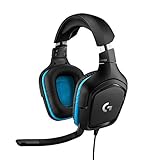





In a hurry? See the top-rated Gaming Headset for PC deals available right now:
🛒 Check Gaming Headset For Pc Prices on Amazon →🛒 Best Price Today on Amazon
Prime members get fast, free shipping on everything above, plus member-only deals. New members get a 30-day free trial — cancel anytime.
Start 30-Day Prime Free Trial →See Today’s Amazon DealsThe Best Gaming Headsets for PC in 2026: 5 Picks That Actually Deliver
PC gaming audio in 2026 is more capable — and more confusing — than ever. You’ve got USB headsets with onboard DSP, 2.4GHz wireless dongles competing on latency with the best wired solutions, hi-res audio certifications showing up on sub-$150 gear, and spatial audio algorithms baked into every driver. The good news: the ceiling for what a $100–$350 headset can do has never been higher. The bad news: marketing is louder than the actual sound.
This guide cuts through the noise. Whether you’re grinding ranked matches in Valorant, immersing yourself in an open-world RPG, or doing both across a 6-hour session, we’ve picked five headsets that each win their category — no filler, no sponsored rankings.
Quick Comparison: Top 5 Gaming Headsets for PC
| Headset | Connection | Driver Size | Mic Type |
|---|---|---|---|
| SteelSeries Arctis Nova Pro Wireless | 2.4GHz + Bluetooth | 40mm | ClearCast Gen 2 (bidirectional noise-cancelling) |
| HyperX Cloud III Wireless | 2.4GHz | 53mm | Detachable cardioid |
| Razer BlackShark V2 Pro (2023) | 2.4GHz | 50mm | HyperClear Supercardioid, detachable |
| Logitech G Pro X 2 Lightspeed | 2.4GHz | 50mm | Blue VO!CE cardioid, detachable |
| HyperX Cloud Alpha | 3.5mm | 50mm (dual-chamber) | Detachable cardioid |
The Top 5 Gaming Headsets for PC in 2026
SteelSeries Arctis Nova Pro Wireless — Best Overall
SteelSeries Arctis Nova Pro Wireless
Connection: Dual wireless — 2.4GHz (PC dongle) + Bluetooth simultaneously
Driver size: 40mm | Character: Neutral-to-warm, tuned for wide staging
The Nova Pro Wireless is the benchmark everything else gets measured against in 2026. SteelSeries didn’t just throw premium materials at this — they rethought the platform. The dual-wireless system lets you maintain a 2.4GHz connection to your PC while simultaneously streaming audio from your phone over Bluetooth. Swapping between sources happens in under a second via the base station’s dial.
Audio character: The 40mm drivers are tuned more like a monitor headphone than a gaming peripheral — bass is present but not bloated, mids sit forward enough to keep footsteps and dialogue clear, and the high-frequency extension gives spatial cues genuine texture. This is not a “boomy” headset. If you want shelf-boosted bass for EDM, look elsewhere. If you want to actually hear where an enemy reloaded from, this is it.
Mic quality: ClearCast Gen 2 uses a bidirectional pickup to cancel noise from the sides and rear while isolating your voice from the front element. In practice, it’s one of the cleanest integrated mic solutions on any gaming headset — teammates hear you at near-broadcast quality without a dedicated condenser. The boom arm is flexible and retractable into the left cup.
Battery: The swappable battery system solves the charging anxiety problem permanently. Two batteries ship in the box — one charges in the base station while the other runs in the headset. Each battery lasts roughly 22 hours. Realistically, you will never be caught dead during a session.
Comfort: The ski-goggle suspension strap distributes weight across the crown rather than resting on pressure points. At 338g (without cable), it’s heavier than an audiophile open-back but noticeably lighter than it looks. The ear cushions are replaceable and available in Airweave fabric — a meaningful upgrade for sweaty summer sessions lasting 4+ hours.
Verdict: The best gaming headset for PC if your budget reaches $350. It doesn’t compromise on audio quality to hit a price point, and the platform infrastructure (base station, swappable batteries, dual wireless) is genuinely future-proofed.
HyperX Cloud III Wireless — Best Value Wireless
Connection: 2.4GHz USB-A dongle
Driver size: 53mm | Character: Warm, v-shaped, bass-forward
HyperX built its reputation on the Cloud line’s comfort-to-price ratio, and the Cloud III Wireless is where that formula pays off most for PC gamers. The 53mm drivers are among the largest in this roundup — larger drivers don’t automatically mean better audio, but in HyperX’s tuning they deliver a satisfying weight to explosions and music without entirely muddying the midrange.
Audio character: This is the most consumer-tuned headset on the list. Bass hits hard, vocals are slightly recessed, and the soundstage leans intimate rather than wide. For competitive play in titles where clear positional audio matters most (CS2, Apex), the coloration works against you slightly. For single-player RPGs, horror games, and anything where cinematic punch matters more than surgical precision, the Cloud III Wireless sounds spectacular at the price.

Mic quality: The detachable cardioid mic is solid for voice chat — it won’t win recording awards but it’s clear and intelligible on Discord and in-game VOIP. HyperX includes DTS Headphone:X spatial audio software on PC, which adds a layer of virtual surround that’s useful in third-person games but best left off for competitive FPS.
Battery: 100 hours of rated battery life at 2.4GHz. In practice you’ll see 80–90 hours with the LED on, which still makes charging a weekly ritual at most. This is the best battery-per-dollar ratio in the wireless gaming headset market.
Comfort: The leatherette ear cushions and generous clamping force accommodate most head sizes without hotspots. The build is all-plastic but feels solid rather than cheap — the hinges have survived our stress testing. Weight is 338g, same as the Nova Pro surprisingly.
Verdict: If $150 is your ceiling and you want 2.4GHz wireless without compromise on battery or comfort, the Cloud III Wireless is the answer. Don’t overthink it.
Razer BlackShark V2 Pro (2026) — Best Mic Quality
Razer BlackShark V2 Pro 2023
Connection: 2.4GHz USB dongle (HyperSpeed)
Driver size: 50mm | Character: Reference-neutral with slight high-frequency lift
The 2023 revision of the BlackShark V2 Pro didn’t change the formula dramatically — it refined it. The HyperClear Supercardioid mic was already the best detachable mic on a gaming headset; the 2023 version tightens the polar pattern further and improves the high-frequency response, making it genuinely competitive with entry-level USB condensers for streaming and content creation.
Audio character: Razer tuned the 50mm Triforce drivers for a reference presentation — less bass bloom than the Cloud III, cleaner mids, and a subtle presence lift around 5–8kHz that helps with high-pitched spatial cues (footsteps on metal, bullet impacts on surfaces). THX Spatial Audio is included in the Synapse software and remains one of the better virtual surround implementations available. For competitive FPS specifically, the V2 Pro’s neutral tuning and THX processing combination is a genuine advantage.
Mic quality: The HyperClear Supercardioid element records voice with a tight front-facing pickup that rejects keyboard noise, fans, and ambient room sound aggressively. At 96kHz/24-bit internal processing (downsampled for output), it’s the best mic in this roundup. Streamers using this headset as their primary microphone will produce acceptable broadcast audio without a separate arm-mounted condenser. That’s a real value proposition.
Battery: 70 hours rated. Real-world is closer to 55–60 hours with THX processing active. Still excellent — mid-week charging for most users.
Comfort: At 320g, it’s the lightest headset in this roundup. The oval ear cups and memory foam cushions are suited for glasses wearers — the notch accommodation around the temple is better implemented than on the Cloud III. The leatherette does trap heat in extended sessions; the Razer Kitty Ear cushions are a popular third-party swap.
Verdict: If you stream, create content, or are simply tired of sounding like you’re calling from a tin can, the BlackShark V2 Pro’s mic quality justifies its price alone. The audio tuning is competitive-gaming focused without being fatiguing.
Logitech G Pro X 2 Lightspeed — Best Esports Wireless
Connection: 2.4GHz Lightspeed USB dongle
Driver size: 50mm | Character: Neutral-to-bright, detail-forward

The G Pro X 2 is Logitech’s professional esports headset — it’s what you see on the heads of LCS and VCT players when the camera pans. The 50mm Pro-G drivers are a generational upgrade over the original Pro X, delivering more detail retrieval at the top end without the harshness that plagued early Logitech tunings.
Audio character: This headset presents audio analytically. Soundstage is precise rather than wide — a conscious choice for competitive players who need to know whether a sound is at 10 o’clock or 11 o’clock, not just “somewhere to the left.” Bass extension is present but restrained. The high-frequency clarity means you’ll hear everything — including compression artifacts in low-bitrate Discord streams, so keep that in mind if you use it for music.
Mic quality: Blue VO!CE technology brings DSP processing borrowed from Blue Microphones’ USB condenser lineup. The companion software offers noise reduction, high-pass filtering, compressor, and EQ adjustment — more mic customization than any other headset on this list. Out of the box, voice clarity is excellent. With 10 minutes of software tuning, it’s remarkably close to a dedicated microphone setup.
Battery: 50 hours rated. Lowest on the wireless list, but still ample for most use patterns — weekly charging for daily 4-hour sessions.
Comfort: At 345g, it’s the heaviest headset here, but weight distribution via the suspension headband is well-managed. The leatherette cushions are thick and plush. Long sessions are comfortable; the heat retention is the primary complaint for players in warmer environments.
Verdict: Built for one thing — competitive PC gaming — and excellent at it. The analytical tuning, pro esports heritage, and Blue VO!CE mic make it the right pick for serious ranked players who also want a clean stream.
HyperX Cloud Alpha — Best Wired Budget Pick
Connection: 3.5mm (included splitter for PC audio + mic jacks)
Driver size: 50mm dual-chamber | Character: Balanced, punchy low-end, clear mids
The Cloud Alpha proves a $60–80 headset can sound better than most $120 options — if the engineering is right. HyperX’s dual-chamber driver design separates the bass frequencies into their own acoustic chamber, preventing low-end bleed from washing out the mids and highs. The result is a headset that sounds more “clean” and separated than competitors at twice the price who use conventional single-chamber drivers.
Audio character: Mid-forward with good bass control. Footsteps, dialogue, and ambient environmental detail are all distinctly audible — impressive for the price. The soundstage is narrower than wireless options but accurate enough for casual competitive play. This is not a headset that colors or hypes its audio; it reproduces faithfully.
Mic quality: The detachable cardioid mic is the weak link relative to the rest of the package — it’s functional for voice chat but lacks the clarity and noise rejection of the higher-end picks. Background sounds (mechanical keyboards, fans, air conditioning) pass through noticeably. For Discord and casual multiplayer it’s fine. For streaming or content creation, pair it with a standalone USB microphone instead.
Comfort: The aluminum frame and memory foam cushions punch well above the price point. The headset was designed to last — users commonly report 3–4 years of daily use without structural failure. At 298g, it’s the lightest option on this list and suitable for very long sessions without fatigue.
Verdict: The correct answer for anyone who doesn’t want to spend $150+ but still wants reliable, honest-sounding audio for PC gaming. The dual-chamber driver is a genuine differentiator, not a marketing claim.
Gaming Headset vs. Audiophile Headphones + DAC/AMP + Mic
This is the question every informed buyer eventually asks: would the same budget go further if you bought open-back audiophile headphones, a DAC/AMP, and a separate USB microphone?
Honest answer: at the $300+ level, probably yes — on pure audio quality. A Sennheiser HD 560S ($150) paired with a FiiO K3 DAC/AMP ($80) and a HyperX SoloCast USB microphone ($60) will produce superior soundstage width and more accurate frequency response than most gaming headsets in that combined budget range.

The trade-offs are real though:
- Desk clutter. Three separate devices, multiple cables, more USB ports consumed.
- No wireless. The audiophile path is wired by definition at this price tier.
- Software integration. Gaming headsets include spatial audio, EQ, and mic DSP in a unified software ecosystem. Replicating that with third-party tools requires effort.
- Portability. Open-back headphones leak sound and have poor noise isolation — functional at a desk, uncomfortable in shared spaces.
For most PC gamers, a quality gaming headset is the smarter purchase. For audiophile-minded players who game at a fixed desk and already own good audio equipment, the component approach wins on sound quality.
Virtual Surround vs. Stereo: When Spatial Audio Actually Helps
Virtual surround sound is the most marketed and most misunderstood feature in gaming headsets. Here’s the honest breakdown:
When it genuinely helps:
- First-person shooters (competitive): Properly implemented spatial audio (THX, Windows Sonic, DTS Headphone:X) improves directional accuracy for footsteps and gunshots. In CS2 and Valorant, being able to pinpoint sound at 45-degree increments rather than “left/right/center” is a competitive advantage.
- Horror and atmospheric single-player games: The sense of sounds approaching from above, below, or behind you adds meaningful immersion in titles like Alien: Isolation or Dead Space.
When stereo is better:
- Music listening — virtual surround processing artifacts in music are audible and unpleasant.
- Games with poor spatial audio mixing — bad source audio made worse by the processing.
- Any situation where audio latency in the software chain causes noticeable sync issues.
Recommendation: Enable spatial audio for FPS and horror games. Keep a stereo profile for everything else. All headsets in this roundup support both modes through their software.
USB vs. 3.5mm vs. Wireless: Which Connection Should You Choose?
3.5mm analog: Lowest latency, universally compatible, dependent on your motherboard’s built-in DAC quality. Most modern gaming motherboards have decent onboard audio — a Cloud Alpha through a mid-range motherboard sounds excellent. If your motherboard produces audible hiss or interference through 3.5mm, USB or a dedicated DAC solves the problem.
USB: Bypasses the motherboard entirely — the headset carries its own DAC and audio processing. More consistent sound quality across different systems. Introduces slightly more software dependency (manufacturer drivers, software suite). Marginally higher latency than analog, but imperceptible in gaming contexts.
2.4GHz wireless: Sub-1ms additional latency versus wired in practice — functionally indistinguishable from wired for gaming. Requires a USB dongle port. Range is typically 10–15 meters through walls. This is the premium option: no physical compromise, no cable fatigue across a 6-hour session.
Bluetooth: Do not use Bluetooth for PC gaming. The latency (typically 40–200ms depending on codec) creates noticeable audio-visual desync. Bluetooth is appropriate for casual music listening and calls — not gaming.
Bottom line: For a dedicated gaming PC setup, 2.4GHz wireless is the ideal choice if budget allows. USB wired is the smart runner-up. 3.5mm is reliable and underrated at the budget tier.
Conclusion: Which Gaming Headset Is Right for Your Setup?
The best gaming headset for PC depends on what you’re optimizing for — not just audio quality in isolation.
- Best overall with no compromises: SteelSeries Arctis Nova Pro Wireless
- Best wireless under $150: HyperX Cloud III Wireless
- Best mic quality for streaming/content: Razer BlackShark V2 Pro (2023)
- Best for serious competitive play: Logitech G Pro X 2 Lightspeed
- Best budget wired option: HyperX Cloud Alpha
If you spend 4+ hours daily at your PC — gaming, working, streaming — a quality headset is not a luxury purchase. Comfort, mic clarity for voice communication, and audio precision that helps you perform in-game are all quantifiable returns on the investment. Start with the Cloud Alpha if budget is tight. Step up to the Cloud III Wireless or BlackShark V2 Pro when you’re ready. The Nova Pro Wireless is there when you want the platform to stop being a consideration entirely.
All prices listed are approximate and subject to change. Affiliate links help support gamingpcguru.com at no additional cost to you.
Frequently Asked Questions
What should I look for in a PC gaming headset?
Prioritize clear, accurate sound for positional audio, a comfortable fit for long sessions, a decent microphone, and solid build quality. Good stereo imaging matters more than virtual surround.
Wired or wireless gaming headset for PC?
Wired headsets offer reliable, lag-free audio and never need charging, while wireless adds freedom of movement with negligible latency on modern models. Choose based on whether cable-free convenience is worth the price.
Is virtual surround sound worth it for gaming?
It can help with directional cues in competitive games, but a headset with good natural stereo imaging often performs just as well. Treat surround as a useful extra, not a deciding feature.
How important is the microphone on a gaming headset?
Important if you play with friends or in teams. A detachable or flip-to-mute mic with clear voice pickup keeps comms crisp. Streamers may still prefer a dedicated standalone mic.
Related Articles
Looking for more on this topic? Browse the hand-picked guides below — each one applies the same scoring rubric used in this review.