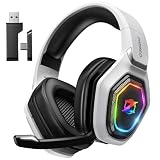
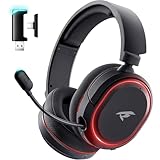
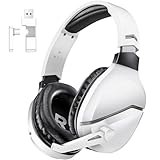
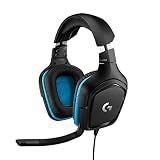
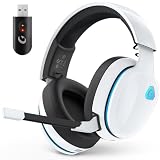
- Top Pick: Razer BlackShark V2 X Gaming Headset: 7.1 Surround Sound – 50mm Drivers – Memory Foam Cushion – For PC, PS4, PS5, Switch – 3.5mm Audio Jack – Black
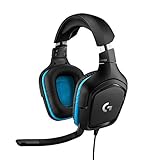
- Best Value: BENGOO G9000 Stereo Gaming Headset for PS4 PC Xbox One PS5 Controller, Noise Cancelling Over Ear Headphones with Mic, LED Light, 7.1 Surround Sound, Soft Memory Earmuffs for Nintendo Xbox Series X|S
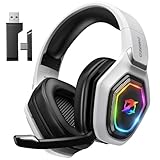
- Premium Choice: Ozeino Gaming Headset for PC, Ps4, Ps5, Xbox Headset with 7.1 Surround Sound Gaming Headphones with Noise Canceling Mic, LED Light Over Ear Headphones for Switch, Xbox Series X/S, Laptop, Mobile White
Affiliate disclosure: As an Amazon Associate we earn from qualifying purchases. This post contains affiliate links — if you buy through them we may earn a small commission at no extra cost to you. This never affects our recommendations.
As an Amazon Associate we earn from qualifying purchases at no extra cost to you.





In a hurry? See the top-rated Gaming Headset for Streaming deals available right now:
🛒 Check Gaming Headset For Streaming Prices on Amazon →🛒 Best Price Today on Amazon
Prime members get fast, free shipping on everything above, plus member-only deals. New members get a 30-day free trial — cancel anytime.
Start 30-Day Prime Free Trial →See Today’s Amazon DealsIntroduction
Streaming demands more from a headset than gaming alone ever does. Your audience hears everything — every breath, keyboard click, room echo, and background noise. A headset that delivers immersive surround sound for single-player games may still produce muddy, unintelligible audio that drives viewers away inside 30 seconds.
The best gaming headset for streaming sits at the intersection of three competing priorities: mic clarity for your audience, comfort for sessions that stretch four to eight hours, and noise rejection precise enough to isolate your voice from mechanical keyboards, fans, and ambient room noise.
Streaming also introduces monitoring needs that pure gaming headsets ignore. Sidetone — hearing your own voice in the ear cups — prevents the muffled over-projection that makes streamers sound like they’re shouting. Software processing suites (EQ, noise gates, compression) compound hardware quality, but only if the raw capsule is worth processing in the first place.
Finally, connectivity matters in ways it doesn’t for offline gaming. USB and USB-C connections carry digital audio directly, bypassing motherboard DAC noise. Wireless adds freedom from cable drag during energetic commentary. XLR remains the gold standard for studio-grade signal chain, but few gaming headsets offer it — making USB the practical broadcast sweet spot.
This guide covers five headsets that genuinely qualify as streaming-grade hardware, across a price range from $100 to $350. Each was evaluated on mic polar pattern suitability, frequency response, build quality, comfort, and overall value for content creators.
Quick Comparison Table
| Headset | Mic Type | Polar Pattern | Connection | Battery / Wired |
|---|---|---|---|---|
| SteelSeries Arctis Nova Pro Wireless | ClearCast Gen 2 Retractable | Bidirectional | USB-A (2.4GHz + Bluetooth) | 36h (dual battery) |
| Corsair HS80 Max Wireless | Omnidirectional Boom | Omnidirectional | USB-C / USB-A Slipstream | 65h |
| EPOS H6Pro Open/Closed | Broadcast Detachable Boom | Supercardioid | 3.5mm + USB (adapter) | Wired only |
| Razer BlackShark V2 Pro 2023 | HyperClear Supercardioid Boom | Supercardioid | 2.4GHz USB | 70h |
| Audio-Technica ATH-GL3 | Cardioid Condenser Boom | Cardioid | 3.5mm + USB | Wired only |
Top 5 Gaming Headsets for Streaming in 2026
SteelSeries Arctis Nova Pro Wireless
Price: ~$350
Connection: USB-A (2.4GHz wireless) + Bluetooth multipoint
Mic: ClearCast Gen 2 retractable bidirectional
Drivers: 40mm neodymium
ANC: Active Noise Cancellation + transparency mode
Battery: 36h continuous (hot-swappable dual-battery system)
Overview
The Arctis Nova Pro Wireless is the closest a headset gets to professional broadcast equipment without crossing into dedicated microphone territory. SteelSeries’ ClearCast Gen 2 mic uses a bidirectional (figure-8) polar pattern — the same approach employed by professional broadcast mics — to capture your voice from the front while canceling noise from the sides. The result is a vocal clarity that competes with standalone USB microphones in the sub-$100 range.
The hardware stack is genuinely premium. Active noise cancellation removes background HVAC and street noise from your monitoring feed, while a transparency mode lets you hear room audio without removing the headset. The hot-swappable battery system (two batteries ship in the box, one charges in the base station while the other powers the headset) means no stream has to end due to battery death.
The Sonar software suite adds parametric EQ, compressor, noise gate, and per-application audio routing — the last feature being uniquely useful for streamers who need game audio, Discord, and music on separate volume faders.
Pros
- Bidirectional mic delivers broadcast-grade vocal isolation
- ANC + transparency mode combination is unmatched at this tier
- Hot-swappable dual battery eliminates dead-battery stream endings
- Sonar software’s per-application routing is a streamer-specific feature advantage
- Simultaneous 2.4GHz + Bluetooth lets you monitor phone audio without a second device
Cons
- $350 price point is a significant investment
- Bidirectional pattern picks up audio from directly behind — mic placement discipline required
- Retractable mic cannot be removed entirely (less modular than detachable boom options)
- Software is Windows-primary; macOS support is limited
Who It’s For
Established streamers ready to invest in broadcast-quality hardware. If you’re pulling regular viewers and audio quality is the last gap between your production and professional-tier creators, the Nova Pro Wireless closes it.
Buy the SteelSeries Arctis Nova Pro Wireless on Amazon
Corsair HS80 Max Wireless
Price: ~$150
Connection: Slipstream 2.4GHz USB-C / USB-A + Bluetooth
Mic: Omnidirectional boom mic + USB-C digital audio
Drivers: 50mm neodymium
ANC: None
Battery: 65h

Overview
The HS80 Max occupies the best value position in this list. At $150, it delivers wireless freedom, USB-C digital connectivity, Dolby Atmos spatial audio, and a mic that outperforms most headsets in its price tier — all wrapped in a memory foam comfort system that holds up across marathon sessions.
The USB-C connection is the headline feature for streamers. Rather than routing audio through a potentially noisy analog 3.5mm path, the HS80 Max carries microphone signal as a clean digital stream directly to your DAW or streaming software. This matters most in systems with onboard audio interference (coil whine, USB bus noise) common in gaming PCs.
The omnidirectional polar pattern is less forgiving than cardioid or supercardioid options — it captures sound from all directions equally, meaning room acoustics and background noise bleed into the signal more readily. In a treated room or quiet space, this is a non-issue. In an untreated bedroom setup, you may need heavier noise gate settings in OBS or streaming software.
Slipstream wireless is Corsair’s proprietary 2.4GHz protocol with sub-1ms latency — functionally imperceptible, and more stable than Bluetooth for real-time monitoring and streaming applications. At 65 hours of rated battery life, it leads this entire category.
Pros
- USB-C digital audio eliminates analog noise floor issues
- 65h battery is the longest in this roundup
- Dolby Atmos support for immersive game audio monitoring
- Memory foam headband and ear cushions support extended sessions
- Slipstream wireless stability matches wired reliability for streaming
Cons
- Omnidirectional mic pattern requires quiet or treated recording environment
- No ANC — room noise management is entirely software-dependent
- 50mm drivers can sound congested on complex audio mixes at high volumes
- iCUE software is resource-heavy on lower-spec systems
Who It’s For
Streamers who work in quiet home setups and prioritize wireless freedom and battery life over maximum mic isolation. Also ideal for users upgrading from wired headsets who want a significant improvement without approaching the $350 Nova Pro price point.
Buy the Corsair HS80 Max Wireless on Amazon
EPOS H6Pro Open/Closed
Price: ~$180
Connection: 3.5mm (included USB-C adapter for PC)
Mic: Broadcast-grade detachable supercardioid boom
Drivers: 42mm
ANC: None (passive isolation on closed variant)
Battery: Wired only
Overview
EPOS built the H6Pro for the broadcast and esports market, and it shows. The detachable supercardioid boom mic is the most modular option in this roundup — remove it for music listening or non-streaming gaming, reattach it in seconds for stream sessions. The broadcast-grade capsule captures voice with a natural, full-bodied tonality that consumer headsets consistently fail to replicate.
The choice between open-back and closed-back variants is a meaningful streaming decision. The open-back version delivers exceptional soundstage and natural audio reproduction for monitoring — you hear your game as it’s mixed, with accurate stereo imaging that helps in competitive titles. However, open-back designs leak audio: your microphone will pick up game audio from the ear cups, and anyone in the room will hear your stream audio. For streaming in shared spaces or with loud game audio, the closed-back variant is the correct choice.
The wired-only design is a deliberate engineering tradeoff. EPOS prioritizes signal purity and zero-latency monitoring over wireless convenience. For desk-bound streamers with cable management already in place, this is a non-issue. For streamers who move around, gesture broadly, or have cable-hostile setups, it may be a dealbreaker.
Build quality is studio-grade throughout. Steel headband, premium leatherette ear cups, and a mic capsule replaceable through EPOS — the H6Pro is designed to last years of heavy use.
Pros
- Detachable supercardioid mic is the most versatile configuration in this roundup
- Open/closed back choice offers genuine flexibility for different streaming environments
- Studio-quality voice reproduction with natural tonality
- Replaceable mic capsule extends product lifespan
- Zero wireless latency — real-time monitoring is exact
Cons
- Wired only — no wireless option exists for this model
- 3.5mm primary connection requires USB adapter for optimal PC audio quality
- No software suite — all processing must be handled externally in OBS, Voicemeeter, or similar
- Open-back variant unsuitable for streaming with loud game audio or in shared spaces
Who It’s For
Dedicated streamers who value audio quality above convenience and already have a cable management setup. The open/closed choice also makes this the best pick for streamers who want one headset that works for both streaming sessions and music production.
Razer BlackShark V2 Pro 2026
Price: ~$180
Connection: HyperSpeed 2.4GHz USB
Mic: HyperClear Supercardioid detachable boom
Drivers: 50mm TriForce Titanium

ANC: None
Battery: 70h
Overview
The Razer BlackShark V2 Pro 2023 revision addresses the primary weaknesses of its predecessor: a tighter mic capsule design, extended battery life to an industry-leading 70 hours, and improved HyperSpeed wireless reliability. For streamers who want wireless flexibility with a genuinely broadcast-competent microphone, this is the most compelling option at the $180 price point.
The HyperClear supercardioid mic is detachable and includes a desktop stand adapter in the box — a detail that signals Razer understands the streaming workflow. When you need a break from streaming but want to stay in game, the mic comes off cleanly. The supercardioid pattern provides tight vocal pickup with strong off-axis rejection, making it the best wireless option for streamers without acoustic treatment.
THX Spatial Audio processing is available through Razer’s Synapse software, with mode presets optimized for different game genres. For streaming monitoring purposes, the custom EQ curve functionality is more useful — you can tune the playback response to match your content type without affecting the microphone signal chain.
The 50mm TriForce Titanium drivers deliver Razer’s characteristic V-shaped frequency response: emphasized bass and treble with a slightly recessed midrange. This works well for gaming audio and music but can make voice monitoring feel slightly unnatural compared to the more neutral tuning of the EPOS or Audio-Technica options.
Pros
- 70h battery — the longest in this roundup and effectively eliminates battery anxiety
- HyperClear supercardioid mic delivers strong off-axis rejection without acoustic treatment
- Detachable mic with included desktop stand adapter — practical streaming workflow design
- HyperSpeed wireless has consistently reliable 2.4GHz performance
- Comfortable memory foam ear cushions hold up across long sessions
Cons
- V-shaped tuning is unflattering for voice monitoring compared to neutral competitors
- Synapse software is resource-intensive and requires an account for full feature access
- No ANC — relies entirely on microphone polar pattern for noise rejection
- USB dongle required (not included USB-C charging); dongle loss disables wireless
Who It’s For
Streamers who prioritize wireless reliability and battery life and want a genuinely capable supercardioid mic without approaching the $350 Nova Pro tier. The 70-hour battery makes it the pick for streamers who forget to charge equipment.
Buy the Razer BlackShark V2 Pro 2023 on Amazon
Audio-Technica ATH-GL3
Price: ~$100
Connection: 3.5mm + USB
Mic: Cardioid condenser detachable boom
Drivers: 45mm
ANC: None (closed-back passive isolation)
Battery: Wired only
Overview
Audio-Technica’s entry into the gaming headset market carries the brand’s 60-year microphone engineering legacy into a $100 product, and the result is the clearest vocal reproduction in this price range. The cardioid condenser boom mic captures voice with a presence and detail that most headsets at twice the price cannot match.
The dual-connection design is practical for streaming multi-platform setups. USB connection delivers clean digital audio for PC streaming with no additional hardware required. The 3.5mm connection serves console streamers, mobile setups, or users who prefer their own DAC. Both connections work simultaneously on some configurations — a unique feature at this price point.
Closed-back construction provides passive isolation that outperforms the open-back EPOS variant for bleeding audio control, without the active electronics cost of ANC. The 45mm drivers deliver a comparatively neutral, balanced frequency response — intentional on Audio-Technica’s part, as their professional audio background prioritizes accuracy over consumer-pleasing enhancement.
The ATH-GL3’s limitations are honest ones. There is no software suite — all processing is external. There is no wireless option. Build materials, while solid, show their $100 construction in lighter plastic compared to the EPOS or BlackShark V2 Pro. The cardioid pattern, while excellent for voice capture, picks up more off-axis sound than supercardioid competitors — room acoustics matter more here.
Pros
- Cardioid condenser mic delivers vocal clarity that punches well above the $100 price point
- Audio-Technica’s microphone engineering heritage is genuinely present in the capsule quality
- Dual 3.5mm + USB connectivity covers PC, console, and mobile streaming scenarios
- Neutral, balanced driver tuning is accurate for monitoring game and stream audio
- Closed-back passive isolation performs well in moderately noisy environments
Cons
- Wired only — no wireless option
- Cardioid pattern picks up more background noise than supercardioid alternatives
- No companion software — all EQ and processing must be handled in OBS or external apps
- Lighter plastic build feels less premium than competitors at $150+
- 3.5mm on some motherboards introduces analog noise floor the USB path avoids
Who It’s For
Beginning and budget-conscious streamers who want professional microphone quality without the investment overhead of premium wireless options. Also ideal as an upgrade path for streamers who’ve been using headset mics with poor capsules and are surprised by how much mic quality matters.
Buy the Audio-Technica ATH-GL3 on Amazon
How to Choose a Gaming Headset for Streaming
Mic Polar Pattern: Cardioid vs. Supercardioid vs. Bidirectional
Polar pattern determines what directions the microphone captures audio from — and what it rejects.
Cardioid picks up a wide forward zone (roughly 130 degrees) while rejecting audio from behind. It’s the most forgiving for inexact mic placement and works well in quiet rooms. The ATH-GL3 uses this pattern.

Supercardioid narrows the pickup zone (roughly 115 degrees) and increases rear rejection. It’s significantly more forgiving of background noise in untreated rooms, but requires more precise mic positioning toward your mouth. The EPOS H6Pro and Razer BlackShark V2 Pro use this pattern.
Bidirectional (figure-8) captures from front and rear while rejecting from the sides. Used by professional broadcast mics and the SteelSeries ClearCast Gen 2, it can deliver exceptional voice isolation when positioned correctly, but requires discipline — audio directly behind the mic (such as an open window or speaker) will be captured.
Recommendation: Untreated rooms favor supercardioid. Treated spaces (acoustic panels, soft furnishings) open up cardioid and bidirectional options.
Sample Rate and Bit Depth
Gaming headsets rarely advertise these specifications prominently, but they matter for streaming. Most headset mics capture at 16-bit / 48kHz — adequate for streaming platforms, which typically transcode voice at much lower bitrates anyway. Headsets in the $180+ tier often sample at 24-bit / 48kHz, providing more headroom for software processing (compression, EQ, noise gating) before the signal degrades.
For Twitch and YouTube streaming, 16-bit / 48kHz is sufficient. For podcast or high-quality audio recording alongside streaming, 24-bit becomes a meaningful advantage.
Sidetone Monitoring
Sidetone feeds your own microphone signal back into the ear cups in real time so you can hear yourself speak. Without it, the natural isolation of closed-back headsets causes over-projection — you speak too loudly, increasing sibilance and fatigue over long sessions.
The Nova Pro Wireless and HS80 Max both offer adjustable sidetone through their software suites. The EPOS H6Pro and Razer BlackShark V2 Pro provide hardware sidetone control on the ear cup. The ATH-GL3 relies on your audio interface or software for monitoring, which introduces a slight latency via USB.
For streaming specifically, hardware sidetone with zero latency (Nova Pro, H6Pro, BlackShark V2 Pro) is preferable to software monitoring.
Software Processing: What Actually Matters
Every headset reviewed here benefits from external software processing in OBS, Streamlabs, or a dedicated audio stack like Voicemeeter Banana:
- Noise Gate: Cuts microphone signal below a set volume threshold — silences keyboard clicks and room noise between speech. Essential for all but the most acoustically treated setups.
- Compression: Evens out volume peaks and valleys so your voice stays consistent when you get excited. Limiter + compressor chains are standard in professional broadcast.
- EQ: Boosting 2kHz–5kHz adds presence and intelligibility for voice. Cutting below 80Hz removes rumble and desk vibration.
Headsets with bundled software (Nova Pro’s Sonar, Corsair’s iCUE, Razer’s Synapse) apply these in their own stack. Alternatively, OBS’s built-in filters handle all three — making even the ATH-GL3’s lack of companion software a manageable limitation.
Connection: XLR vs. USB vs. 3.5mm
3.5mm analog is universally compatible but subject to noise from the audio chain — onboard motherboard audio in gaming PCs often introduces hiss or interference. Always pair 3.5mm headsets with a dedicated USB audio interface for clean signal.
USB digital bypasses the analog chain entirely. The mic ADC (analog-to-digital converter) is inside the headset or dongle, and the signal arrives at the PC digitally. Cleaner, more consistent, and easier to set up. Preferred for streaming.
2.4GHz wireless adds cable freedom at the cost of a USB dongle. Modern implementations (Slipstream, HyperSpeed, SteelSeries 2.4GHz) are reliable enough for streaming with negligible latency impact.
XLR is the professional standard for standalone microphones, offering the lowest noise floor and greatest hardware processing flexibility. No headset in this roundup uses XLR — it remains the province of standalone mics like the Shure SM7dB or Rode PodMic.
Final Verdict
Best overall for streaming: SteelSeries Arctis Nova Pro Wireless — bidirectional mic, ANC, Sonar software with per-app routing, and hot-swap batteries make it the most complete streaming package available in a headset form factor. The $350 price is justified for streamers who depend on audio quality for audience retention.
Best value for streaming: Corsair HS80 Max Wireless — $150 buys USB-C digital audio, 65-hour battery, Dolby Atmos, and solid wireless. The omnidirectional mic limitation is manageable in quiet environments, and the total package is hard to match at the price.
Best for audio quality purists: EPOS H6Pro — the broadcast-grade detachable mic and open/closed back choice make this the pick for streamers who also produce podcasts, record voiceovers, or prioritize absolute audio accuracy over wireless convenience.
Best battery life + wireless: Razer BlackShark V2 Pro 2023 — 70 hours of wireless with a competitive supercardioid mic. The pick for streamers who never want to think about charging.
Best budget pick: Audio-Technica ATH-GL3 — $100 delivers condenser mic quality that embarrasses headsets twice its price. The right choice for streamers building their first real production setup without overextending their budget.
For most streamers starting out or upgrading from a basic gaming headset, the ATH-GL3 or HS80 Max represent the clearest value propositions. Established streamers investing in their production quality will find the Nova Pro Wireless justifies every dollar.
Prices are approximate and subject to change. Affiliate links above support this site at no additional cost to you.
Frequently Asked Questions
Is a gaming headset mic good enough for streaming?
Decent for starting out, but headset mics generally sound thinner than a dedicated USB or XLR mic. A streaming-focused headset with a quality boom mic narrows the gap considerably.
What should a streaming headset have?
A clear, broadcast-quality boom microphone, a comfortable long-session fit, good sound for game audio, and ideally a detachable mic. Sidetone, which lets you hear yourself, is a helpful extra.
Headset mic or standalone mic for streaming?
A standalone USB mic sounds noticeably better and is the upgrade serious streamers make. A good headset mic is convenient and fine for casual streaming or as a starting point.
Wired or wireless headset for streaming?
Wired avoids charging worries during long streams, while wireless gives freedom to step away. Either works, though many streamers prefer wired for guaranteed uptime through a broadcast.
Related Articles
Looking for more on this topic? Browse the hand-picked guides below — each one applies the same scoring rubric used in this review.