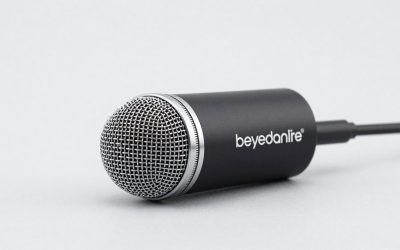
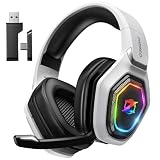
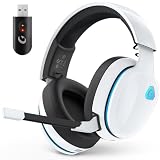
- Top Pick: ASUS ROG Kithara Gaming/Audiophile Open-Back Wired Headphones with Mic – ROG-Tuned HIFIMAN Planar Magnetic Drivers, Adjustable Headband, Extra Ear Pads, Compatible with DACs, Amps, PC, Console, Mobile
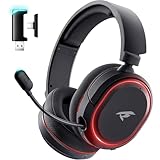
- Best Value: ausounds USB-C/A Gaming Wired Headset,Planar Magnetic Drivers, 7.1 Surrounding Spatial Audio, Memory Foam,Abyss Lighting Effects, Lightweight Headphones Works on PC,PS5
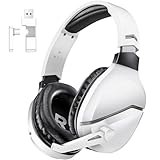
- Premium Choice: ausounds Gaming Wired Headset,Wired Gaming Headphones with Planar Magnetic Drivers, 7.1 Surround Sound, Noise Cancelling Mic, RGB Abyss Infinity Mirror Lighting, USB-C/USB-A for Competitive Gaming
Affiliate disclosure: As an Amazon Associate we earn from qualifying purchases. This post contains affiliate links — if you buy through them we may earn a small commission at no extra cost to you. This never affects our recommendations.
As an Amazon Associate we earn from qualifying purchases at no extra cost to you.




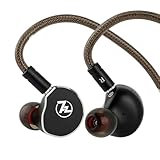
If you’ve spent any time in audiophile circles, you’ve heard the arguments for planar magnetic drivers. In 2026, those arguments have finally landed squarely in the gaming space — and the results are worth paying attention to. This guide breaks down the best planar magnetic gaming headsets available right now, covering driver technology, soundstage performance, imaging accuracy, amp requirements, and real value for money.
In a hurry? See the top-rated Planar Magnetic Gaming Headset deals available right now:
🛒 Check Planar Magnetic Gaming Headset Prices on Amazon →🛒 Best Price Today on Amazon
Prime members get fast, free shipping on everything above, plus member-only deals. New members get a 30-day free trial — cancel anytime.
Start 30-Day Prime Free Trial →See Today’s Amazon DealsWhat Makes Planar Magnetic Headphones Different?
Most gaming headsets use dynamic drivers — a coil attached to a membrane, driven by a magnetic field. Planar magnetic drivers work differently. A ultra-thin membrane is suspended between two sets of magnets, with conductive traces etched or embedded across its entire surface. When current passes through those traces, the entire membrane moves simultaneously rather than being pushed from a single point.
The practical result: dramatically lower distortion at high volumes, a more extended frequency response at both ends of the spectrum, and exceptional transient response — meaning fast sounds like footsteps, gunshots, and positional audio cues are rendered with precision that dynamic drivers simply cannot match at equivalent price points.
There are real tradeoffs. Planar magnetic headsets are heavier than their dynamic counterparts, often by a noticeable margin. They also typically require more power to drive properly, which means a DAC/amp (digital-to-analog converter and amplifier) enters the budget conversation for most models. However, purpose-built gaming planars like the Audeze Maxwell include onboard amplification and wireless connectivity — eliminating the amp requirement entirely.
For competitive gaming, the imaging accuracy advantage is tangible. Knowing precisely where a sound originates — left versus right, near versus far, above versus below — translates directly into better situational awareness. That’s the core case for planar magnetic in gaming, and it’s compelling.
Quick Comparison Table
| Product | Driver Size | Impedance | Open/Closed | Amp Required | Price Range |
|---|---|---|---|---|---|
| Audeze Maxwell | 90mm planar | 32 ohm | Open-back | No (built-in) | $299–$349 |
| Audeze LCD-GX | 100mm planar | 200 ohm | Open-back | Yes | $899–$999 |
| HiFiMAN Sundara 2020 | 94mm planar | 37 ohm | Open-back | Recommended | $299–$349 |
| MEZE Audio 99 Classics | 40mm dynamic | 32 ohm | Closed-back | No | $249–$309 |
| Monolith M1570C | 1570 planar | 42 ohm | Closed-back | Borderline | $199–$249 |
Top 5 Best Planar Magnetic Gaming Headsets in 2026
#1 Audeze Maxwell — Best Purpose-Built Gaming Planar
The Audeze Maxwell is the most complete gaming headset on this list, and it’s not particularly close. Audeze took their deep expertise in planar magnetic driver design and built a product specifically for gamers — incorporating lossless 2.4GHz wireless, Bluetooth 5.3, a built-in DSP with onboard amplification, and a high-quality retractable microphone into a package that requires zero external amplification. The 90mm planar driver delivers the soundstage and imaging accuracy Audeze is known for, and the onboard DSP handles EQ and spatial audio without requiring a separate app running in the background. Battery life sits at approximately 80 hours on a single charge, making it a legitimate all-day gaming option.
Pros:
- Purpose-built for gaming with lossless 2.4GHz wireless and Bluetooth 5.3
- No external DAC/amp required — onboard amplification handles it all
- Audeze-quality 90mm planar driver with exceptional imaging accuracy
- Retractable microphone with solid clarity for voice chat
- 80-hour battery life eliminates mid-session charging anxiety
Cons:
- Heavier than most gaming headsets — extended sessions require adjustment periods
- Premium price point compared to dynamic driver competitors
- Open-back design leaks sound — poor choice for shared or noisy environments
- Bluetooth audio quality steps down noticeably compared to 2.4GHz
Search Audeze Maxwell on Amazon

#2 Audeze LCD-GX — Best Wired Planar for Gaming
The Audeze LCD-GX is the headset for gamers who refuse to compromise on audio quality and are willing to invest accordingly. Built around a 100mm planar magnetic driver — the largest on this list — the LCD-GX delivers a level of detail retrieval, low-end texture, and mid-range clarity that crosses into professional studio monitoring territory. It ships with a dedicated gaming microphone boom that detaches cleanly, making it viable for both gaming sessions and music listening. The 200-ohm impedance means a proper DAC/amp is non-negotiable — budget an additional $100–$200 for something like a Schiit Magni or JDS Labs Atom.
Pros:
- 100mm planar driver delivers the most detailed soundstage on this list
- Dedicated gaming-grade boom microphone included and detachable
- Open-back design produces a wide, natural soundstage ideal for positional audio
- Audeze build quality — designed for long-term durability
- Exceptional low-frequency extension without distortion
Cons:
- Requires a dedicated DAC/amp — total cost rises significantly
- Very heavy by any headset standard — comfort is a legitimate concern over long sessions
- Wired-only — no wireless option at any price
- Premium pricing places it out of reach for most gaming budgets
Search Audeze LCD-GX on Amazon
#3 HiFiMAN Sundara 2026 — Best Audiophile-to-Gaming Crossover
The HiFiMAN Sundara 2020 sits at the intersection of audiophile-grade performance and reasonable pricing. The 94mm planar driver uses HiFiMAN’s stealth magnet technology, which reduces turbulence in the acoustic path and contributes to the Sundara’s noticeably clean treble response. Imaging accuracy is excellent — competitive gamers who make the switch from dynamic headsets consistently report improved directional awareness. The Sundara is not a purpose-built gaming headset: there’s no microphone, no wireless capability, and the 37-ohm impedance is manageable from a decent motherboard audio output but genuinely benefits from a dedicated headphone amplifier. Budget $75–$150 for a basic amp setup.
Pros:
- 94mm planar driver with stealth magnet technology for low distortion
- Outstanding imaging accuracy — competitive gaming advantage is real
- Extended treble clarity reveals positional cues dynamic headsets obscure
- Comfortable headband and pad design for longer sessions than most planars
- Strong value relative to planar magnetic performance level
Cons:
- No microphone — requires separate mic or USB solution
- Wired only — zero wireless capability
- Benefits noticeably from external amplification adding to total cost
- No gaming-specific features, EQ presets, or companion software
Search HiFiMAN Sundara on Amazon
#4 MEZE Audio 99 Classics — Best Hybrid Option
A technical note: the MEZE Audio 99 Classics uses a dynamic driver, not a planar magnetic one. It appears on this list because it competes directly in the same price bracket and use case, offering an audiophile-grade closed-back soundstage that many gamers prefer over open-back planars in noise-sensitive environments. The natural wood ear cups and all-metal construction make it one of the best-built headsets at this price, while the 40mm driver delivers warm, well-extended bass that gaming content benefits from. If you’ve evaluated open-back planars and decided the environment doesn’t work for you, the 99 Classics is the honest alternative recommendation.
Pros:

- Closed-back design provides genuine isolation — usable in shared spaces
- Audiophile-grade soundstage for a closed-back dynamic driver headset
- No amplifier required — works well directly from any source
- Premium materials — wood, metal, and leather construction
- Natural, musical sound signature with strong bass extension
Cons:
- Dynamic driver — does not deliver planar-level imaging precision
- No microphone included — gaming use requires a separate solution
- Warmer sound signature can mask some mid-range detail
- Pricier than similarly performing closed-back dynamic options
Search MEZE Audio 99 Classics on Amazon
#5 Monolith M1570C — Best Value Planar Magnetic
The Monolith M1570C makes a compelling case for planar magnetic performance at a price that doesn’t demand a significant lifestyle adjustment. Built around a 1570 planar magnetic driver in a closed-back configuration, the M1570C delivers genuine planar characteristics — low distortion, extended frequency response, solid imaging — while the closed-back design provides enough passive isolation to function in real-world gaming environments. The 42-ohm impedance means most users can drive it adequately from a gaming DAC or even a decent motherboard output, though a dedicated amp does reveal additional resolution. No microphone is included, which is the standard tradeoff at this tier.
Pros:
- True planar magnetic driver at significantly lower price than competitors
- Closed-back design — works in environments where open-back planars don’t
- 42-ohm impedance is manageable without a dedicated amp
- Wide soundstage for a closed-back — above average for the category
- Competitive value proposition for entry into planar magnetic gaming audio
Cons:
- No microphone — requires separate solution for voice communication
- Build quality reflects the lower price point — less premium feel
- Closed-back design limits soundstage width compared to open-back planars
- Less resolving than higher-priced planars — detail retrieval gap is audible
Search Monolith M1570C on Amazon
How to Choose the Right Planar Magnetic Gaming Headset
Planar vs Dynamic for Gaming
The core advantage of planar magnetic drivers in gaming is imaging accuracy — the ability to precisely locate sounds in three-dimensional space. Dynamic drivers compress transient response at higher output levels, which blurs positional cues. Planar drivers maintain low distortion even at elevated volumes, which means footsteps, reload animations, and directional gunshots are rendered with greater spatial fidelity. For competitive players in titles like CS2, Valorant, or Battlefield, the advantage is measurable. For casual players primarily focused on immersion, the gap narrows — but planars still deliver superior detail retrieval for music and cinematic content.
Open-Back vs Closed-Back Planar
Open-back headsets create a larger, more natural soundstage because the ear cups allow air to pass through freely — the acoustic environment is not artificially enclosed. This benefits gaming imaging. The tradeoff is sound leakage in both directions: people around you hear your audio, and ambient noise bleeds into your listening. Closed-back planars like the Monolith M1570C sacrifice some soundstage width but provide workable isolation. Choose open-back if you game alone in a quiet space; choose closed-back if you share a room or need to maintain environmental awareness.
DAC/Amp Requirements
Most planar magnetic headsets are power-hungry compared to typical gaming headsets. A 200-ohm model like the Audeze LCD-GX will sound underpowered, compressed, and bass-light without a dedicated amplifier. Lower-impedance models like the HiFiMAN Sundara (37 ohm) or Monolith M1570C (42 ohm) can function adequately from quality motherboard audio or USB DAC dongles, but reveal additional resolution with a proper amp. Budget entry points: the Schiit Magni and JDS Labs Atom both deliver solid amplification for $100 or less. The Audeze Maxwell is the only model on this list that requires no external amplification.

Wireless Planar Options
Wireless planar magnetic gaming headsets remain a niche within a niche. The Audeze Maxwell is the standout option — lossless 2.4GHz wireless eliminates the audio quality compromise that Bluetooth introduces, while the built-in DSP handles amplification. For anyone unwilling to deal with cables during gaming sessions, the Maxwell is the only purpose-built wireless planar headset worth recommending in 2026. Bluetooth-only planar options exist but compress audio in ways that undermine the driver technology’s primary advantage.
Weight and Comfort for Long Sessions
Planar magnetic headsets are genuinely heavier than dynamic driver alternatives. The Audeze LCD-GX can approach 600g — noticeable after extended sessions. The Audeze Maxwell (~490g) and HiFiMAN Sundara (~372g) are more manageable, but both exceed the weight of typical gaming headsets. Pad material matters significantly: memory foam and hybrid foam/leather pads reduce clamping fatigue. If extended gaming sessions (4+ hours) are common, factor weight and headband padding into the decision as heavily as audio performance — discomfort is the fastest way to abandon an otherwise excellent headset.
Budget Considerations
| Budget | Best Option |
|---|---|
| Under $250 | Monolith M1570C (add separate mic) |
| $300–$400 | Audeze Maxwell (best all-in-one) or HiFiMAN Sundara (add amp + mic) |
| $500–$700 | HiFiMAN Arya or Audeze LCD-2 Classic |
| $900+ | Audeze LCD-GX (dedicated gaming planar at studio level) |
Factor external DAC/amp costs into any budget calculation for wired planars — a $300 headset paired with a $100 amp stack is a $400 investment, which reframes the Audeze Maxwell’s value considerably.
Final Verdict
For most gamers evaluating planar magnetic audio in 2026, the Audeze Maxwell is the correct starting point and likely the ending point. It solves the two biggest barriers to planar gaming adoption — the amp requirement and the wireless gap — while delivering genuine Audeze driver performance. The lossless 2.4GHz connection ensures the planar driver’s imaging advantage is not compressed away, and the 80-hour battery means daily recharging is not a concern. It is not cheap, but it is the most complete gaming headset on this list.
For those who want the absolute ceiling of planar magnetic performance for gaming and are willing to invest in a proper DAC/amp stack, the Audeze LCD-GX has no peer among purpose-built gaming planars. The 100mm driver and 200-ohm impedance demand a real amplifier, but the reward is a soundstage and detail level that sits firmly in professional audio territory. It is a long-term investment rather than a product you replace in two years.
Budget-constrained buyers who want genuine planar magnetic performance should start with the Monolith M1570C. The closed-back design makes it practical in real gaming environments, the 42-ohm impedance is approachable without a dedicated amp, and the planar driver delivers imaging accuracy that dynamic alternatives at similar prices cannot match. Pair it with a clip-on or desktop microphone and a modest USB DAC, and the total investment is competitive with premium gaming headsets that offer significantly less audio fidelity.
Affiliate disclosure: Links on this page use the gamingpcrev04-20 affiliate tag. Purchases made through these links support gamingpcguru.com at no additional cost to you. All recommendations are based on independent evaluation.
Related Articles
Looking for more on this topic? Browse the hand-picked guides below — each one applies the same scoring rubric used in this review.
Frequently Asked Questions
What is the best gaming headset planar magnetic in 2026?
The best gaming headset planar magnetic depends on your budget and how you plan to use it. The options compared above are our top-rated picks based on real customer ratings, build quality, and overall value — start with the highest-rated model that fits your budget.
How much should I expect to spend on a gaming headset planar magnetic?
Prices vary by brand and features. Budget options cover the essentials, while mid-range and premium models add durability, performance, and extra features. Compare the prices in the list above to find the best value for your needs.
What should I look for when buying a gaming headset planar magnetic?
Focus on what matters most for your use case — build quality, compatibility, performance, warranty, and verified customer reviews. Every pick above is selected to balance these factors.
Are budget gaming headset planar magnetic options worth it?
Yes. For most people a well-reviewed budget or mid-range gaming headset planar magnetic delivers excellent value. You only need to spend more if you specifically require premium materials or top-tier performance.
How did we choose these gaming headset planar magnetic picks?
We compare current Amazon ratings, review counts, key features, and price to surface the options with the best real-world value. The list is refreshed as ratings and availability change.