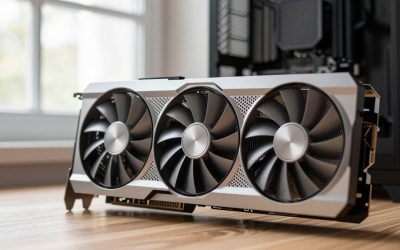
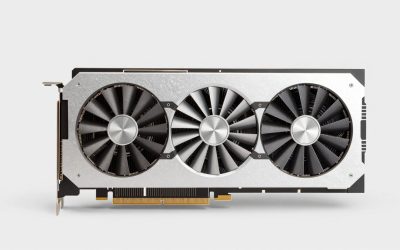
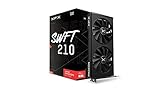
- Top Pick: XFX Speedster SWFT210 Radeon RX 7600 Graphics Card with 8GB GDDR6 HDMI 3xDP, AMD RDNA 3 RX-76PSWFTFY
- Best Value: ASRock Radeon RX 7600 Challenger 8GB OC, RDNA 3, 2695MHz Boost, 8GB GDDR6 128-bit, PCIe 4.0, Dual Fans, 0dB Silent, HDMI 2.1, DisplayPort 1.4
- Premium Choice: XFX Speedster SWFT210 Radeon RX 7600 Graphics Card with 8GB GDDR6 HDMI 3xDP, AMD RDNA 3 RX-76PSWFTFA
Affiliate disclosure: As an Amazon Associate we earn from qualifying purchases. This post contains affiliate links — if you buy through them we may earn a small commission at no extra cost to you. This never affects our recommendations.
As an Amazon Associate we earn from qualifying purchases at no extra cost to you.


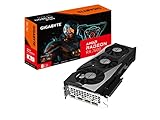
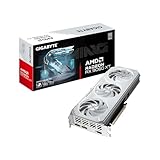

If you’re building a sub-$250 1080p gaming rig in 2026, the AMD RX 7600 remains one of the smartest GPU purchases you can make. Built on RDNA 3 architecture, it delivers genuine high-refresh 1080p performance with FSR 3 Frame Generation support, 8GB of GDDR6 memory, and AV1 hardware encoding for streamers — all at a price point that undercuts the RTX 4060 without sacrificing meaningful frame rates. The AIB (add-in board partner) versions from Sapphire, ASUS, PowerColor, MSI, and XFX refine the reference design with better cooling, factory overclocks, and quieter fan profiles, making the choice of which RX 7600 to buy almost as important as choosing the GPU generation itself. This guide breaks down the top five AIB picks, explains what separates a great RX 7600 card from a mediocre one, and helps you match the right model to your case, PSU, and budget.
In a hurry? See the top-rated RX 7600 Graphics Card deals available right now:
🛒 Check Rx 7600 Graphics Card Prices on Amazon →🛒 Best Price Today on Amazon
Prime members get fast, free shipping on everything above, plus member-only deals. New members get a 30-day free trial — cancel anytime.
Start 30-Day Prime Free Trial →See Today’s Amazon DealsQuick Comparison Table
| GPU Model | Boost Clock | TDP | Cooling | VRAM |
|---|---|---|---|---|
| Sapphire Pulse RX 7600 | 2,755 MHz | 165W | Dual-fan | 8GB GDDR6 |
| ASUS Dual RX 7600 OC | 2,743 MHz | 165W | Dual-fan | 8GB GDDR6 |
| PowerColor Hellhound RX 7600 | 2,815 MHz | 170W | Dual-fan | 8GB GDDR6 |
| MSI MECH 2X RX 7600 | 2,725 MHz | 165W | Dual-fan (compact) | 8GB GDDR6 |
| XFX Speedster SWFT210 RX 7600 | 2,695 MHz | 165W | Dual-fan | 8GB GDDR6 |
Our Top 5 RX 7600 AIB Picks (2026)
1. [Best Overall] Sapphire Pulse RX 7600 — Best Cooling and Value Balance
The Sapphire Pulse RX 7600 is the AIB card that most reviewers and builders reach for first, and for good reason. Sapphire’s dual-fan Pulse cooler keeps temperatures in the low-to-mid 70°C range under sustained 1080p workloads, and the 2,755 MHz boost clock sits comfortably above AMD’s reference spec without requiring additional power delivery. Fan noise is low enough that the card effectively disappears into background PC noise at typical gaming loads, making it a strong choice for open-desk builds or anyone sensitive to GPU whine. At roughly $239, the Pulse delivers the best thermal-per-dollar ratio of any RX 7600 on the market, and Sapphire’s build quality and warranty support are consistently rated among the best in the AMD AIB ecosystem.
2. [Runner-Up] ASUS Dual RX 7600 OC — Best ASUS Budget GPU
The ASUS Dual RX 7600 OC is the right pick if you’re already in the ASUS ecosystem or prefer the brand’s Axial-tech fan design and Aura Sync RGB integration. Clocked at 2,743 MHz boost in OC mode, it trades a small amount of factory overclock headroom for ASUS’s signature build quality and a robust metal backplate that adds rigidity in taller ATX cases. The dual-fan cooler runs slightly warmer than the Sapphire Pulse under extended load — expect mid-70°C versus low-70°C — but stays well within thermal limits and maintains quiet fan speeds during light gaming. The ASUS GPU Tweak III software suite is one of the more polished overclocking and monitoring tools in the AIB space, which makes this card particularly appealing for users who want granular control over fan curves and power limits without third-party software.

3. [Best Performance] PowerColor Hellhound RX 7600 — Best Overclocked RX 7600
If maximum frames at 1080p are the priority, the PowerColor Hellhound RX 7600 is the card to beat. PowerColor ships the Hellhound with a factory boost clock of 2,815 MHz — the highest of any stock RX 7600 AIB card — backed by a slightly elevated 170W TDP that gives the GPU more thermal headroom to sustain those clocks under load. The triple-heatpipe dual-fan cooler handles the extra 5W without breaking a sweat, keeping junction temperatures under 95°C and average hotspot temps in the upper 70s. Real-world benchmarks show the Hellhound pulling 3–5% more frames than the reference RX 7600 in CPU-bound titles and 1–3% more in GPU-limited scenarios, which won’t change the gaming experience dramatically but is measurable. At around $249, it’s the top-end of the RX 7600 AIB range, but still a full $10–$20 below comparable RTX 4060 cards.
4. [Best Compact] MSI MECH 2X RX 7600 — Best Small RX 7600
The MSI MECH 2X RX 7600 is designed for builders working with mATX or smaller cases where length or slot clearance is a limiting factor. At just over 200mm long and a standard 2-slot profile, it fits in enclosures that reject the longer dual-fan designs from Sapphire and PowerColor. The 2,725 MHz boost clock is the most conservative factory overclock in this roundup, but MSI compensates with a no-frills, reliable thermal solution that keeps GPU temps in the mid-70°C range during sustained loads — impressive given the compact cooler footprint. It runs a touch louder than the Sapphire Pulse at full fan speed, but MSI’s custom fan curve keeps the card near-silent during everyday gaming at 1080p. The MECH 2X is priced around $229, making it a particularly strong value proposition for SFF builders who don’t want to compromise on GPU brand reliability.
5. [Best Budget] XFX Speedster SWFT210 RX 7600 — Best Sub-$220 Option
The XFX Speedster SWFT210 RX 7600 is the entry point of the AIB RX 7600 market, and it punches well above its $219 price tag. XFX fits a dual-fan cooler onto the SWFT210 despite the lower price, and while thermal performance is a step behind the Sapphire Pulse — expect high-70°C to low-80°C under heavy load — temperatures never reach throttling territory and the card remains stable across extended gaming sessions. The 2,695 MHz boost clock is AMD’s near-reference spec, so there’s no factory performance premium, but the SWFT210’s value case rests on delivering 95% of the Hellhound’s real-world performance for $30 less. XFX’s build quality on the SWFT210 is functional rather than premium — the backplate is absent on most retail units — but the card is a legitimate choice for budget-first builders who want a brand-name AIB card without any of the AIB price premium.

What Makes a Good RX 7600 AIB Card?
Every RX 7600 AIB card shares the same AMD RDNA 3 GPU die, but the components, cooling, and engineering decisions wrapped around it vary considerably between partners. Understanding the underlying hardware helps you evaluate AIB differences in context.
The RX 7600 uses the Navi 33 die on TSMC’s 6nm process, which AMD also uses in the RX 7700 and RX 7800 XT — a shared architecture that benefits from shared driver maturity. The GPU ships with 32 Compute Units (2,048 stream processors), 8GB of GDDR6 memory on a 128-bit memory bus, and a rated 165W TDP across most AIB configurations. That 128-bit memory bus is the RX 7600’s most frequently cited limitation: bandwidth tops out at 288 GB/s, compared to 272 GB/s on the RTX 4060 (also 128-bit) and 432 GB/s on the 192-bit RX 7700. In practice at 1080p with typical texture settings, 288 GB/s is sufficient — bandwidth constraints appear most often at 4K or with very high texture quality presets, scenarios the RX 7600 isn’t designed to target.
On the feature side, RDNA 3 brings meaningful additions over RDNA 2. FSR 3 Frame Generation is natively supported and works across a growing catalog of titles, effectively doubling perceived frame rates in compatible games with minimal latency overhead. AV1 hardware encoding — accessible through OBS, Streamlabs, and AMD’s own Radeon ReLive — delivers streaming quality that competes with NVIDIA’s NVENC at equivalent bitrates, making the RX 7600 a genuinely capable streaming GPU at this price tier. DisplayPort 2.1 output on the RX 7600 supports up to 8K at 165Hz or 4K at 480Hz over a single cable, far exceeding anything a $230–250 GPU will actually drive but useful for future-proofing monitor compatibility.
Against the RTX 4060, the RX 7600 performs within 2–5% across most 1080p game benchmarks — close enough that personal preference between AMD and NVIDIA ecosystems, software support, and current pricing should drive the decision more than raw frame rate data. The RTX 4060 holds an advantage in DLSS 3 Frame Generation (wider title support than FSR 3 as of mid-2026) and ray tracing performance. The RX 7600 matches or exceeds the RTX 4060 in rasterization workloads and typically costs $10–20 less at retail for comparable AIB models.
How to Choose the Best RX 7600 AIB Card
Cooling: 2-Fan vs Compact Single-Fan RX 7600 Designs
All five cards in this roundup use dual-fan cooling, but fan size, heatsink mass, and card length vary enough to matter in practice. The Sapphire Pulse, PowerColor Hellhound, and ASUS Dual use larger fan blades on longer PCBs (230–255mm), giving each heatsink more surface area to dissipate heat at lower fan speeds. The MSI MECH 2X trades heatsink mass for a shorter form factor, making it the only real option for cases with GPU length restrictions under 220mm. Single-fan RX 7600 designs exist in the market — typically OEM-adjacent or barebones variants — but they run warmer and louder than any card in this guide and are not recommended unless case constraints demand them.
RX 7600 vs RTX 4060: AMD vs NVIDIA
At the $230–250 price band, the RX 7600 and RTX 4060 are direct competitors with nearly identical 1080p rasterization performance. The RTX 4060 wins on DLSS support (more titles, more DLSS versions), ray tracing efficiency, and the NVIDIA software ecosystem including GeForce Experience and NVIDIA Broadcast. The RX 7600 wins on price-per-frame in rasterization workloads, AV1 encoder quality at lower bitrates, and AMD’s open-source driver development. If your library is heavily DLSS-dependent or you use NVIDIA Broadcast for audio and video processing, the RTX 4060 justifies its modest price premium. If you primarily play titles that support FSR or run in native resolution, the RX 7600 AIB cards in this guide deliver equal or better value.

RX 7600 vs RX 7600 XT: Is the XT Worth the Premium?
AMD released the RX 7600 XT with a 16GB GDDR6 buffer on the same Navi 33 die, targeting a ~$280–300 price point. The extra VRAM matters primarily in two scenarios: texture-heavy mods (especially in open-world games like Cyberpunk 2077 or Starfield with high-resolution texture packs), and future games that push VRAM requirements past 8GB at 1080p. If you primarily play competitive titles, esports games, or older AAA releases, the 8GB RX 7600 is sufficient and the XT’s premium is not justified. If you’re building a rig you expect to use for three or more years and plan to play VRAM-intensive next-gen titles, the XT’s 16GB buffer is a more defensible investment. For purely budget-oriented builds targeting today’s game library, the standard RX 7600 AIB cards remain the better value.
PSU Requirements: What You Need for the RX 7600
The RX 7600’s 165W TDP (170W on the PowerColor Hellhound) is modest by modern GPU standards. AMD recommends a 550W PSU for a system built around the RX 7600, which is sufficient for a mid-range Ryzen 5 or Core i5 CPU paired with standard storage and cooling. A quality 550W 80+ Bronze PSU covers the vast majority of RX 7600 builds without headroom concerns. If you’re running a high-core-count CPU (Ryzen 9, Core i9), multiple storage drives, or aggressive RAM overclocks, step up to a 650W unit for comfortable headroom. The RX 7600 uses a single 8-pin PCIe power connector on all AIB variants — no proprietary 16-pin adapter required — making it compatible with virtually any PSU manufactured in the last decade without cable concerns.
Final Verdict
For most 1080p gamers, the Sapphire Pulse RX 7600 is the RX 7600 AIB card to buy in 2026: it balances class-leading cooling, near-silent operation, and a competitive $239 price with one of the strongest warranty and support reputations in the AMD partner ecosystem. If your case demands a shorter card, the MSI MECH 2X RX 7600 at $229 is the compact alternative without meaningful performance compromise — and if you want the highest possible factory clock speed with no budget ceiling on this GPU tier, the PowerColor Hellhound RX 7600 at $249 delivers the fastest RX 7600 you can buy off the shelf.
Related Articles
Looking for more on this topic? Browse the hand-picked guides below — each one applies the same scoring rubric used in this review.
Frequently Asked Questions
What is the best gaming gpu rx 7600 in 2026?
The best gaming gpu rx 7600 depends on your budget and how you plan to use it. The options compared above are our top-rated picks based on real customer ratings, build quality, and overall value — start with the highest-rated model that fits your budget.
How much should I expect to spend on a gaming gpu rx 7600?
Prices vary by brand and features. Budget options cover the essentials, while mid-range and premium models add durability, performance, and extra features. Compare the prices in the list above to find the best value for your needs.
What should I look for when buying a gaming gpu rx 7600?
Focus on what matters most for your use case — build quality, compatibility, performance, warranty, and verified customer reviews. Every pick above is selected to balance these factors.
Are budget gaming gpu rx 7600 options worth it?
Yes. For most people a well-reviewed budget or mid-range gaming gpu rx 7600 delivers excellent value. You only need to spend more if you specifically require premium materials or top-tier performance.
How did we choose these gaming gpu rx 7600 picks?
We compare current Amazon ratings, review counts, key features, and price to surface the options with the best real-world value. The list is refreshed as ratings and availability change.
Ready to decide? Our #1 pick for 2026 is the GPU Model.
Live price & availability on Amazon.