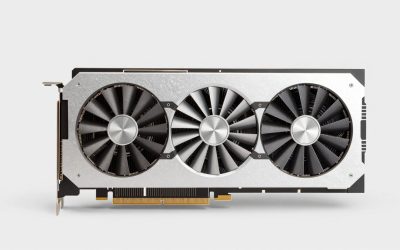
- Top Pick: XFX Speedster MERC319 AMD Radeon RX 6800 XT CORE Gaming Graphics Card with 16GB GDDR6 HDMI 3xDP RX-68XTALFD9
- Best Value: ASRock Radeon RX 9060 XT Challenger 16GB OC, RDNA 4, 3290MHz Boost, 16GB GDDR6 128-bit, PCIe 5.0, Dual Fans, 0dB Silent, LED Indicator, DisplayPort 2.1a, HDMI 2.1b
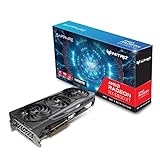
- Premium Choice: Sapphire 11304-01-20G Nitro+ AMD Radeon RX 6800 XT SE PCIe 4.0 Gaming Graphics Card with 16GB GDDR6
Affiliate disclosure: As an Amazon Associate we earn from qualifying purchases. This post contains affiliate links — if you buy through them we may earn a small commission at no extra cost to you. This never affects our recommendations.
As an Amazon Associate we earn from qualifying purchases at no extra cost to you.


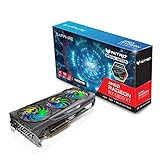

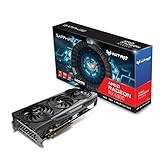

The RX 6800 XT launched in late 2020 as AMD’s answer to Nvidia’s RTX 3080. Five years later, it remains one of the most compelling used GPU purchases you can make. With 16GB of GDDR6 VRAM at a time when 8GB and 12GB cards are struggling with modern games, the 6800 XT has aged far better than its launch-era peers.
In 2026, you can find a well-maintained AIB model in the $200–$280 range. That puts it in direct competition with entry-level new cards and makes it an exceptional value proposition for 1440p gaming — and even a credible 4K option at medium-high settings.
This guide covers the five best AIB variants on the used market, explains what separates them, and gives you an honest framework for deciding whether one belongs in your next build.
In a hurry? See the top-rated RX 6800 XT Graphics Card deals available right now:
🛒 Check Rx 6800 Xt Graphics Card Prices on Amazon →🛒 Best Price Today on Amazon
Prime members get fast, free shipping on everything above, plus member-only deals. New members get a 30-day free trial — cancel anytime.
Start 30-Day Prime Free Trial →See Today’s Amazon DealsWhy the RX 6800 XT Still Makes Sense in 2026
Before diving into the cards, it is worth addressing the obvious question: why buy a five-year-old GPU?
VRAM is the answer. Modern game titles like Alan Wake 2, Black Myth: Wukong, and Hogwarts Legacy routinely push past 10GB of VRAM at 1440p with textures cranked up. The 16GB buffer on the 6800 XT means it handles these loads without the texture pop-in and stuttering that plagues 8GB and 12GB cards.
Driver maturity helps too. AMD’s RDNA 2 architecture is fully polished. There are no driver surprises left — every game has been tested, patched, and optimized over years of real-world use.
Versus the RTX 4070: A new RTX 4070 costs $550–$600 and offers better ray tracing, DLSS 3 with Frame Generation, and slightly higher rasterization performance. But the 6800 XT closes to within 10–15% at 1440p rasterization for roughly 40% of the price on the used market. If you do not care about Frame Generation or ray tracing, the value math heavily favors the 6800 XT.
The caveats are real: no hardware ray tracing advantage, no Frame Generation equivalent (FSR 3’s Frame Generation exists but requires game-by-game support), and power draw sits around 300W — plan your PSU accordingly.
RX 6800 XT AIB Comparison Table
| GPU | Boost Clock | TDP | VRAM | Price (Used) |
|---|---|---|---|---|
| Sapphire Nitro+ RX 6800 XT | 2,360 MHz | 300W | 16GB GDDR6 | $240–$280 |
| PowerColor Red Devil RX 6800 XT | 2,340 MHz | 300W | 16GB GDDR6 | $220–$260 |
| ASUS TUF Gaming RX 6800 XT | 2,310 MHz | 300W | 16GB GDDR6 | $200–$240 |
| MSI Gaming X Trio RX 6800 XT | 2,330 MHz | 300W | 16GB GDDR6 | $210–$250 |
| XFX Speedster MERC 319 RX 6800 XT | 2,365 MHz | 310W | 16GB GDDR6 | $200–$245 |
The 5 Best RX 6800 XT Cards to Buy Used
1. Sapphire Nitro+ RX 6800 XT
The Nitro+ is the benchmark every other RX 6800 XT AIB is measured against. Sapphire has a decades-long reputation for building AMD’s best coolers, and the Nitro+ lives up to it with a triple-fan, triple-slot design that keeps the GPU cool and quiet under sustained load.

Specs
- Boost Clock: 2,360 MHz
- Base Clock: 1,825 MHz
- TDP: 300W
- VRAM: 16GB GDDR6 (256-bit)
- Cooling: Triple-fan (Tri-X), triple-slot
- Dimensions: 322 x 137 x 56 mm
Pros:
- Best thermal performance of any 6800 XT AIB — typically 10–12°C cooler than reference under load
- Near-silent operation at idle; fans stop entirely below 50°C
- Factory overclocked with meaningful headroom for further tuning
- Premium build quality — capacitors, VRMs, and PCB are top-tier
- Dual-BIOS for switching between performance and quiet profiles
Cons:
- Commands the highest price on the used market
- Triple-slot footprint — verify clearance in compact mid-towers
- Premium demand means good condition units sell quickly; requires patience to find
Who it is for: Anyone who wants to buy once and not think about it again. If you run a demanding game library, want the quietest possible system, and are willing to pay $20–$30 more than competing models, the Nitro+ is the pick.
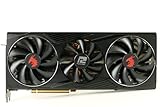
2. PowerColor Red Devil RX 6800 XT
PowerColor Red Devil RX 6800 XT
The Red Devil is PowerColor’s flagship and runs neck-and-neck with the Sapphire Nitro+ in thermal performance. Where the Nitro+ leans toward understated premium, the Red Devil commits fully to gaming aesthetics — heavy RGB, aggressive shroud lines, and a devil-horn logo that will either excite or alienate you.
Specs
- Boost Clock: 2,340 MHz
- Base Clock: 1,825 MHz
- TDP: 300W
- VRAM: 16GB GDDR6 (256-bit)
- Cooling: Triple-fan, triple-slot
- Dimensions: 320 x 140 x 58 mm
Pros:
- Thermal performance rivals the Nitro+ — real-world difference is negligible
- Dual-BIOS (OC / Silent) gives flexibility without software
- Strong factory overclock, excellent overclocking headroom
- RGB implementation is high quality with full addressable control via PowerColor software
- Slightly easier to find on the used market than the Nitro+
Cons:
- Larger physical footprint than most competitors — tight in smaller cases
- RGB adds visual complexity that some builders find excessive
- PowerColor’s used market pricing can be inconsistent; verify condition carefully
Who it is for: Gamers who want Nitro+-level performance at a slightly more accessible price point and do not mind — or actively enjoy — an aggressive aesthetic with full RGB lighting.
3. ASUS TUF Gaming RX 6800 XT
The TUF Gaming card trades top-tier clocks for military-grade build durability and quieter operation in a more compact form factor. ASUS designed it around long-term reliability — Auto-Extreme manufacturing, military-spec capacitors, and an IP5X-certified dust-resistant fan design.
Specs
- Boost Clock: 2,310 MHz
- Base Clock: 1,770 MHz
- TDP: 300W
- VRAM: 16GB GDDR6 (256-bit)
- Cooling: Dual Axial-Tech fans, 2.7-slot
- Dimensions: 300 x 134 x 51 mm
Pros:

- Most compact triple-slot-or-less design — fits mid-towers with tighter GPU clearance
- IP5X-certified fans resist dust ingestion better than open-blade competitors
- Quieter baseline noise floor than Red Devil or Nitro+ at load
- Strong ASUS build reputation; used units tend to be well-maintained
- Lower boost clock still delivers identical real-world gaming performance (within 1–2%)
Cons:
- Dual-fan setup runs slightly warmer than triple-fan designs — 3–5°C difference under sustained load
- Less overclocking headroom than Nitro+ or Red Devil
- Subdued aesthetics may not suit RGB-forward builds
Who it is for: Builders in compact or mid-tower cases who need a slightly shorter card, value long-term durability over maximum factory clock speeds, and prefer quieter acoustics.
4. MSI Gaming X Trio RX 6800 XT
MSI’s Gaming X Trio earns a reputation for near-silent operation thanks to its TORX 3.0 fan technology, which uses double ball bearings and dispersion fan blades for optimized airflow at lower RPM. The result is one of the quietest 6800 XT variants available, without sacrificing thermal performance.
Specs
- Boost Clock: 2,330 MHz
- Base Clock: 1,825 MHz
- TDP: 300W
- VRAM: 16GB GDDR6 (256-bit)
- Cooling: Triple TORX 3.0 fans, triple-slot
- Dimensions: 323 x 140 x 56 mm
Pros:
- TORX 3.0 fans deliver the quietest operation of any card in this list at comparable load
- Silent mode (zero-RPM below 60°C) makes idle and light gaming inaudible
- MSI Afterburner compatibility is excellent — best-in-class overclocking software ecosystem
- Solid thermal performance, within 2–3°C of the Nitro+ at full load
- High availability on the used market; easier to find at fair prices
Cons:
- Longest card in this lineup — verify case clearance before buying
- MSI Mystic Light RGB software can be finicky; third-party control via Afterburner is limited to fans, not lighting
- Used pricing occasionally inflated on listings — shop multiple platforms
Who it is for: The quietest possible 6800 XT build. If you game in a quiet room, stream from a bedroom setup, or simply want near-silent desktop operation, the Gaming X Trio is the card to hunt for.
5. XFX Speedster MERC 319 RX 6800 XT
XFX Speedster MERC 319 RX 6800 XT
The MERC 319 is XFX’s most aggressive 6800 XT variant — named after its 319mm length — and ships with the highest stock boost clock of any card in this guide at 2,365 MHz. XFX designed it for enthusiasts who want maximum performance out of the box and are comfortable with higher power targets.
Specs
- Boost Clock: 2,365 MHz
- Base Clock: 1,825 MHz
- TDP: 310W (+10W vs. reference)
- VRAM: 16GB GDDR6 (256-bit)
- Cooling: Triple-fan, triple-slot
- Dimensions: 319 x 140 x 58 mm
Pros:
- Highest factory boost clock of any card reviewed here
- Competitive thermal performance with all three fans running
- Aggressive pricing on the used market — often the most affordable entry into 6800 XT territory
- Simple, angular shroud design with minimal RGB suits workstation-style builds
- XFX’s used-market presence is strong; supply is consistent
Cons:

- 310W TDP requires a robust PSU — 650W minimum, 750W recommended
- Fans are audible at full load; not in the same acoustic league as the MSI Gaming X Trio or TUF Gaming
- XFX ZERO RPM implementation is less refined than Sapphire or MSI
- Build quality is solid but not premium-tier — plastics feel slightly lighter than Nitro+ or Red Devil
Who it is for: Budget-first buyers who want the highest possible stock clock and are comfortable hunting for deals. If you find a MERC 319 at $200–$220 in good condition, it offers arguably the best raw performance-per-dollar in this entire list.
How to Choose the Right RX 6800 XT on the Used Market
Set your budget ceiling first
Used GPU pricing fluctuates. As a rule, do not pay above $270 for any 6800 XT AIB in 2026 — at that price, the gap to new budget cards narrows uncomfortably. The sweet spot is $210–$250 for a premium AIB (Nitro+, Red Devil) in good condition.
Verify the card’s history
Ask the seller directly: Was this used for gaming or mining? Mining cards accumulate thousands of hours at 100% load. Inspect photos for dust buildup on the heatsink fins, check for bent fan blades, and request a GPU-Z screenshot showing total hours if available. A lightly used gaming card at $240 beats a heavily mined card at $200 every time.
Match the card to your case
- Compact mid-tower (e.g., B500M, H510): Go with the ASUS TUF Gaming (300mm). All other cards exceed 315mm.
- Standard ATX mid-tower and larger: Any card fits; choose based on acoustics and price.
Match the card to your PSU
All five cards require a minimum 650W PSU with two 8-pin PCIe connectors. The XFX MERC 319 pushes 310W and benefits from 750W. Do not cheap out on a used PSU to pair with a used GPU — a failing PSU can kill both cards.
Prioritize by use case
| Priority | Best Pick |
|---|---|
| Best overall used buy | Sapphire Nitro+ |
| Best RGB aesthetics | PowerColor Red Devil |
| Best for compact cases | ASUS TUF Gaming |
| Quietest operation | MSI Gaming X Trio |
| Best price-per-clock | XFX Speedster MERC 319 |
Final Verdict
The RX 6800 XT is the best value proposition in the used GPU market in 2026 for 1440p gaming. Its 16GB VRAM buffer is no longer a luxury — it is a meaningful advantage that will keep this card relevant for another two to three years as VRAM requirements continue climbing.
Among AIB models, the Sapphire Nitro+ is the top pick for anyone who wants to buy with confidence. It runs the coolest, the quietest, and has the highest resale value if you decide to upgrade. For budget-focused buyers, the XFX MERC 319 frequently appears at the lowest prices and delivers the highest stock clocks — worth hunting for if you can find a clean one under $220.
Avoid paying a premium for any 6800 XT over $270. At that price, evaluate whether a new RX 7600 XT or used RTX 3080 makes more sense for your specific use case. And always buy from a seller who can demonstrate the card runs stable — a five-minute FurMark run screenshot is a reasonable ask before any transaction.
The RX 6800 XT earned its reputation at launch. In 2026, with its VRAM advantage finally paying real dividends, it may be a better buy now than it was at full retail price.
Related Articles
Looking for more on this topic? Browse the hand-picked guides below — each one applies the same scoring rubric used in this review.
Frequently Asked Questions
What is the best gaming gpu rx 6800 xt in 2026?
The best gaming gpu rx 6800 xt depends on your budget and how you plan to use it. The options compared above are our top-rated picks based on real customer ratings, build quality, and overall value — start with the highest-rated model that fits your budget.
How much should I expect to spend on a gaming gpu rx 6800 xt?
Prices vary by brand and features. Budget options cover the essentials, while mid-range and premium models add durability, performance, and extra features. Compare the prices in the list above to find the best value for your needs.
What should I look for when buying a gaming gpu rx 6800 xt?
Focus on what matters most for your use case — build quality, compatibility, performance, warranty, and verified customer reviews. Every pick above is selected to balance these factors.
Are budget gaming gpu rx 6800 xt options worth it?
Yes. For most people a well-reviewed budget or mid-range gaming gpu rx 6800 xt delivers excellent value. You only need to spend more if you specifically require premium materials or top-tier performance.
How did we choose these gaming gpu rx 6800 xt picks?
We compare current Amazon ratings, review counts, key features, and price to surface the options with the best real-world value. The list is refreshed as ratings and availability change.
Ready to decide? Our #1 pick for 2026 is the GPU.
Live price & availability on Amazon.