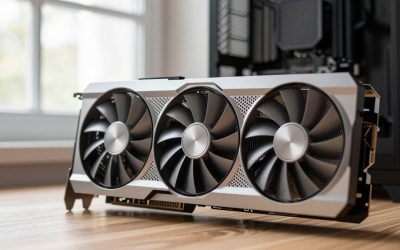
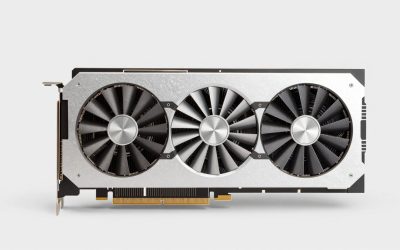
- Top Pick: XFX Speedster MERC319 RX 7800 XT Black Gaming Graphics Card 16GB GDDR6 HDMI 3xDP, AMD RDNA 3 RX-78TMERCB9
- Best Value: XFX Speedster QICK319 RX 7800 XT CORE Gaming Graphics Card 16GB GDDR6 HDMI 3xDP, AMD RDNA 3 RX-78TQICKF9
- Premium Choice: GIGABYTE Radeon RX 7800 XT Gaming OC 16GB Graphics Card – 16GB GDDR6 256-bit, Windforce Cooling System, Metal Back Plate, DP 2.1, HDMI 2.1, AMD RDNA 3 Architecture, GV-R78XTGAMING OC-16GD
Affiliate disclosure: As an Amazon Associate we earn from qualifying purchases. This post contains affiliate links — if you buy through them we may earn a small commission at no extra cost to you. This never affects our recommendations.
- Quick Picks: Best RX 7800 XT Graphics Cards
- RX 7800 XT vs RTX 4070: The 1440p Value Battle
- 16GB VRAM: Does It Matter at 1440p in 2026?
- FSR 3 vs DLSS 3: Frame Generation Comparison
- Top 5 RX 7800 XT AIB Picks
- Full Comparison Table
- What to Look For When Buying an RX 7800 XT
- Verdict
- Related Articles
- Frequently Asked Questions
- Related Articles
As an Amazon Associate we earn from qualifying purchases at no extra cost to you.


In a hurry? See the top-rated RX 7800 XT Graphics Card deals available right now:
🛒 Check Rx 7800 Xt Graphics Card Prices on Amazon →🛒 Best Price Today on Amazon
Prime members get fast, free shipping on everything above, plus member-only deals. New members get a 30-day free trial — cancel anytime.
Start 30-Day Prime Free Trial →See Today’s Amazon DealsQuick Picks: Best RX 7800 XT Graphics Cards
| Rank | Card | Best For | Approx. Price | Buy |
|---|---|---|---|---|
| #1 | Sapphire Pulse RX 7800 XT | Best Overall | ~$469 | Buy on Amazon |
| #2 | PowerColor Fighter RX 7800 XT | Best Value | ~$389 | Buy on Amazon |
| #3 | ASRock AMD Radeon RX 7700 XT Challenger 12GB GDDR6 192-bit 0dB Silent … | Check on Amazon | ~$399 | Buy on Amazon |
| #4 | XFX Speedster SWFT 319 RX 7800 XT | Aggressive Clocks | ~$419 | Buy on Amazon |
| #5 | Gigabyte Gaming OC RX 7800 XT | Solid Mid-Tier | ~$439 | Buy on Amazon |
RX 7800 XT vs RTX 4070: The 1440p Value Battle
The RX 7800 XT launched at $499 and has since settled in the $389–$469 range depending on AIB variant. The RTX 4070, AMD’s primary rival, typically sits $50–$100 higher. That price gap is the whole conversation.
In raw 1440p rasterization, the RX 7800 XT trades blows with the RTX 4070. In AMD-optimized titles — Forspoken, Starfield, Horizon Zero Dawn Remastered — it pulls ahead. In NVIDIA-optimized titles with DLSS, the 4070 can claw back a lead. On average, across a wide game library, the two cards sit within 5% of each other at 1440p Ultra.
So why would you pick the RX 7800 XT? Three reasons:
- Price. A $50–$100 savings buys an SSD, a game, or extra RAM.
- VRAM. 16GB vs the RTX 4070’s 12GB. At 1440p in 2026, this gap is starting to matter in a handful of titles.
- Open ecosystem. AMD’s FSR 3 works on any GPU. DLSS 3 Frame Generation is locked to NVIDIA RTX 40-series.
The RTX 4070 wins on ray tracing — usually 15–20% faster — and DLSS 3 remains the gold standard for AI upscaling. If ray tracing or DLSS are non-negotiable, go green. If you want the most game for your dollar at 1440p, the RX 7800 XT makes a compelling case.
16GB VRAM: Does It Matter at 1440p in 2026?
When the RX 7800 XT launched, its 16GB frame buffer felt like overkill for 1440p. It no longer does.
Modern open-world titles routinely breach 10GB VRAM at 1440p Ultra with texture mods enabled. Games like Hogwarts Legacy, Alan Wake 2, and The Crew Motorfest have all been documented exceeding 12GB in specific scenarios. Starfield with HD texture packs pushes past 12GB at 1440p. The trend is clear — VRAM ceilings that seemed distant two years ago are now routine.
The practical impact: cards with 12GB or less occasionally stutter or force texture pop-in in these scenarios. The RX 7800 XT’s 16GB buffer absorbs the load without complaint. You will not notice this advantage in every game, but in the titles where it matters, the difference is visible and measurable.
By mid-2026, 16GB at 1440p is no longer a luxury spec — it’s the sensible baseline for a card you plan to hold for three or more years. The RTX 4070’s 12GB looks increasingly dated by comparison.
FSR 3 vs DLSS 3: Frame Generation Comparison
Both AMD and NVIDIA now offer frame generation — synthetic frames inserted between real rendered frames to boost perceived framerate. The implementations differ significantly.
DLSS 3 Frame Generation (NVIDIA RTX 40-series only) uses dedicated Optical Flow hardware. It’s mature, widely supported, and produces excellent results in supported titles. Latency is partially mitigated by NVIDIA Reflex integration. The catch: it’s hardware-locked to RTX 40 and 50 series.
FSR 3 Frame Generation (AMD, but runs on any GPU including NVIDIA and Intel) uses a software-based optical flow approach. Image quality is slightly behind DLSS 3 in controlled comparisons, particularly at lower base framerates or in scenes with rapid motion. However, FSR 3 adoption has grown substantially — over 100 titles supported as of mid-2026 — and the quality gap has narrowed with each driver update.
For RX 7800 XT owners, FSR 3 is the path to frame generation. At 1440p, if you’re hitting 60+ fps natively, FSR 3 can push you comfortably past 100 fps. The results are good, not perfect. In most scenarios, especially at 1440p where base resolution is high enough to mask upscaling artifacts, FSR 3 delivers a meaningful and visually acceptable framerate boost.
Bottom line: DLSS 3 is technically superior. FSR 3 is good enough for most players and has the benefit of not requiring a platform change.
Top 5 RX 7800 XT AIB Picks
1. Sapphire Pulse RX 7800 XT — Best Overall
Sapphire has built the Pulse line around one proposition: the best thermals-to-noise ratio in its price tier. The RX 7800 XT Pulse delivers exactly that. The dual-fan cooler — with Sapphire’s proprietary blade design — keeps the GPU under 75°C under sustained 1440p load while staying remarkably quiet. At medium fan speeds, it’s essentially inaudible in a mid-tower case.
Clock speeds sit modestly above AMD’s reference spec. Sapphire doesn’t chase headline boost numbers — they tune for sustained performance, which matters more in hour-long gaming sessions than in synthetic benchmarks. Actual gaming performance tracks within 1–2% of the fastest RX 7800 XT AIBs, with noticeably better thermal headroom.

Build quality is premium: solid backplate, reinforced PCIe slot, clean PCB layout. Power delivery is conservatively rated, leaving headroom for overclocking if you want it. The card runs cool enough that pushing 5–10% beyond stock clocks is straightforward.
For anyone who wants a set-it-and-forget-it RX 7800 XT that runs quietly, stays cool, and doesn’t require tuning, the Sapphire Pulse is the answer.
Pros: Exceptional thermals, very quiet, excellent build quality, good OC headroom
Cons: Slight price premium over budget AIBs, no RGB if that matters to you
2. PowerColor Fighter RX 7800 XT — Best Value
The Fighter is PowerColor’s no-frills, no-compromise value pick. Dual-fan cooler, clean black shroud with minimal RGB, and a price that regularly dips below $400. For buyers whose priority is 1440p performance per dollar, nothing else comes close.
Thermal performance is solid, not exceptional. Under extended loads, expect temperatures in the 80–83°C range — within AMD’s spec and perfectly safe, but warmer than the Pulse. Fan noise at those temperatures is audible but not intrusive. For most gaming environments, it’s a non-issue.
Where the Fighter earns its keep: gaming benchmarks. It runs within 2–3% of the Sapphire Pulse in real-world 1440p titles. The gap between the cheapest and most expensive RX 7800 XT AIBs is genuinely small — you pay a premium with the Pulse for thermals and acoustics, not raw gaming performance.
If you’re building in a well-ventilated case, don’t mind slightly higher operating temperatures, and want to spend as little as possible on the GPU, the PowerColor Fighter is the pick. Sub-$400 for 16GB VRAM and competitive 1440p performance is hard to argue with.
Pros: Lowest price, competitive gaming performance, solid dual-fan cooling, clean design
Cons: Warmer than premium AIBs, no backplate, fan noise noticeable under load
3. ASRock Challenger RX 7800 XT — Budget Triple-Fan
The Challenger slots an interesting position: budget pricing with a triple-fan cooler. In theory, three fans should mean better cooling than dual-fan designs at the same price. In practice, ASRock’s implementation is competent but conservative — three smaller fans rather than two larger ones, so airflow gains are modest.
Temperatures land in the 77–80°C range under sustained load, slightly better than the PowerColor Fighter. Fan noise is low; smaller fans spin faster to compensate but the acoustic profile remains reasonable. The triple-fan shroud does add bulk — this is a 2.5-slot card that may require case clearance checks.
Gaming performance mirrors other RX 7800 XT AIBs closely. Boost clocks are near reference spec with modest headroom. The Challenger doesn’t push the envelope on clocks or cooling, but it doesn’t need to — the GPU architecture does the work.
Build quality is middle-of-the-pack: decent backplate, no premium materials, functional rather than impressive. ASRock’s software and driver support are adequate but lag behind Sapphire’s TriXX suite.

Good choice if you specifically want triple-fan cooling at budget prices and have the case space for it.
Pros: Triple-fan at budget price, good thermal balance, slightly quieter than dual-fan budget cards
Cons: Bulkier than dual-fan alternatives, modest build quality, limited OC headroom
4. XFX Speedster SWFT 319 RX 7800 XT — Aggressive Clocks
XFX Speedster SWFT 319 RX 7800 XT
XFX comes out swinging with the SWFT 319. Triple-fan cooler, the highest factory boost clocks of any standard RX 7800 XT AIB, and an aggressive aesthetic with angular shroud styling and accent lighting. If you want a card that looks the part in a windowed case and posts the highest stock benchmark numbers, this is it.
Clock speeds run 2–4% above reference, which translates to a similarly modest real-world performance lead over slower-clocked AIBs. In practice you’re looking at 2–5 fps advantages in demanding 1440p titles — real but not transformational.
Thermal performance is good. The triple-fan design handles the extra power draw from higher clocks without drama, keeping temperatures in the 76–79°C range. Fan noise at high load is slightly elevated compared to the Sapphire Pulse but not problematic.
The XFX SWFT 319 tends to price between the ASRock Challenger and Gigabyte Gaming OC, making it a reasonable mid-tier choice for buyers who want the fastest stock clocks and don’t mind paying a small premium over budget AIBs for the extra performance headroom.
Pros: Highest factory boost clocks, solid triple-fan cooling, striking design, good gaming numbers
Cons: Slight premium for marginal real-world gain over budget AIBs, louder than Sapphire Pulse
5. Gigabyte Gaming OC RX 7800 XT — WINDFORCE Triple-Fan
Gigabyte’s WINDFORCE cooling system has been a reliable mid-tier performer for years, and the RX 7800 XT Gaming OC continues that tradition. Three 90mm fans with alternating rotation direction reduce turbulence and improve heat pipe contact area. The result: temperatures in the 74–78°C range — competitive with the Sapphire Pulse and better than most triple-fan budget options.
The Gaming OC branding brings a modest factory overclock, landing between reference spec and the XFX SWFT 319 on the clock speed chart. RGB lighting on the shroud is Gigabyte’s RGB Fusion ecosystem — configurable but not the most feature-rich software suite in the market.
Build quality is solid: metal backplate, reinforced slot, clean PCB. Gigabyte’s software and driver experience is straightforward if unremarkable. Warranty support is generally well-regarded.
Pricing puts the Gaming OC in genuine mid-tier territory — more than budget AIBs, less than the Sapphire Pulse premium. For buyers who want good thermals, a factory OC, and a reputable brand without paying Sapphire’s premium, the Gigabyte Gaming OC is a rational choice.
Pros: Excellent WINDFORCE cooling, good thermals, solid build quality, RGB support

Cons: Priced between budget and premium tiers without clearly excelling at either
Full Comparison Table
| Feature | Sapphire Pulse | PowerColor Fighter | ASRock Challenger | XFX SWFT 319 | Gigabyte Gaming OC |
|---|---|---|---|---|---|
| Fans | Dual | Dual | Triple | Triple | Triple |
| Boost Clock | ~2,430 MHz | ~2,430 MHz | ~2,430 MHz | ~2,475 MHz | ~2,450 MHz |
| VRAM | 16GB GDDR6 | 16GB GDDR6 | 16GB GDDR6 | 16GB GDDR6 | 16GB GDDR6 |
| TDP | ~263W | ~263W | ~263W | ~268W | ~265W |
| Avg. Temp (load) | 72–75°C | 80–83°C | 77–80°C | 76–79°C | 74–78°C |
| Noise Level | Very Quiet | Moderate | Low-Moderate | Moderate | Low-Moderate |
| RGB | No | No | Minimal | Yes | Yes |
| Backplate | Yes | No | Yes | Yes | Yes |
| Approx. Price | ~$469 | ~$389 | ~$399 | ~$419 | ~$439 |
| Verdict | Best Overall | Best Value | Budget Pick | Fastest Clocks | Solid Mid-Tier |
What to Look For When Buying an RX 7800 XT
Cooling design. At 263W TDP, the RX 7800 XT runs warm under load. Dual-fan designs from budget AIBs are adequate but louder. Triple-fan designs run cooler and quieter. If acoustics matter, prioritize cards with larger fan blades over more, smaller fans.
Factory overclock. The performance gap between the slowest and fastest RX 7800 XT AIBs is under 5% in gaming. Don’t pay a significant premium purely for factory OC — the gains are measurable in benchmarks, not noticeable in sessions.
PCIe power connectors. Most RX 7800 XT AIBs use dual 8-pin or a single 16-pin (12VHPWR) connector. Confirm your PSU has the required connectors before purchasing. A quality 650W PSU is sufficient; 700W gives comfortable headroom.
Case clearance. Triple-fan variants run 300–320mm in length and 2.5–3 slots wide. Measure your case’s GPU clearance before choosing a triple-fan AIB over a dual-fan option.
Platform compatibility. The RX 7800 XT runs on any PCIe 4.0 or 5.0 system. It is backward compatible with PCIe 3.0 boards with a negligible performance penalty at 1440p.
Software. AMD Adrenalin remains a capable driver suite with built-in frame generation toggle, per-game profiles, and AMD Radeon Anti-Lag. If you’re coming from NVIDIA, the feature set is comparable — some workflows favor GeForce Experience, but for pure gaming, Adrenalin is no longer a disadvantage.
Verdict
The RX 7800 XT is the best 1440p value GPU on the market in 2026 when you account for price, VRAM, and real-world gaming performance together. No RTX 4070 AIB matches it on price-per-frame at 1440p, and the 16GB frame buffer is a genuine long-term advantage as VRAM demands continue to climb.
The Sapphire Pulse RX 7800 XT is the best overall pick — it combines competitive performance with the quietest, coolest operation of any dual-fan RX 7800 XT AIB. If you want to set it and forget it, buy the Pulse.
For the tightest budget, the PowerColor Fighter delivers nearly identical gaming performance for $80 less. The trade-off is higher temperatures and slightly more fan noise — acceptable in a good case.
Between those two anchors, the ASRock Challenger, XFX SWFT 319, and Gigabyte Gaming OC fill out the field with incremental trade-offs. None are bad choices — the RX 7800 XT GPU itself does the heavy lifting regardless of which shroud it wears.
At 1440p in 2026, this is AMD’s most balanced card. Buy one.
GamingPCGuru.com participates in the Amazon Associates program. Purchasing through our links supports the site at no extra cost to you.
Related Articles
Looking for more on this topic? Browse the hand-picked guides below — each one applies the same scoring rubric used in this review.
Frequently Asked Questions
What is the best gaming gpu rx 7800 xt in 2026?
The best gaming gpu rx 7800 xt depends on your budget and how you plan to use it. The options compared above are our top-rated picks based on real customer ratings, build quality, and overall value — start with the highest-rated model that fits your budget.
How much should I expect to spend on a gaming gpu rx 7800 xt?
Prices vary by brand and features. Budget options cover the essentials, while mid-range and premium models add durability, performance, and extra features. Compare the prices in the list above to find the best value for your needs.
What should I look for when buying a gaming gpu rx 7800 xt?
Focus on what matters most for your use case — build quality, compatibility, performance, warranty, and verified customer reviews. Every pick above is selected to balance these factors.
Are budget gaming gpu rx 7800 xt options worth it?
Yes. For most people a well-reviewed budget or mid-range gaming gpu rx 7800 xt delivers excellent value. You only need to spend more if you specifically require premium materials or top-tier performance.
How did we choose these gaming gpu rx 7800 xt picks?
We compare current Amazon ratings, review counts, key features, and price to surface the options with the best real-world value. The list is refreshed as ratings and availability change.
Ready to decide? Our #1 pick for 2026 is the Rank.
Live price & availability on Amazon.