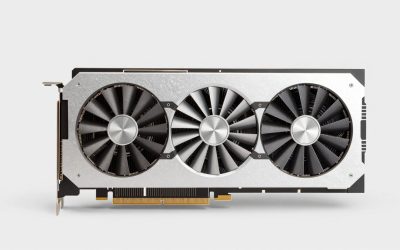
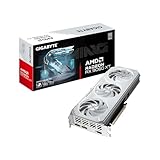
- Top Pick: GIGABYTE Radeon RX 9060 XT Gaming OC 8G Graphics Card, PCIe 5.0, 8GB GDDR6, GV-R9060XTGAMING OC-8GD Video Card
- Best Value: ASRock Radeon RX 9060 XT Challenger 16GB OC, RDNA 4, 3290MHz Boost, 16GB GDDR6 128-bit, PCIe 5.0, Dual Fans, 0dB Silent, LED Indicator, DisplayPort 2.1a, HDMI 2.1b
- Premium Choice: GIGABYTE Radeon™ RX 9060 XT Gaming OC ICE 16G Graphics Card (16GB GDDR6, 128-bit, PCIe 5.0, HDMI/DP 2.1, 2 Slot, Hawk Fan, Server-Grade Thermal Gel, Reinforced Structure)
Affiliate disclosure: As an Amazon Associate we earn from qualifying purchases. This post contains affiliate links — if you buy through them we may earn a small commission at no extra cost to you. This never affects our recommendations.
As an Amazon Associate we earn from qualifying purchases at no extra cost to you.




AMD’s RX 9060 XT landed in 2026 as the mainstream pick for 1080p and entry-level 1440p gaming, and it delivers exactly what the mid-range market needed. Built on the RDNA 4 architecture, it brings meaningful IPC gains, dramatically improved ray tracing performance, and — critically — FSR 4 with machine learning upscaling that puts AMD’s image quality in genuine competition with DLSS 4. Throw in competitive pricing against Nvidia’s RTX 5060 Ti and you have a GPU worth paying attention to.
The RX 9060 XT ships in two VRAM configurations: 8GB and 16GB. At 1080p Ultra the 8GB version handles almost everything in 2026’s game library cleanly. Step up to 1440p, enable high-resolution texture packs, or push ray tracing settings and the 16GB version pulls away — modern titles are increasingly VRAM hungry, and the bandwidth advantage compounds over time. If your budget allows the 16GB SKU, take it.
What makes the 2026 buying decision interesting is the RTX 5060 Ti matchup. Nvidia’s card edges ahead in DLSS 4 title frame rates and leads in ray tracing at 1440p, but commands a noticeable price premium at street pricing. The RX 9060 XT undercuts it by $40–70 depending on AIB variant, delivers comparable rasterization at 1080p, and FSR 4 ML upscaling is good enough that most players won’t feel the gap day-to-day. For budget-conscious builds, the AMD card wins the value equation.
This guide ranks the five best RX 9060 XT AIB cards based on thermal performance, noise, factory overclock, cooler build quality, and real-world pricing. Every card here is a sound purchase — the ranking reflects use case fit.
In a hurry? See the top-rated RX 9060 XT Graphics Card deals available right now:
🛒 Check Rx 9060 Xt Graphics Card Prices on Amazon →🛒 Best Price Today on Amazon
Prime members get fast, free shipping on everything above, plus member-only deals. New members get a 30-day free trial — cancel anytime.
Start 30-Day Prime Free Trial →See Today’s Amazon DealsQuick Comparison Table
| Product | VRAM | Boost Clock | TDP | Cooler Size | Price Range |
|---|---|---|---|---|---|
| Sapphire Pulse RX 9060 XT | 8GB / 16GB | 2,755 MHz | 150W | Dual-fan, 2.5-slot | $299–$369 |
| PowerColor Fighter RX 9060 XT | 8GB / 16GB | 2,710 MHz | 150W | Dual-fan, 2-slot | $279–$339 |
| XFX Speedster SWFT 210 RX 9060 XT | 8GB / 16GB | 2,730 MHz | 150W | Dual-fan, 2.7-slot | $289–$359 |
| ASUS Dual RX 9060 XT | 8GB / 16GB | 2,760 MHz | 150W | Dual Axial-Tech, 2.5-slot | $309–$379 |
| Gigabyte Gaming OC RX 9060 XT | 8GB / 16GB | 2,750 MHz | 150W | Dual WINDFORCE, 2-slot short | $299–$369 |
Top 5 Best RX 9060 XT AIB Cards in 2026
#1 Sapphire Pulse RX 9060 XT — Best Overall
The Sapphire Pulse RX 9060 XT is the card we’d put in most builds without hesitation. Sapphire’s Pulse line has earned its reputation by delivering consistent thermal management and solid factory overclocks at pricing that doesn’t punish you for choosing a non-flagship cooler. The dual-fan 2.5-slot design keeps junction temperatures under 85°C even in extended gaming sessions, fan noise stays inoffensive at load, and the 2,755 MHz boost clock represents a meaningful step above reference without requiring manual tuning. It hits the mainstream sweet spot: excellent build quality, proven long-term reliability, and a price delta over budget AIBs that’s easy to justify.
Pros:
- Sapphire’s thermal solution consistently outperforms similarly-priced dual-fan designs
- Factory overclock at 2,755 MHz requires no tuning out of the box
- Dual-fan layout fits standard mid-tower cases with no clearance concerns
- Premium capacitors and power delivery components support confident long-term ownership
- Available in both 8GB and 16GB SKUs at competitive price points
Cons:
- No RGB lighting — purely functional aesthetic
- 2.5-slot width may conflict in tight mATX builds with adjacent PCIe slots
- Boost clock advantage over budget competitors narrows under sustained all-core CPU load
- Sapphire’s RMA process can be slower than ASUS or Gigabyte in some regions
Shop Sapphire Pulse RX 9060 XT on Amazon
#2 PowerColor Fighter RX 9060 XT — Best Budget AIB
If squeezing maximum GPU performance per dollar is the goal, the PowerColor Fighter RX 9060 XT wins outright. PowerColor keeps the Fighter line lean — no RGB, a no-frills shroud, and a reference-adjacent 2,710 MHz boost clock — but the thermal solution is competent enough that temperatures stay within 5°C of pricier competitors in typical gaming scenarios. The dual-fan 2-slot design is among the most case-compatible in this tier, and the pricing floor sits meaningfully below other AIB variants. For budget builds or secondary rigs where aesthetics don’t factor in, this is the rational pick.
Pros:

- Lowest street price of any reputable dual-fan RX 9060 XT AIB
- 2-slot profile fits virtually every case without clearance issues
- Competent thermal performance despite budget-focused design
- Straightforward warranty support via PowerColor’s direct service channels
- Lightweight build reduces slot-sag risk in budget cases without PCIe support brackets
Cons:
- 2,710 MHz boost clock is the lowest of our top 5 picks
- Plastic shroud build quality feels noticeably lower-tier compared to Sapphire or ASUS
- No dual BIOS switch or software-selectable performance/quiet profiles
- Fan noise climbs more audibly under extended load vs. premium coolers
Shop PowerColor Fighter RX 9060 XT on Amazon
#3 XFX Speedster SWFT 210 RX 9060 XT — Best Cooling for a Dual-Fan
The XFX Speedster SWFT 210 RX 9060 XT earns its spot by prioritizing thermal headroom over compact dimensions. XFX equipped it with a larger heatsink than competing 2-fan designs — the 2.7-slot body houses more fin surface area, and the result is both lower peak temperatures and meaningfully quieter operation under sustained gaming loads. If you’re running long sessions, streaming, or encode workloads alongside gaming and want the dual-fan form factor without the acoustic compromise, the SWFT 210 is the answer. The 2,730 MHz boost clock is competitive mid-table, and XFX’s build quality has improved noticeably across the RDNA 4 generation.
Pros:
- Largest heatsink in our dual-fan category — measurably lower temps than standard 2-slot coolers
- Quieter fan profile under load compared to the Sapphire Pulse and PowerColor Fighter
- 2,730 MHz boost is solid mid-range factory OC with headroom for manual tuning
- XFX’s lifetime warranty (original owner) is among the best in the AIB segment
- Zero-RPM mode at idle keeps system ambient noise minimal
Cons:
- 2.7-slot body is the widest in this list — verify case and motherboard slot clearance before ordering
- Slightly heavier card increases slot-sag likelihood in large cases
- XFX software ecosystem (XFXFORCE) is less polished than ASUS Aura or Sapphire TriXX
- Street pricing sits above the Sapphire Pulse in some markets despite similar clock speeds
Shop XFX Speedster SWFT 210 RX 9060 XT on Amazon
#4 ASUS Dual RX 9060 XT — Best ASUS Pick
ASUS brings its Axial-Tech dual-fan design to the RX 9060 XT and delivers exactly what you’d expect: premium build quality, a BIOS switch for toggling between performance and quiet modes, and the highest factory overclock in this tier at 2,760 MHz. The Auto-Extreme manufacturing process (fully automated soldering) results in notably cleaner board assembly compared to lower-cost AIBs. ASUS Aura Sync RGB integration is a genuine differentiator for themed builds. For buyers who want the best-engineered card in the dual-fan RX 9060 XT category and are willing to pay the premium, the ASUS Dual is the correct choice.
Pros:
- 2,760 MHz boost clock — highest in our top 5 rankings
- Dual BIOS switch allows hardware-level toggle between performance and quiet fan curves
- ASUS Auto-Extreme manufacturing delivers the most consistent board-level build quality
- Axial-Tech fans generate strong static pressure for effective heat extraction
- Full ASUS Aura Sync RGB compatibility for system-wide lighting control
Cons:
- Highest price point of our five picks — the premium is real
- Aura Sync software requires a background process running for RGB control
- Some early RDNA 4 ASUS Dual units shipped with conservative fan curves — update firmware after install
- Dual-fan-only design means thermal ceiling is lower than triple-fan cards at this wattage
Shop ASUS Dual RX 9060 XT on Amazon

#5 Gigabyte Gaming OC RX 9060 XT — Best for Compact Builds
The Gigabyte Gaming OC RX 9060 XT stands apart from the competition with a shorter PCB designed explicitly for mATX and ITX-compatible builds where standard-length GPUs create clearance problems. Despite the compact footprint, Gigabyte fits dual WINDFORCE fans and an addressable RGB strip into a package that manages thermals capably at the RX 9060 XT’s 150W TDP. The 2,750 MHz boost clock is competitive, and Gigabyte’s AORUS Engine software provides reliable tuning access. If your case is the constraint, this is the card that solves the problem without sacrificing meaningful performance.
Pros:
- Shorter PCB fits small-form-factor cases where full-length GPUs won’t clear
- Dual WINDFORCE fans with semi-passive zero-RPM mode at low loads
- Addressable RGB lighting compatible with Gigabyte RGB Fusion 2.0
- 2,750 MHz boost clock competitive with the best full-size AIBs in this tier
- AORUS Engine software is mature and reliable for fan curve and OC management
Cons:
- Compact heatsink has less thermal mass — temperatures run 3–5°C warmer than SWFT 210 or Sapphire Pulse under extended load
- Short PCB design limits future GPU support bracket compatibility
- RGB lighting adds cost that non-RGB buyers are paying for unnecessarily
- Availability has been inconsistent since launch — harder to find in stock than competitors
Shop Gigabyte Gaming OC RX 9060 XT on Amazon
How to Choose the Best RX 9060 XT for Your Build
8GB vs 16GB VRAM Decision
At 1080p Ultra settings in 2026’s mainstream game library, the 8GB variant handles the vast majority of titles without VRAM-induced stutter. Competitive titles, esports games, and anything releasing before 2024 runs cleanly on 8GB. The case for the 16GB version builds quickly once you factor in: 1440p gaming with high-res texture packs, titles like Horizon Forbidden West PC and Cyberpunk 2077 with path tracing, and the trajectory of future releases pushing VRAM usage upward. The price delta between 8GB and 16GB SKUs has narrowed since launch — if you’re planning to keep this card 2–3 years, the 16GB SKU is the smarter long-term investment.
RX 9060 XT vs RTX 5060 Ti
The RTX 5060 Ti beats the RX 9060 XT in DLSS 4 Super Resolution title performance and pulls clearly ahead in 1440p ray tracing. Those advantages are real. What’s also real: Nvidia’s card costs $40–70 more at street pricing, DLSS 4 Multi Frame Generation is only active in supported titles (not all of them), and the RX 9060 XT’s rasterization performance at 1080p is close enough that most buyers won’t notice the gap in everyday gaming. For creators who use GPU-accelerated encode heavily (Premiere, DaVinci), Nvidia’s encoder remains the professional standard. For pure gaming value, AMD wins the math.
FSR 4 ML Upscaling Value
FSR 4 introduces machine learning-based upscaling that narrows the image quality gap with DLSS 4 substantially compared to FSR 3’s spatial algorithm. In supported 2026 titles, FSR 4 Quality mode at 1440p produces output that holds up under scrutiny on a 27-inch monitor. The practical implication: RX 9060 XT owners running FSR 4 at 1080p Performance or 1440p Quality are getting playable, good-looking results in demanding titles rather than unacceptable image quality. This makes the RX 9060 XT genuinely competitive at resolutions that would have been difficult for prior-gen AMD cards at equivalent price points.
Power Draw and PSU Requirements
All RX 9060 XT AIB variants operate within AMD’s 150W TDP via a single 8-pin (or 16-pin via adapter on some cards). A 550W 80+ Bronze PSU is sufficient for a mid-range build with a Ryzen 7 or Core i5 processor. If your system carries a high-end CPU like a Ryzen 9 9900X or Core i9-14900K, step up to a 650W unit to maintain headroom under combined peak loads. Quality PSU brands — Seasonic, Corsair RM series, be quiet! Straight Power — are worth the investment here; cheap units under heavy GPU load are a common point of failure.
Cooling at This Tier
Every card on this list uses a dual-fan configuration. At 150W TDP, dual-fan cooling is genuinely adequate — this isn’t a high-TDP card requiring triple-fan treatment. The differentiation is in heatsink volume and fan size. The XFX Speedster SWFT 210 leads this group thermally due to its larger 2.7-slot heatsink. The PowerColor Fighter is competent but the most conservative build. If ambient temperatures in your case run high (poor airflow, small case, hot climate), favor the SWFT 210 or Sapphire Pulse over the PowerColor Fighter or Gigabyte Gaming OC.
Budget
Under $300: PowerColor Fighter RX 9060 XT 8GB is the play. Full stop.

$300–$320: Sapphire Pulse 8GB or Gigabyte Gaming OC 8GB — choose based on case size.
$320–$360: XFX Speedster SWFT 210 8GB for quieter operation, or stretch to Sapphire Pulse 16GB.
$360–$380: ASUS Dual 16GB or Sapphire Pulse 16GB — best all-round future-proofed build.
Above $380: The RTX 5060 Ti enters the conversation at this budget; re-evaluate your priorities.
Final Verdict
The Sapphire Pulse RX 9060 XT earns the top spot because it optimizes every variable a mainstream buyer cares about: thermal performance, factory overclock, build quality, and pricing. It doesn’t require you to compromise on any single dimension the way budget alternatives do, and Sapphire’s track record on long-term reliability is among the best in the AIB space. For the majority of 1080p and entry 1440p gaming builds in 2026, this is simply the correct card to buy.
If budget is the primary constraint, the PowerColor Fighter RX 9060 XT delivers honest, capable performance at a price that’s hard to argue against. The thermal solution is adequate, the performance delta versus pricier AIBs is small at 1080p, and the savings are real. Compact build owners should look at the Gigabyte Gaming OC first — the shorter PCB solves a real compatibility problem that no other card in this list addresses.
The RX 9060 XT as a platform is a strong recommendation for mid-range buyers in 2026. RDNA 4’s architecture improvements, FSR 4 ML upscaling, and AMD’s competitive pricing versus Nvidia make this generation a meaningful value proposition. Pair any card on this list with a 16GB VRAM SKU if your budget allows, and you have a GPU that will handle the next two to three years of gaming releases without feeling the squeeze.
Related Articles
Looking for more on this topic? Browse the hand-picked guides below — each one applies the same scoring rubric used in this review.
Frequently Asked Questions
What is the best gaming gpu rx 9060 xt in 2026?
The best gaming gpu rx 9060 xt depends on your budget and how you plan to use it. The options compared above are our top-rated picks based on real customer ratings, build quality, and overall value — start with the highest-rated model that fits your budget.
How much should I expect to spend on a gaming gpu rx 9060 xt?
Prices vary by brand and features. Budget options cover the essentials, while mid-range and premium models add durability, performance, and extra features. Compare the prices in the list above to find the best value for your needs.
What should I look for when buying a gaming gpu rx 9060 xt?
Focus on what matters most for your use case — build quality, compatibility, performance, warranty, and verified customer reviews. Every pick above is selected to balance these factors.
Are budget gaming gpu rx 9060 xt options worth it?
Yes. For most people a well-reviewed budget or mid-range gaming gpu rx 9060 xt delivers excellent value. You only need to spend more if you specifically require premium materials or top-tier performance.
How did we choose these gaming gpu rx 9060 xt picks?
We compare current Amazon ratings, review counts, key features, and price to surface the options with the best real-world value. The list is refreshed as ratings and availability change.