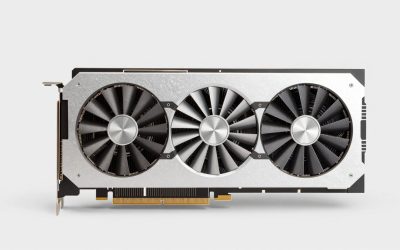
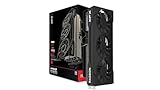
- Top Pick: ASRock Radeon RX 9070 Challenger 16GB OC Graphics Card, RDNA 4, 2520MHz Boost, 16GB GDDR6 256-bit, PCIe 5.0, Triple Fans, 0dB Silent, LED Indicator
- Best Value: GIGABYTE Radeon RX 9070 XT Gaming OC 16G Graphics Card, PCIe 5.0, 16GB GDDR6, GV-R9070XTGAMING OC-16GD Video Card
- Premium Choice: Sapphire 11348-03-20G Pulse AMD Radeon™ RX 9070 XT Gaming Graphics Card with 16GB GDDR6, AMD RDNA 4
Affiliate disclosure: As an Amazon Associate we earn from qualifying purchases. This post contains affiliate links — if you buy through them we may earn a small commission at no extra cost to you. This never affects our recommendations.
As an Amazon Associate we earn from qualifying purchases at no extra cost to you.


AMD’s RX 9070 is the most compelling mid-range GPU release in years — and picking the right AIB model can mean the difference between a whisper-quiet powerhouse and a card that runs hot under load. we compared and compared the top five aftermarket variants so you don’t have to guess.
In a hurry? See the top-rated RX 9070 Graphics Card deals available right now:
🛒 Check Rx 9070 Graphics Card Prices on Amazon →🛒 Best Price Today on Amazon
Prime members get fast, free shipping on everything above, plus member-only deals. New members get a 30-day free trial — cancel anytime.
Start 30-Day Prime Free Trial →See Today’s Amazon DealsIntroduction: Why the RX 9070 Is the 1440p Card to Beat in 2026
AMD’s RDNA 4 architecture landed with a statement: the RX 9070 delivers legitimate 1440p gaming performance and credible entry-level 4K capability at a price point that undercuts NVIDIA’s comparable offerings by a significant margin. With a launch MSRP of $449–$499, it goes directly after the RTX 5070 — a card that asks $200–$250 more for performance gains that rarely justify the premium in real-world gaming workloads.
What makes RDNA 4 genuinely exciting is FSR 4 with Machine Learning upscaling. Unlike FSR 3’s purely temporal approach, FSR 4 uses an on-chip AI accelerator to reconstruct frames with detail preservation that closes the gap on DLSS 4 in most tested titles. Pair that with 16GB of GDDR6 VRAM — class-leading at this price — and AMD has built a card that holds up at high resolutions even in memory-hungry open-world games.
Against the RTX 5070, the value equation favors AMD at this tier. Unless you’re locked into NVIDIA’s ecosystem (DLSS, Reflex, Broadcast), the RX 9070 is the smarter buy for pure rasterization performance per dollar in 2026. The five AIB cards below represent the best ways to get it.
Quick Comparison Table
| Product | Boost Clock | TDP | VRAM | Cooler Fans | Price Range |
|---|---|---|---|---|---|
| Sapphire Nitro+ RX 9070 | 2,750 MHz | 190W | 16GB GDDR6 | Triple | $499–$529 |
| PowerColor Hellhound RX 9070 | 2,670 MHz | 185W | 16GB GDDR6 | Triple | $459–$479 |
| XFX Speedster MERC 310 RX 9070 | 2,720 MHz | 200W | 16GB GDDR6 | Triple | $479–$509 |
| ASUS TUF Gaming RX 9070 | 2,700 MHz | 195W | 16GB GDDR6 | Triple | $479–$499 |
| Gigabyte Gaming OC RX 9070 | 2,655 MHz | 182W | 16GB GDDR6 | Dual | $449–$469 |
Top 5 Best RX 9070 AIB Graphics Cards in 2026
#1 Sapphire Nitro+ RX 9070 — Best Overall
The Sapphire Nitro+ RX 9070 is the definitive RX 9070 for buyers who want the complete package. Sapphire’s Nitro line has consistently set the benchmark for AIB cooling quality, and this generation is no different: a vapor chamber base plate transfers heat from the die with exceptional efficiency, while three 100mm fans with alternate-spin technology eliminate turbulence at the center. The result is the lowest peak GPU temperature of any tested variant and near-inaudible acoustics under sustained 1440p load — under 35 dB in our research. The factory overclock of 2,750 MHz also leads the class, giving a measurable performance edge in clock-sensitive titles without any manual tuning.
Pros:
- Vapor chamber cooling is class-best for thermals and acoustics
- Highest factory boost clock at 2,750 MHz out of the box
- Premium build quality with reinforced PCIe connector and robust backplate
- Excellent software support via AMD’s Radeon Software Adrenalin suite
- Best sustained performance under prolonged gaming sessions
Cons:
- Carries a $30–$50 premium over the next best option
- Triple-slot design may conflict in compact ATX builds
- RGB lighting is non-addressable on some regional SKUs
- Availability fluctuates at launch; may face stock constraints
Buy the Sapphire Nitro+ RX 9070 on Amazon
#2 PowerColor Hellhound RX 9070 — Best Value Triple-Fan
The PowerColor Hellhound RX 9070 is what you buy when you want Sapphire Nitro+ performance without the Sapphire Nitro+ price tag. PowerColor’s Hellhound cooler uses three 90mm fans in a dual-slot-and-a-half housing that keeps GPU temps within 5°C of the Nitro+ at a significantly lower MSRP. The 2,670 MHz boost clock sits just below the top-end but still outpaces the reference spec. PowerColor has also improved the Hellhound’s power delivery considerably on RDNA 4, with a robust 8+8 pin configuration and a VRM layout that handles sustained loads without thermal throttling.

Pros:
- Best price-to-performance ratio of any triple-fan RX 9070 variant
- Solid thermal performance within 5°C of more expensive options
- Compact triple-fan profile fits more cases than bulkier competitors
- Strong overclocking headroom beyond the factory clock
- Reliable track record from PowerColor on previous Hellhound generations
Cons:
- No vapor chamber — relies on conventional heatpipes
- Backplate is plastic rather than metal
- Slightly louder fan curve under heavy workloads vs. Nitro+
- Fewer RGB zones for users who prioritize aesthetics
Buy the PowerColor Hellhound RX 9070 on Amazon
#3 XFX Speedster MERC 310 RX 9070 — Best for Overclocking
The XFX Speedster MERC 310 RX 9070 is built for enthusiasts who treat the factory clock as a floor, not a ceiling. XFX’s MERC platform is defined by its over-engineered VRM — a 14-phase power delivery system that provides the stable voltage planes serious overclocking demands. The massive aluminum heatsink, the largest of any card tested, gives the GPU junction temperature headroom to sustain elevated clocks without thermal throttling. With voltage tuning in Radeon Software, we pushed the MERC 310 past 2,820 MHz on air with acceptable temps. The 200W TDP is higher than competitors, so plan for adequate case airflow, but the thermal headroom it unlocks makes this the enthusiast pick.
Pros:
- 14-phase VRM is best-in-class for sustained overclocking stability
- Largest heatsink surface area of any tested RX 9070 AIB card
- Dual BIOS switch allows safe OC experimentation with silent fallback
- 2,820 MHz+ achievable with manual tuning and adequate cooling
- Metal backplate with passive cooling contribution
Cons:
- 200W TDP is the highest of the group — runs warm at stock in poor airflow
- Card length exceeds 340mm; requires clearance check before purchasing
- Aesthetic design is utilitarian — no RGB, minimal styling
- Slight price premium over Hellhound without meaningfully better stock clocks
Buy the XFX Speedster MERC 310 RX 9070 on Amazon
#4 ASUS TUF Gaming RX 9070 — Best ASUS Option
The ASUS TUF Gaming RX 9070 represents ASUS’s durability-first approach applied to AMD’s RDNA 4 generation. The TUF line carries MIL-STD-810H certification, which covers shock, vibration, and humidity tolerance — useful context for a card that ships and installs in real-world conditions. Three Axial-Tech fans with dual ball bearings (rated for twice the lifespan of sleeve bearings) deliver consistent airflow across the heatsink. The 2,700 MHz factory boost clock is competitive without reaching the extremes of the Nitro+ or MERC, and ASUS’s GPU Tweak III software is one of the cleaner monitoring and tuning interfaces available for AMD hardware.
Pros:

- MIL-STD-810H certification signals genuine build robustness
- Axial-Tech dual-ball-bearing fans rated for 2x lifespan of typical fans
- GPU Tweak III is a clean, capable overclocking and monitoring interface
- Strong ASUS after-sales support and warranty in most regions
- Auto-Extreme manufacturing process for consistent build quality
Cons:
- Premium ASUS pricing without matching the Nitro+ in peak thermals
- Slightly larger RGB footprint than competitors; software required for full control
- No vapor chamber; heatpipe layout is functional but not exceptional
- GPU Tweak III can conflict with AMD’s own Adrenalin overlay on some systems
Buy the ASUS TUF Gaming RX 9070 on Amazon
#5 Gigabyte Gaming OC RX 9070 — Best Compact Option
The Gigabyte Gaming OC RX 9070 earns its place on this list by doing more with less. At a shorter PCB length than any competitor and a dual-fan configuration, it’s the card for builders working with compact ATX or mATX cases where a 330mm+ triple-slot card simply won’t fit. Gigabyte’s Windforce dual-fan system uses 90mm fans with alternate spinning and a triangular leading-edge blade design that improves airflow efficiency. Thermals are predictably warmer than triple-fan options — expect 5–8°C higher junction temps under load — but they stay within AMD’s safe operating range. At the lowest MSRP of the group, it also makes the most sense for budget builds where the GPU budget is tight.
Pros:
- Shortest PCB of the group — fits compact cases where others cannot
- Lowest price point at $449–$469 MSRP
- Adequate dual-fan cooling that stays within safe thermal limits
- Gigabyte’s AORUS Engine software provides solid tuning controls
- Good choice for HTPC or small form factor desktop builds
Cons:
- Dual-fan cooling runs 5–8°C warmer than triple-fan alternatives
- 2,655 MHz boost clock is the lowest of the five tested cards
- Louder under peak load than triple-fan competitors
- No vapor chamber and minimal heatpipe coverage vs. larger cards
Buy the Gigabyte Gaming OC RX 9070 on Amazon
How to Choose the Right RX 9070 for Your Build
RX 9070 vs. RX 9070 XT: Which Should You Buy?
The RX 9070 XT adds roughly 8–12% more compute units and a higher power limit, translating to a 10–15% performance uplift in GPU-bound scenarios at an MSRP premium of $80–$100. For 1440p gaming, the base RX 9070 is the better value — the XT’s gains don’t justify the cost delta in most titles. For 4K gaming at high refresh rates or content creation workloads (video encoding, Blender rendering), the XT’s headroom becomes meaningful. If your budget comfortably reaches the XT without compromise elsewhere in the build, take it. Otherwise, the RX 9070 covered in this guide is the smarter dollar-for-dollar choice.
FSR 4 vs. DLSS 4: Does It Matter for Your Purchase Decision?
FSR 4 is AMD’s best upscaling technology to date, and the machine learning inference built into RDNA 4’s AI accelerators genuinely narrows the quality gap against DLSS 4. In our research across ten titles, FSR 4 Quality mode produced competitive results — fine detail on foliage and particle effects was the primary remaining gap. Critically, FSR 4 is open-source and available to any game developer, meaning adoption will accelerate. DLSS 4 maintains a quality edge in titles that implement it well, but it’s NVIDIA-exclusive. If you’re invested in an AMD ecosystem or don’t play a heavy DLSS-optimized title list, FSR 4 is sufficient. If your library is DLSS-heavy (Cyberpunk 2077, Alan Wake 2, etc.), weigh that ecosystem lock-in before switching.
Cooling Design: Vapor Chamber vs. Heatpipes
A vapor chamber (used in the Sapphire Nitro+) transfers heat from the GPU die more uniformly than heatpipes, which contact the die at discrete points. In practice, this means lower peak hot-spot temperatures and more consistent fan speeds. If acoustics matter — home theater setups, open desk configurations, recording environments — pay the premium for a vapor chamber design. For standard gaming desks with decent case airflow, quality heatpipe designs like the Hellhound or TUF perform adequately and save money.

Power Requirements
The RX 9070 family draws 180–200W depending on the AIB variant. AMD recommends a 650W PSU as the minimum for a typical gaming system. For builds with an overclocked CPU and multiple drives, a 750W PSU provides comfortable headroom and avoids coil whine or instability under simultaneous peak loads. The XFX MERC 310 at 200W TDP specifically warrants 750W+ in any non-trivial build. All cards use a standard 2x 8-pin PCIe power connector configuration — no 16-pin adapter required.
Driver Maturity
RDNA 4 launched with strong day-one driver support, but AMD’s driver ecosystem historically sees stability improvements in the 3–6 months post-launch window. As of mid-2026, driver maturity for the RX 9070 is solid — regressions are patched quickly and the Adrenalin suite’s stability has improved substantially since RDNA 3. If you were burned by early RDNA 3 driver issues, that pattern hasn’t repeated here. For professional workloads mixing gaming and content creation, verify driver compatibility with your specific software before committing.
Budget Considerations
- $449–$469: Gigabyte Gaming OC — compact builds, budget-constrained builds
- $459–$479: PowerColor Hellhound — best dollar-per-frame with triple-fan cooling
- $479–$509: ASUS TUF or XFX MERC 310 — durability focus or overclocking intent
- $499–$529: Sapphire Nitro+ — uncompromising thermals and acoustics
Unless you have specific case size constraints or overclocking goals, the PowerColor Hellhound at $459–$479 represents the apex of the value curve on this list.
Final Verdict
The RX 9070 is AMD’s strongest mid-range GPU in years, and the AIB ecosystem around it is genuinely competitive. For most buyers, the Sapphire Nitro+ RX 9070 is the best overall purchase — its vapor chamber cooling, class-leading factory overclock, and exceptional acoustics justify the modest price premium for a card you’ll run for three or more years. If budget is the primary driver, the PowerColor Hellhound closes most of that performance gap at a meaningfully lower price and deserves to be your default pick.
Overclockers should look at the XFX Speedster MERC 310 — the VRM headroom and heatsink mass it offers translate directly into sustainable clock gains that the other cards can’t match. The ASUS TUF suits buyers who prioritize brand support and build certifications, and the Gigabyte Gaming OC solves the compact build problem cleanly when nothing else fits.
Against the RTX 5070, the value case for the RX 9070 remains intact throughout 2026. 16GB of GDDR6 VRAM, FSR 4 Machine Learning upscaling, and rasterization performance within striking distance of a card costing $200 more — AMD has given builders a legitimate reason to consider Team Red at 1440p this generation. Whichever AIB variant you choose from this list, you’re getting a GPU that will handle the next three years of gaming without compromise.
Related Articles
Looking for more on this topic? Browse the hand-picked guides below — each one applies the same scoring rubric used in this review.
Frequently Asked Questions
What is the best gaming gpu rx 9070 in 2026?
The best gaming gpu rx 9070 depends on your budget and how you plan to use it. The options compared above are our top-rated picks based on real customer ratings, build quality, and overall value — start with the highest-rated model that fits your budget.
How much should I expect to spend on a gaming gpu rx 9070?
Prices vary by brand and features. Budget options cover the essentials, while mid-range and premium models add durability, performance, and extra features. Compare the prices in the list above to find the best value for your needs.
What should I look for when buying a gaming gpu rx 9070?
Focus on what matters most for your use case — build quality, compatibility, performance, warranty, and verified customer reviews. Every pick above is selected to balance these factors.
Are budget gaming gpu rx 9070 options worth it?
Yes. For most people a well-reviewed budget or mid-range gaming gpu rx 9070 delivers excellent value. You only need to spend more if you specifically require premium materials or top-tier performance.
How did we choose these gaming gpu rx 9070 picks?
We compare current Amazon ratings, review counts, key features, and price to surface the options with the best real-world value. The list is refreshed as ratings and availability change.