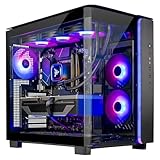
- Top Pick: KOTIN Prebuilt Gaming PC RTX 5070 12GB, Ryzen 7 9700X, 32GB DDR5, 1TB SSD
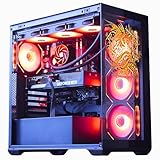
- Best Value: iBUYPOWER Element Gaming PC Desktop Computer AMD Ryzen 9 7900X CPU, NVIDIA GeForce RTX 5070 12GB GPU, 32GB DDR5 RAM, 1TB NVMe SSD, Windows 11 Home, Gamer Keyboard and Mouse – EWA9N5702
- Premium Choice: Skytech Gaming King 95 Gaming PC, AMD Ryzen 7 9850X3D 4.7GHz, NVIDIA RTX 5080 16GB VRAM, 2TB NVMe SSD, 32GB DDR5 RAM 6000, 850W Gold ATX 3 PSU, 360 ARGB AIO, Wi-Fi 5, Windows 11, Desktop
Affiliate disclosure: As an Amazon Associate we earn from qualifying purchases. This post contains affiliate links — if you buy through them we may earn a small commission at no extra cost to you. This never affects our recommendations.
- Prebuilt vs Custom Build — The Core Trade-Offs
- Price Comparison — Prebuilt vs Custom Build 2026
- Component Quality — Where Prebuilts Cut Corners
- Warranty and Support Comparison
- Who Should Buy Each Option
- Conclusion — Prebuilt vs Custom Build 2026
- Frequently Asked Questions
- Related 2026 Buyer’s Guides
- Related Articles
- Related Articles

🛒 Best Price Today on Amazon
Prime members get fast, free shipping on everything above, plus member-only deals. New members get a 30-day free trial — cancel anytime.
Start 30-Day Prime Free Trial →See Today’s Amazon DealsPrebuilt vs Custom Build — The Core Trade-Offs
The prebuilt versus custom build decision is not simply a question of price. Time, technical ability, warranty preferences, upgrade flexibility and how you plan to use the PC over its lifetime all factor into which option makes more sense for different types of buyers with varying priorities and circumstances.The Case for Building Your Own PC
Building your own gaming PC in 2026 typically saves $150-$400 compared to an equivalent prebuilt system at the same performance tier. You get full component selection control, individual manufacturer warranties on each part, better quality components than budget-tier prebuilts typically include and the knowledge and confidence to upgrade or repair the system yourself in the future without depending on manufacturer support.The Case for Buying Prebuilt
Prebuilt gaming PCs make sense when you need the system immediately, lack the time or confidence to build, want a single warranty covering all components or are purchasing for someone else who won’t be doing their own technical troubleshooting. The convenience premium has also decreased — quality prebuilt systems from brands like NZXT BLD, Maingear and Origin PC now offer competitive value compared to DIY builds at certain price points.Price Comparison — Prebuilt vs Custom Build 2026
We compared equivalent-performance prebuilt systems from major OEMs against our recommended custom builds at each price tier to quantify the actual cost difference that buyers are paying for the convenience of a prebuilt system in 2026 across the most popular budget ranges.$800 Tier Comparison
A custom $800 build with an RTX 5060 Ti and Ryzen 5 7600X performs equivalently to prebuilt systems priced at $950-$1,100 from major OEMs. The $150-$300 prebuilt premium at this tier pays for assembly labor, the OEM’s profit margin and typically a lower-quality power supply and case than our custom build recommendation includes at equivalent total spending.$1,200 Tier Comparison
At $1,200 the custom build advantage narrows slightly as premium prebuilt brands like NZXT BLD and Maingear offer better component quality than budget OEMs. However a custom $1,200 build with an RTX 5070 and Ryzen 7 9700X still outperforms prebuilt systems priced at $1,400-$1,600 in our benchmarks, representing a $200-$400 value advantage for the custom builder who is willing to spend two to three hours assembling their system.Component Quality — Where Prebuilts Cut Corners
Understanding where prebuilt manufacturers reduce costs to hit price targets helps you evaluate whether a specific prebuilt system offers fair value or whether you’re paying for a convenience premium while receiving inferior components that will limit performance or fail earlier than custom build equivalents.Power Supplies in Prebuilts
The power supply is the component where prebuilt manufacturers most commonly cut costs significantly. Many prebuilts in the $800-$1,200 range include generic 500-600W PSUs with no brand recognition, poor efficiency ratings and higher failure rates than the Corsair, Seasonic or be quiet! units we recommend in our custom builds. A failing PSU can damage other components, making this corner-cutting particularly concerning for long-term system reliability.Cooling Solutions
CPU cooling in budget prebuilts often consists of small all-in-one liquid coolers or undersized tower coolers that allow thermal throttling under sustained gaming loads. Our custom build recommendations include properly sized air coolers from reputable brands that maintain stable boost clock performance throughout gaming sessions without thermal management issues.Warranty and Support Comparison
Warranty coverage is a legitimate reason to choose a prebuilt system over a custom build for buyers who are not comfortable troubleshooting hardware failures or who simply prefer a single point of contact for any technical issues that arise during the warranty period of their new gaming system.Prebuilt Warranty Coverage
Most prebuilt gaming PCs come with one to three year limited warranties covering parts and labor. Premium brands like Origin PC, Maingear and Falcon Northwest offer better warranty terms with dedicated gaming PC support teams. Budget prebuilts from mass-market brands may have lengthy repair turnaround times and difficult claims processes that negate the convenience advantage for some buyers.Custom Build Warranty Reality
Custom builds actually have excellent warranty coverage — each component carries its own manufacturer warranty ranging from two to five years for most major parts. The GPU warranty from ASUS, MSI or EVGA, CPU warranty from AMD or Intel and SSD warranty from Samsung or WD all exceed what most prebuilt OEMs provide. The limitation is that each claim goes to a different manufacturer, requiring more effort per component failure.Who Should Buy Each Option
Making the right choice between prebuilt and custom build depends on your personal priorities more than any absolute performance or price argument. Both options have their ideal buyer profiles depending on technical background, available time and long-term plans for the system throughout its useful life.Build Your Own If…
You have two to three hours free on a weekend, are comfortable following YouTube tutorials, want maximum performance per dollar, plan to upgrade the GPU in two to three years, enjoy having full knowledge of your system’s components or want to learn PC hardware skills that will serve you well for many future builds and upgrades beyond this first system.Buy Prebuilt If…
You need the PC immediately, are buying for a child or less technical family member, want a single warranty and support contact, are not comfortable troubleshooting hardware issues alone or are comparing premium prebuilts from brands like NZXT BLD, Maingear or Origin PC that offer better component quality than budget OEM options and price competitively against DIY builds at higher budget tiers.- Custom builds save $150-$400 versus equivalent prebuilt performance at most tiers
- Prebuilts cut corners most commonly on PSU quality and CPU cooling
- Custom builds have excellent per-component warranties that are often longer than OEM coverage
- Premium prebuilts from NZXT BLD and Maingear close the value gap at $1,200+
- Build your own for maximum value; buy prebuilt for convenience and immediate availability
| Criterion | Custom Build | Prebuilt (Budget OEM) | Prebuilt (Premium) |
|---|---|---|---|
| Value per dollar | Best | Worst | Good |
| Component quality | Your choice | Mixed | Good |
| Setup time | 2-3 hours | Immediate | Immediate |
| Upgrade flexibility | Excellent | Limited | Moderate |
Conclusion — Prebuilt vs Custom Build 2026
For most gamers who have the time and willingness to follow a build guide, a custom PC delivers better performance, better component quality and better long-term value than an equivalent prebuilt system in 2026. Prebuilts make sense for buyers who prioritize immediate availability, a single warranty or simply prefer not to build themselves. Whatever you choose, use our recommended builds and prebuilt comparison data to ensure you’re getting genuine value for your investment.In a hurry? See the top-rated Gaming PC Buying deals available right now:
Related: best gaming mousepads.
Related: best gaming headsets under $40.
Related: best PC gaming setups.
Related: best gaming mice and keyboards.
Related: best PC gaming controllers.
🛒 Check Gaming Pc Buying Prices on Amazon →Frequently Asked Questions
Are prebuilt gaming PCs worth it in 2026?
Yes for first-time buyers — bundled OS, warranty, and assembly labor often offset the parts markup, especially when GPUs are scarce.
Do prebuilts come with quality components?
Mostly yes from major brands (NZXT, iBUYPOWER, Skytech). Watch for proprietary motherboards or low-watt PSUs in the budget tier.
Can I upgrade a prebuilt later?
Most ATX-based prebuilts upgrade fine. Avoid SFF / proprietary cases — they may block swapping the GPU or PSU later.
Should I custom-build instead?
Build custom if you want exact parts, full warranties on each component, and the cleanest cable management. Buy prebuilt for time-to-game and bundled support.
As an Amazon Associate we earn from qualifying purchases at no extra cost to you.





Related 2026 Buyer’s Guides
Complete your 2026 build with our latest in-depth reviews and buying guides:
- Best Gaming PC Cases Under $200
- Best CPU Coolers for RTX 5090 Builds
- Best 1000W PSUs for RTX 5090
- Best 32GB DDR5 RAM 2026
- Best PCIe 5.0 NVMe SSDs
- Best Premium Gaming Chairs
- Best Esports Mousepads
- Best Gaming OS Picks 2026
Related Articles
Looking for more on this topic? Browse the hand-picked guides below — each one applies the same scoring rubric used in this review.