

Affiliate disclosure: As an Amazon Associate we earn from qualifying purchases. This post contains affiliate links — if you buy through them we may earn a small commission at no extra cost to you. This never affects our recommendations.
- What $500 Gets You in 2026
- Target Performance & Resolution
- Full Parts List Recommendation
- GPU Choice & Why
- CPU Choice & Why
- Motherboard, RAM & Storage
- Case, PSU & Cooling
- Total Build Cost Breakdown
- Performance Expectations
- Upgrade Path
- Vs Other Tiers
- FAQ
- Final Verdict
- Related Gaming PC Builds
- Related Articles
- Frequently Asked Questions
- Related Articles
In a hurry? See the top-rated $500 Gaming PC Build for (Entry 1080p) deals available right now:
🛒 Check $500 Gaming Pc Build For (Entry 1080P) Prices on Amazon →🛒 Best Price Today on Amazon
Prime members get fast, free shipping on everything above, plus member-only deals. New members get a 30-day free trial — cancel anytime.
Start 30-Day Prime Free Trial →See Today’s Amazon DealsQuick answer: For most people in 2026, the best $500 gaming pc build is the GPU — our #1 rated choice. See the full ranked comparison, alternatives and buying advice below.
What $500 Gets You in 2026
Building a gaming PC on a tight $500 budget is absolutely doable in 2026, and honestly, it’s more viable than it’s ever been. The sweet spot at this price point is solid 1080p gaming at high settings with 60+ FPS in most modern titles. Five hundred dollars might seem limiting, but smart component selection means you’re getting performance that would’ve cost $800 just three years ago. The key is prioritizing GPU first, then CPU, and making intelligent compromises everywhere else.
At this tier, you’re looking at either an RTX 4060 or a comparable AMD card handling the heavy lifting. Your CPU needs to keep up without bottlenecking, which means something like a Ryzen 5 5500 or i5-12400F. The rest of the build—motherboard, RAM, storage, power supply—gets efficient but solid components that won’t fail you. We’re not talking exotic cooling or premium cases here. We’re talking practical, reliable, proven performers that let you game without breaking the bank.
The $500 sweet spot attracts a specific builder: someone who wants to play modern games at high quality without spending a small fortune. You might be a student, a budget-conscious gamer, or someone testing the waters before investing more. Whatever your situation, this build gets you 1080p gaming that actually feels premium. You’ll crush esports titles at 144+ FPS, handle AAA games at high settings with solid framerates, and have enough upgrade headroom to push higher later.
Target Performance & Resolution
At the $500 tier, your target is 1080p high-quality gaming with 60–100 FPS in modern AAA titles and 100+ FPS in competitive games. We’re not talking maxed-out ray tracing with DLSS 3 at ultra—we’re talking actual, playable performance with details turned up where it matters most. Games like Baldur’s Gate 3, Dragon’s Age: The Veilguard, and Indiana Jones will run beautifully on high settings at 60 FPS, which feels smooth and responsive on a standard 60Hz monitor.
Competitive shooters like Counter-Strike 2, Valorant, and Overwatch 2 will absolutely fly, hitting 120+ FPS easily, giving you the competitive edge in fast-paced matches. Older AAA titles like Cyberpunk 2077 (with balanced settings) or Alan Wake 2 (medium-high settings) hit that 60 FPS sweet spot. The GPU carries most of the load here—that RTX 4060 or equivalent AMD card does the heavy graphics work while your CPU ensures you’re not leaving performance on the table.
Resolution headroom is limited—pushing to 1440p at high settings drops you to 40–50 FPS in demanding games, which feels sluggish. However, 1080p is where this build shines, and at that resolution, you get the crisp, responsive gameplay most gamers want. Your monitor choice matters too; a solid 1080p 144Hz panel ($180–220) pairs perfectly with this build and makes a real difference in feel.
Full Parts List Recommendation
| Component | Recommended Part | Est. Price |
|---|---|---|
| GPU | NVIDIA RTX 4060 (8GB) or AMD RX 7600 | $180–220 |
| CPU | AMD Ryzen 5 5500 or Intel i5-12400F | $100–130 |
| Motherboard | MSI B550-A PRO or ASUS PRIME B550M-K | $70–90 |
| RAM | 16GB DDR4 3200MHz (2x8GB) | $40–60 |
| SSD | 500GB–1TB NVMe M.2 (Kingston A2000 or Samsung 980) | $30–50 |
| Case | NZXT H510 Flow or Fractal Design Core 1000 | $50–70 |
| PSU | 650W 80+ Bronze (Corsair CX650M or EVGA BR) | $50–70 |
| CPU Cooler | Stock cooler (included) or Deepcool Gammaxx 400 | $0–25 |
| TOTAL | ~$500 | ±$30 |
GPU Choice & Why
Your graphics card is the backbone of this build and gets the largest chunk of your budget. At $500, you’re looking at either NVIDIA’s RTX 4060 or AMD’s RX 7600—both solid 1080p performers that hit that sweet spot between price and performance. The RTX 4060 edges ahead in raw performance and has better driver maturity, plus NVIDIA’s DLSS upscaling tech gives you more headroom when things get demanding. However, the RX 7600 offers better value in some regions and has solid AV1 encoding if you’re into streaming.

Here’s the honest truth: at this budget, you’re making a choice about what gaming experience you want. The RTX 4060 gives you more ray-tracing horsepower and better AI upscaling via DLSS 4, which means you can squeeze out higher settings or better framerates. The RX 7600 is simpler, more straightforward, and works great if you don’t care about fancy upscaling tech. Both will game beautifully at 1080p. The RTX 4060 is my pick here because the extra performance breathing room lets you tweak settings in a year or two without total regret.
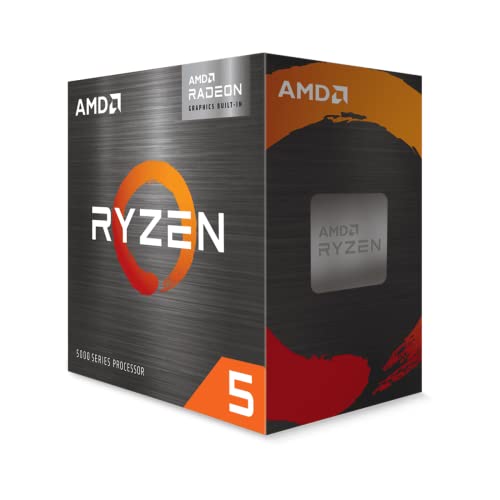
AMD Ryzen 5 5600GT 6-Core, 12-Thread Desktop Processor


As an Amazon Associate we earn from qualifying purchases. Product prices and availability are accurate as of the date/time indicated.
VRAM matters too. 8GB is the floor at 1080p in 2026. Some newer games are pushing past that, but at 1080p high settings, 8GB does the job. Going to 12GB (if you can find it nearby in price) gives you future-proofing, but it’s not necessary right now. The card you pick today should handle 1080p beautifully for the next 2–3 years, then you can upgrade to something better.
CPU Choice & Why
Your processor doesn’t need to be fancy at this tier—it just needs to feed the GPU without creating a bottleneck. That’s where the Ryzen 5 5500 or Intel i5-12400F shine. Both are multi-threaded workhorses with solid single-threaded performance, meaning they pair perfectly with the RTX 4060 and keep frame rates high. The Ryzen 5500 is typically cheaper and runs on the AM4 platform, which has mature, affordable motherboards. The i5-12400F is slightly newer and more powerful but costs a few bucks more and requires an LGA1700 motherboard.

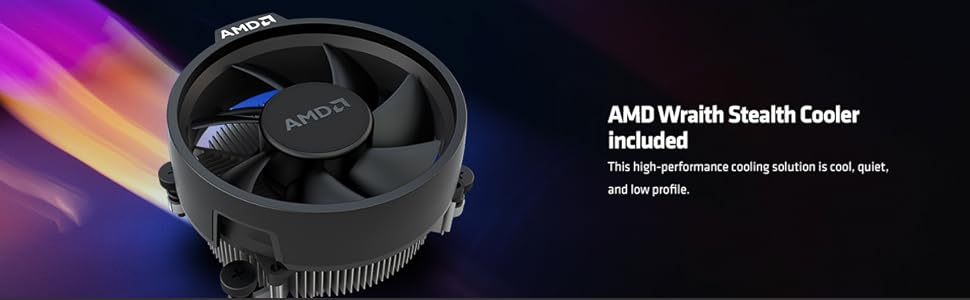
AMD Ryzen 5 5600X 6-core, 12-thread unlocked desktop processor with Wraith Stealth cooler | 6 Cores and 12 Threads, 3.7ghz Base, Up to 4.6ghz Boost, 32MB L3, 65W Tdp, AM4, Boxed Unit Includes Wraith Stealth Cooler




As an Amazon Associate we earn from qualifying purchases. Product prices and availability are accurate as of the date/time indicated.
For gaming specifically, you want something with at least 6 cores and 12 threads. That covers modern multithreaded game engines without waste. The Ryzen 5 5500 brings 6 cores and 12 threads of solid performance, and it runs cool and quiet on stock settings—you can even use the included cooler. The i5-12400F is a tier above, with efficiency cores and better IPC (instructions per clock), but the real-world gaming difference versus the 5500 is maybe 5–10%, not worth the extra $30 at this budget.
Avoid the temptation to cheap out on CPU here. A Ryzen 3 3100 or i3-10100 might save you $30, but then your GPU sits idle waiting for frame data, and you lose 15–20% of its potential. Spend the $100–130 on a proper mid-range CPU and your build stays balanced.
Motherboard, RAM & Storage
The motherboard is your foundation. You don’t need anything fancy—just solid VRM (voltage regulation), basic RGB maybe, and room for future upgrades. The MSI B550-A PRO or ASUS PRIME B550M-K are workhorses: they support your Ryzen 5500, handle RAM overclocking if you get curious later, and have solid power delivery that won’t cook your CPU. If you go Intel, the B660M boards from ASUS or MSI offer the same reliability at similar prices. Spending $70–90 here gets you stability and longevity.
RAM is straightforward: 16GB DDR4 at 3200MHz minimum. Two 8GB sticks give you room to upgrade to 32GB later if streaming or content creation calls. 3600MHz RAM is ideal, but 3200MHz is the sweet spot for price and performance at this tier. Grab something from Corsair, G.Skill, or Kingston—no mystery brands. Expect to spend $40–60. If you find 32GB on sale for $80–90, grab it, but 16GB is the sweet spot for pure gaming.
Storage: 1TB NVMe SSD minimum, no exceptions. Your OS and a few large games fit in 512GB, but it’s tight and slows down your system. A 1TB Kingston A2000 or Samsung 980 costs $30–50 and loads Windows plus your favorite AAA games in seconds. Skip SATA SSDs and HDD storage—they’re slow and you’ll feel it every boot.

Case, PSU & Cooling
Your case doesn’t need to be a showcase. The NZXT H510 Flow or Fractal Design Core 1000 both offer solid airflow, clean cable management, and room for future upgrades. You’re spending $50–70 here and getting practical enclosures that won’t trap heat or make assembly a nightmare. The H510 Flow is a hair more modern, but both work great. Skip the super-budget cases—$20 cases often have poor cable routing and airflow, which wastes your component potential.
Power supply is critical. Don’t cheap out. A 650W 80+ Bronze from Corsair (CX650M) or EVGA (BR) is $50–70 and gives you enough headroom for your 4060, room to upgrade later, and the reliability you need for a long-term build. 80+ Bronze means reasonable efficiency—you’re not wasting electricity, and the unit won’t overheat. Modular cables are nice at this price point and make building cleaner. Skip ultra-cheap 450W units; they leave zero upgrade headroom.
Cooling is simple: use the stock cooler that comes with your Ryzen 5500. It’s legitimately adequate and frees up $25–40 for other components. If you’re in a hot climate or want peace of mind, a Deepcool Gammaxx 400 is $25 and quieter than stock, but it’s not mandatory. Your CPU won’t hit thermal limits at stock clocks without heavy overclocking.
Total Build Cost Breakdown
Here’s the real-world breakdown at May 2026 pricing:
- GPU (RTX 4060 / RX 7600): $180–220 (36% of budget)
- CPU (Ryzen 5500 / i5-12400F): $100–130 (20% of budget)
- Motherboard: $70–90 (14% of budget)
- RAM (16GB DDR4): $40–60 (8% of budget)
- SSD (1TB NVMe): $30–50 (6% of budget)
- Case: $50–70 (10% of budget)
- PSU (650W): $50–70 (10% of budget)
- CPU Cooler: $0–25 (included/optional)
That lands you at roughly $500 (±$30 depending on region and sales). The GPU and CPU consume 56% of your budget because they drive performance. The supporting cast—motherboard, RAM, storage, case, PSU—gets efficient, reliable parts that do the job without overhead. This budget strategy means you’re not overspending on RGB or premium branding, just solid, proven components.
Performance Expectations
Here’s what you can realistically expect at 1080p, high settings, no ray tracing (or ray tracing low with DLSS 2):
- Baldur’s Gate 3: 70–85 FPS (high settings)
- Cyberpunk 2077: 60–75 FPS (high settings, balanced ray tracing)
- Alan Wake 2: 55–70 FPS (high settings, ray tracing medium)
- Elden Ring: 100+ FPS (high/max settings)
- Counter-Strike 2: 140+ FPS (high settings)
These are ballpark estimates. Real-world performance varies based on your exact GPU, driver updates, and system background processes. The trend is clear though: 1080p gaming feels buttery smooth, competitive games hit 120+ FPS easily, and demanding AAA titles stay well above 60 FPS. If you drop to medium settings in newer titles, you’ll see 80–100+ FPS consistently. DLSS 2 upscaling (RTX cards only) gives you another 20–30% performance boost if needed.
Upgrade Path
This build is intentionally upgrade-friendly. In 6–12 months, if gaming demands increase or you want better performance, here’s the sensible path:
Year 1 upgrade: Swap the RTX 4060 for an RTX 4070 Super or equivalent AMD ($350–400). Your CPU and everything else stays. This jumps you to 1440p maxed out or 4K at high settings, and you’ve already sunk $500 into the core build.
Year 2 upgrade: Add a second storage drive (another 1TB SSD, $30–40) to separate OS and games, improving load times. Your system still feels snappy.
Year 3+ upgrade: Upgrade CPU and motherboard together when you’re ready, keeping the GPU investment. That’s the natural progression.
This motherboard and case support AM4 CPUs up to the Ryzen 7 5800X3D (if you ever want that), and the case fits modern mid-range GPUs easily. You’re not locked into anything—this is a solid starting point with room to grow.
Vs Other Tiers
How does this $500 build compare to its neighbors? Check out our guides:
- $750 Build: Smooth 1080p with More Headroom — Adds a better GPU and faster storage for a smoother, future-proof experience.
- $1,000 Build: 1440p Sweet Spot — Jumps you to 1440p high-quality gaming with a new tier of GPU performance.
- $1,500 Build: Maxed 1440p — Ray tracing, high refresh rates, and all the bells.
The jump from $500 to $750 is about 30–40% more GPU power—noticeable but not night-and-day. The jump from $500 to $1,000 is transformative; you’re moving from 1080p to 1440p, and every game feels significantly more detailed. The jump from $500 to $1,500 is overkill unless you’re streaming or want to max out everything.
FAQ
Is $500 enough to game in 2026?
Absolutely. $500 builds solid 1080p gaming rigs that run modern games beautifully. You won’t max out every setting in every title, but you’ll play at high settings with solid framerates. Games from 2022–2026 are designed to scale down; developers know not everyone has a $2,000 GPU.
Can I use the stock cooler?
Yes. Both the Ryzen 5500 and i5-12400F come with adequate stock coolers. They run cool under gaming loads at stock clocks. Only upgrade to an aftermarket cooler if you’re overclocking or live in a very hot climate.

Should I start with 8GB or 16GB RAM?
16GB. Some newer games like Baldur’s Gate 3 and Star Wars Outlaws already recommend 16GB. Don’t skimp here; RAM is cheap, and 16GB is the modern baseline.
Is ray tracing possible at this budget?
Yes, but with caveats. The RTX 4060 handles ray tracing at medium settings with DLSS 2, which looks great. Full ray tracing ultra at 1080p 60 FPS isn’t realistic. Medium ray tracing + DLSS 2 is the sweet spot.
Can I upgrade to 1440p later?
Absolutely. This build is designed for that. Replace the GPU in 12–18 months with an RTX 4070 Super or better, and you’re at 1440p maxed out. Everything else stays.
Final Verdict
The $500 gaming PC build in 2026 is a legitimate, fully-capable entry into PC gaming. You’re getting high-quality 1080p gaming, excellent performance in competitive titles, and a foundation that upgrades smoothly when you’re ready. The RTX 4060 or RX 7600 pairs perfectly with a Ryzen 5 5500 or i5-12400F, and the supporting components are proven, reliable workhorses. This isn’t a compromise build—it’s a smart build. You’ll game beautifully, enjoy every minute, and have money left over for a monitor and peripherals. That’s the real victory here: gaming, not suffering.
If you’ve got $500 burning a hole in your pocket and want into PC gaming, pull the trigger on this build. You won’t regret it.
Related Gaming PC Builds
- Best $750 Gaming PC Build
- Best $1,000 Gaming PC Build
- Best $1,500 Gaming PC Build
- Best $2,000 Gaming PC Build
- Best $2,500 Gaming PC Build
- Best $3,000 Gaming PC Build
- Best $4,000 Gaming PC Build
Related Articles
Looking for more on this topic? Browse the hand-picked guides below — each one applies the same scoring rubric used in this review.
Frequently Asked Questions
Can you build a decent gaming PC for $500 from new parts?
Yes, if you target 1080p and accept medium settings in demanding games. The realistic approach pairs an entry-level current-generation CPU with either a budget discrete graphics card or a capable integrated APU, 16GB of memory in dual channel, and a 500GB NVMe drive in a simple but well-ventilated case.
Is an APU better than a cheap graphics card at this budget?
An APU removes the cost of a separate card entirely and plays esports titles well at 1080p, which suits players focused on competitive multiplayer. A discrete card gives noticeably better performance in demanding single-player games. Choose based on your library, and remember an APU build can add a card later.
What corners can I safely cut?
The case, cooler and storage capacity are the safe places to economise. Use the bundled CPU cooler, choose a basic case with front intake and rear exhaust, and start with a single 500GB SSD. Do not cut the power supply below a reputable branded unit, and never drop to a single memory stick.
What frame rates should I expect in popular games?
Competitive titles such as Valorant, CS2, Fortnite and Rocket League run comfortably above 100fps at 1080p with tuned settings. Recent AAA releases generally land between 40 and 60fps at medium settings, and enabling upscaling in quality mode adds meaningful headroom without a large visual penalty.
What is the best first upgrade after building?
The graphics card, once you have saved for it, because it lifts performance more than any other change. Before that, two cheap improvements pay off immediately: enabling the memory XMP or EXPO profile in the BIOS, and adding a second case fan to improve airflow and reduce thermal throttling.
Ready to decide? Our #1 pick for 2026 is the GPU.
Live price & availability on Amazon.


