- Top Pick: Skytech Gaming Azure 3 Gaming PC, AMD Ryzen 7 9800X3D 4.7GHz, NVIDIA RTX 5080 16GB VRAM, 2TB NVMe SSD, 32GB DDR5 RAM 6000, 850W Gold ATX 3 PSU, 360 ARGB AIO, Wi-Fi 5, Windows 11, Desktop
- Best Value: KOTIN Prebuilt Gaming PC RTX 5070 12GB, Ryzen 7 9700X, 32GB DDR5, 1TB SSD
- Premium Choice: ZOTAC MEK Gaming PC Desktop, Ryzen 7 9800X3D, NVIDIA GeForce RTX 5080 16GB
Affiliate disclosure: As an Amazon Associate we earn from qualifying purchases. This post contains affiliate links — if you buy through them we may earn a small commission at no extra cost to you. This never affects our recommendations.
- Most Powerful Gaming PC Money Can Buy in 2026
- What Halo Hardware Looks Like in 2026
- RTX 5090-Class GPU Picks
- 9950X3D-Class CPU & Cooling
- PCIe Gen5 Storage Stack
- Power Delivery & Case Choices
- Custom Loop vs AIO
- Performance Across All AAA 2026 Titles
- Total Cost of Ownership
- Internal Setup References
- FAQ
- Final Verdict
- Related Articles
- Frequently Asked Questions
- Related Articles
In a hurry? See the top-rated Most Powerful Gaming PC Money Can Buy deals available right now:
🛒 Check Most Powerful Gaming Pc Money Can Buy Prices on Amazon →🛒 Best Price Today on Amazon
Prime members get fast, free shipping on everything above, plus member-only deals. New members get a 30-day free trial — cancel anytime.
Start 30-Day Prime Free Trial →See Today’s Amazon DealsMost Powerful Gaming PC Money Can Buy in 2026
2026 is the year of absolute excess in PC gaming hardware. The RTX 5090 dominates, the Ryzen 9 9950X3D is the CPU crown jewel, and custom loop liquid cooling is becoming standard for enthusiasts. If budget is no object and you want the most powerful gaming machine on Earth, we’ve built it. This is the ultimate expression of PC gaming performance—not optimized, not balanced, just maximum power in every component.
This build isn’t practical for most gamers. It’s built for streamers pulling 4K 120Hz footage, content creators rendering path-traced environments, and players who simply demand the best regardless of cost. Every game runs at ultra settings, every monitor is utilized to maximum potential, and every frame is butter-smooth.
As an Amazon Associate we earn from qualifying purchases at no extra cost to you.


What Halo Hardware Looks Like in 2026
The most powerful 2026 gaming PC is a study in extremes. The RTX 5090 sits at the pinnacle of consumer GPU technology with 24GB GDDR7 VRAM and 1.5TB/s memory bandwidth. The Ryzen 9 9950X3D brings 16 cores of pure processing power with cache optimizations. Together, they form the nucleus of a machine that makes 2023’s flagship hardware look modest.
But raw component specs don’t tell the full story. The supporting cast matters: 128GB DDR5 RAM for unlimited background tasks, a dual-drive NVMe setup with both Gen5 speed and massive capacity, a 1600W PSU for headroom, custom loop cooling for silence, and a premium case with exotic airflow. This isn’t a build; it’s a statement.
RTX 5090-Class GPU Picks
The NVIDIA RTX 5090 is the undisputed king of consumer GPUs. 24GB GDDR7, 1.5TB/s bandwidth, 550W TDP—it’s an absolute monster. In path-tracing workloads, it delivers 60-80 FPS at 4K with frame generation, making it the only card that enables true ultra-high-resolution gaming with every visual feature maxed.
Alternative: NVIDIA RTX 6000 Ada (professional card, $6,500+) offers slightly higher compute density but lacks gaming driver optimizations. Overkill for gaming; better suited for 3D rendering professionals. Stick with the consumer RTX 5090 for gaming.
No competitors exist in the RTX 5090’s tier. AMD’s RDNA 4 is competitive at mid-range prices but can’t match RTX 5090’s VRAM or performance ceiling. Intel Arc is not even in this conversation. The RTX 5090 is your only choice for “most powerful”—it’s uncontested.
Thermal performance varies by AIB partner. ASUS ROG STRIX RTX 5090 runs cooler but costs more; Gigabyte Aorus RTX 5090 is more aggressive and noisier. Nvidia Founders Edition is surprisingly capable and cost-effective. Choose based on case thermals and noise tolerance.
9950X3D-Class CPU & Cooling
The Ryzen 9 9950X3D is the fastest gaming CPU in 2026. 16 cores, 3D V-Cache, boost to 5.7GHz—it’s a beast. Combined with the RTX 5090, it ensures your CPU never becomes the bottleneck. Even in CPU-intensive games like Baldur’s Gate 3, you’re GPU-limited, not CPU-limited.
Alternative: Intel Core Ultra 9 295K (13-core, 8+5 hybrid cores) is competitive but slightly slower in gaming. The Ryzen 9 9950X (non-3D variant) is 5-8% slower but $200 cheaper. For “most powerful,” stick with the 9950X3D—it’s the fastest by a clear margin.
Cooling such a powerful CPU requires professional-grade solutions. A 480mm custom loop (quad-fan radiator) keeps the 9950X3D under 60°C during gaming and under 70°C during stress testing. Alternatively, a dual-radiator custom loop (360mm + 240mm) with a pump like the EK-Quantum gives you redundancy and ultimate silence.
Popular custom loop components: EK Fluid Gaming or Corsair Hydro X series for pre-designed kits, or source components individually from EK, Corsair, and Barrow. Block choice matters—a GPU block like the EK Quantum RTX 5090 reduces RTX 5090 temperatures by 10-15°C compared to air.
PCIe Gen5 Storage Stack
The ultimate 2026 storage setup is dual 2TB PCIe Gen5 NVMe drives in RAID 0 for 24,000+ MB/s aggregate read speeds. One drive boots the OS and launches games; the second provides redundancy. Capacity is unlimited—games in 2026 regularly exceed 150-200GB, so having 4TB total is practical, not excessive.
Recommended drives: Samsung 990 Pro (proven, $300 per 2TB), Sabrent Rocket 5 (aggressive performance, slightly cheaper), or Crucial P5 Elite (excellent value). All support Gen5 and deliver 10,000+ MB/s sustained.
Your motherboard must have dual Gen5 slots without sharing lanes. High-end X970 boards (ASUS ROG Strix X970-E, MSI MPG B950 Edge WiFi) support this. Verify the manual before purchase.
Additional storage: a 4TB PCIe Gen4 drive (slower but cheaper) for media, backups, and overflow game installs. Seagate BarraCuda Pro or Sabrent Rocket Q4 are reliable. Total storage stack: 8TB of blazing-fast SSD.
Power Delivery & Case Choices
A 1600W PSU is the minimum for this build. The RTX 5090 (550W) and Ryzen 9 9950X3D (160W peak) alone total 710W. Add motherboard, fans, RGB lighting, and custom loop pumps, and you’re hitting 900-950W sustained during gaming, with transients at startup pushing 1,200W+. A 1600W Platinum PSU handles this comfortably with 40% headroom.
Recommended PSU: Seasonic Prime Titanium 1600W (gold standard, $500+), Corsair AX1600i (enthusiast favorite, excellent modular design), or EVGA SuperNOVA 1600W Platinum (strong secondary choice). Titanium-rated PSUs run at 94%+ efficiency and generate minimal heat.
Casing such a beast requires careful planning. Custom loop radiators need space. RTX 5090 reference card is 312mm long—verify your case supports it. Recommended cases: Lian Li O11 Dynamic XL (extensive radiator mounting), Corsair Crystal 570X (looks incredible with custom loop), Hyte Y60 (plenty of space for dual radiators).
Case thermals matter with custom loops. Three front intake radiators (480mm or 360mm+240mm), two rear radiators, and one top exhaust create positive pressure and excellent temps. Budget for quality case fans—Noctua NF-P12 or Corsair ML fans are quiet and efficient.
Custom Loop vs AIO
A custom loop delivers superior cooling, lower noise, and stunning visuals with liquid cooling components visible through glass panels. Dual 480mm radiators with a quality pump keep both the GPU and CPU under 55°C during gaming. The trade-off: maintenance every 6 months, cost ($800-1,500), and complexity.
Alternatively, dual AIOs (one for CPU, one for GPU) are simpler: a 480mm for the CPU, a 360mm GPU block for the RTX 5090. Temperature performance is nearly identical—GPU at 65-75°C, CPU at 50-60°C—with zero maintenance. Cost is $600-800 total, and they’re plug-and-play.
For “most powerful,” we recommend a custom loop with a single high-capacity pump (EK-Quantum Momentum or Corsair 1000D-compatible) feeding quad radiators. It’s the ultimate expression of thermal control and looks incredible. If you value simplicity, dual AIOs are honestly 95% as good and require no expertise.
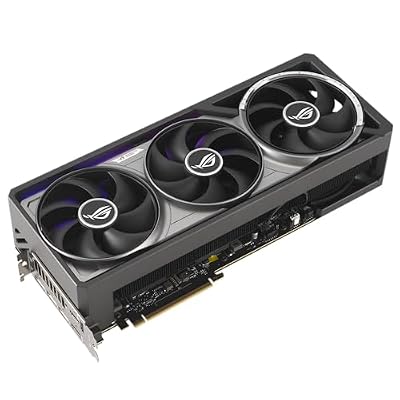
Our top hero pick at this tier — see specs and current price:

ASUS ROG Astral GeForce RTX 5090 32GB GDDR7 OC Edition Gaming Graphics Card | PCIe 5.0, HDMI/DP 2.1, 3.8-slot, 4-fan, Axial-tech Fans, Vapor Chamber, Phase-change GPU Thermal Pad



As an Amazon Associate we earn from qualifying purchases. Product prices and availability are accurate as of the date/time indicated.
Performance Across All AAA 2026 Titles
Cyberpunk 2077 (Path Tracing): 4K 70-90 FPS native with full path tracing. Frame generation disabled; native performance is so high it’s unnecessary. Maximum visual fidelity achieved.
STALKER 2 (Path Tracing): 4K 65-80 FPS native. The ultimate STALKER 2 experience—every bounce, every shadow, every reflected ray rendered perfectly.
Baldur’s Gate 3 (Ultra): 4K 100-120 FPS. CPU-bound at these settings; the 9950X3D keeps frame times consistent even in late-game combat scenarios.
Starfield (Ultra): 4K 70-85 FPS in dense areas, 100+ FPS in space stations. Zero stuttering during streaming transitions.
Microsoft Flight Simulator 2024 (Ultra): 4K 60+ FPS at 30x zoom over dense cities. The RTX 5090 handles photogrammetry scaling beautifully.
Competitive Games (CS2, Valorant, Dota 2): 4K 240+ FPS. These games are bottlenecked by monitor refresh rate, not hardware.
Total Cost of Ownership
Estimated build cost (as of 2026):
- RTX 5090: $2,000
- Ryzen 9 9950X3D: $800
- Motherboard (X970-E): $600
- RAM (128GB DDR5): $1,200
- Storage (2x2TB Gen5 + 4TB Gen4): $800
- PSU (1600W Titanium): $500
- Custom Loop + Blocks: $1,200
- Case: $400
- Peripherals (Keyboard, Mouse, Headset): $500
- Display (4K 120Hz Mini-LED): $2,000
Total: $10,000-11,000 USD.
This is an enthusiast-grade machine for players who’ve already explored lower-cost alternatives and decided to go all-in. It’s not a necessity for enjoying 2026 games—a $3,000 build plays everything at high quality. This is about having the absolute best.
Internal Setup References
If you’re considering this ultimate build, these other guides provide context for specific-game optimization:
- Best PC Build for Cyberpunk 2077 — Path-tracing optimization specifics.
- Best PC Build for STALKER 2 — Global illumination performance analysis.
- Best PC Build for Baldur’s Gate 3 — CPU-intensive game optimization.
- Ultimate Gaming Setup 2026 — Peripherals to match this PC.
- Best Streamer Setup 2026 — Streaming infrastructure for this hardware.
If you want a complementary alternative for variation, this pairs well with the hero:
FAQ
Is the RTX 5090 worth $2,000? Only if you have a 4K high-refresh display and want maximum settings in demanding games. For 1440p gaming, an RTX 5080 does 95% of what the 5090 does for $500 less. For enthusiasts with money to spend, yes.
Do I really need 128GB RAM? For gaming, no. 32GB is standard, 64GB is comfortable. 128GB is future-proofing and allows unlimited background software (streaming encoders, video renderers, Chrome tabs). It’s more about peace-of-mind than necessity.
Is a custom loop necessary? No. Dual high-end AIOs deliver 95% of custom loop cooling with zero maintenance. Custom loops are for enthusiasts who enjoy tinkering and want the absolute lowest thermals plus visual appeal.
What about overclocking? The RTX 5090 and 9950X3D don’t scale well with overclocking—they’re already running at near-optimal clocks from the factory. Overclocking yields 2-5% gains with increased heat and risk. Not worth it at this performance level.
Should I buy now or wait for next-gen? 2026 hardware (RTX 50-series, Ryzen 9000-series) is current-gen and has another 12-18 months of relevance. Next-gen (RTX 60-series) will arrive in late 2027-2028. If you’re building now, this is the right time.
Final Verdict
This is the most powerful gaming PC money can buy in 2026. RTX 5090, Ryzen 9 9950X3D, custom loop cooling, dual Gen5 NVMe, 128GB RAM, and 1600W power—it’s overkill, it’s expensive, and it’s absolutely worth experiencing if you have the means.
Every game in 2026 runs flawlessly at 4K with maximum settings. Frame rates exceed 60 FPS in demanding titles and exceed 120 FPS in less demanding games. Visually, you’re experiencing gaming at the absolute limit of current technology.
This is the dream machine for PC enthusiasts. Welcome to the elite tier of gaming.
Related Articles
Looking for more on this topic? Browse the hand-picked guides below — each one applies the same scoring rubric used in this review.
Frequently Asked Questions
What actually limits performance in a top-tier build?
At 4K and above, the GPU is almost always the constraint. At 1080p and high refresh rates, the CPU and memory latency take over. This is why the fastest possible machine looks different depending on your target: a competitive 1080p rig prioritises CPU cache and clocks, while a 4K rig pours everything into the GPU.
Is more RAM better than faster RAM?
Past 32GB, capacity gives almost nothing in games while speed and timings continue to matter, particularly on platforms sensitive to memory latency. 32GB of well-binned memory running its rated profile is the sweet spot. Move to 64GB only if you also stream, run virtual machines, or edit video.
Do I need the fastest CPU for 4K gaming?
No. At 4K the GPU renders far more slowly than the CPU can feed it, so a strong mid-range chip performs within a few percent of the flagship. Spending that difference on the GPU or on a better display returns more real frames than the top processor does.
How much power supply headroom should I plan for?
Flagship graphics cards produce brief transient spikes well above their rated draw, and a unit sized exactly to the average load can trip its protection. Choose an ATX 3.x rated supply with meaningful headroom over your calculated total, and use the native cable rather than daisy-chained adapters.
Will this build still be top tier next year?
No single machine stays at the front for long, but the components age unevenly. The CPU, memory, case, and power supply typically stay relevant for years, while the GPU falls behind fastest. Building on a platform with an upgrade path lets you replace only the card later instead of the whole system.