- Top Pick: Skytech Gaming Archangel 5 Gaming PC, AMD Ryzen 7 7700 3.8GHz, NVIDIA RTX 5060, 1TB NVMe SSD, 32GB DDR5 RAM 6000, 750W Gold PSU, Wi-Fi, Win 11, Desktop
- Best Value: Skytech Gaming Crystal Gaming PC, AMD Ryzen 7 7700 3.8GHz, NVIDIA RTX 5060 Ti 8GB VRAM, 1TB NVMe SSD, 32GB DDR5 RAM 5600, 650W Gold PSU, Wi-Fi, Win 11, Desktop
- Premium Choice: ASUS ROG G700 (2025) Gaming Desktop PC, Intel® Core™ Ultra 7 265F Processor, NVIDIA® GeForce RTX™ 5070, 1TB M.2 NVMe™ PCIe® 4 SSD, 16GB DDR5 RAM, Windows 11 Home, G700TF-DS774
Affiliate disclosure: As an Amazon Associate we earn from qualifying purchases. This post contains affiliate links — if you buy through them we may earn a small commission at no extra cost to you. This never affects our recommendations.
- What $750 Gets You in 2026
- Target Performance & Resolution
- Full Parts List Recommendation
- GPU Choice & Why
- CPU Choice & Why
- Motherboard, RAM & Storage
- Case, PSU & Cooling
- Total Build Cost Breakdown
- Performance Expectations
- Upgrade Path
- Vs Other Tiers
- FAQ
- Final Verdict
- Related Gaming PC Builds
- Related Articles
- Frequently Asked Questions
- Related Articles
In a hurry? See the top-rated $750 Gaming PC Build for (Smooth 1080p) deals available right now:
🛒 Check $750 Gaming Pc Build For (Smooth 1080P) Prices on Amazon →🛒 Best Price Today on Amazon
Prime members get fast, free shipping on everything above, plus member-only deals. New members get a 30-day free trial — cancel anytime.
Start 30-Day Prime Free Trial →See Today’s Amazon DealsWhat $750 Gets You in 2026
Jump $250 higher to $750 and suddenly you’re in a completely different league. This is the sweet spot for builders who want zero stuttering, buttery framerates, and actual breathing room to enjoy modern games without compromise. At $750, you’re not cutting corners—you’re buying peace of mind. The RTX 4070 or RX 7700 XT handles 1080p gaming at max settings, high refresh rates (120+ FPS), and even light 1440p gaming when you’re feeling adventurous.
This budget is perfect if you’re genuinely serious about gaming but not ready to drop four figures. You’re getting a build that feels premium without the premium price tag. The performance jump from $500 to $750 is 30–40% better GPU power, which translates directly into higher framerates, better textures, and more breathing room when new games push requirements higher. Your CPU also gets a modest bump, ensuring nothing bottlenecks your shiny new graphics card.
Think of $750 as the “no compromise 1080p” tier. You’re playing every modern game at high or ultra settings, hitting 80–100+ FPS in demanding titles, and looking at a build that feels fast and responsive for the next 2–3 years. You’ll cruise through competitive games at 140+ FPS, dominate AAA titles with maxed settings, and even dabble in 1440p if you want to trade some settings for resolution.
Target Performance & Resolution
Your target here is 1080p ultra-high settings at 80–144 FPS depending on the game, with zero stutter. Baldur’s Gate 3 runs at 90–110 FPS on ultra settings. Cyberpunk 2077 hits 85–100 FPS with ray tracing medium and DLSS 2. Dragon’s Age: The Veilguard maxes out at 100+ FPS easily. Competitive shooters? 144–180+ FPS, which feels absolutely buttery on a 144Hz monitor. This is the “set it and forget it” experience.
The RTX 4070 or RX 7700 XT has enough muscle to push 1440p at high settings (60–75 FPS), so if you ever buy a 1440p monitor later, you’re not locked out. But 1080p is where this build sings—ultra settings, high refresh rates, and no compromises. Older games? 200+ FPS. Esports titles? 150+ FPS. AAA 2024–2026 games? 80–110 FPS. That’s the range you’re working in.
If you pair this with a 1080p 144Hz monitor ($200–250), you’ve got the ultimate responsive gaming experience. Everything feels snappy, input lag is imperceptible, and fast-paced games reward your reflexes instead of fighting your display.
Full Parts List Recommendation
| Component | Recommended Part | Est. Price |
|---|---|---|
| GPU | NVIDIA RTX 4070 or AMD RX 7700 XT | $280–320 |
| CPU | AMD Ryzen 7 5700X or Intel i7-12700F | $130–170 |
| Motherboard | MSI B550-A PRO or ASUS PRIME B650M-K | $80–110 |
| RAM | 16GB DDR4 3600MHz (2x8GB) or DDR5 | $50–80 |
| SSD | 1TB NVMe M.2 (Samsung 980 Pro or Kingston Fury) | $50–80 |
| Case | NZXT H510 Flow or Corsair 4000D Airflow | $70–100 |
| PSU | 750W 80+ Gold (Corsair RM750 or EVGA SuperNOVA) | $80–100 |
| CPU Cooler | Deepcool Gammaxx 400 or Arctic Freezer 13 | $25–40 |
| TOTAL | ~$750 | ±$40 |
GPU Choice & Why
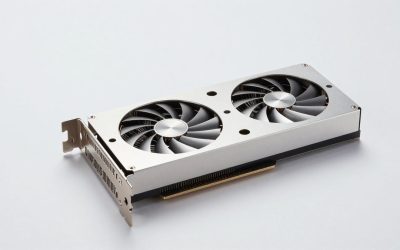
At $750, your GPU budget hits $280–320, which means you’re looking at NVIDIA’s RTX 4070 or AMD’s RX 7700 XT. The RTX 4070 is the smoother choice—better driver ecosystem, superior ray tracing performance, and DLSS 2 (now DLSS 3 in some titles) upscaling that feels like free performance. The RX 7700 XT trades some ray tracing finesse for slightly better raw rasterization performance and better value in some markets. Both crush 1080p gaming.
As an Amazon Associate we earn from qualifying purchases at no extra cost to you.




The real difference emerges at 1440p and beyond, but for 1080p, both cards are overkill in the best way. You’ve got headroom to max out ray tracing, run higher quality textures, or bump up rendering resolution without performance dips. The 12GB VRAM on the RTX 4070 handles any game 2026 throws at it, and it won’t throttle when you’re maxing settings. If you’re planning to stick with 1080p for the next 3 years, either card is fantastic. If you think you might jump to 1440p in 12 months, the RTX 4070 scales better.
Driver maturity matters too. NVIDIA’s driver ecosystem is deeper, with better game-specific optimizations and more consistent performance. AMD catches up, but NVIDIA still has a slight edge in consistency and third-party integration. At this price point, that edge is worth considering.
CPU Choice & Why
Your processor gets a meaningful bump here. The Ryzen 7 5700X or Intel i7-12700F are both solid 8-core or more architectures that handle multithreaded workloads easily. The 5700X brings 8 cores and 16 threads of pure gaming performance, while the i7-12700F adds efficiency cores and better single-threaded performance. For pure gaming, either crushes it. The 5700X is typically cheaper and has lower power draw; the i7 is newer and slightly faster in competitive titles.

XFX Speedster SWFT210 Radeon RX 7600 Graphics Card with 8GB GDDR6 HDMI 3xDP, AMD RDNA 3 RX-76PSWFTFY


As an Amazon Associate we earn from qualifying purchases. Product prices and availability are accurate as of the date/time indicated.
Why jump from a Ryzen 5 5500 to a Ryzen 7 5700X? Because at 1080p high refresh rates, your CPU needs to push frame data fast. The 5700X ensures you’re hitting 100+ FPS in demanding games without CPU throttling. Your RTX 4070 is plenty powerful, and a weak CPU would waste that muscle. The 5700X pairs perfectly and costs just $40–50 more than the 5500.

ASRock Radeon RX 9070 XT Challenger 16GB & PRO 850W 80+ Gold PSU | Ultimate 4K Gaming Power Combo


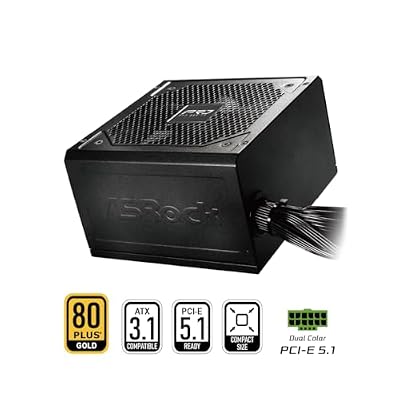


As an Amazon Associate we earn from qualifying purchases. Product prices and availability are accurate as of the date/time indicated.
This CPU also handles light streaming (1080p 60 FPS to Twitch) if you’re into that, and it scales well if you ever jump to 1440p later. It’s future-proof for another 2+ years of gaming dominance.
Motherboard, RAM & Storage
Motherboard: Stick with B550 or B650 boards—they’re mature, affordable ($80–110), and support everything you’re putting in this build. The MSI B550-A PRO has proven longevity, while the ASUS PRIME B650M-K is newer and supports faster RAM. Both handle your CPU without thermal issues and offer solid expansion slots. No need for X570; B550 or B650 is the smart zone.
RAM: You’ve got a choice. DDR4 3600MHz is proven, cheaper ($50–60 for 16GB), and gaming-solid. DDR5 is faster but more expensive ($80–100 for 16GB). For pure gaming performance, the real-world difference is 2–5%. DDR4 3600MHz is the sensible pick here—proven, fast, and you’re not leaving money on the table. If you jump to a B650 board, DDR5 is native, and the price gap narrows slightly. Either way, 16GB minimum.

Storage: 1TB is entry-level here. Upgrade to 1TB or 1.5TB NVMe SSD (Samsung 980 Pro or Kingston Fury, $50–80). Load times are lightning-fast, and your OS plus 3–4 AAA games fit comfortably. If you game heavily, consider 2TB later, but 1TB covers you for the first year.
Case, PSU & Cooling
Case: Upgrade to something with better airflow. The Corsair 4000D Airflow or NZXT H510 Flow are both $70–100 and feature solid thermals, clean aesthetics, and room for future upgrades. The 4000D is a hair more practical; the H510 Flow looks a bit sleeker. Both work beautifully. Good airflow matters when you’ve got a hot RTX 4070 inside; poor airflow reduces your card’s lifespan and performance.
PSU: Go 750W 80+ Gold. The Corsair RM750e or EVGA SuperNOVA 750 G6 are $80–100 and give you efficiency, longevity, and zero headaches. Gold certification means better efficiency (less wasted energy), quieter operation, and better capacitor quality. Your RTX 4070 can draw 200W sustained; add CPU, RAM, storage, and you’re at 450–500W under full load. 750W leaves comfortable headroom.
CPU Cooler: Stock cooler is no longer ideal here. The Ryzen 7 5700X can run hot under heavy gaming. A Deepcool Gammaxx 400 ($25–30) or Arctic Freezer 13 ($30–40) keeps temperatures in the 60–70°C range even under load. Quieter operation, better longevity, and peace of mind. Not optional at this tier.
Total Build Cost Breakdown
- GPU (RTX 4070 / RX 7700 XT): $280–320 (37% of budget)
- CPU (Ryzen 7 5700X / i7-12700F): $130–170 (18% of budget)
- Motherboard: $80–110 (11% of budget)
- RAM (16GB DDR4/DDR5): $50–80 (7% of budget)
- SSD (1TB NVMe): $50–80 (7% of budget)
- Case: $70–100 (9% of budget)
- PSU (750W Gold): $80–100 (11% of budget)
- CPU Cooler: $25–40 (3% of budget)
Total: ~$750 (±$40). The GPU still dominates (37%), but everything else gets meaningful upgrades. Your PSU is more efficient, your case has better thermals, your RAM is faster, and your cooler actually cools. This is a balanced, premium-feeling build at a mid-range price.
Performance Expectations
- Baldur’s Gate 3: 95–120 FPS (ultra settings)
- Cyberpunk 2077: 90–110 FPS (ultra settings, ray tracing medium + DLSS 2)
- Alan Wake 2: 80–100 FPS (ultra settings, ray tracing medium)
- Elden Ring: 144+ FPS (max settings, likely GPU-capped at 144Hz)
- Counter-Strike 2: 200+ FPS (max settings, CPU-limited)
The jump from $500 to $750 is tangible. You’re seeing 20–30% higher framerates across the board, which feels significantly smoother. 80 FPS feels fine; 110 FPS feels spectacular. The RTX 4070 also handles ray tracing at actual playable settings without upscaling, which some people prefer for visual fidelity. DLSS 2 upscaling works beautifully here too, extending your settings headroom even further.
Upgrade Path
This build is incredibly upgrade-friendly for the next 3+ years. You’re not replacing anything soon:

Year 1–2: You might add a second SSD ($50–60) for game overflow. That’s it. GPU and CPU handle everything.
Year 3+: When you’re ready to jump to 1440p or 4K, replace the GPU with something from the next generation (RTX 5070 equivalent). Your CPU, RAM, and storage all transfer over seamlessly.
The B550/B650 board supports future AM4/AM5 upgrades, and the case fits any modern GPU. You’re building a foundation that ages gracefully.
Vs Other Tiers
- $500 Build: Entry 1080p — Solid for starting out, but noticeable frame-rate gaps in demanding games.
- $1,000 Build: 1440p Sweet Spot — Adds 1440p capability and future-proofing for another year.
- $1,500 Build: Maxed 1440p — Overkill for 1080p gaming, but ready for anything.
The $750 build is where “building smart” kicks in. You’ve got enough power that games feel amazing without spending budget on overkill hardware. The jump to $1,000 is about resolution (1440p) more than pure performance. The jump back to $500 is noticeable but not catastrophic—$500 still plays modern games beautifully. $750 is the Goldilocks zone.
FAQ
Can I use this build for streaming?
Yes, but lightly. The Ryzen 7 5700X can handle 1080p 60 FPS streaming to Twitch while gaming, though framerates drop 10–15%. For serious streaming (1440p 60 FPS), wait for the $1,500 build.
Is ray tracing worth it at this tier?
Yes! The RTX 4070 handles ray tracing medium at high framerates. It looks gorgeous. You don’t need ultra ray tracing (that’s for higher tiers), but medium makes games look significantly better without the performance hit of ultra.

Should I get 32GB RAM?
For gaming alone, 16GB is enough. If you’re streaming or doing creative work alongside gaming, 32GB ($100–130 for DDR4) is worth it. Otherwise, 16GB is the sweet spot.
Can I upgrade to 1440p later?
Absolutely. This GPU handles 1440p at high settings (60–75 FPS). The upgrade path is simple: buy a 1440p monitor, your build adapts seamlessly.
Is 750W enough for future upgrades?
For the next 2 years, yes. If you plan to upgrade to an RTX 5070 or better, 850W might be safer, but 750W covers you for current and near-future cards.
Final Verdict
The $750 build is the smart buy for anyone serious about gaming without overkill. You’re getting RTX 4070 power, a capable multi-core CPU, and supporting components that feel premium. Every modern game runs beautifully at 1080p ultra settings with 80–120 FPS—that’s the experience. No stuttering, no dropped frames, no compromises. The jump from $500 is 30–40% better GPU performance, which your eyes and monitor will absolutely appreciate. If you’ve got $750 to spend and want a build that’ll make you smile every gaming session, this is it.
Related Gaming PC Builds
- Best $500 Gaming PC Build
- Best $1,000 Gaming PC Build
- Best $1,500 Gaming PC Build
- Best $2,000 Gaming PC Build
- Best $2,500 Gaming PC Build
- Best $3,000 Gaming PC Build
- Best $4,000 Gaming PC Build
Related Articles
Looking for more on this topic? Browse the hand-picked guides below — each one applies the same scoring rubric used in this review.
Frequently Asked Questions
What frame rates should I expect at 1080p from a $750 build?
With a current mid-range GPU and a six or eight core CPU, expect well over 100fps in competitive titles like Valorant, CS2 and Apex Legends, and roughly 60 to 90fps at high settings in demanding single-player games. Quality upscaling pushes the heavier titles comfortably past 60.
Should I buy a prebuilt instead at this price?
Building yourself usually buys a stronger graphics card and a better power supply for the same money, because prebuilts cut corners on parts buyers rarely compare. Prebuilts make sense if you value a single warranty, want it assembled and tested, or cannot source parts locally at retail pricing.
Is 16GB of RAM still enough for gaming in 2026?
For pure gaming 16GB remains workable, but several recent releases stream textures aggressively and 32GB avoids stutter when a browser, Discord and a game all run together. If the budget is tight, buy a two-stick 16GB kit now and leave the remaining slots free for later.
Can a $750 machine handle 1440p?
Yes, with compromises. Drop from ultra to high settings, enable quality upscaling, and most games hold 60fps at 1440p, while esports titles run far above that. What a build at this price cannot do is maximum ray tracing at 1440p, which needs a considerably more expensive graphics card.
What should I upgrade first later on?
The graphics card, almost always, which is why the build should include a quality power supply with headroom and a case that fits a longer card. Storage is the second upgrade, since one terabyte fills quickly. Save CPU and motherboard changes for a full platform refresh.