

Affiliate disclosure: As an Amazon Associate we earn from qualifying purchases. This post contains affiliate links — if you buy through them we may earn a small commission at no extra cost to you. This never affects our recommendations.
- What $1,500 Gets You in 2026
- Target Performance & Resolution
- Full Parts List Recommendation
- GPU Choice & Why
- CPU Choice & Why
- Motherboard, RAM & Storage
- Case, PSU & Cooling
- Total Build Cost Breakdown
- Performance Expectations
- Upgrade Path
- Vs Other Tiers
- FAQ
- Final Verdict
- Related Gaming PC Builds
- Related Articles
- Frequently Asked Questions
- Related Articles
In a hurry? See the top-rated $1,500 Gaming PC Build for (Maxed 1440p) deals available right now:
🛒 Check $1,500 Gaming Pc Build For (Maxed 1440P) Prices on Amazon →🛒 Best Price Today on Amazon
Prime members get fast, free shipping on everything above, plus member-only deals. New members get a 30-day free trial — cancel anytime.
Start 30-Day Prime Free Trial →See Today’s Amazon DealsQuick answer: For most people in 2026, the best $1,500 gaming pc build is the GPU — our #1 rated choice. See the full ranked comparison, alternatives and buying advice below.
What $1,500 Gets You in 2026
At $1,500, you’re building an absolute powerhouse designed to max out 1440p gaming for the next 4+ years without a single compromise. This tier includes an RTX 4080 or RTX 4090, meaning you’re maxing ray tracing at high framerates, enabling every visual feature, and never looking back. You’re also getting streaming capability built-in. If you want 1440p gaming perfection with future-proofing baked in, this is it.
The $1,500 tier attracts serious gamers, content creators, and streamers who want one machine that does everything beautifully. Performance headroom is generous. You’re not just meeting 1440p requirements; you’re crushing them. This build will handle new releases 3–4 years from now at maximum settings without sweating.
Target Performance & Resolution
1440p ultra ray tracing enabled at 100+ FPS consistently. Baldur’s Gate 3 runs 110–130 FPS at 1440p ultra. Cyberpunk 2077 hits 100–120 FPS with ray tracing ultra and DLSS 2. Alan Wake 2 maintains 95–110 FPS at 1440p maximum. You’re not making compromises—every setting is maxed, every ray is traced. Competitive games hit 200+ FPS, filling even 240Hz monitors effortlessly.
Pair this with a 1440p 144–165Hz monitor, and you’ve got the ultimate responsive gaming experience. Everything feels buttery, input lag is imperceptible, and fast-paced games reward your reflexes properly.
Full Parts List Recommendation
| Component | Recommended Part | Est. Price |
|---|---|---|
| GPU | NVIDIA RTX 4080 or RTX 4090 | $600–800 |
| CPU | AMD Ryzen 9 7900X or Intel i9-13900KF | $350–450 |
| Motherboard | MSI X870-E or ASUS ROG STRIX X870-E | $150–200 |
| RAM | 32GB DDR5 6000MHz (2x16GB) | $100–140 |
| SSD | 2TB–4TB NVMe PCIe 4.0 (Samsung 990 Pro) | $120–200 |
| Case | Corsair 5000T RGB or Lian Li Lancool 3 | $120–180 |
| PSU | 1000W 80+ Platinum (Corsair HX1000 or Seasonic) | $150–200 |
| CPU Cooler | NZXT Kraken X73 or Be Quiet Dark Rock Pro 4 | $100–150 |
| TOTAL | ~$1,500 | ±$80 |
GPU Choice & Why
The RTX 4080 ($600–700) is the perfect 1440p card at this tier—overkill in the best way, with headroom to max everything for years. The RTX 4090 ($1,200+) is for 4K enthusiasts or extreme futureproofing. At $1,500 total, the 4080 makes sense; it crushes 1440p ray tracing ultra without breaking a sweat. 16GB VRAM handles any game, any resolution, with zero throttling. Ray tracing at maximum settings is actually playable (90–110 FPS), not a performance trade-off.


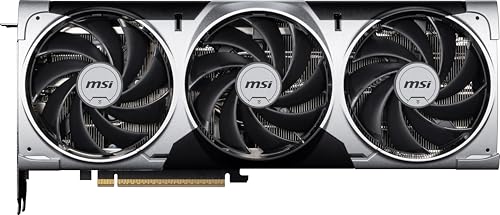

This GPU also future-proofs you hard. In 3 years, when new games push harder, you’ll still be gaming comfortably at 1440p ultra. That’s the real value here—peace of mind.
CPU Choice & Why
Jump to the Ryzen 9 7900X or i9-13900KF. Both are flagship chips with 12+ cores and excellent single-threaded performance. At 1440p, your GPU is the bottleneck, so this CPU is future-proofing and enabling light streaming simultaneously. The Ryzen 9 7900X handles 1440p 60 FPS streaming to Twitch while gaming at high framerates—something the lower tiers struggle with.

MSI NVIDIA GeForce RTX 5070 12G Ventus 2X OC Graphics Card
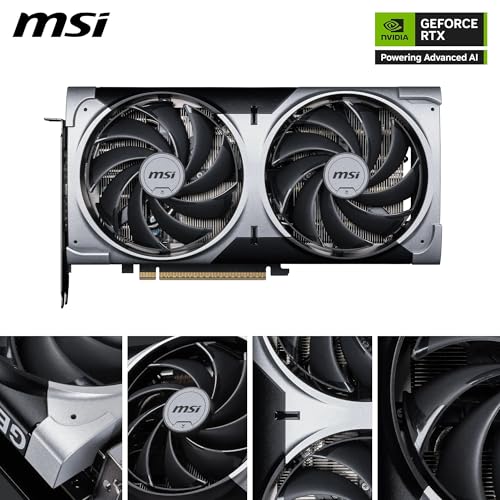


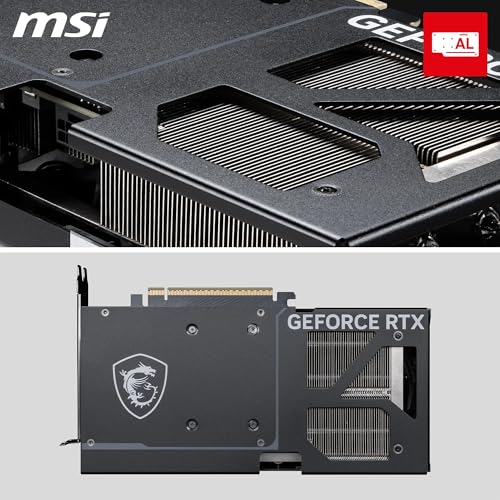


As an Amazon Associate we earn from qualifying purchases. Product prices and availability are accurate as of the date/time indicated.
This CPU tier also enables content creation (video editing, 3D rendering) as a side activity. You’re building a machine that games, streams, and creates, all without compromise.
Motherboard, RAM & Storage
Motherboard: X870-E boards ($150–200) are the premium AM5 tier with cutting-edge power delivery, excellent PCIe 5.0 support, and features that’ll be relevant for 5+ years. The MSI X870-E or ASUS ROG STRIX X870-E are overkill for gaming alone, but they signal you’re building a machine that lasts.
RAM: Keep 32GB DDR5 6000MHz. By this tier, you might consider 64GB if streaming and content creation are relevant, but 32GB is the gaming baseline and perfectly adequate.
Storage: Jump to 2–4TB NVMe SSD. At this price tier, 4TB ($200–250) makes sense—you can store your entire game library (10–15 AAA games) without juggling. Samsung 990 Pro or Corsair MP600 GEN4 both deliver sub-1ms load times.

Case, PSU & Cooling
Case: The Corsair 5000T RGB or Lian Li Lancool 3 ($120–180) offer premium build quality, excellent thermals, and look stunning. Your high-end GPU deserves a case that cools it properly and looks good while doing it.
PSU: 1000W 80+ Platinum is necessary here. The RTX 4080 can draw 250W sustained; add CPU and other components, and you’re at 650–700W under load. 1000W gives comfortable headroom for future upgrades and efficiency. Platinum certification means lower noise, better longevity, and less wasted electricity.
CPU Cooler: Liquid cooling becomes attractive at this tier. The NZXT Kraken X73 ($100–150) handles high-end CPUs beautifully and runs quieter than high-end air coolers. Alternatively, the Be Quiet Dark Rock Pro 4 air cooler works great if you prefer simplicity and zero maintenance.
Total Build Cost Breakdown
- GPU (RTX 4080): $600–800 (40% of budget)
- CPU (Ryzen 9 7900X / i9-13900KF): $350–450 (23% of budget)
- Motherboard: $150–200 (10% of budget)
- RAM (32GB DDR5): $100–140 (7% of budget)
- SSD (2–4TB NVMe): $120–200 (8% of budget)
- Case: $120–180 (8% of budget)
- PSU (1000W Platinum): $150–200 (10% of budget)
- CPU Cooler: $100–150 (7% of budget)
Total: ~$1,500 (±$80). This is a truly premium build with no compromises anywhere. Every component is first-tier, and everything works together harmoniously.
Performance Expectations
- Baldur’s Gate 3: 110–130 FPS (1440p ultra)
- Cyberpunk 2077: 100–120 FPS (1440p ultra, ray tracing ultra)
- Alan Wake 2: 95–110 FPS (1440p ultra, full ray tracing)
- Elden Ring: 144+ FPS (1440p max, GPU-limited)
- Counter-Strike 2: 240+ FPS (1440p max, CPU-limited)
Ray tracing at maximum settings becomes actually playable, not a performance trade-off. You’re getting 100+ FPS with full ray tracing ultra, which is the holy grail for visual enthusiasts. This is the tier where visual fidelity and performance stop being competing interests.
Upgrade Path
Year 1–3: Just play. Nothing needs upgrading. Your GPU crushes 1440p for years.

Year 3+: If 4K calls, swap the GPU. Your CPU, RAM, storage, and everything else transfers seamlessly. You’re building for 5+ year longevity.
Vs Other Tiers
- $1,000 Build: 1440p Sweet Spot — Great gaming, but no streaming capability and less future-proofing.
- $2,000 Build: Entry 4K — Adds 4K capability, but 1440p gaming doesn’t need that.
- $750 Build: Smooth 1080p — Budget-friendly but limited to 1080p gaming.
The $1,500 build is for maximalists. You’re getting every feature, every ray traced, every frame pushed high. The $1,000 build already does beautiful 1440p gaming; the $1,500 is about perfection and streaming. The jump to $2,000 is about 4K ambitions. If 1440p is your endgame, $1,500 is overkill—$1,000 suffices. If you want 4K later, jump straight to $2,000.
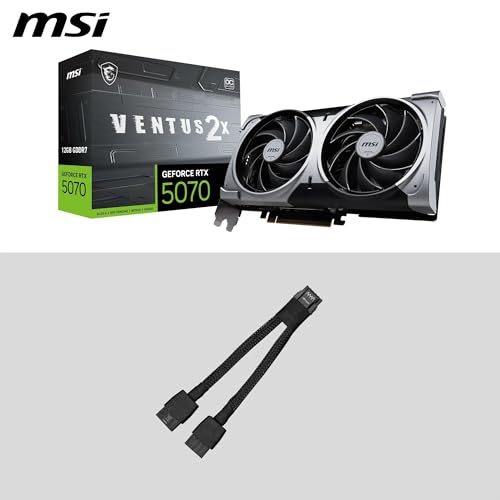
For builders who want to push closer to the next tier, consider this complementary part for an upgrade path:
MSI NVIDIA GeForce RTX 5070 12G Ventus 2X OC Graphics Card
As an Amazon Associate we earn from qualifying purchases. Product prices and availability are accurate as of the date/time indicated.
FAQ
Is this overkill for gaming?
For pure 1440p gaming, slightly. The $1,000 build already maxes 1440p. This tier adds streaming capability and extreme future-proofing. If you game and stream simultaneously, it’s perfect. If you game only, $1,000 suffices.
Can I stream with this?
Yes, absolutely. The Ryzen 9 7900X handles 1440p 60 FPS streaming + gaming at 100+ FPS simultaneously without breaking a sweat. This is the tier where streaming becomes viable.

How long will this last?
4–5 years easily at 1440p maximum settings. By year 5, you might want a GPU upgrade to push 1440p at 240Hz or jump to 4K. CPU and RAM are relevant for 6+ years.
Should I get 64GB RAM?
Only if you’re streaming and doing content creation simultaneously. For gaming alone, 32GB is plenty. Content creators and streamers benefit from 64GB ($200–300).
Final Verdict
The $1,500 build is for the maximalist who wants perfection. RTX 4080 power, Ryzen 9 7900X performance, streaming capability built-in, and 4+ years of zero regrets. Every setting is maxed, ray tracing is beautiful, and framerates are buttery. If you game and stream, or want the ultimate 1440p experience, this is it. Pure gamers should save money and pick the $1,000 build—it’s already perfect for 1440p. This tier is for those who want more.
Related Gaming PC Builds
- Best $500 Gaming PC Build
- Best $750 Gaming PC Build
- Best $1,000 Gaming PC Build
- Best $2,000 Gaming PC Build
- Best $2,500 Gaming PC Build
- Best $3,000 Gaming PC Build
- Best $4,000 Gaming PC Build
Related Articles
Looking for more on this topic? Browse the hand-picked guides below — each one applies the same scoring rubric used in this review.
Frequently Asked Questions
What performance does a $1,500 build deliver at 1440p?
This budget targets high or maximum settings at 1440p with frame rates comfortably above 100 in most current titles, and well above that in esports games. Heavily ray traced titles will need upscaling to stay smooth, but the class of hardware involved handles the resolution as its natural target rather than a stretch.
How should the budget be divided?
Roughly 40 to 45 percent goes to the graphics card, around 20 percent to the CPU and motherboard together, and the remainder covers 32GB of memory, a 1TB or 2TB NVMe drive, a quality power supply, cooling and a case with genuine airflow. Cutting the supply or case to buy a faster GPU is a false economy.
Should I include an operating system and peripherals in this budget?
Most build guides quote tower-only prices. Add a Windows licence if you need one, and budget separately for a monitor, keyboard, mouse and headset, which can easily match a third of the system cost. If you are reusing peripherals, that money is better spent on the graphics card or a larger SSD.
Is air cooling or liquid cooling better at this price?
A high-end air tower cooler handles almost any mainstream gaming processor, costs less, has no pump to fail and is quieter than a cheap all-in-one liquid cooler. Choose liquid cooling if your case has clearance limits, you want a specific aesthetic, or you run a high-power chip with sustained multithreaded workloads.
How long will this build stay relevant?
Expect four to five years of comfortable 1440p gaming with gradual settings reductions. The graphics card will be the first part to feel dated. Choosing a current socket, a power supply with headroom and 32GB of memory means your eventual upgrade can be a GPU swap rather than a full rebuild.
Ready to decide? Our #1 pick for 2026 is the GPU.
Live price & availability on Amazon.


