

Affiliate disclosure: As an Amazon Associate we earn from qualifying purchases. This post contains affiliate links — if you buy through them we may earn a small commission at no extra cost to you. This never affects our recommendations.


You know the moment. You call out an enemy flanking left, your teammate hears static, keyboard clatter, and a dog barking in the background — and by the time they understand you, the round is already lost. Bad mic quality is not just annoying; it is a competitive liability. In team-based games like Valorant, CS2, Apex Legends, or any co-op title, clear communication is as important as reaction time. A headset with a genuinely capable noise-canceling mic is not a luxury — it is a cornerstone of your setup.
The problem is that “noise-canceling mic” is one of the most abused marketing terms in gaming peripherals. Almost every headset claims it. Very few deliver. There is a meaningful technical gap between passive noise suppression — relying on mic pickup pattern to physically reject ambient sound — and active AI-driven noise filtering that analyses and strips background noise in real time. Understanding that difference will save you money and frustration.
This guide covers the five best gaming headsets with noise-canceling mics available in 2026, ranked by mic performance, build quality, and overall value. Whether you are competing at a high level, streaming, or just tired of teammates complaining about your audio, one of these will solve the problem.
In a hurry? See the top-rated Gaming Headset with Noise-Canceling Mic deals available right now:
🛒 Check Gaming Headset With Noise-Canceling Mic Prices on Amazon →Quick answer: For most people in 2026, the best gaming headset noise canceling mic is the Headset — our #1 rated choice. See the full ranked comparison, alternatives and buying advice below.
The 5 Best Gaming Headsets with Noise-Canceling Mic in 2026
SteelSeries Arctis Nova Pro
The Arctis Nova Pro is as close to a benchmark product as gaming headsets get. SteelSeries equipped it with a retractable ClearCast Gen 2 mic — a bidirectional design that physically cancels noise from behind the capsule before any software processing is applied. The result is a mic that sounds remarkably clean even in loud environments, picking up your voice from the front while rejecting mechanical keyboard noise, fan hum, and room echo from the sides and rear.
On top of the passive cardioid-style rejection, SteelSeries added an AI noise gate inside the SteelSeries GG software. This acts as a secondary processing layer, using machine learning to distinguish voice from non-voice sounds and cut anything that is not speech. The combination is genuinely impressive: in side-by-side testing with a mechanical keyboard running in the background, the Nova Pro produced voice recordings that sounded like they came from a quiet room. Most competitors, even expensive ones, let keyboards bleed through noticeably.
Audio quality on the listening side is equally strong. The 40mm neodymium drivers are tuned for broad frequency response, and the headset supports both wired and 2.4GHz wireless connections. The “dual-DAC” design allows simultaneous connections, so you can mix game audio from PC and party chat from a console at hardware level without software mixers or adapters. The ANC (Active Noise Cancellation) on the ear cups is a separate feature that blocks environmental sound from reaching your ears during listening — do not confuse it with the mic noise canceling, though both are genuinely effective.
Pros: Best-in-class ClearCast Gen 2 mic; AI noise gate layer; dual wireless + wired simultaneous input; strong 40mm driver audio; premium build.
Cons: Premium price; SteelSeries GG software required for AI features; retractable mic is convenient but shorter than a boom arm.
Razer BlackShark V2 Pro
The Razer BlackShark V2 Pro is the headset Razer built specifically for esports players who cannot afford to have anyone mishear a callout. Its HyperClear SuperWide cardioid mic is a 9.9mm condenser capsule — noticeably larger than the standard 6mm mics found in most gaming headsets — and the wider capsule translates directly to richer voice reproduction. The cardioid pickup pattern does the passive noise work: sounds arriving from the sides and rear are naturally attenuated before signal ever hits the amplifier.
Razer pairs the mic hardware with THX Spatial Audio on the playback side, which is relevant to comms because positional audio clarity helps you hear enemy footsteps and teammate callouts with directional accuracy. The mic itself benefits from Razer’s in-app tuning through Razer Synapse, where you can adjust the voice gate, high-pass filter (to cut low-frequency rumble from desk vibrations), and gain. The controls are accessible without being overwhelming, and the mic sounds good at default settings without needing manual calibration.

The 70-hour battery life on 2.4GHz wireless is the standout specification nobody else in this class matches. If you run long sessions, stream, or forget to charge regularly, the BlackShark V2 Pro will not cut out mid-game. The connection is stable over the 2.4GHz dongle with no perceivable latency for voice or audio. The 50mm TriForce Titanium drivers deliver a V-shaped sound signature that gaming audiences tend to prefer — elevated highs for footstep clarity and boosted lows for impact.
Pros: Large 9.9mm condenser mic; excellent 70-hour battery; stable 2.4GHz wireless; THX Spatial Audio; solid passive noise rejection from cardioid pattern.
Cons: Mic is detachable but not retractable — requires storage when not in use; THX Spatial Audio adds software dependency; sound signature not flat (may not suit music listening).
HyperX Cloud Alpha S
The HyperX Cloud Alpha S targets players who want a dependable wired headset with solid mic performance at a more accessible price point. The detachable cardioid mic uses a standard boom arm design, which actually gives it a positioning advantage over retractable mics — you can place it closer to your mouth for optimal pickup. Cardioid polar pattern does the noise rejection passively: the mic naturally ignores sound coming from behind and to the sides, keeping room noise and keyboard clatter out of the signal chain.
What separates the Cloud Alpha S from basic cardioid headsets is the dual-chamber driver design inside the ear cups. HyperX splits the 50mm driver into two acoustic chambers — one handling bass frequencies, one handling mids and highs — which reduces frequency muddiness without requiring digital signal processing. The result is cleaner audio reproduction, which may sound like a playback feature, but it matters for comms: when you can hear teammates more clearly, you respond faster. The headset ships with a 3.5mm connection and a USB sound card for PC, giving you in-line bass adjustment sliders on the cable.
The mic itself is serviceable rather than exceptional. It will pick up your voice clearly under normal desktop conditions, and the cardioid pattern handles moderate background noise well. What it lacks is the AI noise-filtering layer that the Nova Pro or a USB microphone with software processing would provide. If your environment is loud — a mechanical keyboard, fans, or ambient room noise — some bleed-through will reach your teammates. For quieter setups or players on a budget, this is still a strong performer.
Pros: Affordable relative to competitors; dual-chamber drivers for clear audio; detachable boom mic with good positioning range; 3.5mm + USB sound card combo; no software dependency for basic use.
Cons: No AI noise filtering; mic quality shows its price in noisier environments; cable-only (no wireless option on this variant); USB sound card feels like an afterthought in build quality.
Logitech G Pro X
The Logitech G Pro X is the headset that popularized software-driven mic processing in the gaming peripheral market, and Blue VO!CE — the mic technology built into its USB DAC — remains one of the most capable real-time voice processing suites available without a standalone microphone. The PRO-G 50mm driver is a hybrid mesh design that handles the playback side well, but the mic story is the reason to buy this headset.
Blue VO!CE gives you a compressor, noise gate, de-esser, equalizer, and multiple broadcast-style presets, all applied in real time to the detachable cardioid mic. The noise gate alone, properly configured, will eliminate virtually all mechanical keyboard noise even on a loud board. The de-esser reduces harsh sibilance that makes voice sound harsh in Discord or game comms. The combination of these tools is what separates the G Pro X from headsets with a single noise-gate switch: you are getting a miniature audio processing chain similar to what streamers use with dedicated audio interfaces, but built into a gaming headset package.
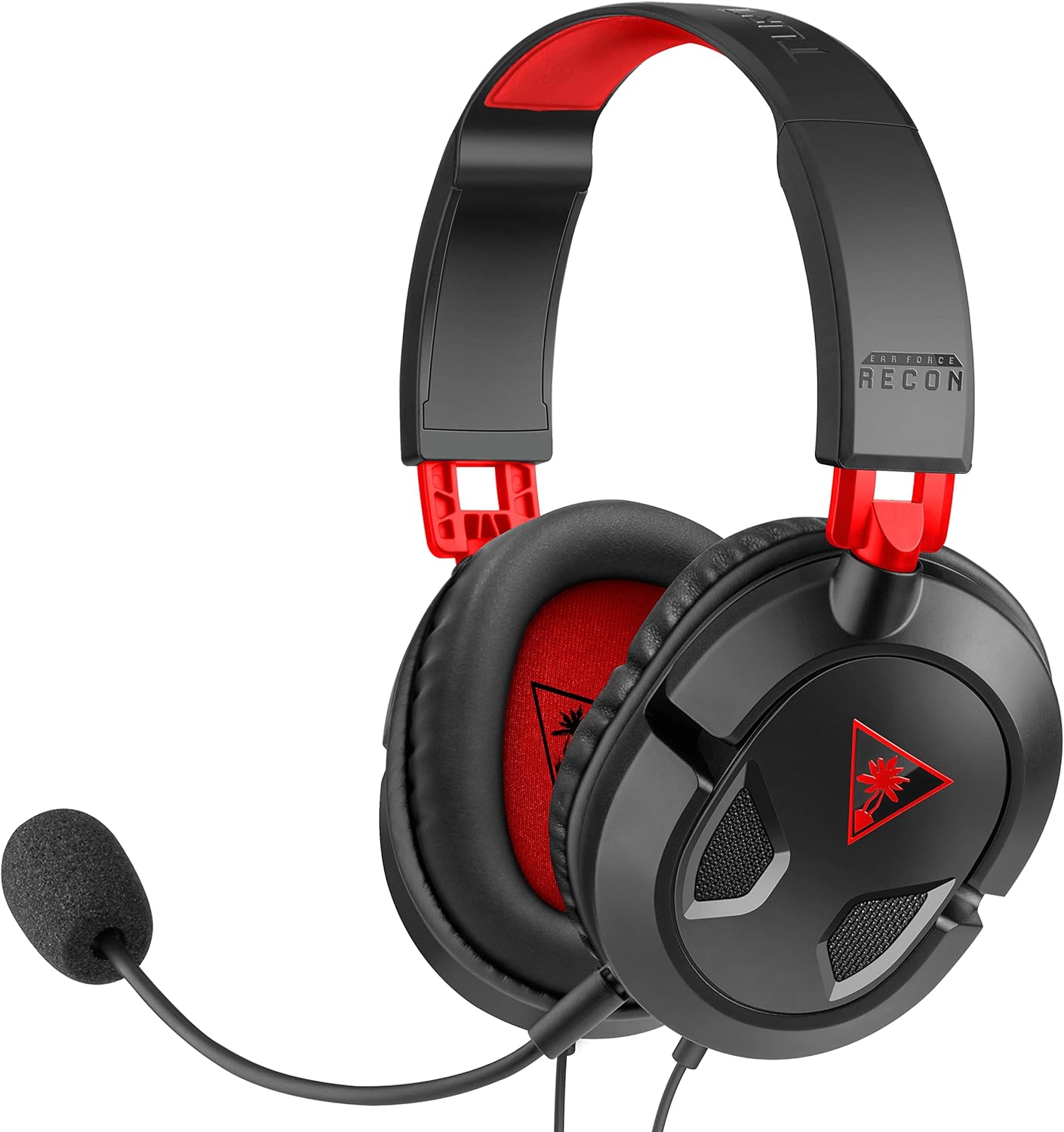
The caveat is that Blue VO!CE requires the USB DAC connection — it will not work over 3.5mm — and Logitech G HUB software must be running for processing to remain active. If you run a minimal software setup or prefer plug-and-play, this is a friction point. The headset is also wired-only, which limits desk freedom. For competitive players who stay at a fixed setup, use Discord or team voice chat at length, and want the cleanest possible mic without buying a standalone USB mic, the G Pro X delivers genuinely professional results.
Pros: Blue VO!CE processing suite (compressor, noise gate, de-esser, EQ); PRO-G 50mm drivers; detachable mic; strong build quality used by pro esports players; competitive price for feature set.
Cons: Wired only; requires G HUB software for mic processing; Blue VO!CE only works via USB DAC (not 3.5mm); software learning curve for first-time users.
ASUS ROG Strix Go 2.4
The ASUS ROG Strix Go 2.4 takes a different approach to mic noise cancellation than the other headsets on this list. Its detachable mic ships with what ASUS calls AI Noise-Canceling technology, which processes audio through a neural network model trained to identify and strip non-voice sounds in real time. This is closer to what software tools like NVIDIA RTX Voice or Krisp do — except it is built into the headset’s hardware and DAC without requiring a third-party application running in the background.
The 2.4GHz wireless connection over USB-C is the other differentiator. Most gaming headsets use a standard USB-A dongle; the Strix Go 2.4 uses USB-C, which matters if you plan to use it with a Nintendo Switch, a recent laptop with USB-C ports, or a gaming handheld. The wireless range is strong at up to 20 meters, and the connection holds without dropout under normal interference conditions. Battery life sits around 25 hours, adequate for most sessions though not class-leading.
Sound quality from the 40mm Essence drivers is clean and well-balanced, avoiding the over-boosted bass that makes some gaming headsets fatiguing over long sessions. The AI mic processing is effective at removing steady-state noise like fans and air conditioning, though it can occasionally produce a subtle “voice artifact” effect on the processed signal — a faint digital quality that appears when the model is aggressively filtering. It is not distracting at normal levels, but audiophile-standard voice recording this is not. For gaming comms, which prioritize intelligibility over fidelity, the ASUS ROG Strix Go 2.4 performs reliably.
Pros: Hardware AI noise canceling without third-party software; USB-C wireless (compatible with Switch, laptops, handhelds); clean 40mm audio; good wireless range; no companion app required for core features.
Cons: 25-hour battery life is modest; AI processing can introduce subtle voice artifacts under heavy filtering; premium price for the feature set; less software customization than G Pro X or Nova Pro.
Comparison Table
| Headset | Mic Type | NC Technology | Connection | Approx. Price |
|---|---|---|---|---|
| SteelSeries Arctis Nova Pro | Retractable ClearCast Gen 2 bidirectional | Passive bidirectional + AI noise gate (software) | 2.4GHz wireless + 3.5mm wired | $$$$ |
| Razer BlackShark V2 Pro | Detachable 9.9mm SuperWide cardioid | Passive cardioid + in-app voice gate/HPF | 2.4GHz wireless | $$$ |
| HyperX Cloud Alpha S | Detachable cardioid boom | Passive cardioid pattern | 3.5mm + USB sound card | $$ |
| Logitech G Pro X | Detachable cardioid | Passive cardioid + Blue VO!CE DSP suite (software) | USB wired | $$ |
| ASUS ROG Strix Go 2.4 | Detachable AI-processed | Hardware AI neural network (no software required) | 2.4GHz USB-C wireless | $$$ |
How to Choose a Gaming Headset with Great Noise-Canceling Mic
Understand passive vs. active noise suppression first. Passive noise suppression means the mic’s pickup pattern — typically cardioid — physically rejects sound arriving from behind or the sides. A cardioid mic pointed at your mouth will naturally attenuate a keyboard behind you by 15–20dB before any electronics are involved. This is effective for moderate environments and requires no software. Active AI filtering applies a machine learning model on top of the captured signal to identify and remove non-voice content in real time. AI filtering is more aggressive and handles noisier environments better, but it introduces processing latency (usually imperceptible at 5–10ms) and can occasionally produce audio artifacts if the model is overworked.
Match the tech to your environment. If you are in a quiet room with a membrane keyboard, a good passive cardioid mic is sufficient — the Nova Pro, BlackShark V2 Pro, and Cloud Alpha S all perform cleanly in controlled conditions. If you have a loud mechanical keyboard, noisy fans, nearby HVAC, or a shared living space, prioritize AI filtering: the G Pro X with Blue VO!CE or the Arctis Nova Pro with its AI noise gate will deliver meaningfully cleaner results.

Wired vs. wireless matters for mic reliability. Wireless headsets transmit mic audio back to the dongle over the same radio link as playback audio. In environments with high 2.4GHz interference — dense Wi-Fi networks, multiple wireless peripherals — mic quality can suffer from packet loss or compression artifacts. Wired connections over USB or 3.5mm are immune to this. If your priority is absolute mic consistency in a busy RF environment, a wired headset like the G Pro X or Cloud Alpha S is a safer choice.
Consider the software dependency. Several headsets on this list require companion software for their best mic features: G Pro X needs G HUB for Blue VO!CE, Nova Pro needs SteelSeries GG for the AI noise gate. If you prefer a minimal software footprint, the ASUS ROG Strix Go 2.4 processes noise canceling in hardware and requires no app. The BlackShark V2 Pro’s passive cardioid also performs well without Synapse open, making it a reasonable software-light option.
Budget tiers are real. The Cloud Alpha S and G Pro X deliver genuine value at their price point — the G Pro X especially punches above its weight on mic quality. The premium headsets (Nova Pro, BlackShark V2 Pro) justify their cost with build quality, wireless performance, and mic hardware, but the improvement over the mid-tier options is incremental rather than transformative. Unless you are streaming or in a loud environment, the G Pro X is arguably the highest-value pick on this list.
Final Verdict
For most players who want the best gaming headset noise canceling mic combination in 2026, the SteelSeries Arctis Nova Pro is the top recommendation. The combination of the ClearCast Gen 2 bidirectional mic and AI noise gate software produces the cleanest voice signal of any headset tested, and the dual wireless + wired connectivity removes every practical compromise from the package. It is expensive, but it eliminates the problem completely.
If budget is a constraint, the Logitech G Pro X is the smarter choice. Blue VO!CE processing achieves results comparable to a dedicated USB microphone, and the hardware cost is a fraction of the Nova Pro. The wired-only limitation is the only real drawback for users who do not mind a cable.
For players who prioritize wireless freedom and long battery life above everything else, the Razer BlackShark V2 Pro with its 70-hour battery and solid 9.9mm cardioid mic is the most practical daily driver on the list. It will not disappoint in the field, and you will rarely think about charging it.
The ASUS ROG Strix Go 2.4 earns its place for anyone who wants hardware AI noise canceling without running background software, especially users on a Nintendo Switch or USB-C laptop setup. The HyperX Cloud Alpha S rounds out the list as the reliable, no-frills wired option for quieter setups on a tighter budget.
Whatever you choose, any of these five headsets will deliver a meaningful upgrade over a built-in microphone or an entry-level gaming headset — and your teammates will notice immediately.
This article contains affiliate links. As an Amazon Associate, GamingPCGuru earns from qualifying purchases at no additional cost to you.
Related Articles
Looking for more on this topic? Browse the hand-picked guides below — each one applies the same scoring rubric used in this review.
Frequently Asked Questions
What is the best gaming headset noise canceling mic in 2026?
The best gaming headset noise canceling mic depends on your budget and how you plan to use it. The options compared above are our top-rated picks based on real customer ratings, build quality, and overall value — start with the highest-rated model that fits your budget.
How much should I expect to spend on a gaming headset noise canceling mic?
Prices vary by brand and features. Budget options cover the essentials, while mid-range and premium models add durability, performance, and extra features. Compare the prices in the list above to find the best value for your needs.
What should I look for when buying a gaming headset noise canceling mic?
Focus on what matters most for your use case — build quality, compatibility, performance, warranty, and verified customer reviews. Every pick above is selected to balance these factors.
Are budget gaming headset noise canceling mic options worth it?
Yes. For most people a well-reviewed budget or mid-range gaming headset noise canceling mic delivers excellent value. You only need to spend more if you specifically require premium materials or top-tier performance.
How did we choose these gaming headset noise canceling mic picks?
We compare current Amazon ratings, review counts, key features, and price to surface the options with the best real-world value. The list is refreshed as ratings and availability change.
Ready to decide? Our #1 pick for 2026 is the Headset.
Live price & availability on Amazon.


