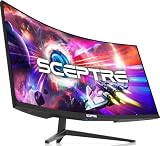
- Top Pick: TCL 65" T7 4K QLED Google TV with 144Hz Gaming (65T7)
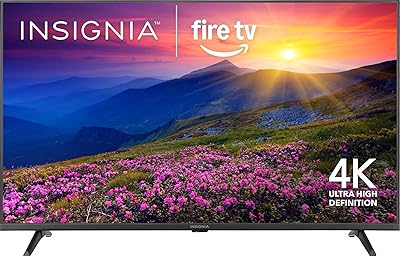
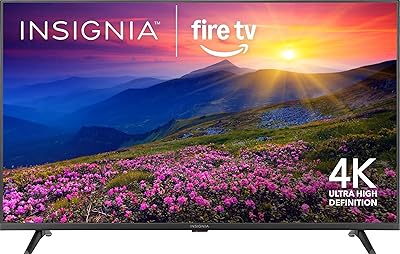
- Best Value: INSIGNIA 50" Class F50 Series LED 4K UHD Smart Fire TV with Alexa Voice Remote (NS-50F502NA26)
- Premium Choice: TCL 55 Inch Class QM6K Series | Mini LED QLED 4K HDR | 55QM6K, Latest Model | 120HZ-144HZ High Brightness Smart Google TV Dolby Atmos Onkyo Audio | Voice Remote Alexa Gaming Streaming Television
Affiliate disclosure: As an Amazon Associate we earn from qualifying purchases. This post contains affiliate links — if you buy through them we may earn a small commission at no extra cost to you. This never affects our recommendations.
Gaming TVs have become serious performance hardware. Whether you’re playing on PS5 or Xbox Series X, the right display unlocks the full potential of your console with 4K 120Hz output, VRR (Variable Refresh Rate), and HDMI 2.1 bandwidth. We researched and ranked the best gaming TVs available in 2026 across OLED, QLED, and mini-LED panels.
Every pick on this list supports at least 4K 60Hz with low input lag, and most hit 4K 120Hz — the sweet spot for next-gen console gaming. Here’s what’s worth your money.
In a hurry? See the top-rated Gaming TVs deals available right now:
🛒 Check Gaming Tvs Prices on Amazon →🛒 Best Price Today on Amazon
Prime members get fast, free shipping on everything above, plus member-only deals. New members get a 30-day free trial — cancel anytime.
Start 30-Day Prime Free Trial →See Today’s Amazon DealsTop Picks at a Glance
| TV | Panel | Max Refresh | HDMI 2.1 | Best For |
|---|---|---|---|---|
| LG C3 OLED | OLED evo | 4K 120Hz | 4 ports | Overall best |
| Samsung QN90C Neo QLED | Mini-LED QLED | 4K 120Hz | 4 ports | Bright room gaming |
| Sony X90L | Full Array LED | 4K 120Hz | 2 ports | Sony ecosystem |
| TCL QM8 | Mini-LED QLED | 4K 144Hz | 2 ports | Budget QLED |
| Hisense U8K | Mini-LED QLED | 4K 144Hz | 2 ports | Value pick |
As an Amazon Associate we earn from qualifying purchases at no extra cost to you. Product prices and availability are accurate as of the date shown and are subject to change.


LG C3 OLED — Best Overall Gaming TV
- Panel: OLED evo with self-lit pixels — true blacks and infinite contrast ratio for immersive night gaming scenes
- Performance: 4K 120Hz across all four HDMI 2.1 ports; input lag drops to 1.3ms in Game Mode — virtually imperceptible
- VRR Support: Compatible with G-Sync, FreeSync Premium, and HDMI Forum VRR simultaneously — works with PS5, Xbox, and PC
- Gaming UI: LG’s Game Dashboard overlays frame rate, VRR status, and settings without leaving your game
- Consideration: OLED panels can experience burn-in with static HUD elements over years of heavy use — use pixel refresh features regularly
Samsung QN90C Neo QLED — Best for Bright Rooms
- Brightness: Neo QLED mini-LED backlight hits over 2,000 nits peak — obliterates glare in sunlit living rooms where OLED washes out
- Gaming Features: Motion Xcelerator Turbo Pro delivers 4K 120Hz; all four HDMI ports are 2.1 spec with 48Gbps bandwidth
- VRR: Supports FreeSync Premium Pro and HDMI Forum VRR; G-Sync Compatible certification means smooth PC gaming too
- Sound: Object Tracking Sound+ matches audio to on-screen movement — surprisingly effective for an integrated speaker system
- Consideration: Local dimming can cause minor blooming around bright objects on dark backgrounds compared to true OLED
Sony X90L — Best for PlayStation Gamers
- PS5 Integration: Auto HDR Tone Mapping and Auto Genre Picture Mode activate automatically when a PS5 is connected — zero setup required
- Picture Quality: XR Cognitive Processor analyzes and enhances content to match how human eyes perceive depth and texture
- Gaming Specs: Two HDMI 2.1 ports support 4K 120Hz; VRR and ALLM (Auto Low Latency Mode) engage automatically in Game Mode
- Acoustic Surface Audio+: Speakers built into the screen panel vibrate the display itself — audio feels like it originates from the action
- Consideration: Only two HDMI 2.1 ports versus four on LG C3 and Samsung QN90C — plan your device connections accordingly
TCL QM8 — Best Budget Mini-LED
- Value: TCL’s flagship mini-LED technology at a fraction of the price of LG or Samsung flagships — remarkable performance per dollar
- Refresh Rate: 4K 144Hz support via HDMI 2.1 — future-proofed for next-generation PC GPUs beyond current console limits
- Brightness: QLED panel with high nit output performs well in mixed-light environments and HDR content
- Gaming: Low input lag in Game Mode; VRR support covers FreeSync and HDMI Forum VRR for console and PC compatibility
- Consideration: Smart TV interface (Google TV) is less refined than LG or Samsung; two HDMI 2.1 ports rather than four
Hisense U8K — Best Value Gaming TV
- Price-to-Performance: Aggressive pricing makes this the entry point for serious gaming TV specs without compromising on core features
- Mini-LED: Full array local dimming with thousands of zones delivers strong contrast and deep blacks for a non-OLED panel
- 144Hz Gaming: HDMI 2.1 ports support 4K 144Hz — exceeds current console capabilities and pairs well with high-end gaming PCs
- VRR & ALLM: Supports Variable Refresh Rate and Auto Low Latency Mode for seamless switching between gaming and media modes
- Consideration: Peak brightness slightly below Samsung QN90C; Google TV platform can feel slower on older firmware versions
Buying Guide
OLED vs. QLED vs. Mini-LED: Which Panel Is Right for You?
OLED delivers the best contrast and the lowest input lag of any panel technology — each pixel produces its own light and can switch off completely for true black. It’s the premium choice for dark room gaming. QLED and Mini-LED panels use LED backlights behind LCD panels; they can’t match OLED contrast but get significantly brighter, making them better for sunlit rooms. If burn-in concerns you or you game in a bright space, a Samsung QN90C or TCL QM8 is the smarter call.
HDMI 2.1 and Why It Matters
HDMI 2.1 provides 48Gbps of bandwidth — the pipeline required for 4K 120Hz, 8K 30Hz, and uncompressed VRR. Without it, you’re capped at 4K 60Hz from your PS5 or Xbox Series X. Check how many HDMI 2.1 ports a TV has before buying: the LG C3 has four full-bandwidth ports, while the Sony X90L has only two. If you run multiple HDMI 2.1 devices, port count matters.
Input Lag vs. Response Time: What Actually Affects Gaming
Input lag is the delay between pressing a button and seeing the result on screen — this is the metric that matters for gaming. Target under 15ms in Game Mode; the LG C3 OLED hits 1.3ms. Response time (often advertised as 1ms GtG) refers to how fast individual pixels change — it affects motion blur, not controller-to-screen latency. In practice, all modern gaming TVs with Game Mode enabled perform well on both metrics.
Screen Size: Matching TV Size to Viewing Distance
For optimal 4K detail, sit roughly 1.5x the screen diagonal from the display. A 65-inch TV ideally places you 8 feet away. Going too large for a small room results in visible pixels and eye fatigue during long sessions. Most living room gaming setups land in the 55–77 inch range. If you’re gaming at a desk, consider a 27–32 inch gaming monitor instead — purpose-built for close viewing distances.
FAQ
Do gaming TVs work with PC as well as consoles?
Yes — every TV on this list connects to a PC via HDMI and supports PC resolutions. The LG C3 is G-Sync Compatible and FreeSync certified, making it excellent for PC gaming. Enable Game Mode to minimize input lag regardless of your source.
Is OLED worth it for gaming TVs in 2026?
For most gamers who prioritize picture quality and play in dark rooms, yes. The LG C3 and other OLED panels offer response times and contrast ratios that QLED cannot match. Burn-in risk exists but is manageable with normal gaming habits and using the built-in pixel refresh cycle.
What resolution and refresh rate should I look for?
Prioritize 4K 120Hz with HDMI 2.1 for current-gen consoles. If you also game on PC with a high-end GPU, consider a TV that supports 144Hz like the TCL QM8 or Hisense U8K. 1080p or 1440p at high refresh rates matters more on monitors used at close range.
Does VRR make a noticeable difference in gaming?
Yes, especially in open-world games with variable frame rates. VRR (Variable Refresh Rate) eliminates screen tearing and stuttering when your console can’t maintain a locked 60 or 120fps. Both PS5 and Xbox Series X support HDMI Forum VRR; PC gamers benefit from G-Sync or FreeSync support.
Can I use a gaming TV as a PC monitor?
Absolutely — it’s increasingly common. Use a large OLED TV as a productivity and gaming display from your desk. Enable Chroma 4:4:4 mode for sharp text rendering, and make sure your GPU supports HDMI 2.1 or DisplayPort to HDMI 2.1 adapters for 4K 120Hz output.
Final Verdict
The LG C3 OLED remains the best gaming TV in 2026 for anyone who wants the complete package: perfect blacks, four HDMI 2.1 ports, 4K 120Hz, and response times that rival dedicated gaming monitors. If you game in a bright room or OLED burn-in is a concern, the Samsung QN90C Neo QLED offers comparable gaming specs with superior peak brightness. PlayStation-first households will appreciate the Sony X90L’s deep PS5 integration. On a tighter budget, the TCL QM8 and Hisense U8K deliver 4K 144Hz mini-LED performance at prices that undercut the big brands significantly. Any of these five will transform how your next-gen console or gaming PC looks and feels.

Related Articles
Looking for more on this topic? Browse the hand-picked guides below — each one applies the same scoring rubric used in this review.
Frequently Asked Questions
What size TV should I buy for gaming?
Sitting distance decides it. For a 4K set you can sit about 1.2 times the screen diagonal away and still not see pixels, so a 55 inch works from around 5.5 feet and a 65 inch from roughly 6.5 feet. Larger screens improve immersion but force more head movement, which some competitive players dislike.
Does a TV advertised as 120Hz always accept a 120Hz signal?
No, and this is the most common buying mistake. Some budget sets advertise a motion rate or effective refresh figure of 120 while the panel only accepts 60Hz input. Confirm the specification says 120Hz native panel and that at least one HDMI 2.1 port supports 4K 120 input from a console or PC.
Should I worry about OLED burn-in from game HUDs?
The risk is low with mixed viewing but real if you leave a static minimap or health bar on screen for thousands of hours. Modern panels include pixel shifting, logo dimming and automatic refresh cycles that mitigate it. Reduce OLED light slightly, vary your content, and never pause a game on a bright static image overnight.
How bright does a gaming TV need to be?
In a dark room, 600 nits peak is plenty for convincing HDR highlights. In a bright living room with windows, aim for 1000 nits or more and a good anti-reflective coating, which is where Mini LED QLED sets excel. Full-screen sustained brightness matters more than peak numbers for daytime play.
Can a TV replace a desktop gaming monitor?
It can, but check subpixel structure first. Many QD-OLED and WOLED TVs use non-standard subpixel layouts that make small text look fringed at close range. You also need 4:4:4 chroma support and enough desk depth. For seated desk use, a 42 or 48 inch model is usually the largest practical size.
Ready to decide? Our #1 pick for 2026 is the LG C3 OLED.
Live price & availability on Amazon.