Affiliate disclosure: As an Amazon Associate we earn from qualifying purchases. This post contains affiliate links — if you buy through them we may earn a small commission at no extra cost to you. This never affects our recommendations.
4K gaming monitors have matured significantly — OLED panels at 4K are now available at consumer prices, and Mini-LED IPS screens deliver HDR performance that was impossible at this price two years ago. The catch is that 4K gaming still demands serious GPU horsepower: expect to run an RTX 4080, RTX 4090, or AMD RX 7900 XTX to maintain 60fps and above at max settings in demanding titles. If your GPU is ready, these are the best 4K panels you can buy right now.
In a hurry? See the top-rated 4K Gaming Monitors deals available right now:
🛒 Check 4K Gaming Monitors Prices on Amazon →🛒 Best Price Today on Amazon
Prime members get fast, free shipping on everything above, plus member-only deals. New members get a 30-day free trial — cancel anytime.
Start 30-Day Prime Free Trial →See Today’s Amazon DealsTop Picks at a Glance
| Product | Best For |
|---|---|
| LG 27GR95QE-B OLED | Fast OLED for competitive 4K |
| Samsung Odyssey OLED G8 | Premium 4K OLED curved |
| ASUS ROG Swift OLED PG32UCDM | High-refresh 4K OLED |
| Dell Alienware AW3225QF | Large curved 4K OLED |
| LG UltraGear 27GR75Q | Budget 4K IPS entry point |
As an Amazon Associate we earn from qualifying purchases at no extra cost to you.



LG 27GR95QE-B OLED — Best Fast 4K OLED Monitor
- Panel: 27-inch WOLED, 3840×2160, 240Hz, 0.03ms GtG
- HDR: VESA DisplayHDR True Black 400, DCI-P3 98.5%
- Connectivity: 2x HDMI 2.1, 1x DisplayPort 1.4, USB-C (90W PD)
- Pros: 0.03ms pixel response eliminates motion blur at any frame rate; near-perfect black levels from self-emissive OLED pixels; HDMI 2.1 supports 4K 120Hz from PS5 and Xbox Series X; USB-C with 90W charging is useful for laptop connectivity
- Cons: OLED burn-in risk with static HUD elements over long periods — use pixel shift and screen saver; lower peak brightness than Mini-LED in SDR; 27 inches is small for a 4K panel at typical desk distances
Samsung Odyssey OLED G8 — Best Premium 4K OLED Gaming Monitor
- Panel: 34-inch QD-OLED curved, 3440×1440 (ultrawide) / 32-inch flat 4K variant at 3840×2160, 175Hz
- HDR: DisplayHDR True Black 400, Quantum Dot color enhancement
- Connectivity: 2x HDMI 2.1, 1x DisplayPort 1.4, USB-C
- Pros: Quantum Dot layer over OLED boosts color volume and peak brightness beyond standard WOLED; Samsung’s gaming hub enables Netflix, Disney+, and Xbox Cloud Gaming without a PC; sleek thin-bezel design looks premium; near-instantaneous pixel response
- Cons: Premium pricing; the 4K flat variant is less widely available than the ultrawide model; Samsung’s Tizen OS smart features require internet connectivity for some functions
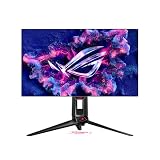
ASUS ROG Swift OLED PG32UCDM — Best High-Refresh 4K OLED
- Panel: 32-inch QD-OLED, 3840×2160, 240Hz, 0.03ms GtG
- HDR: DisplayHDR True Black 400, DCI-P3 99%
- Connectivity: 2x HDMI 2.1, 1x DisplayPort 1.4, USB-C (90W PD), USB hub
- Pros: True 4K at 240Hz on a QD-OLED panel is the current peak of gaming display technology; 32-inch size hits the sweet spot for 4K pixel density at desk distances; ASUS ELMB removes motion blur at any refresh rate; full-featured USB hub integrated into the stand
- Cons: Requires RTX 4090 or equivalent to utilize 240Hz at 4K in demanding games; most expensive mainstream option; ASUS ROG branding and RGB may not suit all setups
Dell Alienware AW3225QF — Best Large Curved 4K OLED
- Panel: 32-inch QD-OLED curved (1700R), 3840×2160, 240Hz, 0.03ms GtG
- HDR: DisplayHDR True Black 400, DCI-P3 99.3%
- Connectivity: 2x HDMI 2.1, 1x DisplayPort 1.4, USB-C (90W PD), USB 3.2 hub
- Pros: 1700R gentle curve adds immersion without the geometric distortion of tighter curves; Alienware’s AlienFX lighting syncs with compatible peripherals; among the best factory color calibration in its class; comprehensive connectivity including USB-C power delivery
- Cons: Largest footprint on this list — requires a deep desk; highest price on this list; Alienware software is more resource-intensive than alternatives
LG UltraGear 27GR75Q — Best Budget 4K IPS Entry Point
- Panel: 27-inch IPS, 2560×1440 native (4K via DSC compression on some configs), 165Hz, 1ms GtG
- HDR: DisplayHDR 400
- Connectivity: 2x HDMI 2.0, 1x DisplayPort 1.4
- Pros: LG IPS panels have consistently strong out-of-box color accuracy; 165Hz refresh rate is genuinely useful for gamers not yet pushing 4K at max settings; affordable entry price into LG’s UltraGear lineup; compatible with both G-Sync and FreeSync
- Cons: Native resolution is 1440p — not a true 4K panel; HDR 400 adds little visible benefit; HDMI 2.0 limits bandwidth for console 4K gaming
Buying Guide: What to Know Before Buying a 4K Gaming Monitor
GPU Requirements for 4K Gaming
Running modern AAA games at 4K and high settings requires a GPU that can sustain 60fps or above at that resolution. As a baseline, an RTX 4070 Ti or RX 7900 XT can handle 4K at 60–90fps in most titles with settings adjustments. To reach 120fps at 4K in demanding games, an RTX 4080 or RTX 4090 is needed. DLSS 3 and AMD FSR 3 upscaling technologies help bridge the gap — a 4K monitor paired with DLSS Quality mode rendering at 1440p delivers a sharp image at higher frame rates than native 4K rendering.
OLED vs. Mini-LED vs. IPS for 4K
OLED delivers perfect blacks (infinite contrast ratio), near-zero pixel response time, and the most vibrant HDR available — but requires burn-in precautions and costs significantly more. Mini-LED IPS combines traditional IPS color accuracy with a large number of local dimming zones for dramatically improved HDR contrast — a middle ground between standard IPS and OLED. Standard IPS is the most affordable 4K option with good colors and wide viewing angles, but HDR implementation is minimal at the DisplayHDR 400 level most ship with.
HDMI 2.1: Why It Matters for 4K
HDMI 2.1 is essential if you plan to connect a PS5 or Xbox Series X — it is the only HDMI version that supports 4K at 120Hz, which both consoles can output. PC gamers using DisplayPort 1.4 are not affected by the HDMI version, as DisplayPort handles 4K 144Hz+ independently. Always verify the monitor has at least one HDMI 2.1 port if console gaming at 4K is part of your use case.
Panel Size and Pixel Density at 4K
4K resolution delivers its sharpest image at 27–32 inches — the pixel density at 27 inches is 163 PPI, which is noticeably crisp at typical 60–80cm desk distances. At 32 inches, pixel density drops to 137 PPI — still very sharp and more comfortable for longer viewing distances. Beyond 32 inches, 4K starts to look comparable to 1440p at closer desk distances, making ultrawide or larger formats better suited to living room setups where viewing distance increases.

FAQ
Q: Do I need a 4K monitor for gaming in 2026?
A: No — 1440p remains the performance sweet spot for most gamers. 4K is the right choice if you have a high-end GPU (RTX 4080 or above), game primarily in visually rich single-player titles, or connect a PS5/Xbox Series X that natively outputs 4K. For competitive multiplayer, 1440p at high refresh rates typically offers better frame rates at lower GPU cost.
Q: Is OLED worth the extra cost for gaming monitors?
A: For gamers who prioritize HDR, dark scene clarity, and motion performance, OLED is a transformative upgrade. The perfect blacks and instant pixel response eliminate two key compromises of IPS panels. The main concern is burn-in from static HUD elements — this is manageable with pixel shift, OLED care mode, and not leaving static images on screen for extended periods. For mixed gaming and productivity, OLED is worth serious consideration at the current price point.
Q: Can a 4K gaming monitor work with a mid-range GPU?
A: Yes, with expectations adjusted. An RTX 3070 or RX 6700 XT can drive 4K at 60fps in many titles with medium-high settings. Enabling DLSS or FSR upscaling from 1440p to 4K on a native 4K monitor delivers a sharp image at better frame rates. 4K monitors also work perfectly at 1440p resolution if you later upgrade your GPU.

Q: What refresh rate do I need for 4K gaming?
A: 60Hz is the minimum for comfortable 4K gaming. 120Hz is the recommended target for PS5 and Xbox Series X, which can natively output 4K 120Hz. 144Hz and above provides a smoother experience on PC when your GPU can sustain those frame rates. 240Hz at 4K is currently the apex specification and requires the most powerful consumer GPUs to fully utilize.
Q: What is the burn-in risk with OLED gaming monitors?
A: OLED burn-in risk exists but is manageable. Modern OLED monitors include pixel shift, logo luminance adjustment, and screen savers specifically designed for gaming static elements like health bars and minimaps. Vary your content, enable the manufacturer’s OLED care features, and avoid leaving bright static images on screen for extended periods. Most manufacturers now offer burn-in protection policies for the first few years.
Final Verdict
If you have the GPU to drive it, the ASUS ROG Swift OLED PG32UCDM represents the current peak of 4K gaming monitors — QD-OLED at 4K 240Hz on a 32-inch panel is as good as consumer gaming displays get right now. For a more balanced premium choice, the Samsung Odyssey OLED G8 delivers QD-OLED’s color and contrast advantages with a feature set that includes smart TV functionality. Gamers dipping their toe into 4K on a budget will find the LG 27GR95QE-B OLED a compelling starting point — OLED at a more accessible price with full HDMI 2.1 for console use.

Related Articles
Looking for more on this topic? Browse the hand-picked guides below — each one applies the same scoring rubric used in this review.
Frequently Asked Questions
What GPU do I need for 4K gaming?
For 60fps at high settings in current AAA titles, plan on something in the RTX 4070 Ti or RX 7900 XT class as a realistic floor. For 4K at 120fps or with ray tracing enabled, you are looking at flagship cards. Upscaling technologies like DLSS and FSR lower the requirement significantly and are widely used at this resolution.
Is OLED or IPS better for a 4K gaming monitor?
OLED delivers perfect blacks, per-pixel contrast and near-instant response, making it outstanding for dark games and HDR. IPS is brighter in full-screen white content, immune to burn-in and considerably cheaper. If you leave static desktop elements on screen for eight hours a day, IPS remains the safer long-term choice.
Should I worry about OLED burn-in?
Risk has fallen substantially thanks to pixel shifting, logo dimming and automatic compensation cycles, and most manufacturers now include three-year burn-in warranties. The realistic risk case is static taskbars, HUD elements and browser toolbars displayed at high brightness for years. Hiding the taskbar and using a dark theme meaningfully reduces exposure.
What size should a 4K monitor be?
27 inches gives a very sharp roughly 163 pixels per inch but usually needs display scaling for readable text. 32 inches at about 138 PPI is the sweet spot for gaming, offering visible sharpness with usable desktop text at 100 percent scaling. Beyond 32 inches you start losing the pixel density advantage.
Do I need DisplayPort 2.1 or is 1.4 enough?
DisplayPort 1.4 with Display Stream Compression handles 4K at 144Hz with HDR without visible quality loss, so it remains sufficient for most panels on sale. DisplayPort 2.1 matters for 4K at 240Hz and beyond, or for uncompressed high-bandwidth signals. Check that your graphics card supports the version the monitor requires.