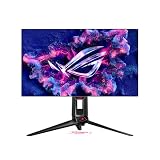
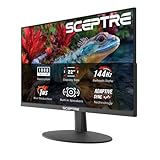
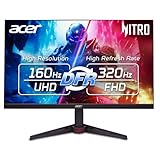
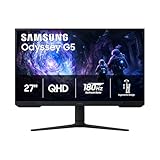
- Top Pick: TCL 55" T7 4K QLED Google TV with 144Hz Gaming (55T7)
- Best Value: INSIGNIA 50" Class F50 Series LED 4K UHD Smart Fire TV with Alexa Voice Remote (NS-50F502NA26)
- Premium Choice: Hisense 43" E6 Cinema Series Hi-QLED 4K UHD Smart Fire TV (43E6QF) – AI Light Sensor, Dolby Vision · Atmos, Voice Remote with Alexa, Motion Rate 120, HDR 10+ Adaptive, Game Mode Plus
Affiliate disclosure: As an Amazon Associate we earn from qualifying purchases. This post contains affiliate links — if you buy through them we may earn a small commission at no extra cost to you. This never affects our recommendations.
Getting 4K 120Hz out of a PS5 or Xbox Series X requires more than a big screen — it demands HDMI 2.1, low input lag in Game Mode, and proper VRR implementation. Budget TVs often lack the bandwidth or panel speed to deliver what next-gen consoles promise. We’ve narrowed the field to five 4K TVs that are genuinely built for gaming in 2026.
Every pick below has been evaluated on input lag, VRR compatibility, HDMI 2.1 port count, and real-world gaming picture quality. Here are the best 4K TVs for gaming right now.
In a hurry? See the top-rated 4K TVs for Gaming deals available right now:
🛒 Check 4K Tvs For Gaming Prices on Amazon →🛒 Best Price Today on Amazon
Prime members get fast, free shipping on everything above, plus member-only deals. New members get a 30-day free trial — cancel anytime.
Start 30-Day Prime Free Trial →See Today’s Amazon DealsTop Picks at a Glance
| TV | Panel | Input Lag | HDMI 2.1 Ports | Best For |
|---|---|---|---|---|
| LG C3 OLED | OLED evo | ~1.3ms | 4 | Overall best |
| Samsung S90C OLED | QD-OLED | ~1.5ms | 4 | Brightness + OLED |
| Sony A80L OLED | OLED | ~8.5ms | 2 | PS5 owners |
| TCL QM8 | Mini-LED QLED | ~9ms | 2 | Budget 4K 120Hz |
| Hisense U8K | Mini-LED QLED | ~9ms | 2 | Value mini-LED |
As an Amazon Associate we earn from qualifying purchases at no extra cost to you.


LG C3 OLED — Best 4K Gaming TV Overall
- Input Lag: Industry-leading ~1.3ms in 4K 120Hz Game Mode — effectively zero latency for competitive and fast-paced titles
- HDMI 2.1: All four HDMI ports are full 48Gbps 2.1 spec — connect PS5, Xbox Series X, a PC, and a streaming device simultaneously without compromise
- VRR Ecosystem: G-Sync Compatible, FreeSync Premium, and HDMI Forum VRR — covers every platform with a single TV
- OLED Picture: Self-emissive pixels produce infinite contrast; HDR highlights pop against absolute black in supported games
- Consideration: OLED brightness peaks lower than QLED — less ideal for rooms with significant ambient light during daytime sessions
Samsung S90C OLED — Best QD-OLED for Gaming
- QD-OLED Technology: Quantum Dot layer on top of an OLED panel boosts color volume and peak brightness beyond traditional OLED — best of both worlds
- Brightness Advantage: Hits higher nits than standard OLED panels; handles moderate ambient light better than the LG C3
- Gaming Specs: 4K 120Hz across four HDMI 2.1 ports; input lag around 1.5ms in Game Mode — imperceptibly close to the LG C3
- Motion Xcelerator: Samsung’s motion processing is fast with minimal judder on high-frame-rate gaming content
- Consideration: Slightly higher price premium over the LG C3 for incremental brightness improvement — worth it for bright rooms, less so otherwise
Sony A80L OLED — Best for PlayStation 5
- PS5 Exclusive Features: Auto HDR Tone Mapping, Auto Genre Picture Mode, and PlayStation-exclusive content modes activate automatically via HDMI
- XR OLED Motion: Sony’s proprietary motion processing reduces blur in fast camera movement and sports-style games without ghosting artifacts
- Sound Quality: Acoustic Surface Audio+ uses actuators behind the screen to generate sound — dialogue and effects feel spatially accurate
- 4K 120Hz: Two HDMI 2.1 ports support full 4K 120Hz with VRR; ALLM enables automatic Game Mode switching
- Consideration: Only two HDMI 2.1 ports versus four on LG and Samsung; input lag is slightly higher at ~8.5ms — still excellent for gaming
TCL QM8 — Best Budget 4K 120Hz TV
- Mini-LED Backlight: Thousands of dimming zones produce deep blacks and high brightness that rival more expensive panels at a fraction of the cost
- 144Hz Capable: Supports 4K 144Hz via HDMI 2.1 — ready for next-gen PC GPUs and beyond current console frame rate limits
- VRR Support: FreeSync Premium and HDMI Forum VRR ensure smooth, tear-free gameplay on consoles and compatible PCs
- Google TV: Built-in smart platform offers access to all major streaming apps alongside gaming modes
- Consideration: Mini-LED blooming visible on fine bright objects against dark backgrounds; only two HDMI 2.1 ports
Hisense U8K — Best Value 4K Gaming TV
- Aggressive Pricing: Hisense prices the U8K well below Samsung and LG equivalents while delivering comparable mini-LED gaming specs
- High Brightness: Full array local dimming with strong peak nits competes with TVs twice its price in HDR performance
- 4K 144Hz: HDMI 2.1 support for 144Hz output future-proofs the display for GPU upgrades and coming game titles
- ALLM & VRR: Auto Low Latency Mode and Variable Refresh Rate work correctly on PS5 and Xbox Series X out of the box
- Consideration: Processing can add minor artifacts at very high motion settings; smart TV software less polished than LG or Samsung
Buying Guide
What Makes a TV Good for 4K Gaming?
Four factors define a gaming-capable 4K TV: HDMI 2.1 bandwidth (required for 4K 120Hz), input lag in Game Mode (target under 15ms), VRR support (eliminates tearing), and panel response time (affects motion clarity). Budget TVs often check one or two boxes but fail on others. Every TV on this list passes all four criteria at its price point. OLED panels lead on input lag and response time; mini-LED QLED leads on brightness and price.
How Many HDMI 2.1 Ports Do You Actually Need?
If you run a single console, two HDMI 2.1 ports is enough. If you have a PS5, Xbox Series X, and a gaming PC all connected simultaneously, four HDMI 2.1 ports — like on the LG C3 and Samsung S90C — eliminate the need for an HDMI switch. An HDMI switch introduces additional input lag, so native ports are always preferable for gaming devices.
Understanding VRR: G-Sync, FreeSync, and HDMI Forum VRR
G-Sync Compatible certification covers Nvidia GPU users. FreeSync Premium covers AMD GPU users and Xbox consoles. HDMI Forum VRR covers PS5 and general HDMI 2.1 devices. The LG C3 supports all three simultaneously. If you only game on PS5 and Xbox, HDMI Forum VRR alone is sufficient. PC gamers should confirm their GPU brand matches the TV’s supported VRR standard.
4K 60Hz vs. 4K 120Hz: Is the Upgrade Worth It?
For competitive multiplayer games, racing titles, and any game with fast camera movement, 120Hz delivers noticeably smoother animation than 60Hz. The difference is immediately visible on a side-by-side comparison. PS5 and Xbox Series X both support 4K 120Hz in supported titles. If your game library leans toward slower-paced strategy or RPG titles, 4K 60Hz is acceptable — but 120Hz TVs hold their value longer as more games adopt higher frame rate targets.

FAQ
What is the minimum input lag I should look for in a gaming TV?
Under 15ms in Game Mode is the practical threshold where most gamers cannot perceive latency. Competitive gamers should target under 5ms. The LG C3 OLED at ~1.3ms and Samsung S90C at ~1.5ms are best-in-class; even the TCL QM8 and Hisense U8K come in around 9ms — well within the acceptable range for casual and competitive console gaming.
Does my PS5 or Xbox Series X actually output 4K 120Hz?
Yes — in supported game titles and with an HDMI 2.1 cable and compatible TV. Not every game supports 120fps at 4K; many titles offer a Performance Mode (higher frame rate at reduced resolution) versus a Quality Mode (4K 60fps). Check the specific game’s display options to confirm what resolution and frame rate combination is available.
Is a gaming TV better than a gaming monitor for console gaming?
Gaming TVs win on screen size and are better suited for couch gaming distances of 6–10 feet. Gaming monitors win on refresh rate ceilings (360Hz+), response time, and ergonomic adjustability for close-up desk use. For console gaming in a living room, a 55–65 inch 4K gaming TV is the clear choice. For a bedroom gaming desk setup, a 27–32 inch monitor often makes more sense.

Do I need to buy a special HDMI cable for 4K 120Hz?
Yes — use an Ultra High Speed HDMI cable (HDMI 2.1 spec, 48Gbps certified). Standard HDMI 2.0 cables max out at 18Gbps and cannot carry 4K 120Hz signals. Most new consoles and TVs include a compatible cable in the box; if yours didn’t, pick up a certified Ultra High Speed HDMI cable separately.
Will 4K gaming TVs work with older consoles like PS4 or Xbox One?
Yes — HDMI 2.1 ports are backward compatible with HDMI 2.0 and 1.4 devices. Your PS4 or Xbox One will display at its native resolution (1080p or upscaled 4K) with no issues. Game Mode and low input lag settings still apply to older consoles, so you benefit from a good gaming TV regardless of which generation you’re playing.
Final Verdict
The LG C3 OLED is the gold standard for 4K gaming TVs in 2026 — four HDMI 2.1 ports, near-zero input lag, and universal VRR support make it the most capable choice for multi-platform gamers. The Samsung S90C OLED edges it out in brightness for mixed-light environments and is worth the premium if you game in a well-lit room. PlayStation households should look hard at the Sony A80L OLED for its seamless PS5 integration. If budget is the priority, the TCL QM8 and Hisense U8K both deliver 4K 144Hz mini-LED performance at prices that make the premium OLED options feel optional rather than essential.

Related Articles
Looking for more on this topic? Browse the hand-picked guides below — each one applies the same scoring rubric used in this review.
Frequently Asked Questions
Why is HDMI 2.1 essential for a gaming TV?
HDMI 2.1 carries up to 48Gbps, which is what 4K at 120Hz with 10-bit HDR colour requires. It also enables variable refresh rate and auto low latency mode. Check how many 2.1 ports the TV has, because some models provide only two and one may be shared with the eARC output for a soundbar.
What input lag should I look for?
In game mode a good 2026 TV measures between 5 and 13 milliseconds at 60Hz and under 6 milliseconds at 120Hz. Anything above 30 milliseconds will feel sluggish in shooters. Always enable game mode manually or verify auto low latency mode is switching it on, since picture presets like Cinema can add 100 milliseconds.
Do I need VRR if I only play console games?
Yes, it still helps. Many console titles use unlocked or dynamic frame rates that fluctuate between 45 and 60fps, and VRR removes the judder and tearing those dips cause. Both current consoles support it. Check the supported VRR window and whether the TV suffers from gamma flicker in dark scenes at low frame rates.
Is OLED or Mini LED better for gaming?
OLED gives near-instant pixel response, perfect blacks and excellent motion clarity, at the cost of lower full-screen brightness and a small burn-in risk with static HUDs. Mini LED QLED goes far brighter for sunlit rooms and has no burn-in concern, but shows blooming around bright objects. Choose OLED for dark rooms, Mini LED for bright ones.
What settings matter if I connect a PC?
Enable the enhanced or full HDMI format on that input so the TV accepts 4:4:4 chroma, which keeps small text sharp instead of fringed. Set the PC output to RGB full range and match the TV black level to full. Also disable sharpening, noise reduction and motion interpolation, all of which add lag and artefacts.