- Top Pick: Assault Mode Activate – SDCK-EN039 – Common – 1st Edition
- Best Value: SIENBOR Quick Push Game Console,4 Modes Games, A Toy Game Machine That Exercises Reaction Ability and Improves Concentration |Teens Boys & Girls Ages 3-12 Years Old & Up
- Premium Choice: Dad Mode Activated Word Search: 100 Large-Print Puzzles for New Dads — Diapers, 3am Feeds, and the Best Job You'll Ever Have
Affiliate disclosure: As an Amazon Associate we earn from qualifying purchases. This post contains affiliate links — if you buy through them we may earn a small commission at no extra cost to you. This never affects our recommendations.
- Quick Settings Guide — Gaming TV Optimization
- 1. Activate Game Mode First
- 2. Disable Motion Smoothing (TruMotion, MotionFlow, etc)
- 3. Enable VRR (Variable Refresh Rate)
- 4. Calibrate Brightness for HDR
- 5. Disable Dynamic Contrast/TruBlack
- 6. Set Color Temperature to Warm2/Neutral
- 7. Enable HDMI Enhanced (48Gbps)
- Gaming TV Calibration Checklist
- Frequently Asked Questions
- Final Verdict
- Related Articles
- Related Articles
Most gamers buy an expensive gaming TV, plug it in with default settings, and immediately suffer—artificially increased input lag, oversaturated colors that make HDR look like a cartoon, motion smoothing that creates ghosting in fast-paced games. The irony is that 90% of these problems are solved by accessing two or three menus.
In April 2026, with high-end TVs like the LG C6 OLED and Samsung QN90D Mini-LED dominating gaming setups, understanding the settings that matter separates 4ms input lag from 45ms input lag, 60Hz smooth gameplay from 120Hz responsive gameplay, and accurate HDR from blown-out clipping.
This guide covers the essential settings on every major TV platform (LG WebOS, Samsung Tizen, Sony Google TV) and explains what each does for competitive vs immersive gaming.
In a hurry? See the top-rated Gaming TV Settings deals available right now:
🛒 Check Gaming Tv Settings Prices on Amazon →🛒 Best Price Today on Amazon
Prime members get fast, free shipping on everything above, plus member-only deals. New members get a 30-day free trial — cancel anytime.
Start 30-Day Prime Free Trial →See Today’s Amazon DealsQuick Settings Guide — Gaming TV Optimization
| Setting | Gaming Value | Default | Recommended |
|---|---|---|---|
| Game Mode | Disables post-processing | OFF | ON (Critical) |
| Input Lag | Direct latency | 30-45ms | <5ms (Game Mode) |
| Motion Smoothing | Interpolates frames | ON | OFF (Disable TruMotion, etc) |
| VRR | Adaptive refresh | OFF | ON (if 120Hz TV) |
| HDMI Enhanced | Full 4K 60Hz support | OFF | ON (Essential) |
| Brightness | Peak luminance | 50% | 80-100% (with eye comfort) |
| Color Temperature | White balance | Warm2 | Warm2 or Neutral |
1. Activate Game Mode First
As an Amazon Associate we earn from qualifying purchases at no extra cost to you.


This is non-negotiable. Every modern TV has a “Game Mode” that disables post-processing (motion smoothing, edge enhancement, dynamic contrast adjustment) that introduce latency.
Impact: Reduces input lag from 30-45ms to <5ms. Literally the single most important setting for competitive gaming.
Where to find:
- LG WebOS: Settings → Picture → Game Screen → Game Mode (ON)
- Samsung Tizen: Settings → Picture → Intelligent Mode → Game (or custom Game Mode)
- Sony Google TV: Settings → Display & Sound → Picture → Mode → Game
When Game Mode is ON, your TV stops trying to “improve” the image and just displays what the console sends. The slight loss of color pop is worth the 40ms latency reduction.
2. Disable Motion Smoothing (TruMotion, MotionFlow, etc)

ZOTAC Gaming GeForce RTX 5080 Solid CORE OC DLSS 4 16GB GDDR7 256-bit 30 Gbps PCIE 5.0 Gaming Graphics Card, IceStorm 3.0 Advanced Cooling, Spectra RGB Lighting, ZT-B50800J2-10A


As an Amazon Associate we earn from qualifying purchases. Product prices and availability are accurate as of the date/time indicated.
Every TV manufacturer has a different name for frame interpolation (TruMotion on LG, MotionFlow on Sony, Auto Motion Plus on Samsung). They all do the same thing: insert artificial frames between real frames to make motion smoother. This creates 20-40ms additional latency and causes ghosting in fast-paced games like Counter-Strike 2.
Impact: Removes 20-40ms latency, eliminates ghosting in competitive games.
Where to find:

- LG: Settings → Picture → TruMotion → OFF
- Samsung: Settings → Picture → Auto Motion Plus → OFF
- Sony: Settings → Picture → MotionFlow → OFF
Your TV may show “soap opera effect” warnings when disabling these—ignore them. Gaming responsiveness is more important than motion smoothness in interpolated frames.
3. Enable VRR (Variable Refresh Rate)
As an Amazon Associate we earn from qualifying purchases at no extra cost to you.



If your TV supports 120Hz gaming (released 2021+), enabling VRR (HDMI Forum VRR or FreeSync) eliminates screen tearing and stuttering when frame rates drop below 120 FPS.
How it works: TV refreshes at whatever frame rate your console sends (45 FPS, 72 FPS, 120 FPS) instead of always refreshing at 60Hz. Result: no tearing, no stuttering, pure smooth gameplay.
Where to find:
- LG: Settings → Picture → HDMI VRR (ON)
- Samsung: Settings → Picture → FreeSync (ON) or HDMI VRR (ON)
- Sony: Settings → Display & Sound → BRAVIA XR Anti-Lag (ON)
Console support:
- Xbox Series X/S: Native support (no additional settings)
- PlayStation 5: Native support (no additional settings)
- PC: Requires compatible HDMI 2.1 cable + modern GPU (RTX 40-series, RX 8000)
4. Calibrate Brightness for HDR
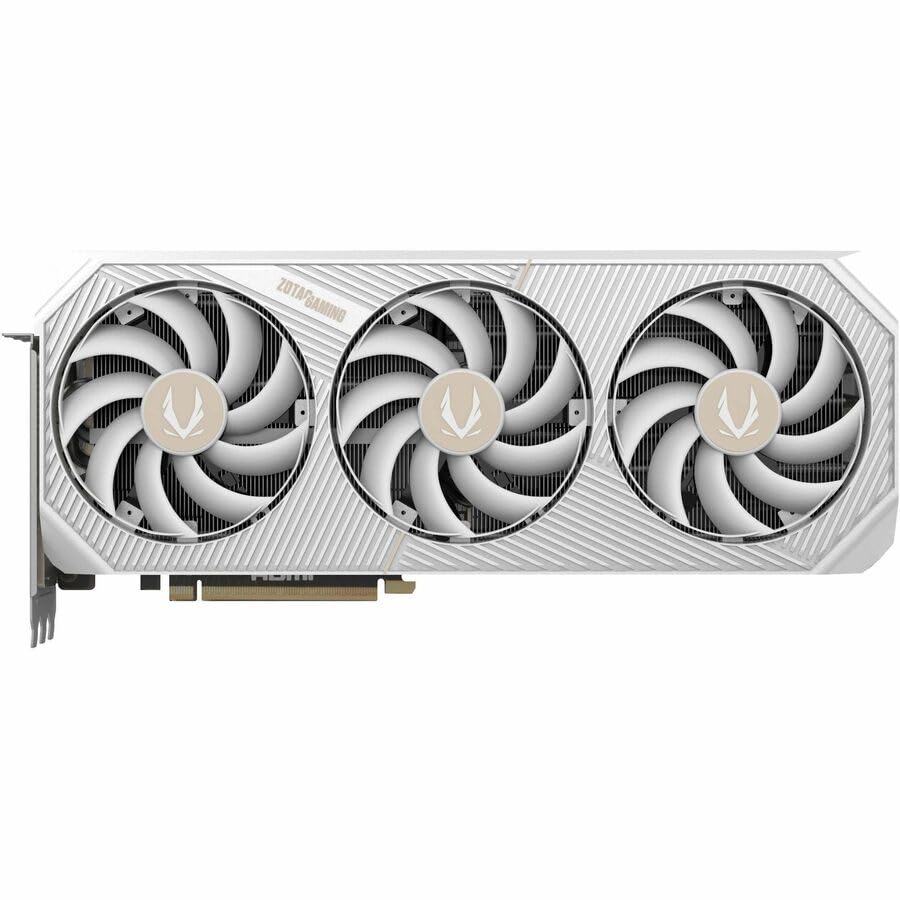
ZOTAC Gaming GeForce RTX 5080 Solid CORE OC DLSS 4 16GB GDDR7 256-bit 30 Gbps PCIE 5.0 Gaming Graphics Card, IceStorm 3.0 Advanced Cooling, Spectra RGB Lighting, ZT-B50800J2-10A
As an Amazon Associate we earn from qualifying purchases. Product prices and availability are accurate as of the date/time indicated.
Default brightness on gaming TVs is often 40-50%, which crushes shadow detail in dark scenes. Professional gaming brightness sits at 80-100% depending on room lighting.
Real-world test: In a dark room, a properly calibrated TV shows the subtle difference between absolute black and dark gray. Underbrightened TVs crush both to identical black, losing detail.
Calibration steps:
- Enable Game Mode (removes post-processing)
- Set Brightness to 80%
- Play Baldur’s Gate 3 night scenes or Alan Wake 2 dark sequences
- Adjust brightness until you distinguish shadow detail without eye strain
- Save as custom Game Profile
For HDR gaming (PS5 with HDR enabled):
- LG OLED: Brightness 80-100% (perfect blacks, no crushed shadows)
- Samsung Mini-LED: Brightness 70-90% (infinite blacks, peak 2,000+ nits)
- Sony QD-OLED: Brightness 75-95% (best shadow detail)
5. Disable Dynamic Contrast/TruBlack
TVs often have “Dynamic Contrast” or “TruBlack” settings that boost contrast in real-time, creating artificial-looking images with blown-out blacks and blown-out whites. For gaming, these introduce latency and destroy color accuracy.
Where to find:
- LG: Settings → Picture → Dynamic Contrast (OFF)
- Samsung: Settings → Picture → Dynamic Contrast (OFF)
- Sony: Settings → Picture → Dynamic Contrast (OFF)
Your image will look “flatter” initially—this is correct. The image is now accurate to what developers intended, not enhanced artificially.
6. Set Color Temperature to Warm2/Neutral

Default color temperature is often “Warm3” (yellowish) or “Cool” (bluish). For gaming, Warm2 provides neutral white balance without color casts.
Where to find:
- LG: Settings → Picture → Color Temperature → Warm2
- Samsung: Settings → Picture → Color Tone → Warm2
- Sony: Settings → Display & Sound → Color Temp → Warm2
For HDR gaming, verify white balance is neutral by displaying white text on black background. Text should appear pure white, not yellow or blue.
7. Enable HDMI Enhanced (48Gbps)
As an Amazon Associate we earn from qualifying purchases at no extra cost to you.

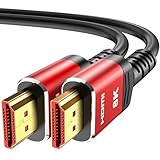


Some TVs disable HDMI Enhanced by default, limiting bandwidth to 18Gbps. This prevents 4K 120Hz or 1440p 240Hz over HDMI 2.1.
Where to find:
- LG: Settings → All Settings → Picture → HDMI Input Level → Enhanced
- Samsung: Settings → Picture → HDMI Input Enhanced (ON)
- Sony: Settings → Display & Sound → HDMI Signal Format → Enhanced
Verify: Connect your console/PC via HDMI 2.1 cable (certified, preferably Zeskit brand). Your TV should display “HDMI 2.1” or “Enhanced” in picture settings.
Gaming TV Calibration Checklist
| Setting | Status | Impact |
|---|---|---|
| Game Mode | ON | -40ms input lag |
| Motion Smoothing (TruMotion) | OFF | -20ms latency, no ghosting |
| VRR (HDMI VRR/FreeSync) | ON | Eliminates tearing |
| Brightness | 80-100% | Shadow detail, HDR accuracy |
| Dynamic Contrast | OFF | Prevents latency, accurate contrast |
| Color Temperature | Warm2 | Neutral white balance |
| HDMI Enhanced | ON | Full 4K 120Hz bandwidth |
| Backlight/Contrast | 75-80% | Natural contrast, no clipping |
| Sharpness | 0 | Disables artificial sharpening |
Frequently Asked Questions
Why does my TV feel laggy even with Game Mode on?
Common causes:
- Game Mode not actually enabled (verify in settings)
- HDMI cable is substandard (not 2.1 certified)
- HDMI Enhanced disabled (check HDMI settings)
- Running at 1080p instead of native resolution (some TVs add conversion latency)
Solutions: Verify each setting above, try different HDMI port (some ports are faster than others), restart TV, reset to factory defaults + enable Game Mode.
Should I use the TV’s “Gaming” picture preset or create a custom profile?
Create custom. The built-in “Gaming” preset often leaves motion smoothing enabled or disables features you need (like HDMI Enhanced). Use the steps above for true gaming optimization.
Is 4ms input lag good for competitive gaming?
<5ms is imperceptible. 5-10ms is acceptable for casual gaming. 15ms+ you’ll notice delay in competitive titles. Modern TVs in Game Mode achieve <5ms.
What’s the difference between VRR and 120Hz?
- 120Hz: TV refreshes 120 times per second (always)
- VRR: TV refreshes at whatever frame rate your console sends (45-120 FPS)
With VRR disabled and console sending 80 FPS, your 120Hz TV still refreshes 120 times, creating micro-stutters. VRR eliminates this.
Does disabling motion smoothing make games look choppy?
No. Gaming at 60+ FPS is objectively smoother than motion-interpolated 24 FPS video. The “soap opera effect” warnings are misleading—games at native frame rates are inherently smoother.
Final Verdict
The five essential settings for gaming:
- Game Mode: ON
- Motion Smoothing: OFF
- VRR: ON (if 120Hz TV)
- Brightness: 80-100%
- HDMI Enhanced: ON
These five changes reduce input lag from 40ms to <5ms and eliminate ghosting. The remaining settings (color temperature, dynamic contrast) refine the experience for long gaming sessions.
Test your calibration: Launch a fast-paced game like Fortnite or Valorant and compare responsiveness to default settings. You’ll immediately notice 40ms less latency—a transformative difference for competitive gaming.
Pair your gaming TV with a quality gaming console, high-speed HDMI cable, and a gaming soundbar for complete setup. Check our guides to best gaming TVs, gaming monitors, and gaming displays for more options.
Last updated: April 2026. Prices and availability may change. We independently research every product we recommend. When you buy through our links, we may earn a commission at no extra cost to you.
Related Articles
Looking for more on this topic? Browse the hand-picked guides below — each one applies the same scoring rubric used in this review.
Ready to decide? Our #1 pick for 2026 is the Game Mode.
Live price & availability on Amazon.