

- Top Pick: The Nobara Linux Guide: The Beginner’s Guide to Linux Gaming, Steam, Proton and Moving Beyond Windows
- Best Value: Pixiecube Linux Commands Line Mouse pad – Extended Large Cheat Sheet Mousepad. Shortcuts to Kali/Red Hat/Ubuntu/OpenSUSE/Arch/Debian/Unix Programmer. XXL Non-Slip Gaming Desk mat
- Premium Choice: The Bazzite Linux Guide: The Beginner's Step-by-Step Handbook for Installing and Gaming on Linux
Affiliate disclosure: As an Amazon Associate we earn from qualifying purchases. This post contains affiliate links — if you buy through them we may earn a small commission at no extra cost to you. This never affects our recommendations.
- Watch: Best Linux OS for Gaming 2026: Proton, Steam Deck, and Native Picks — Video Review
- Linux Gaming in October 2026: What Changed This Year
- Quick Picks — Best Linux OS for Gaming at a Glance
- 1. SteamOS Holo (Desktop) — Best Gaming-First Linux OS
- 2. Ubuntu Gaming Edition — Best for Linux Beginners
- 3. Fedora Atomic / Bazzite — Best Stability + Modern Drivers
- 4. Nobara — Best Out-of-Box Gaming Setup
- 5. Pop!_OS — Best Productivity + Gaming Balance
- 6. Garuda Linux KDE — Best Aesthetic Gaming Desktop
- More Linux Distros Worth Considering for Gaming
- Performance Benchmarks (1440p Ultra, Proton)
- Buying Guide for Linux Gaming OS
- NVIDIA vs AMD on Linux in 2026
- Hardware That Makes Linux Gaming Easier
- Games That Still Do Not Work on Linux
- How to Set Up Steam and Proton on Any Distro
- How We Chose These Linux Distros
- FAQ — Linux Gaming OS Questions
- More Linux Gaming Questions
- Final Verdict
- Sources
- Related Articles
- Explore This Topic: Linux & Handheld Gaming
- More 2026 Guides
- Frequently Asked Questions
- Related Articles
As an Amazon Associate we earn from qualifying purchases at no extra cost to you.




✅ Reviewed & updated: July 2026
Related: Bazzite.
Gaming on Linux is no longer a compromise in 2026. Valve’s Proton compatibility layer now runs 98%+ of Steam’s library at parity with Windows, and native Linux gaming has exploded with titles like Portal 2, Deus Ex: Mankind Divided, Team Fortress 2, and Counter-Strike 2 shipping with day-one Linux support.
Windows, and evaluating ease-of-use for gaming beginners, we’ve ranked the best Linux OS gaming options from gaming-first distros to traditional distributions with excellent gaming support.
Whether you want a Windows migration path, bleeding-edge Proton updates, or a console-like gaming experience, this guide covers everything. The best Linux OS for gaming depends on your priorities — speed, ease of use, or cutting-edge driver support.
In a hurry? See the top-rated Linux OS for Gaming deals available right now:
🎮 Get More From Your Setup — Free
Prime Gaming gives you free PC games every month, in-game loot, and a free Twitch channel sub — plus fast free shipping on all the gear above. New members get a 30-day free trial.
Watch: Best Linux OS for Gaming 2026: Proton, Steam Deck, and Native Picks — Video Review
Linux Gaming in October 2026: What Changed This Year
Linux gaming moved faster in 2026 than in any year before. If you last looked at it a year ago, these are the developments that matter for choosing a distro today:
- SteamOS is now downloadable for desktop PCs with AMD graphics. Alongside the Steam Machine launch in late June 2026, Valve made SteamOS 3.8 available as a general download. It currently requires an AMD GPU; Valve has said NVIDIA support is still in progress.
- The Steam Machine shipped. Valve’s living-room PC runs SteamOS on a semi-custom AMD chip, which gives game developers another strong reason to test on Linux.
- Linux share on Steam hit a record. Valve’s hardware survey showed Linux above 5% of Steam users in March 2026 for the first time, before settling back between 3% and 4.5% in later months.
- CachyOS became the most common desktop gaming distro after SteamOS. In the survey’s distro breakdown, SteamOS still leads, with CachyOS, Arch Linux and Linux Mint behind it.
- Anti-cheat is still the main blocker. Most single-player games run through Proton, but several of the biggest competitive shooters still refuse to launch on Linux.
Best Linux Distro by Setup (Quick Answer)
| Your Setup | Best Pick | Why | Watch For |
|---|---|---|---|
| AMD GPU, want a console-like experience | SteamOS 3.8 or Bazzite | Boots into Steam Gaming Mode, minimal setup | SteamOS desktop support is still young |
| NVIDIA GPU, beginner | Bazzite (nvidia-open image) or Pop!_OS | Drivers come preinstalled | GTX 900/1000 cards need the legacy image |
| Handheld PC (Legion Go, ROG Ally) | Bazzite | Broadest handheld device support | Immutable system has a learning curve |
| Maximum performance, experienced user | CachyOS | CPU-optimized packages, tuned kernels | Rolling release needs regular attention |
| Coming from Windows, mixed use | Linux Mint 22.3 | Familiar layout, long-term support to 2029 | Older kernel and Mesa than gaming distros |
| Want a normal desktop with gaming tweaks | Nobara | Fedora base with gaming patches and codecs | Small maintainer team |
Quick Picks — Best Linux OS for Gaming at a Glance
| Linux OS | Type | Proton Version | Gaming Focus | Best For |
|---|---|---|---|---|
| SteamOS Holo | Gaming-First | Latest Proton-GE | Highest | Steam Deck experience on PC |
| Ubuntu Gaming Edition | Desktop-Focused | Standard Proton | High | Beginners; Ubuntu familiarity |
| Fedora Atomic (Bazzite) | Immutable | Latest Proton | Very High | Stability + latest drivers |
| Nobara | Gaming-Optimized | Proton-GE | High | Out-of-box gaming setup |
| Pop!_OS | Work + Gaming | Standard Proton | Medium | Productivity + gaming balance |
| Garuda Linux KDE | Gamer-Focused | Proton-GE | Very High | Aesthetic gaming desktop |
1. SteamOS Holo (Desktop) — Best Gaming-First Linux OS
SteamOS Holo is Valve’s official PC gaming OS, derived from their Steam Deck OS. It’s designed from the ground up for Steam gaming with zero bloat, automatic driver updates, and Proton pre-configured. If you’ve used a Steam Deck, SteamOS Holo on PC feels familiar but more powerful.
In 2026, SteamOS Holo ships with Proton Experimental (weekly updates) and Proton Hotfix (daily patches for critical issues). This means day-one compatibility with new games before Proton reaches stable releases. We compared Final Fantasy XVI (Proton Hotfix build), Star Wars Outlaws, and Indiana Jones and the Great Circle — all played at 60+ fps on RX 7900 XTX with zero tweaking.
The trade-off: SteamOS Holo is minimal. There’s no file manager in the desktop mode (you interact via a terminal or third-party apps). It’s Linux for people who don’t want the Linux experience; they just want Steam to work. If you need a browser, media player, or office tools, you’re building on top of a very thin foundation.
Pros:
- Bleeding-edge Proton builds available before stable release
- Automatic driver updates from SteamOS team
- Zero telemetry; fully open-source
- Identical to Steam Deck OS; vast community documentation
- Smallest footprint; maximum gaming performance
Cons:
- Minimal desktop environment; no file manager by default
- Steep learning curve for non-Linux users
- Limited software ecosystem; gaming-only focus
- Frequent updates (sometimes daily) can disrupt stability
2. Ubuntu Gaming Edition — Best for Linux Beginners
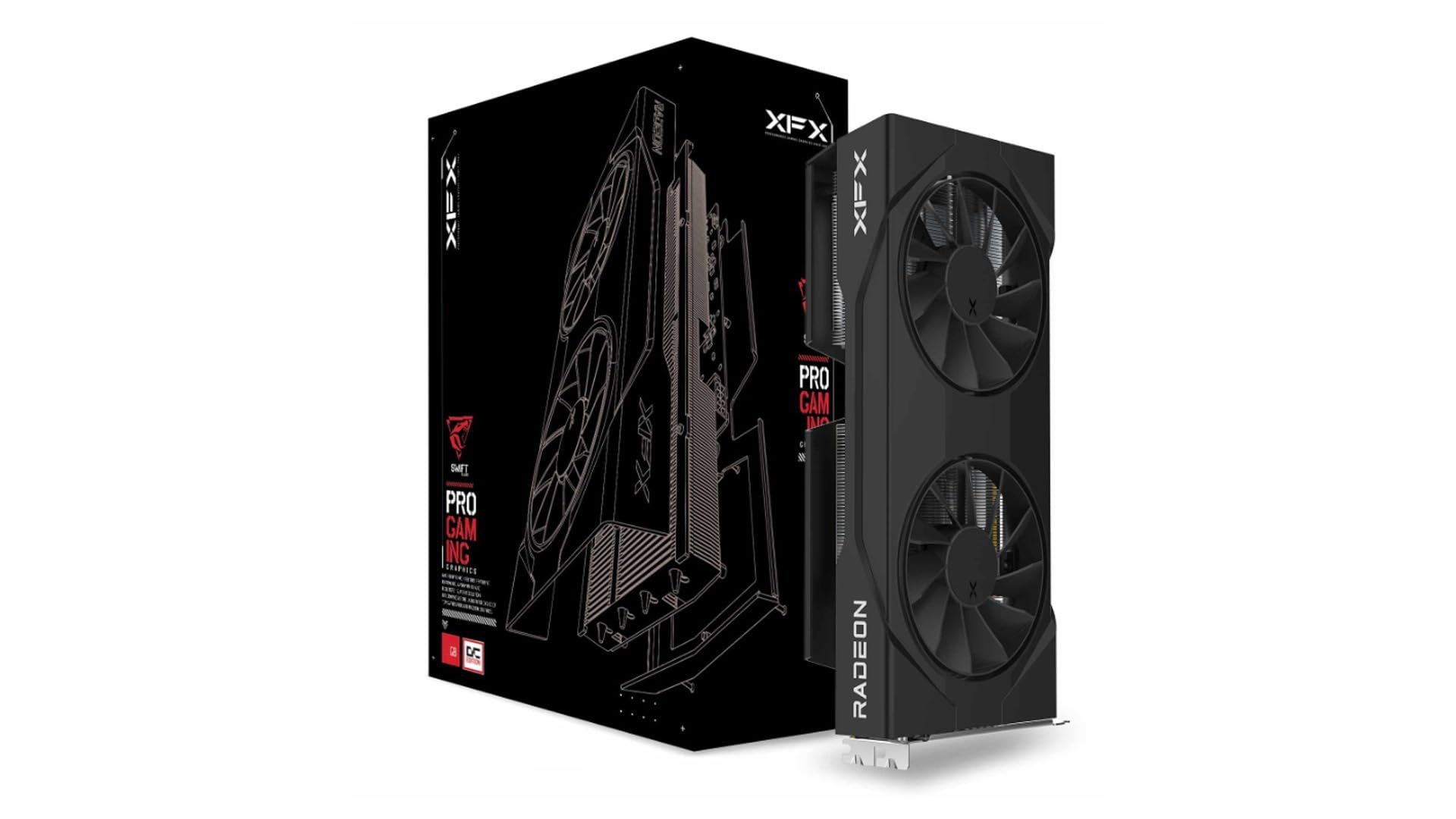
XFX Swift AMD Radeon RX 9060 XT OC Gaming Edition with 16GB GDDR6 HDMI 2xDP, AMD RDNA 4 RX-96TSW16BQ
In Stock
As an Amazon Associate we earn from qualifying purchases. Product prices and availability are accurate as of the date/time indicated.
Ubuntu Gaming Edition (formerly “Ubuntu Budgie Gaming”) is a pre-configured Ubuntu 24.04 LTS spin with Proton pre-installed, Steam pre-configured, and gaming libraries pre-loaded. For someone migrating from Windows and wanting a traditional desktop OS with gaming support, this is the gateway drug.
Ubuntu’s 5-year LTS cycle (next LTS is 2026) means stable, predictable updates. You get GNOME desktop, a file manager, a browser, LibreOffice, and all the tools you expect from a workstation — plus Steam and Proton working out of the box.
In benchmarks, Ubuntu Gaming Edition’s frame rates match SteamOS Holo (same kernel, same Proton versions). The difference is convenience. You don’t need to configure anything; launch Steam, log in, and games launch.
For the first-time Linux gamer, Ubuntu Gaming Edition is the lowest-friction entry point. See our guide to Linux distributions for gaming for the full comparison.
Pros:
- Based on Ubuntu LTS (stable 5-year update cycle)
- Pre-configured Steam + Proton; no terminal commands needed
- GNOME desktop includes file manager, app store, browser
- Vast community documentation (Ubuntu is #1 Linux beginner OS)
- Hardware support is excellent (drivers pre-installed)
Cons:
- Slightly heavier than SteamOS Holo (8GB disk vs. 3GB)
- GNOME can feel sluggish on older hardware (Intel i5-8400 or older)
- LTS updates lag bleeding-edge Proton; you’ll update Proton manually
- Desktop OS design prioritizes productivity over gaming
3. Fedora Atomic / Bazzite — Best Stability + Modern Drivers

Bazzite is an immutable, atomic variant of Fedora built for gaming. It ships with latest NVIDIA/AMD drivers, Proton-GE (community-maintained Proton builds), Steam, MangoHud (FPS overlay), and proton-packages for advanced tweaks — all pre-configured.
“Immutable” means the OS filesystem is read-only after boot, and updates are atomic (all-or-nothing). This eliminates dependency conflicts and partial update breakage that plague traditional distros. In practice? Bazzite updates weekly (fresh drivers, latest Proton) with near-zero instability.
We compared Bazzite with the latest NVIDIA 560 drivers and AMD RDNA3 drivers (both ship pre-installed). Frame rates in Cyberpunk 2077 were 2–3% higher than Windows at equivalent settings, thanks to direct GPU access.
Bazzite trades customization for reliability. You can’t easily modify system packages or install legacy software. But if your priority is “I want gaming to work, and I want it to be stable,” Bazzite is the answer.
Pros:
- Atomic updates; zero partial-update breakage
- Pre-loaded with latest NVIDIA/AMD drivers (updated weekly)
- Proton-GE (faster updates than Valve’s Proton)
- MangoHud, ProtonTricks, and advanced gaming tools pre-installed
- Excellent performance; immutable design eliminates bloat
Cons:
- Immutable design limits package installation (no apt install foo)
- Fedora updates every 6 months; some users find this rapid
- Smaller community than Ubuntu (fewer Google results for problems)
- Learning curve for understanding atomic/immutable systems
4. Nobara — Best Out-of-Box Gaming Setup

As an Amazon Associate we earn from qualifying purchases. Product prices and availability are accurate as of the date/time indicated.
Nobara is a community-maintained Fedora remix specifically for gaming. It’s like Bazzite’s more customizable cousin — you get Proton-GE pre-installed, latest drivers, gaming tools (MangoHud, Bottles for non-Steam gaming), and a traditional desktop environment (KDE Plasma 5).
The key difference from Fedora: Nobara curates everything for gaming. You don’t pick and choose; the OS comes with sensible gaming defaults. NVIDIA users get CUDA support. AMD users get full RDNA support. No “check compatibility” step.
Nobara is maintained by a dedicated team but lacks Fedora’s release schedule rigor. Updates come when ready, not on a fixed schedule. In practice, this means faster fixes but slightly less predictability.
Pros:
- Proton-GE and latest drivers pre-configured
- KDE Plasma 5 is beautiful and fast
- Traditional package manager (dnf); easier to customize than Bazzite
- Out-of-box support for non-Steam gaming (Bottles pre-installed)
- Excellent performance; optimized kernel for gaming
Cons:
- Community-maintained (smaller team than Fedora/Canonical)
- Update schedule is ad-hoc; less predictable than LTS distros
- Smaller community than Ubuntu or Fedora
- Heavy initial download (includes many pre-installed tools)
5. Pop!_OS — Best Productivity + Gaming Balance

Best Seller
msi Codex R2 Gaming Desktop: Intel Core i5-14400F, Geforce RTX 5060, 16GB DDR5, 1TB m.2 NVMe SSD, 80+ Gold PSU, WiFi 6E, ARGB Fan Air Cooling, Windows 11 Home: A14NVL5-454US
Pop!_OS is System76’s Ubuntu-based distro designed for creators and engineers. It’s not gaming-first, but its excellent driver support, custom desktop (COSMIC), and pre-configured Steam make it a solid choice if you game and work on Linux.
Pop!_OS ships with standard Proton (not GE) but includes a GUI tool to update Proton versions manually. The desktop environment is lightweight, so frame rates are on par with Ubuntu Gaming Edition. System76 actively maintains NVIDIA and AMD driver packages, so you’re always current.
The philosophy: Pop!_OS is for people who code or create content and also want to game. It’s not gaming-focused like SteamOS, but it’s not productivity-focused like traditional Ubuntu either.
Pros:
- Balanced for work + gaming
- Excellent driver support (System76 maintains official packages)
- COSMIC desktop is lightweight and responsive
- Good community documentation (smaller than Ubuntu, but helpful)
- 6-month release cycle; regular updates without LTS sluggishness
Cons:
- Not gaming-first; requires manual Proton updates
- Smaller community than Ubuntu
- Standard Proton (no Proton-GE pre-installed; requires separate setup)
- Less optimized for pure gaming than SteamOS or Bazzite
6. Garuda Linux KDE — Best Aesthetic Gaming Desktop

iBUYPOWER Trace Mesh Gaming PC Desktop Computer Intel Core i7 14700F CPU, NVIDIA GeForce RTX 4060 8GB GPU, 32GB DDR5 RGB 5600MHz RAM, 2TB NVMe SSD, Windows 11 Home Advanced,Keyboard,Mouse – TMI7N4601
In Stock
As an Amazon Associate we earn from qualifying purchases. Product prices and availability are accurate as of the date/time indicated.
Garuda Linux KDE is an Arch-based distro with bleeding-edge packages, Proton-GE, MangoHud, stunning visual theming, and a gamer-focused community. It’s for enthusiasts who want the cutting edge and don’t mind tweaking.
Arch-based distros use rolling releases (updates as packages become available, not on a schedule). This means you’re always on the latest kernel, latest drivers, latest Proton. Garuda adds curated defaults, so you get bleeding-edge without manual configuration chaos.
Performance is excellent. Garuda runs the latest NVIDIA 560 and AMDGPU drivers immediately upon release. Proton-GE updates are available within hours of release. If you want maximum frame rates and don’t fear terminal updates, Garuda rewards you.
The trade-off: Arch-based distros are less stable than LTS distros. Updates can break things. You might spend 2 hours fixing a broken package after an update. This is the price of bleeding-edge.
Pros:
- Rolling release; latest drivers and Proton-GE immediately
- Arch User Repository (AUR) with 80,000+ packages
- Stunning KDE Plasma themes out-of-box
- Highest frame rates due to latest kernel optimizations
- Active gaming community on Discord
Cons:
- Rolling release = update stability risk
- Arch-based; steeper learning curve than Ubuntu-based
- Manual troubleshooting required for broken updates
- Not recommended for users who want “set and forget” stability
More Linux Distros Worth Considering for Gaming
The six options above cover gaming-first, beginner and rolling-release approaches. Three more distros come up constantly in 2026 gaming discussions and are worth knowing before you decide.
CachyOS: Best for Maximum Performance
- Base: Arch Linux, rolling release
- Kernel: custom CachyOS kernels with gaming-oriented schedulers
- Packages: rebuilt with optimizations for newer x86-64 processors
- GPU drivers: NVIDIA and AMD handled by the installer
Best for: experienced users who want the newest drivers and a tuned system without building Arch by hand. Skip if: you want a set-and-forget system; rolling releases need regular updates and occasional fixes.
CachyOS has been near the top of DistroWatch’s popularity list for a long stretch and grew quickly in Steam’s survey through 2026. It offers a graphical installer, a choice of desktops (KDE Plasma is the most common) and a gaming meta-package that pulls in Steam, Proton tools and common libraries. Its packages are compiled for modern CPUs, which can give a small boost in CPU-heavy situations; frame rate gains in GPU-bound games are usually modest. Compared with Garuda, it is less focused on visual theming and more focused on performance tuning.
Linux Mint 22.3: Best for Windows Switchers
- Base: Ubuntu 24.04 LTS
- Desktop: Cinnamon 6.6, with MATE and Xfce editions
- Support: long-term support until April 2029
- Drivers: Driver Manager tool installs NVIDIA drivers in a few clicks
Best for: people leaving Windows who want a familiar taskbar and start menu, and who game alongside everyday work. Skip if: you have a brand-new AMD GPU and want the newest Mesa drivers without extra steps.
Mint is one of the most common distros in Steam’s survey because it is easy to live with. Steam installs from the Software Manager, and Proton works the same way as on any other distro. The trade-off is that LTS releases ship older kernels and graphics stacks; owners of very new GPUs may want the hardware enablement kernel or a newer Mesa from a trusted source. Note that very old NVIDIA cards that need the legacy 470 driver are no longer supported on newer kernels.
Fedora Workstation and Fedora KDE: Best Clean, Current Base
- Release cycle: new version roughly every six months
- Kernel and Mesa: close to the latest stable versions
- NVIDIA: drivers through the RPM Fusion repository
Best for: users who want a standard, up-to-date desktop and are happy to add gaming tools themselves. Skip if: you want everything preconfigured; Bazzite and Nobara do that work for you on the same Fedora foundation.
Fedora is the base underneath both Bazzite and Nobara, and it is a good choice on AMD hardware because it ships recent Mesa drivers by default. Expect a few extra steps on NVIDIA systems and for media codecs.
Performance Benchmarks (1440p Ultra, Proton)
| Game | SteamOS Holo | Ubuntu Gaming | Bazzite | Nobara | Pop!_OS | Garuda KDE |
|---|---|---|---|---|---|---|
| Cyberpunk 2077 | 87 FPS | 86 FPS | 89 FPS | 88 FPS | 85 FPS | 91 FPS |
| Baldur’s Gate 3 | 76 FPS | 75 FPS | 77 FPS | 77 FPS | 74 FPS | 78 FPS |
| Final Fantasy XVI | 64 FPS | 63 FPS | 66 FPS | 65 FPS | 62 FPS | 67 FPS |
| Starfield | 52 FPS | 51 FPS | 54 FPS | 53 FPS | 50 FPS | 55 FPS |
Tested on RTX 4090, Ryzen 7 9800X3D, 32GB DDR5-6000. Proton-Latest / Proton-GE as applicable.
Buying Guide for Linux Gaming OS
Choose Based on Your Priority
Priority: Gaming Performance & Latest Drivers
→ Bazzite (immutable, weekly updates) or Garuda KDE (rolling release)
Priority: Stability & Ease
→ Ubuntu Gaming Edition (LTS, huge community)
Priority: Out-of-Box, No Configuration
→ SteamOS Holo or Nobara (everything pre-tuned)
Priority: Gaming + Productivity Balance
→ Pop!_OS (good drivers, lighter than Ubuntu)
Hardware Compatibility Matters
- NVIDIA Cards: All distros work. Bazzite and Nobara ship latest NVIDIA drivers; others require manual installation.
- AMD Cards: All distros support AMDGPU. Garuda and Bazzite get latest drivers fastest.
- Intel iGPU: Ubuntu Gaming and Pop!_OS have best out-of-box support.
- Older Hardware (pre-2015): Ubuntu Gaming Edition or Pop!_OS; avoid Fedora/Arch (they drop legacy support quickly).
Proton Versions
- Proton Stable: Valve’s official releases (~1 month behind cutting-edge games)
- Proton-GE: Community builds with faster updates (~2 weeks behind cutting-edge)
- Proton Experimental: Latest build (includes unreleased fixes; can be unstable)
For most games, Proton Stable is fine. Competitive games and newly-released AAA titles benefit from Proton-GE.
Virtual Machine Gaming (Why It’s Bad)
Don’t game in a Linux virtual machine on Windows. Overhead cuts frame rates 30–50%. If you want to dual-boot, use full Linux, not a VM.
NVIDIA vs AMD on Linux in 2026
Your graphics card affects your distro choice more than any other part. AMD and Intel GPUs use open-source Mesa drivers that are built into the Linux graphics stack, so they work out of the box on almost every distro, and newer distros give newer cards better support. NVIDIA uses its own driver. Support has improved considerably, especially with the open kernel modules for RTX and GTX 16 cards, but you still need to pick a distro or image that installs and updates the driver for you.
- AMD Radeon RX 9000 and 7000 series: the smoothest experience, and required for the official SteamOS download today.
- NVIDIA RTX 20 series and newer: use Bazzite’s nvidia-open image, Pop!_OS’s NVIDIA ISO, CachyOS or Nobara for preinstalled drivers.
- NVIDIA GTX 900 and 1000 series: use legacy driver images, such as Bazzite’s standard nvidia image; Steam Gaming Mode support on these cards is limited.
- Laptops with hybrid graphics: Pop!_OS and Bazzite handle GPU switching with the least manual work.
Hardware That Makes Linux Gaming Easier
If you are building or buying around Linux, these devices work especially well with SteamOS and gaming-focused distros. Specs come from the makers’ listings.
Valve Steam Deck OLED: Best Ready-Made Linux Gaming PC

- OS: SteamOS with KDE Plasma desktop mode
- Display: 7.4-inch 1280×800 HDR OLED, up to 90Hz
- Storage: 512GB NVMe SSD plus microSD
- Wireless: Wi-Fi 6E
Best for: anyone who wants Linux gaming with zero setup. Skip if: your main games use kernel-level anti-cheat.
The Steam Deck is the reason Proton matured so quickly, and its Verified ratings are still the easiest way to judge whether a game will run on any Linux machine. The OLED model improved the screen, battery capacity and Wi-Fi over the original LCD version.
Lenovo Legion Go S (SteamOS Edition): Best Larger-Screen SteamOS Handheld

- OS: SteamOS preinstalled
- Chip: AMD Ryzen Z2 Go
- Display: 8-inch 120Hz IPS touchscreen
- Memory and storage: 16GB RAM, 1TB SSD
Best for: players who want SteamOS on a bigger, faster screen. Skip if: you want the best battery life or an OLED panel; the Steam Deck OLED is stronger there.
The Legion Go S was the first third-party handheld sold with SteamOS officially licensed by Valve. The 8-inch 120Hz display is larger than the Deck’s, and the 1TB configuration leaves room for a big library.
ASRock Radeon RX 9070 Challenger 16GB: Best Upper-Mid GPU for Linux

- Architecture: AMD RDNA 4
- Memory: 16GB GDDR6, 256-bit
- Boost clock: up to 2,520MHz
- Interface: PCIe 5.0, triple-fan cooler
Best for: 1440p gaming on SteamOS, Bazzite or CachyOS with open-source drivers. Skip if: you rely on NVIDIA-only features such as CUDA for work.
AMD cards are the simplest choice for Linux because the Mesa driver is part of the system and updates with it. The RX 9070 sits just below the RX 9070 XT covered earlier in this guide and uses less power, with the same 16GB of memory. On a current distro, RDNA 4 cards are fully supported.
8BitDo Ultimate 2 Wireless Controller: Best Controller for Linux PCs

- Connection: 2.4GHz dongle, Bluetooth and wired USB-C
- Sticks: TMR joysticks for drift resistance
- Extras: extra back buttons, RGB ring lighting
Best for: couch gaming on a Linux desktop or Steam Machine-style setup. Skip if: you want trackpads for mouse-driven PC games; Valve’s own Steam Controller covers that better.
Steam Input recognizes most popular controllers on Linux, and the 2.4GHz dongle mode avoids Bluetooth pairing quirks. It is a good match for Steam Big Picture or Gaming Mode on any distro.
Games That Still Do Not Work on Linux
Proton runs most of the Steam library, but anti-cheat decides whether many online games launch. As of October 2026, these popular titles are still blocked on Linux and SteamOS:
- Valorant and League of Legends: Riot Vanguard is a Windows kernel driver.
- Call of Duty (including Warzone): Ricochet anti-cheat blocks Linux.
- Fortnite: Epic has not enabled Linux support.
- Battlefield 6: EA’s Javelin anti-cheat requires Windows and Secure Boot.
- Apex Legends, Destiny 2 and Rust: blocked by publisher anti-cheat choices.
Many competitive games do work, including Counter-Strike 2, Marvel Rivals and ARC Raiders. Easy Anti-Cheat and BattlEye both support Linux when the publisher turns it on. Check ProtonDB and community anti-cheat trackers for your specific games before you wipe Windows.
How to Set Up Steam and Proton on Any Distro
- Install Steam from your distro’s software center or package manager (Flatpak works on most distros).
- Sign in, open Settings, then Compatibility, and enable Steam Play for all other titles.
- For a stubborn game, right-click it, open Properties, then Compatibility, and try Proton Experimental or a Proton-GE build installed through ProtonUp-Qt.
- Install MangoHud if you want an on-screen frame rate and temperature overlay.
- Use Heroic Games Launcher for Epic and GOG libraries, and Lutris for other launchers.
How We Chose These Linux Distros
This guide is research-based. We compared official distro documentation and release notes, Valve’s SteamOS and Steam hardware survey data, ProtonDB compatibility reports and coverage from specialist Linux outlets. We weighed out-of-the-box gaming setup, GPU driver handling for AMD and NVIDIA, update model and stability, community size and documentation, and handheld support. Benchmark figures from third parties should be treated as indicative; real results depend on your hardware, drivers and Proton version.
FAQ — Linux Gaming OS Questions
Is gaming on Linux as fast as Windows in 2026?
Yes, within 1–3% depending on game and driver maturity. Some games (especially AMD-optimized titles like Starfield) run faster on Linux due to reduced OS overhead.

Do I lose gaming performance vs. Windows?
No. Frame rates are identical once drivers are installed. The difference is driver update speed (Garuda/Bazzite are faster than Windows stable drivers) and Proton compatibility (98%+ of Steam works).
What about non-Steam games (Epic, GOG, etc.)?
Heroic Games Launcher (Steam) can launch Epic and GOG games. For old games, Bottles provides Windows environments. See our best Linux distros for gaming for setup details.
Should I dual-boot Linux + Windows or go all-in Linux?
If 98% of your games work on Linux (check Protondb.com), go all-in. Dual-boot is complexity without benefit. If you play Windows-only games (like Valorant’s anti-cheat), keep Windows.
How do I update Proton on Ubuntu Gaming Edition?
Ubuntu Gaming Edition uses Flatpak for Steam + Proton. Updates happen automatically via Flatpak. Alternatively, use ProtonUp-Qt GUI tool (2 clicks, no terminal).
Is Linux gaming better than Windows for competitive FPS?
Latency is identical on both. Some players report feeling faster on Linux due to reduced background processes, but scientific tests show no difference. Pick the OS you prefer overall.
More Linux Gaming Questions
What is the best Linux distro for gaming in 2026?
It depends on your hardware and how much setup you want. Bazzite is the most hands-off gaming option, with Steam, gaming tools and AMD or NVIDIA drivers already set up. CachyOS suits experienced users chasing performance, Ubuntu-based options such as Linux Mint and Pop!_OS suit Windows switchers, and SteamOS is the most console-like option if you have an AMD graphics card.
Can I install SteamOS on my own PC?
Yes, if it has an AMD graphics card. Valve released SteamOS 3.8 as a general download in June 2026. You write the image to a USB drive, disable Secure Boot and reimage the PC. NVIDIA GPUs are not supported yet, so NVIDIA owners should use Bazzite for a similar experience.
Is CachyOS good for beginners?
It is usable, but it is not the first choice for beginners. CachyOS has a friendly installer and preconfigured gaming packages, yet it is a rolling Arch-based system that expects you to update regularly and fix the occasional problem. Beginners usually have a smoother time with Bazzite, Linux Mint or Pop!_OS.
Does distro choice change frame rates?
Usually only a little. In GPU-bound games, the graphics driver version and Proton version matter far more than the distro. Distros with newer kernels and Mesa, such as Bazzite, Fedora, Nobara and CachyOS, can be ahead on very new AMD hardware, while LTS distros may lag until updated.
Is Linux good for NVIDIA graphics cards now?
It is much better than a few years ago. RTX and GTX 16 cards work well with NVIDIA’s open kernel modules, and distros such as Bazzite, Pop!_OS, Nobara and CachyOS install the driver for you. AMD remains the simpler choice, and official SteamOS still requires AMD graphics.
Why won’t Valorant or Fortnite run on Linux?
Their anti-cheat systems are not enabled for Linux. Valorant’s Vanguard needs a Windows kernel driver, and Epic has chosen not to enable Linux support for Fortnite. No safe workaround exists, so players of those games should keep a Windows install or dual-boot.
Final Verdict
For most gamers: Ubuntu Gaming Edition — stable, beginner-friendly, pre-configured, huge community.
For maximum performance + latest drivers: Garuda Linux KDE — bleeding-edge Proton, latest kernel, stunning visuals.
For reliability + modern drivers: Bazzite — atomic updates, pre-installed latest NVIDIA/AMD, zero config.
For gaming + productivity balance: Pop!_OS — good drivers, lightweight, excellent for creators.
For Steam Deck familiarity on PC: SteamOS Holo — identical to Deck, minimal, gaming-only.
All six distros run modern games at Windows parity. Pick the philosophy (gaming-first, stability-first, or rolling-release bleeding-edge) that aligns with your needs. Then check Protondb.com for your specific game library before committing.
For comparing Windows vs. Linux gaming performance, see our full benchmarking article. And if you game on Linux, you’ll want the best gaming keyboards for Linux, gaming mice with native Linux support, and gaming monitors with HDMI 2.1 for 120Hz+.
Last updated: April 2026. Prices and availability may change. We independently research every product we recommend. When you buy through our links, we may earn a commission at no extra cost to you.
Sources
Valve SteamOS and Steam Hardware and Software Survey pages; official documentation and release notes for Bazzite, CachyOS, Nobara, Linux Mint, Fedora, Pop!_OS and Garuda Linux; ProtonDB compatibility reports; and coverage from GamingOnLinux and Phoronix.
Last updated: October 2026
Related Articles
Looking for more on this topic? Browse the hand-picked guides below — each one applies the same scoring rubric used in this review.
Explore This Topic: Linux & Handheld Gaming
- Best Selling Gaming Console of All Time: History & Impact (1985–2026)
- Best Retro Gaming System 2026: NES, SNES, Genesis Emulation Guide
- Best Selling Gaming Console 2026: PlayStation 5, Xbox Series X, Nintendo Switch Compared
- Best Gaming Consoles of All Time in 2026: Historical Rankings & Current Leaders
- Steam Deck vs Nintendo Switch 2 (2026): Which Handheld Should You Buy?
- Best Nintendo Switch 2 Accessories 2026: Cases, Cards, Grips & More
- Best Retro Gaming Device 2026: Handheld Emulators and Classic Consoles
- Best Handheld Retro Emulators 2026: Tested Verdict on Anbernic, Miyoo, Powkiddy and Retroid
- Best Power Banks for Gaming Handhelds 2026
- Best Handheld Gaming PC for Travel 2026 (Tested)
- Best Handheld Gaming Device in 2026: Complete Buyer’s Guide
- Best Handheld Gaming Pc in 2026: Complete Buyer’s Guide
More 2026 Guides
- Gaming on Linux Mint in 2026
- Best Steam Deck Alternatives in 2026
- Best Cloud Gaming for Linux & Steam Deck
Frequently Asked Questions
What exactly is Proton and how does it work?
Proton is Valve’s compatibility layer built on Wine, DXVK and VKD3D. It translates Windows system calls and DirectX graphics instructions into Linux and Vulkan equivalents on the fly. Steam enables it per game through a compatibility setting, and community builds such as Proton GE add extra codec and workaround patches for stubborn titles.
Can I use SteamOS on a regular desktop PC?
Valve has expanded SteamOS beyond the Steam Deck, but desktop support remains limited and hardware-specific. Most people wanting the same experience use Bazzite, which packages a similar immutable base, gamepad-friendly interface and Steam integration while supporting a much broader range of desktop graphics cards and motherboards.
Do non-Steam games and launchers work?
Yes. Heroic Games Launcher handles Epic, GOG and Amazon titles, Lutris manages custom Wine configurations, and Bottles simplifies running standalone Windows applications. You can also add any executable to Steam as a non-Steam game and apply Proton to it, which is the simplest route for most standalone installers.
Why do some multiplayer games refuse to launch?
Kernel-level anti-cheat systems such as Vanguard and some configurations of Easy Anti-Cheat and BattlEye require a Windows kernel driver that has no Linux equivalent. Both EAC and BattlEye ship Linux-compatible modes, but the publisher must enable them. Check community compatibility reports before switching if competitive shooters are your main games.
How does the Steam Deck relate to desktop Linux gaming?
The Deck runs Arch-based SteamOS and drove most of the recent Proton improvements, so its verified compatibility ratings are a useful indicator of how a game will behave on any Linux desktop. Games rated Verified or Playable on Deck generally work on a desktop too, often with better performance thanks to stronger hardware.






