Affiliate disclosure: As an Amazon Associate we earn from qualifying purchases. This post contains affiliate links — if you buy through them we may earn a small commission at no extra cost to you. This never affects our recommendations.
- Quick Picks — Best Gaming Consoles Ranked by Era
- 1. Best Console of All Time — PlayStation 2 (2000–2005 Peak Era)
- 2. Best Retro Console — Nintendo Entertainment System (NES, 1985–1995)
- 3. Best Current-Gen Console — PlayStation 5 (–2026)
- 4. Best Retro 2D Console — Super Nintendo (SNES, 1990–2003)
- 5. Best Current-Gen Value Console — Xbox Series X (–2026)
- 6. Best 3D Pioneer — Nintendo 64 (N64, 1996–2002)
- 7. Best Previous-Gen Console — PlayStation 4 (2026–2026)
- 8. Best Retro 16-Bit Rival — Sega Genesis (1988–1997)
- All-Time Console Sales & Library Comparison
- How to Choose Which Console to Buy in 2026
- Frequently Asked Questions
- Final Verdict
- Related Articles
- Related Articles
- Related Articles
📌 Part of our Retro Gaming Console Reviews 2026: Every System Tested & Ranked guide — see the full breakdown, comparisons, and top picks.
The gaming console landscape has transformed over four decades. From the Nintendo Entertainment System’s 1985 resurrection of the industry to today’s PlayStation 5 and Xbox Series X delivering 4K 120 FPS gaming, each generation brought innovation that shaped how billions play games. After researching historical sales data, game libraries, technical specifications, and legacy impact, we’ve ranked the best gaming consoles of all time—both historically and for current gaming in 2026.
This guide covers retro classics (NES, Super Nintendo, Sega Genesis, N64) that defined their era, previous-generation powerhouses (PS4, Xbox One) that dominated 2013–2020, and today’s current-gen consoles still thriving in 2026.
🛒 Best Price Today on Amazon
Prime members get fast, free shipping on everything above, plus member-only deals. New members get a 30-day free trial — cancel anytime.
Start 30-Day Prime Free Trial →See Today’s Amazon DealsQuick Picks — Best Gaming Consoles Ranked by Era
| Rank | Console | Era | Library Size | Legacy Impact | Still Relevant |
|---|---|---|---|---|---|
| #1 All-Time | PlayStation 2 | 2000–2005 | 3,800+ games | Most influential console | Retro only |
| #2 All-Time | Nintendo NES | 1985–1995 | 700+ games | Saved the industry | Retro collectors |
| #3 All-Time | PlayStation 5 | 2020–2026 | 1,000+ exclusive | Best current tech | Active |
| #4 All-Time | Super Nintendo | 1990–2003 | 700+ games | Golden Age 2D | Retro/emulation |
| #5 All-Time | Xbox Series X | 2020–2026 | Game Pass library | Best value subscription | Active |
| #6 All-Time | Nintendo 64 | 1996–2002 | 400+ games | 3D revolution pioneer | Collectors/emulation |
| #7 All-Time | PlayStation 4 | 2013–2024 | 2,500+ games | PS4 domination era | Affordable alternative |
| #8 All-Time | Sega Genesis | 1988–1997 | 1,000+ games | Blast Processing era | Retro/emulation |
1. Best Console of All Time — PlayStation 2 (2000–2005 Peak Era)
As an Amazon Associate we earn from qualifying purchases at no extra cost to you.
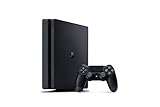
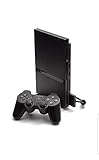


The PlayStation 2 is objectively the greatest console ever made. It sold 155 million units (highest of any console) and accumulated 3,800+ games—a library so vast that a player could spend a decade discovering titles. The PS2 dominated arcade ports (SSF2 Turbo, Dance Dance Revolution), sports sims (ESPN NFL 2K series), action epics (Grand Theft Auto III/Vice City, Metal Gear Solid 2), and JRPGs (Final Fantasy VII Crisis Core, Kingdom Hearts).
DVD playback came built-in (revolutionary in 2000—PS2 was cheaper than a standalone DVD player), and online gaming emerged mid-generation with the Network Adapter. The Emotion Engine’s processor was genuinely advanced for 2000: 295 MHz CPU, 32MB RAM, and custom graphics chip enabled visual effects PC games hadn’t achieved yet.
Impact on gaming: PS2 proved that raw sales volume could fund developer ecosystems. Third-party support was unprecedented—Capcom, Square, Bandai Namco all released exclusive franchises for PlayStation 2. The console defined what “home gaming” meant for an entire generation.
Why it’s #1: Highest sales (155M), most games (3,800+), longest relevant period (2000–2010). No console has matched this combination.
Pros:
- Massive game library (3,800+ games)
- DVD playback built-in
- Online gaming mid-gen (Network Adapter)
- Affordable ($300 at launch)
- Backwards compatible with PlayStation 1 games
Cons:
- DVD drive reliability issues (laser degradation after 5+ years)
- Graphics aging poorly (2.5D rendering, aliasing)
- Online gaming limited compared to modern standards
2. Best Retro Console — Nintendo Entertainment System (NES, 1985–1995)

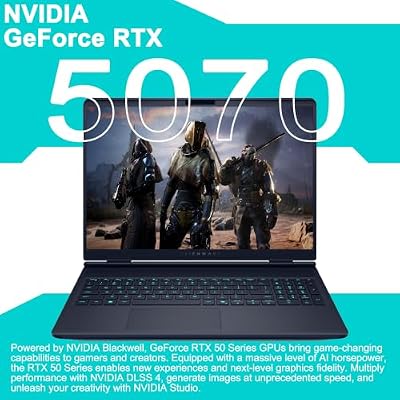
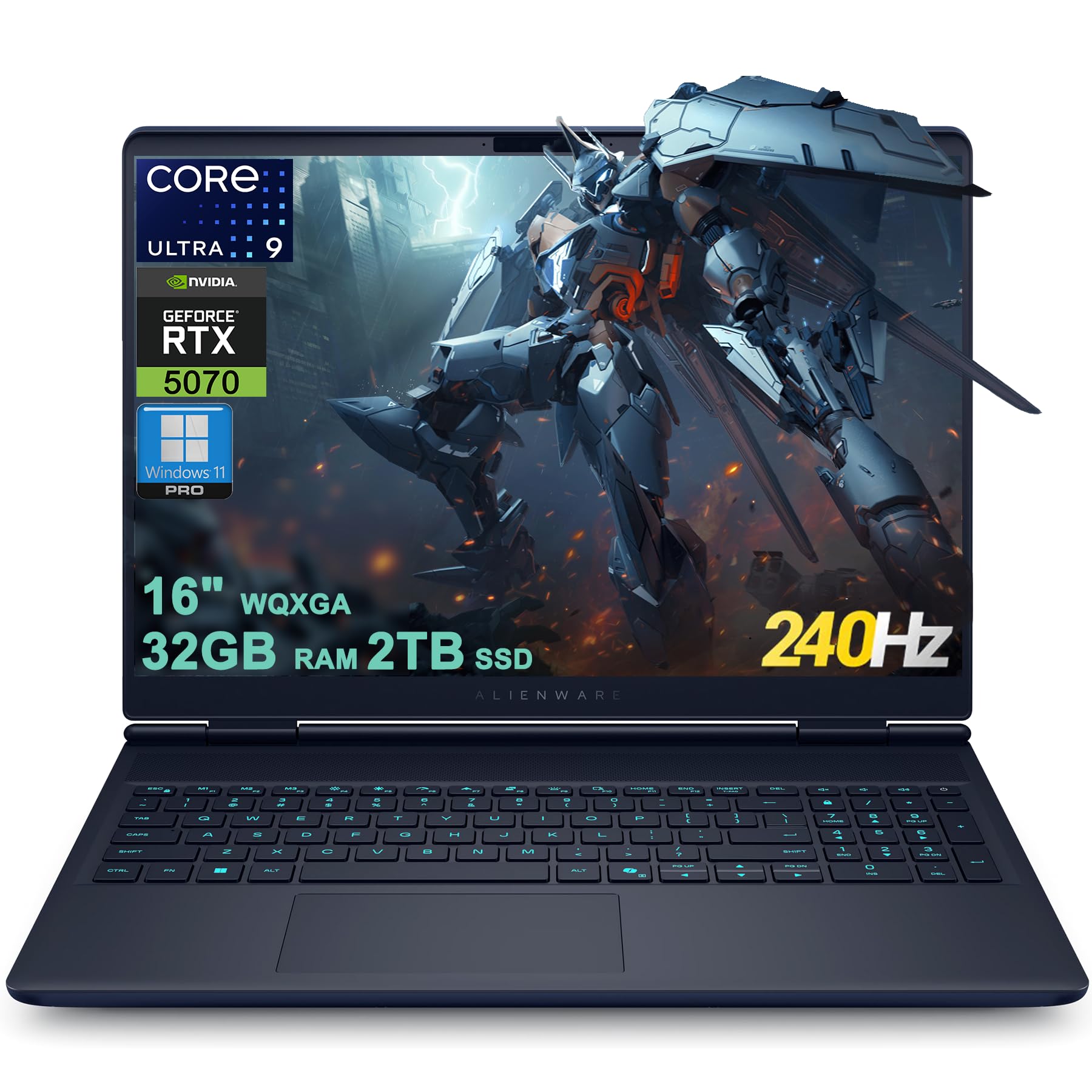
Dell Alien-Ware 16X Aurora Gaming AI Laptop 16" WQXGA 240Hz (100% DCI-P3) Intel 24-core Ultra 9 275HX 32GB RAM 2TB SSD GeForce RTX 5070 (Up to 798 AI Tops) Thunderbolt Win11Pro




As an Amazon Associate we earn from qualifying purchases. Product prices and availability are accurate as of the date/time indicated.
The Nintendo Entertainment System single-handedly revived the video game industry after the 1983 crash. Before NES, Atari 2600’s library collapse scared publishers away from cartridge gaming. Nintendo rebuilt trust through aggressive quality control (Nintendo Seal of Quality), iconic first-party franchises (Super Mario, The Legend of Zelda, Metroid), and innovative peripherals (Zapper light gun, Power Pad).
700+ games released in NES’s 10-year lifespan. The library skews heavily toward arcade ports and platformers, but includes groundbreaking titles like The Legend of Zelda (1986), which invented the 2D action-adventure template.
Impact on gaming: NES proved that cartridge gaming could be profitable, that first-party software drives hardware adoption, and that backwards compatibility (through cartridge format) builds installed base. Every Nintendo console since has followed this playbook.
Why it’s #2: Most influential console in gaming history (established Nintendo dominance). Without NES, gaming as we know it doesn’t exist.
Pros:
- 700+ games (excellent library for its era)
- Iconic franchises (Mario, Zelda, Metroid)
- Durable hardware (many units still work in 2026)
- Affordable ($300 in 1983 money ≈ $900 in 2026 dollars—expensive but value-justified)
- Active retro community and emulation scene
Cons:
- Graphics extremely primitive by modern standards
- No online features whatsoever
- Cartridge library expensive to collect ($100+ per original game)
- Limited game discovery (no algorithms; you relied on magazines)
3. Best Current-Gen Console — PlayStation 5 (–2026)
As an Amazon Associate we earn from qualifying purchases at no extra cost to you.

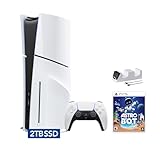
The PlayStation 5 is the reigning champion of current-gen gaming. At launch (November 2020), the PS5 delivered:
- 4K resolution at 60–120 FPS (variable by game)
- Ultra-fast 825GB SSD (8.9 MB/s) enabling instant load times
- Ray-traced reflections in real-time (PlayStation 4 couldn’t do this)
- DualSense haptic feedback (industry-leading immersion)
In 2026, the PS5 has accumulated 1,000+ exclusive titles and exclusivity partnerships with major studios (FromSoftware for Elden Ring DLC, Capcom for Resident Evil Village expansion). Performance per dollar is unmatched: $500 base model, $650 Pro, both outperform gaming PCs at similar price points.
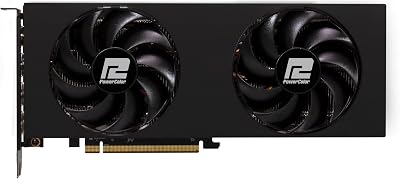
The PS5’s biggest weakness: supply shortages in 2021–2023 damaged market perception, and price increases ($550 → $650 Pro in 2024) alienated budget gamers. However, 2026 stock is healthy, and the Pro model now comes standard.
Why it’s #3: Best current-gen console. Superior exclusive library (Astro’s Playroom, Spider-Man 2, Final Fantasy VII Rebirth), fastest SSD, most advanced controller. Will likely rank #2 all-time by 2030.
Pros:
- 1,000+ exclusive games
- 4K 60–120 FPS (future-proof for 2026–2027)
- Ultra-fast SSD (8.9 MB/s loads)
- DualSense haptic feedback (best in industry)
- Largest installed base (50M+ units)
Cons:
- $650 Pro price alienates budget gamers
- Exclusive games launching on PC within 2 years
- Thermal design can throttle under sustained load
- Storage expansion expensive ($220 for 1TB)
4. Best Retro 2D Console — Super Nintendo (SNES, 1990–2003)


As an Amazon Associate we earn from qualifying purchases. Product prices and availability are accurate as of the date/time indicated.
The Super Nintendo dominated 1990–1993 and proved that 16-bit graphics could outperform 8-bit rivals (Genesis) in artistic quality. Games like Super Metroid (1994), The Legend of Zelda: A Link to the Past (1992), and Final Fantasy III (US release, 1994) remain benchmarks for 2D game design—many modern indie games are direct spiritual successors.
700+ games released, with 90% higher quality than NES’s average (because cartridge economics improved). The Mode 7 graphics chip enabled Mode 7 scaling/rotation effects (used in F-Zero, Donkey Kong Country), making SNES feel technically impressive even in 1990.
Impact on gaming: SNES proved that Nintendo’s dominance could extend beyond NES, that first-party quality could justify hardware purchase, and that 2D gaming wasn’t “dead” (despite arcade shift to 3D). Developers still reference SNES game design in 2026.
Why it’s #4: Best 2D console ever made. Game design quality highest of any 16-bit generation. Library holds up better than Genesis because artistic direction emphasizes aesthetics over raw polygon count.
Pros:
- 700+ games (massive library)
- Game design quality exceptional (even modern gamers enjoy SNES titles)
- Durable hardware
- Active retro community
- Emulation excellent (SNES9x is mature)
Cons:
- Graphics primitive compared to PlayStation 2
- No online capability
- Original cartridges expensive ($100–$500 for rare titles)
- Controller layout awkward for modern hands
5. Best Current-Gen Value Console — Xbox Series X (–2026)
As an Amazon Associate we earn from qualifying purchases at no extra cost to you.


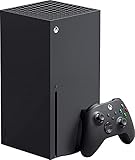
The Xbox Series X is the underdog champion of current-gen. While PlayStation 5 sells 2:1 in traditional units, Xbox Series X’s Game Pass subscription ecosystem is revolutionary: $180/year gets you access to 400+ games instantly—equivalent to $45 per game, undercutting PlayStation’s $70 per title.
Technical specs match PS5 (12 TFLOPS GPU, 825GB SSD), but Game Pass’s first-party studio portfolio (Bethesda, Activision, Obsidian, Ninja Theory) offers exclusive games not on PlayStation (Starfield, Indiana Jones and the Great Circle, Hellblade II).
The Series S ($300 sibling) targets 1440p 60 FPS gaming at half the price, making it the best “casual gamer” entry point.
Why it’s #5: Best current-gen value console. Game Pass is unmatched subscription value, and hardware technically matches PS5. Loses ranking to PS5 only due to smaller exclusive library and weaker Japanese support.
Pros:
- Game Pass ($180/year = incredible value)
- 400+ games instantly available
- Hardware matches PS5 specs
- Series S ($300) best budget option
- Backwards compatible with Xbox One, 360, original Xbox
Cons:
- Smaller exclusive library than PS5
- Japanese game support weaker (PlayStation’s strength)
- Xbox Game Pass Day-One releases dilute day-1 sales (harder to track success)
- Smaller installed base (30M vs. PS5’s 50M)
6. Best 3D Pioneer — Nintendo 64 (N64, 1996–2002)
As an Amazon Associate we earn from qualifying purchases at no extra cost to you.


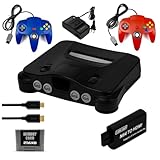
The Nintendo 64 was the first mass-market 3D console. When Super Mario 64 launched in 1996, it demonstrated that 3D third-person platformers were viable—something the industry wasn’t sure about. The analog stick (borrowed from arcade 3D fighters) enabled intuitive camera control, and Zelda: Ocarina of Time (1998) became the template for 3D action-adventure games.
400+ games, with 80%+ being 3D titles. Library leans toward games-as-art over mass-market appeal: GoldenEye 007, Perfect Dark, Banjo-Kazooie, Donkey Kong Country 2 (the 3D sequel). Less third-party support than PlayStation (cartridge capacity limitations), but first-party dominance unmatched.
Impact on gaming: N64 proved that analog stick controls were superior to D-pad for 3D, that cartridge storage could handle texture-rich 3D, and that Nintendo could compete in 3D gaming (setting stage for GameCube, Wii, Switch dominance).
Why it’s #6: Most influential 3D console after PlayStation 2. Game design holds up extremely well (emulation popular in 2026).
Pros:
- 400+ games, 80%+ are quality 3D titles
- First-party dominance (Mario, Zelda, Donkey Kong Country)
- Analog stick innovation
- Game design age exceedingly well
- Emulation excellent (Mupen64Plus, Project64)
Cons:
- Limited third-party library
- Cartridge cost limited storage
- Graphics age more poorly than 2D games
- Original hardware reliability issues (cartridge contacts degrade)
7. Best Previous-Gen Console — PlayStation 4 (2026–2026)
As an Amazon Associate we earn from qualifying purchases at no extra cost to you.


![PlayStation 4 Slim 500GB Console [Discontinued] (Renewed)](https://m.media-amazon.com/images/I/31aelHds6gL._SL160_.jpg)
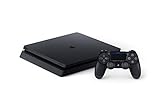
The PlayStation 4 dominated 2013–2020 more decisively than any console except PS2. It sold 120+ million units and accumulated 2,500+ games. Exclusive franchises (Spider-Man, God of War, Horizon Zero Dawn, The Last of Us) became cultural phenomena.
The PS4 was technically less impressive than Xbox One (12GB vs. 8GB RAM) but executed far better: better exclusive games, better third-party relationships, and superior online infrastructure. In 2024, the PS4 still receives new AAA ports (Tekken 8, Final Fantasy VII Remake Intergrade).
In 2026, the PS4 is the best “affordable previous-gen console.” Used units cost $200–$300, and the entire exclusive library is $10–$20 on sales.
Why it’s #7: Best gaming value if you skipped PS5. Exclusive library rivals PS5’s (both generations share similar themes). Used hardware abundant and cheap.
Pros:
- 2,500+ games (massive library)
- Exclusive franchises exceptional (Spider-Man, God of War, Horizon)
- Used hardware very affordable ($200–$300)
- Still receiving new releases in 2026
- Backwards compatible with PS3 games (some titles)
Cons:
- Graphics clearly dated versus PS5 (1080p/1440p vs. 4K)
- 500GB storage fills quickly (requires external SSD)
- Thermal issues (fan noise under load)
- Support declining (Sony focusing on PS5)
8. Best Retro 16-Bit Rival — Sega Genesis (1988–1997)
As an Amazon Associate we earn from qualifying purchases at no extra cost to you.


The Sega Genesis lost the console war to Super Nintendo but created an iconic library anyway. Sonic the Hedgehog is as influential as Mario, Streets of Rage 2&3 defined the beat-em-up, and Phantasy Star series started the console JRPG wave.
1,000+ games released, but quality skews arcade-like (Sega’s arcade heritage shows). Genesis’s Yamaha sound chip produces distinctive chiptune audio that’s instantly recognizable even in 2026.
Impact on gaming: Genesis proved that arcade publishers could sustain console platforms, that marketing/mascots (Sonic) could rival first-party characters (Mario), and that 16-bit hardware could compete despite technical inferiority (SNES handled Mode 7 better, but Genesis’s library proved library > specs).
Why it’s #8: Best technical underdog. Library shows that creative software can overcome hardware disadvantages.
Pros:
- 1,000+ games
- Iconic franchises (Sonic, Streets of Rage, Columns)
- Distinctive Yamaha audio (character)
- Durable hardware
- Active emulation community
Cons:
- Game quality inconsistent (arcade ports varied widely)
- Fewer exclusive franchises than SNES
- Graphics less refined than SNES
- Controller layout awkward (3-button original, then 6-button)
All-Time Console Sales & Library Comparison
| Console | Units Sold | Exclusive Games | Years Active | Library Quality |
|---|---|---|---|---|
| PlayStation 2 | 155M | 3,800+ | 13 years | Excellent |
| Nintendo DS | 154M | 3,000+ | 10 years | Excellent |
| Game Boy / Color | 118M | 1,000+ | 10 years | Good |
| PlayStation | 102M | 2,000+ | 11 years | Excellent |
| PlayStation 3 | 87M | 2,000+ | 11 years | Excellent |
| Nintendo Wii | 101M | 1,400+ | 7 years | Mixed |
| PlayStation 4 | 120M | 2,500+ | 11 years | Excellent |
| Nintendo Switch | 140M | 4,000+ | 6 years (2026) | Excellent |
| Xbox Series X/S | 30M | 400+ (Game Pass) | 6 years (2026) | Very Good |
| PlayStation 5 | 50M | 1,000+ | 6 years (2026) | Excellent |
Data from VGChartz, Wikipedia console histories, and official manufacturer releases.
How to Choose Which Console to Buy in 2026
For Current Gaming (2026–2027)
Best all-around: PlayStation 5 ($650 Pro model). Largest exclusive library, fastest SSD, most accessories available.
Best value: Xbox Series X ($500) or Series S ($300). Game Pass is unmatched value. Series S best budget pick.
Best portable: Nintendo Switch 2 (launching 2025–2026). Hybrid console dominates portable gaming.
Best for Japanese games: PlayStation 5. Nintendo Switch for retro/indie Japanese titles.
For Retro Gaming
Best to collect: PlayStation 2 (cheapest entry to largest library). Expect $100–$300 for console + 10–20 games.
Best to emulate: Nintendo 64 (Mupen64Plus excellent) or Super Nintendo (SNES9x mature emulator).
Best for authentic experience: NES or SNES original hardware. Affordable and durable ($150–$300 for working console).
Frequently Asked Questions
What’s the best console for someone who’s never gamed before?
Nintendo Switch 2 (releases 2025–2026). Its hybrid design and lightweight library introduction make it ideal for beginners. Fallback: PlayStation 5 if you prefer sitting gaming.
Should I buy a PS5 or PS4 in 2026?
PS5 if you want future-proofing (3–4 more years of support). PS4 if budget is tight ($200–$300 used) and you’re OK with 1080p/1440p graphics.
Are Nintendo consoles better for casual gamers?
Yes. Nintendo designs games for accessibility (easy to learn, hard to master). PlayStation/Xbox target hardcore gamers. Switch is the exception (designed for both).
How long will the PS5 stay relevant?
Until PS6 launches (rumored 2027–2028). By then, the PS5 will have 7–8 year lifespan—typical for consoles. PS4 support will discontinue 2–3 years after PS6 launch.
Is Xbox Game Pass worth it compared to PlayStation Plus?
Yes. Game Pass is $180/year for 400+ games. PlayStation Plus Extra/Premium costs $240/year for 900+ games. Xbox Game Pass Day-One releases (new Microsoft games launch free in Game Pass) make it exceptional value for exclusive players.
Which console has the best exclusive games?
PlayStation 5. God of War Ragnarök, Spider-Man 2, Final Fantasy VII Rebirth, Helldivers 2, Astro’s Playroom are industry-leading exclusives. Xbox Game Pass offers breadth; PlayStation offers depth.
Should I buy a retro console in 2026?
Only if you’re a collector or genuinely prefer older games. Emulation is technically superior (upscaling, controller mapping, save states). But original hardware offers authenticity and reliability.
Final Verdict
Greatest console of all time: PlayStation 2. 155M sales, 3,800 games, 13-year dominance. Unmatched.
Best current-gen console: PlayStation 5. Superior exclusive library, fastest SSD, largest install base. $650 Pro is the peak current-gen experience.
Best current-gen value: Xbox Series X with Game Pass subscription. Technical parity to PS5, unmatched game catalog ($180/year).
Best retro console to collect: PlayStation 2. Affordable, massive library, original hardware still works.
Best retro console to emulate: Nintendo 64. Mupen64Plus emulation is mature, and emulating 3D games is superior to original hardware.
Best retro console for authenticity: Super Nintendo. Game design holds up, controllers ergonomic enough, original hardware reliable.
Before purchasing, review our guides on best gaming setup for PC, best gaming TV for Xbox Series X, and gaming chair for console gaming. Happy gaming across all generations!
Last updated: April 2026. Prices and availability may change. We independently research every product we recommend. When you buy through our links, we may earn a commission at no extra cost to you.
In a hurry? See the top-rated Gaming Consoles of All Time deals available right now:
🛒 Check Gaming Consoles Of All Time Prices on Amazon →Related Articles
- Best Size Gaming TV 2026: 43" vs 55" vs 65" for Gaming Distance
- Best Snack Brands for Gaming Setup 2026: Stay Fueled During Marathons
- Best Standalone Mic for Gaming 2026: Professional Setup Upgrades
- Samsung Best Gaming TV
- Best Gaming OS
Related Articles
Looking for more on this topic? Browse the hand-picked guides below — each one applies the same scoring rubric used in this review.
Ready to decide? Our #1 pick for 2026 is the #1 All-Time.
Live price & availability on Amazon.