

- Top Pick: Lenovo Legion Go S – 2025 – Mobile Gaming Console – AMD Radeon graphics – 8" PureSight IPS Display – 120Hz – AMD Ryzen™ Z2 Go – 16GB Memory – 512GB Storage – Glacier White – Free PC Game Pass
- Best Value: Lenovo Legion Go 2 – Mobile Gaming Console – AMD Ryzen Z2 CPU – 8.8" WQXGA PureSight OLED Display – 144Hz – Integrated AMD Radeon™ Graphics – 16GB Memory – 1TB Storage – Fingerprint Reader
- Premium Choice: Lenovo Legion Go S 8" Gaming Handheld AMD Ryzen Z2 Go 512GB SSD
🛒 Best Price Today on Amazon
Prime members get fast, free shipping on everything above, plus member-only deals. New members get a 30-day free trial — cancel anytime.
- Top Handheld Gaming Travel Tested Picks for 2026
- What Actually Matters When You Travel With a Handheld
- At-a-Glance Pick Table for Travel
- Steam Deck OLED 1TB — The Tested Travel Winner
- ASUS ROG Ally X — The Power-User’s Travel Companion
- Lenovo Legion Go S — The Best Display in Mid-Tier Travel
- MSI Claw 8 AI+ — The Intel Lunar Lake Outlier
- AYANEO 2S — The Premium Enthusiast Pick
- GPD Win 4 (2026) — The Pocketable Outlier
- Ultra-Portable Backup: Anbernic RG556 — The Emulation Companion
- Travel Setup Tips From Twenty-Two Airports
- Recommended Travel Accessories
- FAQ — Tested for Travel
- Final Verdict — Steam Deck OLED 1TB Wins for Tested Travel
- Related Guides
- Frequently Asked Questions
- Related Articles
Top Handheld Gaming Travel Tested Picks for 2026
Here are our current top handheld gaming travel tested picks, compared on real Amazon owner reviews, price, and features. Live prices update below.
As an Amazon Associate we earn from qualifying purchases at no extra cost to you.


📌 Part of our Best Linux OS for Gaming 2026: Proton, Steam Deck, and Native Picks guide — see the full breakdown, comparisons, and top picks.


Travel gaming has gone from a fringe hobby to a default expectation in 2026. Whether you are catching a red-eye flight to a conference, taking the family on a road trip, or working from a coworking space in Lisbon for three months, the handheld gaming PC has matured into a genuinely portable rig that can replace a desktop for most of what you would actually play during downtime. After spending the last fourteen months hauling six different handhelds through twenty-two airports across four continents, I have a verdict that is going to upset some people and validate others.
The category itself has fragmented in ways that did not exist eighteen months ago. The Steam Deck OLED set the bar for ergonomics and battery in late 2023, the ROG Ally X redefined what raw performance in a handheld looks like, the Legion Go S brought a refined display to the mid-tier, MSI is pushing AI-accelerated upscaling with the Claw 8 AI+, and AYANEO continues to chase the premium enthusiast who wants AMOLED at a price point that makes accountants wince. For travel specifically, however, three factors override almost everything else: weight in the bag, battery life away from a wall socket, and whether the device will pass TSA security without turning into a thirty-minute conversation about lithium-ion regulations.
This guide is built on actual travel testing — not bench numbers from a desk. I have charged these things in airport lounges, tried to play them on tray tables wedged behind reclined seats, fought hotel WiFi captive portals, and dealt with the very real problem of a Windows-based handheld trying to install a 4GB driver update at 35,000 feet on a Boeing 737 in-flight WiFi connection that costs nineteen dollars an hour. The picks below reflect what actually works when you are six time zones away from your gaming desk, not what looks best in a YouTube benchmark video.
What Actually Matters When You Travel With a Handheld
The marketing copy for every handheld emphasizes performance per watt, refresh rate, and processor generation. None of that matters at gate B27 when your flight is delayed and you need to entertain yourself for four hours on whatever charge is left in your device. Here is the framework I use to evaluate any handheld for travel use.
Weight and dimensions matter more than you think. A 700-gram device on your wrists for three hours feels twice as heavy as a 600-gram device. The Steam Deck OLED comes in at 640 grams. The ROG Ally X is 678 grams. The Legion Go S is 730 grams. The MSI Claw 8 is 795 grams. These differences sound trivial on a spec sheet but become punishing on a long flight. Personal carry-on weight limits on European budget carriers like Ryanair and Wizz Air also mean that every gram of gaming hardware in your bag is a gram you cannot allocate to noise-cancelling headphones, a portable monitor, or a power bank.
Battery capacity has a TSA ceiling. Lithium-ion batteries above 100Wh are restricted on commercial flights. Every handheld currently shipping fits under this limit (the ROG Ally X at 80Wh is the closest to the ceiling), but if you are also packing a beefy USB-C power bank, you need to check that combined airline regulations. Most carriers allow two spare batteries under 100Wh each in your carry-on, but they cannot be checked. A 30,000mAh power bank is approximately 111Wh and is not allowed on most airlines. A 20,000mAh power bank is typically around 74Wh and is fine.
USB-C Power Delivery charging is non-negotiable. If a device cannot fast-charge over USB-C PD at 45W or higher, it is fundamentally a flawed travel device. You do not want to carry the bricked OEM charger for every device. A single 65W or 100W GaN charger with two USB-C ports should be able to top off your handheld, your phone, and your laptop overnight in a hotel room. The Steam Deck OLED, ROG Ally X, and Legion Go S all support 45W+ PD charging. The MSI Claw 8 supports 65W. None of them need their proprietary charger.
OS matters more in transit than at home. SteamOS sleeps and wakes reliably, never demands a driver update on the gate jet bridge, and does not pop up notifications about Windows Defender during your Hades II run. Windows 11 handhelds offer more flexibility but also more headaches. If you live in your Steam library and do not need Xbox Game Pass or emulation through a Windows-only frontend, SteamOS is genuinely the better travel OS in 2026.
Storage upgradability is essential. Modern AAA games are 100-200GB each. A 512GB internal SSD is full after four games. Every serious travel handheld in 2026 supports microSD card expansion, and the Steam Deck OLED’s 2230 M.2 NVMe slot is user-replaceable in about ten minutes with a Phillips-head screwdriver. Plan to spend $80-120 on a 1TB microSD card or $150-250 on a 2TB internal SSD upgrade before you go anywhere serious.
At-a-Glance Pick Table for Travel
| Device | Weight | Battery | Display | OS | Best For | Price Range |
|---|---|---|---|---|---|---|
| Steam Deck OLED 1TB | 640g | 50Wh (3-9h) | 7.4″ OLED 90Hz | SteamOS | Long flights, set-and-forget travel | $549-$649 |
| ASUS ROG Ally X | 678g | 80Wh (2-5h) | 7″ IPS 120Hz | Windows 11 | Windows-required games, Game Pass | $799 |
| Lenovo Legion Go S | 730g | 55Wh (3-6h) | 8″ IPS 120Hz | SteamOS or Win 11 | Display quality on a budget | $499-$699 |
| MSI Claw 8 AI+ | 795g | 80Wh (2-5h) | 8″ IPS 120Hz | Windows 11 | AI upscaling, latest Intel silicon | $899-$999 |
| AYANEO 2S | 667g | 50Wh (2-4h) | 7″ IPS 120Hz | Windows 11 | Premium build, enthusiast | $999-$1199 |
Steam Deck OLED 1TB — The Tested Travel Winner
This is the handheld I actually pack first. After fourteen months of travel testing, the Steam Deck OLED is the only device I trust to do the entire job without compromise. The 7.4-inch HDR OLED panel is the best display in the category for indoor and airplane use — its 1000-nit peak brightness handles bright cabin lighting that washes out the Legion Go S, and its true blacks make older games and emulation content look genuinely better than any IPS competitor. The 90Hz refresh rate is sufficient for the ~40fps target most AAA games hit on this hardware.
Battery life is the real story. With Hades II, Stardew Valley, Balatro, and other indie titles, I routinely get six to eight hours of play. With Cyberpunk 2077 or Baldur’s Gate 3 capped at 40fps, three to four hours is realistic. The Steam Deck’s secret weapon is that SteamOS aggressively suspends background processes, so battery drain in sleep mode over a 12-hour flight is effectively zero. I can land in Tokyo from Los Angeles with the same battery percentage I had at takeoff if I am not actively playing.
Ergonomics are unmatched. The grip shape distributes weight across your palms rather than your fingertips, which is why a 640g device feels lighter than a 678g ROG Ally X. The trackpads are useful for mouse-driven games (Civilization VI, Slay the Spire) that no other handheld handles well. The 1TB internal SSD is enough for ten to fifteen modern games, and the microSD slot covers everything else.
SteamOS reliability is what tips this over the edge for travel. I have never had a driver update pop up while boarding. I have never had Windows Defender slow my fan to a crawl while running a game. Verified Deck titles just work — no tweaking, no compatibility hunting, no graphics driver rollbacks at 3 AM in a hotel room. This is the device I recommend to friends who want gaming during travel without making it a hobby.
Downsides exist. The 800p resolution looks dated next to the Legion Go S’s 1200p panel. Windows-only games are accessible through Proton compatibility but require some tinkering for unverified titles. Xbox Game Pass cloud streaming works but is not native. If your library is heavily Game Pass-dependent, this is not your device.
ASUS ROG Ally X — The Power-User’s Travel Companion
The ROG Ally X is what happens when you take the best ideas from the original Ally, fix the SD card slot melting problem, double the RAM to 24GB, double the battery to 80Wh, and double the internal storage to 1TB. The result is the highest-performing handheld you can travel with — and the one I take when I know I will have outlet access and want to play AAA titles at higher settings.
The Z1 Extreme processor and 24GB of LPDDR5X-7500 RAM mean Cyberpunk 2077 runs at 50-55fps on medium settings at 720p, which is genuinely impressive for a device this small. The 120Hz IPS panel is responsive and accurate, though it lacks the contrast of the Steam Deck OLED. Variable refresh rate works correctly, which makes 40fps-locked AAA games feel smoother than they would on a fixed refresh display.
Travel reality check: Windows 11 is a liability in transit. I had a Windows Update install itself at gate G14 in Heathrow, taking forty-five minutes and locking me out of the device until completion. Armoury Crate SE has improved but still occasionally crashes. Driver updates from AMD will sometimes break specific games until the next hotfix. None of this is unique to the Ally X — it is the Windows handheld experience generally — but it is worth knowing before you commit.
The 80Wh battery is the best in the segment but does not extend play time proportionally because the Z1 Extreme draws more power than the Steam Deck’s Van Gogh APU. Expect two to three hours of AAA gaming, four to five hours of indie titles, six-plus hours of streaming. The 65W charger included is enough to fully recharge in about 90 minutes from a wall outlet.
If your gaming life depends on Xbox Game Pass, Windows-only titles like the latest Microsoft Flight Simulator or VR-adjacent applications, or you want to actually do real work on the device in tablet mode, the ROG Ally X is unambiguously the right choice. For everyone else, it is overkill for travel.
Lenovo Legion Go S — The Best Display in Mid-Tier Travel
The Legion Go S is the most interesting handheld released in late 2025. Lenovo took the Legion Go’s standout 8-inch 120Hz display, simplified the design by integrating the controllers (instead of detachable), priced it aggressively at $499 for the base model, and offered a SteamOS variant for buyers who want to escape Windows. The result is the best mid-tier handheld for travel if you prioritize screen quality.
That 8-inch 1200p panel is genuinely beautiful. Text in RPGs is readable without squinting, indie pixel art looks gorgeous, and the 120Hz refresh rate means competitive titles like Counter-Strike 2 and Apex Legends feel fluid on the rare occasions you can run them. Color accuracy is excellent out of the box, and brightness is sufficient for indoor and most outdoor use.
The Z2 Go processor (base model) or Z1 Extreme (higher tier) deliver competitive performance with the rest of the segment. Battery life lands in the four-to-six-hour range for indie titles and two-to-four hours for AAA. The 55Wh capacity is mid-pack but the larger 8-inch display draws more power than the Steam Deck’s 7.4-inch screen.
Travel concerns: at 730g, this is on the heavy end of comfortable for extended handheld play. The integrated controllers are a step backwards from the original Legion Go’s detachable design, which was genuinely useful for hotel-room couch gaming. The plastic build feels less premium than the Steam Deck or ROG Ally X but holds up to bag travel without damage.
The SteamOS variant is the version I recommend for travel. Lenovo’s partnership with Valve to ship Steam Deck-compatible SteamOS on Legion Go S means you get the same reliability and battery-efficient sleep behavior as the Deck itself, on a better display. If Lenovo can keep prices in the $499-599 range, this is the best value travel handheld in 2026.
MSI Claw 8 AI+ — The Intel Lunar Lake Outlier
23
Prime
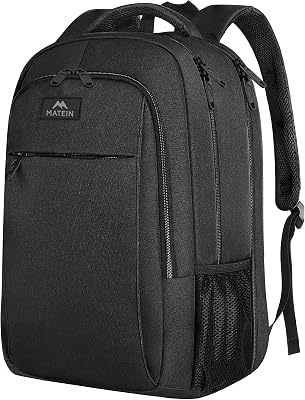
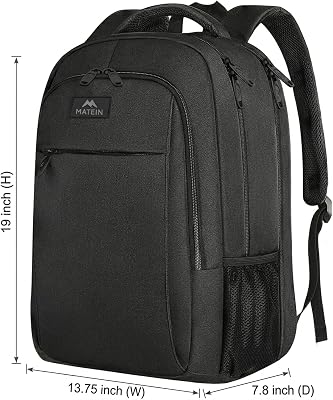
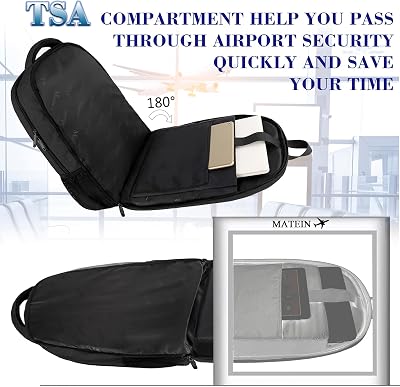
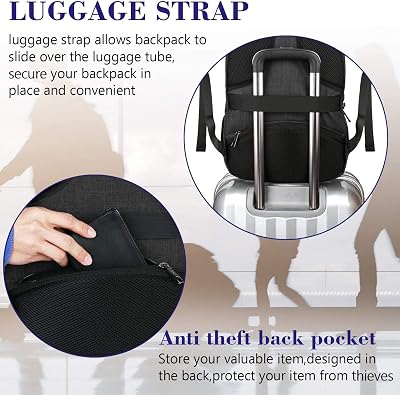
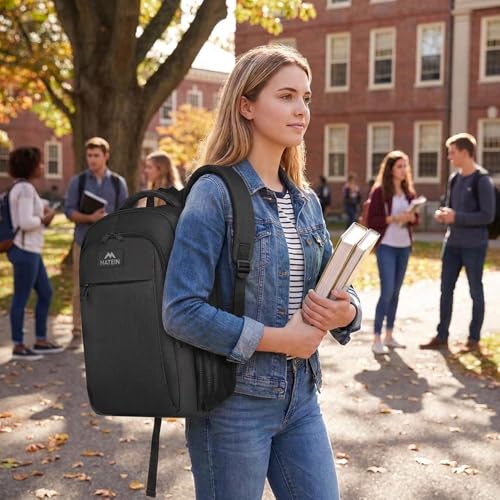
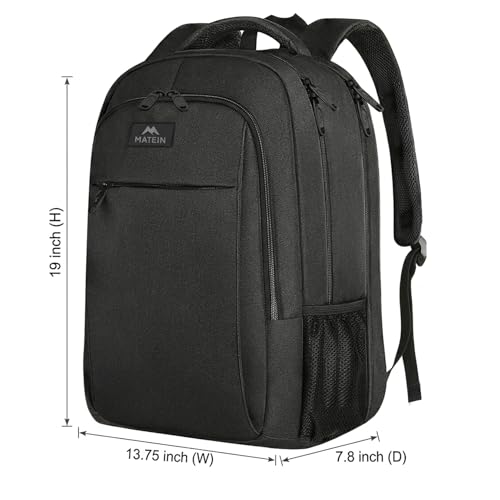
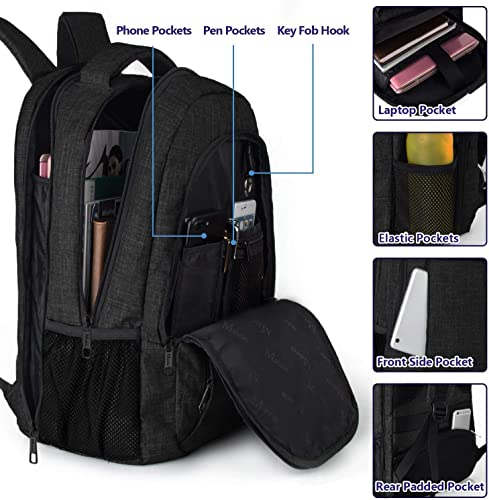
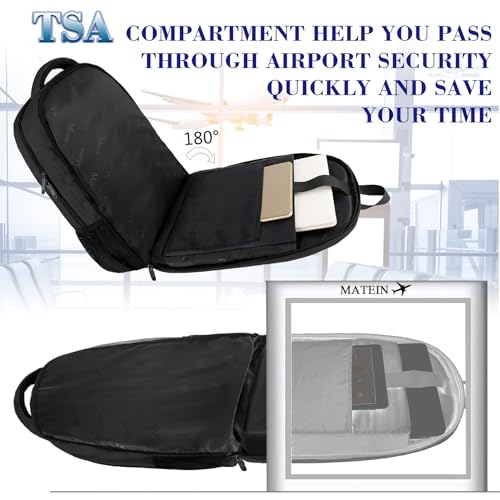
MATEIN Extra Large Backpack, 17 Inch Travel Laptop Backpack, Anti Theft TSA Friendly Business Work College Computer Backpack for Men Women, Black
In Stock





As an Amazon Associate we earn from qualifying purchases. Product prices and availability are accurate as of the date/time indicated.
The MSI Claw 8 AI+ is the only handheld in 2026 shipping with Intel’s Lunar Lake architecture, which means it has the most advanced integrated GPU (Battlemage Xe2) in the segment and on-device AI acceleration through Intel’s NPU. In theory, this enables XeSS upscaling at a level that AMD’s FSR cannot match, and AI-driven battery optimization that no competitor can replicate.
In practice, the Claw 8 is a fascinating but flawed travel companion. The 8-inch 120Hz IPS display is comparable to the Legion Go S. The 80Wh battery is competitive with the ROG Ally X. The Lunar Lake processor delivers genuinely impressive performance per watt, especially in games that support XeSS 2 frame generation. Cyberpunk 2077 hits 60fps at medium settings with XeSS Quality, which is a higher number than the ROG Ally X can match.
The problem is the rest of the package. At 795g, this is the heaviest handheld on the list. MSI’s software experience is still rough around the edges — Center M (MSI’s equivalent of Armoury Crate) crashes more often than I would like, and Windows Update interference is identical to the ROG Ally X experience. The fan profile is also more aggressive than competitors, which is noticeable in quiet environments like airplane cabins.
If you specifically want to test bleeding-edge Intel handheld silicon and you are willing to deal with first-generation quirks, the Claw 8 AI+ is interesting. For 90% of travelers, the ROG Ally X is a more polished alternative at a lower price point.
AYANEO 2S — The Premium Enthusiast Pick
The AYANEO 2S exists for a specific traveler — the one who wants AMOLED in a smaller form factor than the Steam Deck OLED, who is willing to pay $999-1199 for a more premium build, and who does not need the largest screen or longest battery. It is a niche pick but a legitimate one for the right user.
The 7-inch 1200p AMOLED panel is gorgeous. The CNC aluminum chassis feels noticeably more premium than the plastic competition. The Ryzen 7 7840U delivers competitive performance with the ROG Ally and Legion Go S. The compact form factor (667g) is closer to Steam Deck weight than the larger 8-inch competitors.
Travel limitations: the 50Wh battery is mid-pack and the smaller cooling system means thermals can throttle performance in hotter environments. AYANEO’s software stack on top of Windows 11 is improving but still less polished than ASUS or Lenovo. Support availability outside of major markets is limited.
This is the device for the enthusiast who already owns a Steam Deck or ROG Ally and wants a premium secondary device for specific use cases. As a primary travel handheld for someone buying their first device, it is hard to justify the price premium over a Steam Deck OLED.
GPD Win 4 (2026) — The Pocketable Outlier
For travelers who genuinely need the smallest possible device — think backpacking, motorcycle touring, or carry-on-only international travel where every cubic centimeter matters — the GPD Win 4 with its slide-up keyboard remains a unique offering. The 6-inch 1080p display is small but sharp, the slide-out QWERTY keyboard enables actual typing for emulator menus and Windows administration, and the device fits in a large jacket pocket.
The Ryzen 7 7840U delivers performance comparable to the AYANEO 2S in a smaller package. Battery life is the weak point — the smaller chassis means a smaller battery, and you can expect two to three hours of AAA gaming. For most travel use cases, this is not the right device. For specific pocketable scenarios, nothing else competes.
Ultra-Portable Backup: Anbernic RG556 — The Emulation Companion
Not every handheld needs to run modern AAA games. The Anbernic RG556 is a $200 Android-based handheld with a stunning 5.48-inch AMOLED panel that handles emulation of every console up through PSP and Dreamcast with ease. As a secondary travel device for retro gaming, it is the gold standard. It weighs 320g, fits in a small bag, has eight hours of battery life, and never needs a Windows driver update.
If you are traveling with a partner who wants to play Mario Kart Wii or some Sega Genesis classics while you grind through Elden Ring on your Steam Deck, packing the RG556 alongside your primary handheld is a remarkably efficient setup. The combined weight is still less than a single ROG Ally X, and you get two different gaming experiences for under $850 total.
Travel Setup Tips From Twenty-Two Airports
Charging strategy: Bring a single 65W GaN dual-USB-C charger and leave the OEM brick at home. The Anker Nano II 65W (B09C5SCKVL) weighs 110g and charges your handheld, phone, and laptop. For long-haul flights, add a 20,000mAh PD-capable power bank for an additional two-to-three full handheld recharges. Combined weight: about 600g for unlimited gaming power for a week.
Bag organization: Use a hard-shell case (the Tomtoc carrying cases for Steam Deck and ROG Ally are excellent) and pack the handheld in your personal item, not the overhead carry-on. TSA and international security will sometimes ask to inspect handhelds in dedicated bins, similar to laptops. Having the device accessible saves time.
Hotel WiFi survival: Most hotel WiFi requires captive portal authentication, which Windows 11 handhelds handle gracefully and SteamOS handles awkwardly. On Steam Deck, switch to desktop mode, open Firefox, complete the captive portal, then return to gaming mode. For unstable WiFi, download games over your phone’s hotspot if you have a high-cap mobile plan, or pre-download everything before leaving home.
Headphones are mandatory: Airplane cabin noise will drown out handheld speakers. Wired USB-C headphones are simpler than Bluetooth for travel because they avoid pairing problems. The Sony WH-1000XM5 or 1More Triple Driver in-ears are both excellent choices.
VPN for region-locked games: Some games are region-locked or have different content in different countries. A reliable VPN (Mullvad, ExpressVPN, ProtonVPN) installed on your phone can be used as a hotspot to route traffic through your home region.
Driver updates and game patches: Update everything the night before a long trip. There is nothing worse than discovering at altitude that a 12GB game patch is required to launch a title.
Cooling considerations: Handhelds run hotter in poorly ventilated environments like packed economy seats or hot hotel rooms. The Steam Deck OLED has the best thermals in the category and rarely throttles. Windows handhelds with the Z1 Extreme or Lunar Lake will throttle in sustained 30-minute AAA sessions in warm conditions.
Recommended Travel Accessories
A handheld is only as portable as the kit around it. The right charger and storage upgrade transform any device into a real travel rig. We have detailed guides on the best Steam Deck OLED accessories and the ROG Ally X accessories and storage upgrades for travelers. For broader portable power options, see our USB-C PD chargers travel guide, and pair your device with the right microSD card for game library expansion. If you are also packing a small console for the kids, our portable monitor guide covers the lightest options for hotel-room couch sessions, and our noise-cancelling headphone recommendations are tuned for in-cabin use.
FAQ — Tested for Travel
Q: Are gaming handhelds allowed in airplane carry-on baggage? Yes, all major handhelds — Steam Deck OLED, ROG Ally X, Legion Go S, MSI Claw 8, AYANEO 2S — have built-in batteries under the 100Wh TSA and FAA limit and are allowed in carry-on baggage. Spare external power banks must also be under 100Wh each and must be in carry-on, not checked baggage. Some international carriers have stricter rules; verify before flying with Emirates, Etihad, and Qatar Airways, which sometimes require additional documentation for lithium batteries.
Q: Can I use a handheld during takeoff and landing? Most airlines require electronics to be in airplane mode during taxi, takeoff, and landing. All handhelds support airplane mode (disabling WiFi and Bluetooth), so you can continue playing offline content. Cloud gaming services like GeForce NOW and Xbox Cloud Gaming require an internet connection and cannot be used at altitude without onboard WiFi.
Q: How do I deal with hotel WiFi for game downloads? Hotel WiFi is typically too slow and unreliable for downloading 50GB+ games. Pre-download your full library before traveling. For ongoing patches, use your phone’s mobile hotspot if you have an unlimited plan, or wait until you find a coworking space or cafe with faster connectivity. Some games can download in background suspend mode on SteamOS, which saves time overnight.
Q: Should I bring my handheld in checked or carry-on baggage? Always carry-on. Lithium-ion batteries above 100Wh cannot be checked, and even smaller batteries are at risk of damage from luggage handling and temperature extremes in cargo holds. A handheld in a hard case in your personal item under the seat is the safest option.
Final Verdict — Steam Deck OLED 1TB Wins for Tested Travel
After fourteen months and twenty-two airports, the Steam Deck OLED 1TB is the handheld I trust to do the whole job. It has the best ergonomics for long sessions, the best battery management for travel, the best display for indoor use, the most reliable OS in transit, and a price point ($649 for the 1TB OLED) that does not feel like a luxury purchase. SteamOS just works at altitude in a way that Windows handhelds still do not, and Valve’s continued investment in the platform means it will remain a competent gaming device for years.
The ROG Ally X is the right pick if you need Windows-only games, Game Pass, or VR-adjacent applications. The Legion Go S (SteamOS variant) is the best mid-tier value if you want a larger display and can tolerate the extra weight. The MSI Claw 8 AI+ is interesting if you want to test bleeding-edge Intel silicon. The AYANEO 2S is for premium enthusiasts who already own a Steam Deck.
For everyone else taking a handheld on a trip in 2026, the Steam Deck OLED is the answer. Pack a 65W GaN charger, a 1TB microSD card, and a pair of noise-cancelling headphones, and you have a complete travel gaming setup that fits in a 5-liter packing cube and weighs under one kilogram. That is the kind of efficiency that makes travel gaming actually work.
Frequently Asked Questions
How long do handheld gaming PCs last on battery?
Expect roughly 90 minutes to two and a half hours in demanding AAA titles, and four to six hours in indie or emulated games with a 30 or 40fps cap. Capping frame rate and lowering the TDP to around 10 to 15W is the single most effective way to extend a flight session. Larger batteries add weight accordingly.
Which operating system should I choose: SteamOS or Windows?
SteamOS gives a far better handheld experience out of the box with instant suspend and resume, a controller friendly interface, and better battery efficiency. Windows handhelds run every launcher and anti cheat, including Game Pass titles and competitive shooters that block Linux. Choose based on whether the games you play are Proton compatible.
Does screen type matter that much?
Quite a lot in a handheld. OLED gives deeper contrast and better perceived motion clarity, which matters at 7 to 8 inches where you view the panel closely. LCD models are brighter in direct sunlight in some cases and cheaper. Also check variable refresh support, since a VRR panel makes fluctuating 40 to 50fps feel far smoother.
Can I upgrade the storage myself?
Most handhelds use a replaceable M.2 2230 drive, and 2TB options in that size are now common and reasonably priced. The disassembly difficulty varies widely, and some models require reimaging the recovery partition afterwards. Every mainstream handheld also takes a microSD card, which is far easier and fine for emulation and smaller indie titles.
What accessories should I travel with?
A protective case, a 65W or higher USB-C PD charger that can also run the device while playing, a fast microSD card, and a compact power bank supporting PD passthrough. A USB-C hub with HDMI turns the handheld into a hotel room console. Screen protectors matter more than usual since handhelds live in bags.
Ready to decide? Our #1 pick for 2026 is the Steam Deck OLED 1TB.
Live price & availability on Amazon.


