Affiliate disclosure: As an Amazon Associate we earn from qualifying purchases. This post contains affiliate links — if you buy through them we may earn a small commission at no extra cost to you. This never affects our recommendations.
- Best 32-Inch Gaming Monitors in 2026: Top 5 Picks for Immersive Desktop Gaming
- Quick Comparison
- Top 5 Best 32-Inch Gaming Monitors
- 4K vs. 1440p at 32 Inches — Which Resolution Makes More Sense?
- GPU Requirements for 32-Inch 4K Gaming
- VA vs. IPS vs. Mini-LED at 32 Inches — Panel Comparison
- Conclusion — Which 32-Inch Monitor Should You Buy?
- Related Articles
- Frequently Asked Questions
- Related Articles
As an Amazon Associate we earn from qualifying purchases at no extra cost to you.

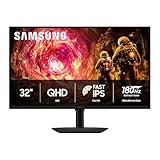


In a hurry? See the top-rated 32-Inch Gaming Monitor deals available right now:
🛒 Check 32-Inch Gaming Monitor Prices on Amazon →🛒 Best Price Today on Amazon
Prime members get fast, free shipping on everything above, plus member-only deals. New members get a 30-day free trial — cancel anytime.
Start 30-Day Prime Free Trial →See Today’s Amazon DealsBest 32-Inch Gaming Monitors in 2026: Top 5 Picks for Immersive Desktop Gaming
There’s a reason 32-inch monitors have become the go-to screen size for serious desktop gaming rigs. Sit 60–80 cm back from a 32-inch panel and the image fills your field of vision without forcing you to turn your head. Go bigger and you’re in TV territory. Go smaller — say 27 inches — and you start leaving immersion on the table.
The math works out cleanly at this size. A 4K (3840×2160) panel at 32 inches delivers 138 PPI, which is the sweet spot where individual pixels disappear at normal viewing distances. That’s noticeably sharper than 4K on a 27-inch (163 PPI, slightly over-resolved for most desktop distances) and significantly sharper than 1440p at 32 inches (92 PPI, which starts to feel soft if you sit close).
The tradeoff is real, though. A 32-inch display takes up desk space — you’ll want at least 70 cm of depth to avoid neck strain. And driving 4K at high refresh rates still demands a flagship GPU. If you’re running an RTX 4070 or below and mostly playing competitive shooters, a 1440p 32-inch is the smarter call.
Here’s where the 2026 market lands across five monitors that represent the best of what’s available at this size.
Quick Comparison
| Monitor | Resolution | Panel | Refresh Rate |
|---|---|---|---|
| Samsung Odyssey Neo G7 32-inch | 4K (3840×2160) | Mini-LED VA | 165Hz |
| LG 32GQ950-B | 4K (3840×2160) | Nano IPS | 160Hz |
| Gigabyte M32U | 4K (3840×2160) | IPS | 144Hz |
| ASUS TUF Gaming VG32VQ1B | 1440p (2560×1440) | VA | 170Hz |
| MSI MAG323CR | 1440p (2560×1440) | VA | 180Hz |
Top 5 Best 32-Inch Gaming Monitors
1. Samsung Odyssey Neo G7 32-Inch — Best 4K 32-Inch Overall
Samsung Odyssey Neo G7 32-inch
The Neo G7 is the most technically impressive 32-inch gaming monitor you can buy right now. Samsung’s Mini-LED backlight array uses 2,000 local dimming zones — a number that genuinely changes the HDR experience rather than marketing fluff. When an explosion lights up a dark scene, the Neo G7 can keep surrounding areas deep black while the bright zone hits over 1,300 nits peak brightness. That’s DisplayHDR 2000 certification doing real work.
- Resolution & PPI: 4K at 138 PPI — pixels are invisible at normal viewing distances
- Panel type: VA-based Mini-LED with quantum dot color enhancement
- SDR brightness: ~400 nits center, adequate for bright rooms
- HDR brightness: Up to 1,300+ nits peak, sustained 700+ nits
- Refresh rate: 165Hz with G-Sync Compatible and FreeSync Premium Pro
- Response time: 1ms GtG (with overdrive)
- Notable features: 2,000-zone Mini-LED local dimming, Quantum Matrix Technology, DisplayPort 1.4, HDMI 2.1 (game console ready at 4K 120Hz)
The one caveat with VA panels is black smearing in fast motion — this is more noticeable in competitive games than cinematic titles. If you’re splitting time between AAA story games and online shooters, the Neo G7’s HDR performance in story games is stunning, but a pure IPS panel will feel snappier in CS2 or Valorant.
Best for: Single-player and cinematic gaming, HDR enthusiasts, console and PC hybrid setups.
2. LG 32GQ950-B — Best IPS 4K 32-Inch for Color Accuracy
LG 32GQ950-B
LG’s Nano IPS technology has been the benchmark for color accuracy in gaming monitors for years. The 32GQ950-B extends that reputation to 32-inch 4K with factory-calibrated panels that hit 98% DCI-P3 coverage — the color space used for professional video and cinema grading. If you also use your monitor for photo editing, video work, or content creation alongside gaming, this is the monitor to look at.

- Resolution & PPI: 4K at 138 PPI
- Panel type: Nano IPS with anti-glare coating
- SDR brightness: ~450 nits — genuinely bright, handles sunlit rooms well
- HDR brightness: ~1,000 nits peak (DisplayHDR 1000 certified)
- Refresh rate: 160Hz with G-Sync Ultimate and FreeSync Premium Pro
- Response time: 1ms GtG
- Notable features: Full-array local dimming (FALD), 98% DCI-P3, hardware calibration support, USB-C with 90W power delivery, 4-port USB hub
The IPS advantage here is motion clarity. Compared to VA panels, IPS handles fast-moving content with less trailing and better pixel response consistency. HDR performance is excellent for an IPS panel, though Mini-LED panels like the Neo G7 will outperform it in pure contrast ratio (typically 1,000:1 on IPS vs. 4,000:1+ on VA).
Best for: Gamers who also work in creative applications, accuracy-first buyers, G-Sync users.
3. Gigabyte M32U — Best Value 4K 32-Inch
If you want 4K at 32 inches without paying a premium for Mini-LED or factory-calibrated color, the Gigabyte M32U is the monitor the market needed. It undercuts the LG 32GQ950-B by around $250 while delivering the same 4K IPS panel type and a full-featured hub that makes it genuinely useful as a desktop centerpiece.
- Resolution & PPI: 4K at 138 PPI
- Panel type: IPS (SS IPS)
- SDR brightness: ~350 nits typical
- HDR brightness: ~400 nits peak (DisplayHDR 400 — adequate but not class-leading)
- Refresh rate: 144Hz with FreeSync Premium Pro and G-Sync Compatible
- Response time: 1ms GtG
- Notable features: KVM switch (control two PCs with one keyboard/mouse), USB-C with 90W power delivery (charges a laptop), HDMI 2.1 for 4K 144Hz from consoles, 3-port USB-A hub, DisplayPort 1.4
The KVM switch is a genuine productivity feature — connect a work laptop via USB-C, a gaming PC via DisplayPort, and toggle between them with a button press. The 90W USB-C delivery charges most modern laptops at full speed simultaneously. HDR performance is the weakest of the 4K options here, but if you’re a gamer rather than an HDR purist, the M32U’s resolution and feature set represent exceptional value.
Best for: Dual-PC setups, laptop + desktop users, value-focused 4K buyers.
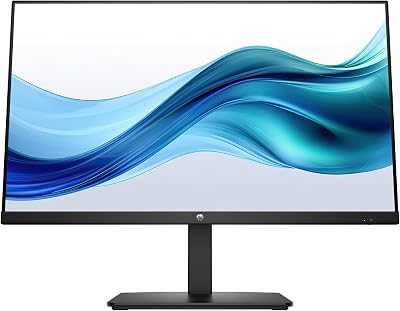
4. ASUS TUF Gaming VG32VQ1B — Best Budget 32-Inch 1440p
The argument for 1440p at 32 inches is straightforward: you get a larger, more immersive screen than a 27-inch while remaining GPU-friendly. A mid-range GPU like the RTX 4060 or RX 7700 XT can push 1440p at 144+ FPS in most titles — a claim that becomes much harder at 4K.
The VG32VQ1B makes the case well. Its VA panel delivers a 3,000:1 native contrast ratio, which means black scenes look genuinely dark without requiring local dimming. The slight curve (1500R) adds to immersion without distortion at normal viewing distances.
- Resolution & PPI: 1440p at 92 PPI — visible pixel structure up close, fine at 65–80 cm
- Panel type: VA, 1500R curved
- SDR brightness: ~400 nits — solid for a budget-tier panel
- HDR brightness: ~550 nits peak (DisplayHDR 400)
- Refresh rate: 170Hz with FreeSync Premium and G-Sync Compatible
- Response time: 1ms MPRT
- Notable features: 3,000:1 contrast ratio, 125% sRGB coverage, Shadow Boost (enhances visibility in dark areas), ELMB Sync (motion blur reduction + VRR simultaneously)
ELMB Sync is worth calling out specifically — most monitors require you to choose between backlight strobe (for motion blur reduction) and VRR. ASUS’s ELMB Sync runs both together, which is useful in competitive games where you want both tear-free frames and crisp motion.
Best for: Mid-range GPU owners, competitive gamers who want immersion, budget-conscious buyers.
5. MSI MAG323CR — Best Budget Curved 32-Inch
MSI MAG323CR
The MAG323CR is the most affordable 32-inch monitor on this list and makes a compelling case at its price point. The tighter 1500R curve feels engaging for single-player gaming and racing sims, and the VA panel delivers strong contrast that punches above the budget tier.
- Resolution & PPI: 1440p at 92 PPI
- Panel type: VA, 1500R curved
- SDR brightness: ~300 nits typical — adequate for controlled-light environments
- HDR brightness: ~400 nits peak (DisplayHDR 400)
- Refresh rate: 180Hz — highest on this list, strong for competitive play
- Response time: 1ms MPRT
- Notable features: 5,000:1 static contrast ratio (spec), FreeSync Premium, Night Vision mode for dark game areas, 2× HDMI 2.0 + DisplayPort 1.2
The 180Hz refresh rate is the headline spec, though in practice the difference between 170Hz and 180Hz is imperceptible. What matters more is the VA panel’s contrast — dark scenes in horror games, space sims, and night environments look substantially better on VA than a budget IPS. The lower price versus the ASUS TUF comes with a slight HDR downgrade and a more basic feature set, but as a primary gaming monitor it delivers strong fundamentals.
Best for: Entry-level buyers, immersive single-player gaming, racing and flight sim players.
4K vs. 1440p at 32 Inches — Which Resolution Makes More Sense?
This is the most important decision when shopping at 32 inches, and the answer depends almost entirely on your GPU.
Choose 4K if:
- You own an RTX 4080, RTX 4090, RX 7900 XT/XTX, or equivalent
- You play graphically rich single-player games where visual fidelity matters more than frame rate
- You also use the monitor for content creation, where 4K workspace real estate is valuable
- You’re connecting a PS5 or Xbox Series X, which output 4K natively
Choose 1440p if:
- Your GPU is RTX 4060 Ti, RTX 4070, RX 7700 XT, or below
- You primarily play competitive titles (CS2, Valorant, Apex, Overwatch 2) where high frame rates matter more than resolution
- You’re budget-conscious — the best 1440p 32-inch monitors cost $100–$300 less than comparable 4K options
At 1440p and 32 inches, the pixel density (92 PPI) is noticeably softer than 4K if you sit close. Keep viewing distance at 65 cm or more and it becomes a non-issue in motion. At 4K and 32 inches, you’re getting the best pixel density available at this size — better than a 27-inch 4K monitor for most desktop gaming distances.
GPU Requirements for 32-Inch 4K Gaming
Running 4K at 144Hz or higher requires substantial GPU horsepower. Here’s a realistic breakdown:

- RTX 4090 / RX 7900 XTX — 4K 144Hz+ in demanding titles (Cyberpunk, Alan Wake 2) with DLSS/FSR quality mode. The only cards that do this comfortably.
- RTX 4080 Super / RX 7900 XT — 4K 100–120Hz in most titles; some will need DLSS Performance mode. Strong performers at 4K.
- RTX 4070 Ti Super / RX 7800 XT — 4K 60–80Hz native in demanding games; DLSS/FSR Quality mode pushes this to 100+ Hz effectively.
- RTX 4070 / RX 7700 XT and below — These GPUs are better matched with 1440p at 32 inches. You’ll run 4K at acceptable frame rates in less demanding games, but competitive titles and AAA open-world games will feel sluggish at 4K Ultra settings.
DLSS 4 (Nvidia) and FSR 4 (AMD) have matured significantly — quality-mode upscaling from 1440p to 4K is nearly indistinguishable from native 4K on a monitor of this size. If you’re on an RTX 4070 Ti or similar, 4K with DLSS Quality is a legitimate option.
VA vs. IPS vs. Mini-LED at 32 Inches — Panel Comparison
| Characteristic | VA | IPS | Mini-LED (VA base) |
|---|---|---|---|
| Contrast ratio | 3,000:1–5,000:1 | 1,000:1 | Effective 10,000:1+ with dimming |
| Color accuracy | Good (90–95% sRGB) | Excellent (95–100% sRGB, DCI-P3) | Good to excellent |
| Motion clarity | Moderate (black smear risk) | Best (consistent response) | Moderate (same VA base) |
| HDR performance | Good (high native contrast) | Moderate (limited by contrast) | Excellent (local dimming + high nits) |
| Price | Lowest | Mid | Highest |
| Best use case | Dark-room immersive gaming | Competitive gaming, creative work | HDR enthusiasts, cinematic gaming |
IPS remains the best all-rounder for competitive play — its consistent pixel response across the full gray-to-gray range means no black smearing in dark fast-moving scenes. VA wins on contrast and price, making it the better choice if you game in a dark room and care about atmosphere over competitive edge. Mini-LED is the premium option that partially closes the gap between VA contrast and IPS motion clarity, with the added benefit of serious HDR performance.
Conclusion — Which 32-Inch Monitor Should You Buy?
The Samsung Odyssey Neo G7 is the best 32-inch gaming monitor available if HDR is a priority and you play in a controlled-light environment. Its 2,000-zone Mini-LED backlight is genuinely transformative in the right titles.
For pure color accuracy and dual-use creative work, the LG 32GQ950-B is the professional-grade choice — factory-calibrated, G-Sync Ultimate, and USB-C charged.
If budget is the primary filter, the Gigabyte M32U delivers 4K at 32 inches with best-in-class connectivity (KVM, USB-C 90W, HDMI 2.1) for $150–$250 less than the competition.
Going 1440p? The ASUS TUF VG32VQ1B is the better all-rounder with ELMB Sync and stronger build quality, while the MSI MAG323CR is the pick if you want the lowest price of entry to curved 32-inch gaming.
At 32 inches, you’re in the size range where gaming stops being something you look at and starts being something you’re inside. The right monitor here doesn’t just display your games — it frames them.
Related Articles
Looking for more on this topic? Browse the hand-picked guides below — each one applies the same scoring rubric used in this review.
Frequently Asked Questions
What is the best gaming monitor 32 inch in 2026?
The best gaming monitor 32 inch depends on your budget and how you plan to use it. The options compared above are our top-rated picks based on real customer ratings, build quality, and overall value — start with the highest-rated model that fits your budget.
How much should I expect to spend on a gaming monitor 32 inch?
Prices vary by brand and features. Budget options cover the essentials, while mid-range and premium models add durability, performance, and extra features. Compare the prices in the list above to find the best value for your needs.
What should I look for when buying a gaming monitor 32 inch?
Focus on what matters most for your use case — build quality, compatibility, performance, warranty, and verified customer reviews. Every pick above is selected to balance these factors.
Are budget gaming monitor 32 inch options worth it?
Yes. For most people a well-reviewed budget or mid-range gaming monitor 32 inch delivers excellent value. You only need to spend more if you specifically require premium materials or top-tier performance.
How did we choose these gaming monitor 32 inch picks?
We compare current Amazon ratings, review counts, key features, and price to surface the options with the best real-world value. The list is refreshed as ratings and availability change.