🛒 Best Price Today on Amazon
Prime members get fast, free shipping on everything above, plus member-only deals. New members get a 30-day free trial — cancel anytime.
- Top Sim Racing Cockpit Setup Ideas Picks for 2026
- Why Sim Racing Cockpits Are Trending in 2026
- Design Philosophy: Geometry First, Aesthetic Second
- At-a-Glance Cockpit Blueprint
- The Seven Components That Define a Curated 2026 Cockpit
- Build and Arrangement Tips
- Budget Breakdown
- FAQ
- Final Verdict
- Related Guides
- Related Guides
- Frequently Asked Questions
- Related Articles
- Related Guides
Top Sim Racing Cockpit Setup Ideas Picks for 2026
Here are our current top sim racing cockpit setup ideas picks, compared on real Amazon owner reviews, price, and features. Live prices update below.
As an Amazon Associate we earn from qualifying purchases at no extra cost to you.



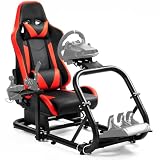
![Racing Simulator Cockpit Stand with Elite Series Racing Seats for Logitech/Thrustmaster/Fanatec G29 G920 G923 T80 T300,djustable Steering Wheel Stand,Not Included Wheel,Pedals & Shifter [xbox]](https://m.media-amazon.com/images/I/71f+qAdHoSL._SL400_.jpg)
Best Seller
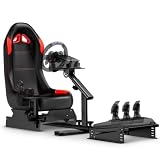
Racing Simulator Cockpit Stand with Elite Series Racing Seats for Logitech/Thrustmaster/Fanatec G29 G920 G923 T80 T300,djustable Steering Wheel Stand,Not Included Wheel,Pedals & Shifter [xbox]
View on Amazon.com
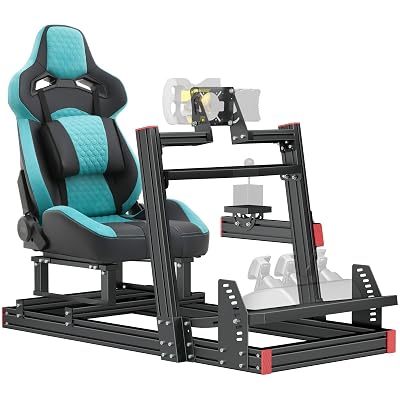

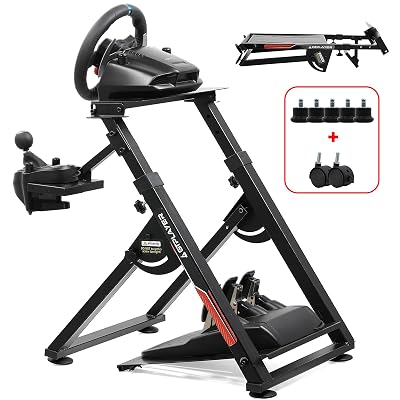
Racing Simulator Cockpit Stand with Elite Series Racing Seats for Logitech/Thrustmaster/Fanatec G29 G920 G923 T80 T300,djustable Steering Wheel Stand,Not Included Wheel,Pedals & Shifter [xbox]
View on Amazon.com

A sim racing cockpit is the most expensive aesthetic in PC gaming, and pretending otherwise is doing you a disservice. The first time you sit in a properly bolted-down aluminum-profile rig with a direct-drive wheel humming at 12 Nm of torque and a hydraulic brake pedal that needs 60 kg of force to lock the front tires, you understand the gap between this and a $300 wheel clamped to a desk. It is not a small gap. It is a different category of hobby. The setups we have compared for 2026 are the ones that close that gap honestly, where every component is chosen because it makes the next lap faster or the next stint more comfortable, and where the aesthetic of motorsport — anodized aluminum, motorsport-bucket leather, the geometry of a real GT3 driving position — is a side effect of building the thing correctly rather than the goal of it.
This guide is the curated version of every cockpit we have driven this year, ranked by what they actually do on track. We are not here to sell you the most expensive rig in the catalog. We are here to tell you which combination of chassis, wheel base, pedals, and seat gives you the most simulator per dollar, what to skip, and where the real diminishing returns kick in. If you came expecting a $5000 budget number you will not be disappointed — serious sim racing costs serious money — but you will leave knowing exactly where each dollar is going and why.
Why Sim Racing Cockpits Are Trending in 2026
Two things happened in the last eighteen months. First, direct-drive wheel bases dropped below $1000 in entry tiers from Moza, Fanatec, and Asetek, which means the technology that used to define a $3000 rig is now the starting point of a $1500 rig. Second, esports leagues — iRacing, Le Mans Virtual, F1 Sim Racing World Championship — finally got mainstream broadcast coverage and turned cockpit photos into a recognized social aesthetic. The result is that people who two years ago would have bought a chair and a wheel are now building dedicated rooms with aluminum-profile chassis, triple monitors on side-by-side stands, and motion-cancelling bass shakers under the seat. The hobby grew up, and the gear grew with it.
What this means for the buyer is that 2026 is the first year the math actually works. A $2200 rig today drives like a $4500 rig from 2022. Belt-drive wheels are gone from the recommended list. Plastic pedals with springs are gone from the recommended list. The floor of what counts as a serious cockpit has risen sharply, and that floor is now the natural starting point for anyone who wants to take sim racing past the casual stage.
Design Philosophy: Geometry First, Aesthetic Second
The visual identity of a sim racing cockpit — anodized black aluminum, red or grey motorsport-pattern Alcantara, exposed bolts and clean cable runs — comes from copying the construction logic of real race cars. Aluminum profile (typically 40×80 mm extrusion) is the chassis material because it is stiff, modular, and doesn’t flex under direct-drive torque. A bucket seat with deep bolsters keeps you locked in place during long stints. The pedal set sits at the same angle and distance as a GT3 cockpit so your muscle memory transfers if you ever get into a real car. None of this is decoration. The look of the rig is what happens when you build a rig that actually works.
If you want this aesthetic to land, three rules matter. One, do not mix consumer-grade plastic with aluminum profile — a Logitech G29 bolted to a Sim-Lab chassis looks wrong because the components are from different worlds. Two, run cables inside the profile channels using T-slot covers, not zip ties along the outside. Three, the monitor stand is part of the rig, not a separate desk shoved against it. Triple monitors mounted on the cockpit’s own monitor arm move with the chassis if you ever shift it, and they sit at the exact eye height the seat was designed for. Skip the monitor stand and the entire visual collapses.
Things to avoid: RGB everything (a few subtle accent strips are fine, a Christmas tree is not), wheel rims that don’t match the discipline you race (a thick F1-style rim on a GT3-only sim looks confused), and any attempt to put the rig on carpet without a hard mat. Carpet absorbs torque and slowly rotates the entire chassis over a long session. A rubber gym mat or a sheet of MDF underneath solves it.
At-a-Glance Cockpit Blueprint
| Category | Curated Pick | Price Tier | Why It Made the List |
|---|---|---|---|
| Chassis | Sim-Lab GT1 PRO | $$$ | Stiffest sub-$1000 aluminum profile rig, GT and F1 seating positions |
| Wheel Base | Fanatec ClubSport DD+ | $$$$ | 12 Nm direct drive, mature firmware, swappable rims |
| Rim | Fanatec Formula V2.5 X | $$$ | Carbon back plate, OLED, magnetic shifters |
| Pedals | Heusinkveld Sprint | $$$$ | Hydraulic damper, load cell brake, the reference set |
| Seat | Sparco-style bucket on slider | $$$ | Bolsters lock you in during long stints |
| Display | Triple 32" 1440p curved | $$$$ | Wraparound peripheral vision matches real cockpit FOV |
| Accent | Buttkicker Gamer Pro | $$ | Tactile bass shaker, transforms immersion |
The Seven Components That Define a Curated 2026 Cockpit
1. Sim-Lab GT1 PRO Aluminum Profile Chassis
The GT1 PRO is the chassis we keep coming back to because it does the boring things right. The 40×80 mm profile is genuinely stiff under a 12 Nm direct-drive base, the pedal plate doesn’t flex when you brake on the Heusinkveld set, and the bolt-down points are where you need them for both GT3 and F1 seating positions. We have driven cockpits twice this price that flex more under load. The fit-and-finish of the powder coat is the giveaway — Sim-Lab finishes the profile to a uniform matte black that survives a year of cable changes and pedal swaps without showing wear, and the laser-cut brackets are deburred so you don’t slice a finger every time you reach behind the seat to plug something in.
Where it matters: the front pedal plate is height-adjustable through three positions so you can dial in proper heel-toe geometry, and the wheel deck angle is adjustable through a wide range so you can run the wheel anywhere from a 12-degree GT3 angle to a near-vertical F1 angle. The seat slider is the same one Sparco specifies on their road-car bucket seats, which means it accepts standard motorsport seats without an adapter. Alternatives include the Trak Racer TR8 Pro (slightly cheaper, less rigid under hard braking) and the Sim-Lab P1-X (more expensive, F1-focused, harder to swap to GT layout). For a curated build that needs to handle both disciplines, the GT1 PRO is the answer.
2. Fanatec ClubSport DD+ Wheel Base
Direct drive is the dividing line in sim racing. Below it, you are simulating force feedback. At it, you are feeling the actual physics. The ClubSport DD+ delivers 12 Nm of peak torque, which is enough to genuinely fight you out of a high-speed corner and let you feel the front tires bite as load transfers under braking. The reason we keep recommending it over cheaper 12 Nm options is firmware maturity — Fanatec’s driver stack has been refined for years and handles edge cases (sudden disconnects, sim updates, rim hot-swaps) without the random oscillation issues we still see on newer entrants. The quick-release is metal, not plastic, which matters when you are swapping a Formula rim for a GT rim midway through a session.
The compatibility footprint is the other reason this is the curated pick. The DD+ works with PC, PlayStation, and Xbox, which protects your investment if you ever want to race on console-locked titles like Gran Turismo. Moza’s R12 is competitive on raw specs and slightly cheaper, but the rim ecosystem is smaller and the console story is non-existent. Asetek’s La Prima is brilliantly built but priced higher with a narrower software footprint. For a 2026 cockpit that needs to last five years through multiple sim updates, the DD+ is the safe and correct choice.
3. Fanatec Formula V2.5 X Wheel Rim
The wheel rim is where personal taste enters the picture, and the Formula V2.5 X is the rim we recommend when someone wants one rim that handles everything from open-wheel cars to GT3 endurance racing. The carbon-fiber back plate, full OLED telemetry display, and magnetic shifter paddles are objectively the right tech, and the diameter (300 mm) is a workable compromise between true F1 dimensions (290 mm) and GT proportions (330 mm). Magnetic paddles in particular are addictive — the click is consistent across millions of cycles and never softens the way mechanical microswitches do after a year of hard use.
If you race exclusively GT3 and endurance prototypes, the Cube Controls Formula Pro Touch is the more accurate visual match and the touchscreen UI is genuinely useful for switching brake bias mid-stint. If you race exclusively F1-style open wheelers, the Fanatec F1 Esports V2 is the dedicated choice. For a single rim that disappears into whatever discipline you’re racing this weekend, the V2.5 X is the curated answer.
4. Heusinkveld Sprint Hydraulic Pedals
This is the component that changes the game more than any other upgrade, and it is the one most people resist because pedals do not look exciting in a photo. The Sprint set uses a hydraulic damper on the brake pedal, calibrated to require around 60 kg of force at full lock, which is roughly what a real GT3 brake feels like. After three weeks on Heusinkveld pedals you will brake later, more consistently, and with better trail-braking modulation than you ever did on a spring-loaded set. The throttle has a progressive curve that lets you feel the bite point on corner exit, and the clutch — if you spec it for manual shifting in road cars — has a real cable-actuated feel rather than the on-off behavior of cheap pedals.
The build is overengineered in the right ways. The base plate is machined aluminum, the pedal arms are forged, and the mounting holes line up exactly with Sim-Lab’s pedal deck without an adapter. Fanatec’s ClubSport V3 with the brake performance kit gets you eighty percent of the way for half the price, and Moza’s CRP is a credible budget alternative. But for a cockpit that aspires to be a tool rather than a toy, the Sprint is the reference. Skip it now and you will buy it within a year anyway.
5. Sparco-Style Motorsport Bucket Seat
The seat is the component that gets neglected most and matters most for stint length. A proper motorsport bucket with deep side bolsters locks your hips in place so you stop bracing against the wheel under cornering load, which means your steering inputs get smoother and your lap times get more consistent over a two-hour stint. The Sparco-style bucket we recommend is FIA-pattern shaped (not literally FIA-certified — that adds zero value for sim use) with a reclining back angle so you can dial in either GT3 upright posture or F1 reclined posture depending on what you’re racing.
Materials matter more than they look like they should. The Alcantara-pattern center panels grip your race suit (or hoodie) so you do not slide around under load, while the leather bolsters wear evenly and clean up easily. Cheaper buckets use a single fabric and feel either grippy and hot or smooth and slippery. The two-fabric construction is the giveaway between a serious seat and a costume. Mount it on the Sim-Lab seat slider with M8 bolts, take fifteen minutes to dial in the angle, and you have the most important piece of comfort upgrade in the entire rig.
6. Triple 32-Inch 1440p Curved Monitor Stack
The triples-versus-VR debate is endless and we will return to it in the FAQ, but for a curated cockpit in 2026 our answer is triples. Three 32-inch 1440p curved panels (1500R curve, 165 Hz, IPS for color) at the right angles give you a 180-degree wraparound field of view that matches the peripheral awareness a real driver has, which is the part most people underestimate. You see cars on your inside line earlier, you place the car at corner apex more accurately because you can see the kerb in your peripheral vision, and you do not get the motion sickness some people get in long VR stints.
The trick with triples is the mounting and the bezel angle. Mount the monitors on a triple-monitor stand that bolts directly to the cockpit chassis, set the side panels at a 45-degree inward angle from the center, and set the sim’s field of view to match the actual geometry. Get this right and the world wraps around you in a way that no flat-screen single panel ever achieves. Get it wrong (panels too flat, FOV too wide) and triples will feel weirder than a single screen. The 32-inch size is the sweet spot — 27-inch panels leave too much bezel in your peripheral vision, 49-inch ultrawides force a compromise on FOV math.
7. Buttkicker Gamer Pro Tactile Transducer
The bass shaker is the cheapest upgrade in the rig with the highest perceived value. Bolt a Buttkicker Gamer Pro to the seat frame, wire it to the dedicated amp, and the rig now communicates road texture, kerb impacts, engine vibration, and tire lockup through your spine instead of through the speakers. For about $250 all-in, you add a dimension of feedback that genuinely changes how you race. You feel the front tires lock under heavy braking before you hear them. You feel the moment the rear steps out before the wheel tells you. You feel a kerb you clipped on the racing line without having to look.
The Gamer Pro mounts under the seat with the included bracket, draws its signal off a stereo splitter from the PC’s audio output, and runs through a small dedicated amp that lives somewhere under the rig. There is no software setup beyond a one-time level calibration. It is the most fire-and-forget upgrade in the entire cockpit, and the one that almost everyone overlooks when budgeting a serious build. Add it.
Build and Arrangement Tips
Build the chassis on the floor before you move it to its final position. Aluminum profile rigs go together quickly with the right hex keys and the right sequence, and assembling on the floor lets you torque the bolts properly without fighting gravity. Once the chassis is together, move it to the room and then bolt on the seat, pedal plate, and wheel deck in that order. The cables — base power, USB to PC, pedal USB, button box USB, monitor stand power — should run inside the profile channels using slide-in T-slot covers. This takes an extra hour during the build and saves you from looking at zip-tied spaghetti for the next five years.
Position the rig so that the monitors face away from windows (sun glare on a 32-inch panel is unforgivable in the afternoon) and so that there is at least 60 cm of clearance behind the seat for stand-up exits between stints. The PC tower goes under the monitor stand, not on the rig itself, because PC fans transmit vibration into the chassis and you do not want that. Run a dedicated power strip for the rig — wheel base, monitor amp, Buttkicker amp, monitors, PC — and put it on a switched plug so you can power down the whole assembly with one switch when you walk away.
Lighting matters more than people think. A single low-temperature (3000 K) bias light behind the center monitor reduces eye fatigue over long stints and prevents the cinema-room cave look that destroys the daytime usability of the room. Skip the RGB strips around the monitor backs unless you actually like that aesthetic; for a curated motorsport-look rig, a single warm bias light reads more correctly than a rainbow.
Budget Breakdown
Entry tier ($1500-2200): Trak Racer TR8 Pro chassis, Moza R5 wheel base with Formula rim, Moza CRP three-pedal set, basic Sparco-style bucket, single 49-inch ultrawide monitor on a separate desk stand. This is the floor of what counts as a serious cockpit in 2026 and it drives genuinely well. You will outgrow the wheel base first.
Mid tier ($2800-4500): Sim-Lab GT1 PRO chassis, Fanatec ClubSport DD+ wheel base, Formula V2.5 X rim, Fanatec ClubSport V3 pedals with brake performance kit, full motorsport bucket, triple 27-inch 1440p monitor stack, Buttkicker Gamer Pro. This is where the curated build naturally sits and where the cost-per-driven-mile starts dropping rapidly.
Premium tier ($6000-9000): Sim-Lab P1-X or GT1 PRO chassis, Asetek La Prima or Fanatec Podium wheel base, dual-rim setup (Formula + GT), Heusinkveld Sprint hydraulic pedals, FIA-pattern carbon bucket, triple 32-inch 1440p curved monitor stack with custom stand, Buttkicker Gamer Pro x2, dedicated handbrake and sequential shifter. At this tier you are in real-driving-school territory and the bottleneck is your seat time, not your gear.
FAQ
Are triple monitors better than VR for sim racing? For most people, yes, with caveats. Triples give you a wider effective field of view, no motion sickness over long stints, and the ability to glance at telemetry overlays without removing a headset. VR (specifically Pimax Crystal Super or Varjo Aero) gives you stronger depth perception in corner apex placement and a more total immersion. For league racing where stints can run two hours, triples win on practicality. For one-hour hot-lap sessions where pure immersion matters, VR wins.
Do I really need a direct-drive wheel base? If you are racing more than two hours a week and want to improve, yes. Belt-driven wheels filter out the feedback you need to read the front tires under load, and gear-driven wheels add notchiness that hides what the car is doing. Direct drive is the boundary between the wheel telling you what is happening and the wheel guessing at it. In 2026 the entry price has dropped enough that there is no real reason to start anywhere else.
How loud is a serious cockpit? Quieter than people expect. The wheel base produces almost no sound (direct-drive motors are silent), the pedals click softly under your feet, and the monitors are passive. The Buttkicker shaker produces low-frequency rumble that you feel more than hear. Total ambient noise is comparable to a desktop PC. The neighbors will not complain.
How long does a build take? A first-time build of a Sim-Lab GT1 PRO with full gear takes a full Saturday — six to eight hours including cable management. A second build on the same chassis takes three hours. The hardest part is not the chassis assembly, which is well-documented; it is the cable routing inside the profile channels, which is fiddly and takes time to get clean.
Final Verdict
The curated cockpit for 2026 is built on the Sim-Lab GT1 PRO chassis with a Fanatec ClubSport DD+ wheel base, Heusinkveld Sprint pedals, a real motorsport bucket, and a triple 32-inch 1440p monitor stack mounted on the chassis itself. That combination, with a Buttkicker Gamer Pro for tactile feedback, is the rig that delivers the most simulator per dollar at the mid-to-premium tier and the one you will not feel the need to replace for at least five years. If you have to pick a single anchor product to start the build around, pick the chassis — every other component bolts to it, and the GT1 PRO is the platform that scales cleanly from your first $2200 setup into a $6000 endgame rig without ever forcing a chassis swap.
Related curated guides on GamingPCGuru: Best F1 Sim Racing Wheel Gear 2026, Trending Racing Wheel Reviews, Best Gaming Chairs vs Motorsport Buckets 2026, Triple Monitor Setup Guide for Sim Racers, VR vs Triples for Sim Racing in 2026, PC Builds Tuned for iRacing and ACC, Aluminum Profile Cockpit Comparison.
Related Guides
- Best Chairs for Photo Editing in 2026
- UGREEN HDMI KVM 2 Monitor 2 PC Review: 4K + USB 3.0
- Thermaltake LCGS Versa i1460S Review: RTX 5060 PC (2026)
- Best Webcam Mounts in 2026
Frequently Asked Questions
Is a direct drive wheel worth it over a belt-driven wheel?
Direct drive removes the belts and gears between motor and wheel, so you feel tire slip, kerbs, and weight transfer with far more detail and no dead zone around center. Entry-level 5 to 8Nm units are now affordable and pair with aluminum profile rigs. Belt wheels remain fine for casual racing on a desk.
How much torque do I actually need from a direct drive base?
Most drivers run their wheels well below maximum anyway. A 5 to 8Nm base is plenty for open-wheel and GT cars and is safe on a rigid desk mount. 12 to 15Nm units only make sense on a stiff aluminum profile cockpit, since a flexing frame turns extra torque into vibration rather than usable detail.
Does a triple-monitor setup beat a single ultrawide?
Triples give true peripheral vision, which helps enormously with apex placement and side-by-side racing, and the angled side panels reproduce correct geometry when the field of view is configured properly. An ultrawide is simpler, has no bezels, and suits smaller rooms, but it compresses side awareness and cannot match triples for spatial judgment.
Do I need load cell pedals or are potentiometer pedals fine?
Load cell brakes measure pressure rather than travel, which matches how real brakes behave and makes threshold braking repeatable through muscle memory. This is the single largest consistency gain in sim racing, usually worth more lap time than a wheel upgrade. Potentiometer pedals are workable for arcade titles but limit precision under trail braking.
Is aluminum profile better than a folding cockpit?
Aluminum profile rigs resist flex under a high-torque base and let you bolt on shifters, handbrakes, buttboxes, and motion later, which makes them the long-term choice. Folding cockpits store away and cost far less, but they twist noticeably above roughly 8Nm and require re-adjusting your seating position each session.