- Top Pick: Ray Tracing Gems: High-Quality and Real-Time Rendering with DXR and Other APIs
- Best Value: Ray Tracing Gems II: Next Generation Real-Time Rendering with DXR, Vulkan, and OptiX
- Premium Choice: ASRock Radeon RX 9070 Challenger 16GB OC Graphics Card, RDNA 4, 2520MHz Boost, 16GB GDDR6 256-bit, PCIe 5.0, Triple Fans, 0dB Silent, LED Indicator
Ray tracing has gone from a showcase feature to something many of the biggest games now lean on heavily, and the GPU you choose decides whether those reflections, shadows and global-illumination effects run beautifully or crawl. What separates a true ray tracing card is the combination of dedicated RT hardware to accelerate the ray maths, AI upscaling and frame generation (NVIDIA’s DLSS or AMD’s FSR) to claw back the performance ray tracing costs, and enough VRAM to hold the larger frame buffers heavy RT and high textures demand. This guide rounds up the best ray tracing GPUs in 2026 across the range people actually shop for, from sensible mainstream RTX cards to a flagship and a workstation-class option.
- Best Ray Tracing GPUs at a Glance
- 1. ASUS Prime GeForce RTX 5080 OC Edition 16GB GDDR7
- 2. GIGABYTE Radeon RX 9060 XT Gaming OC 16G, PCIe 5.0
- 3. MSI Gaming GeForce RTX 3060 12GB GDDR6, PCIe 4
- 4. ASUS Dual GeForce RTX 3060 12GB GDDR6 LHR, RGB
- 5. MSI Gaming GeForce RTX 4060 8GB GDDR6, HDMI/DP
- 6. NVIDIA RTX PRO 4000 SFF Blackwell 24GB GDDR7 ECC, PCIe 5.0
- How to Choose a Ray Tracing GPU
- Frequently Asked Questions
- Related Guides
- Related Articles
Our picks were chosen on what genuinely drives ray tracing: the generation and quantity of RT cores, support for the latest DLSS or FSR frame generation, and the VRAM on board, alongside overall value. We have included a deliberate spread — from a mainstream card around $371 up to a workstation-class board above $2,000 — and we are honest about where each fits, because the best ray tracing GPU is the one matched to your resolution, your games and your budget. Below you will find an at-a-glance comparison of all six, then a closer look at each card and a buyer’s guide built around RT cores, upscaling and memory — the things that actually matter when ray tracing is the priority.
As an Amazon Associate we earn from qualifying purchases at no extra cost to you.







🛒 Best Price Today on Amazon
Prime members get fast, free shipping on everything above, plus member-only deals. New members get a 30-day free trial — cancel anytime.
Best Ray Tracing GPUs at a Glance
| Graphics Card | Best For | Standout Spec | Approx Price |
|---|---|---|---|
| ASUS Prime RTX 5080 OC 16GB | Flagship ray tracing | Latest-gen RTX, 16GB GDDR7 | around $1,499 |
| GIGABYTE Radeon RX 9060 XT Gaming OC 16G | 16GB AMD value RT | 16GB GDDR6, FSR, PCIe 5.0 | around $459 |
| MSI GeForce RTX 3060 12GB | Affordable RT + 12GB VRAM | 12GB GDDR6, RT cores, DLSS | around $399 |
| ASUS Dual RTX 3060 12GB LHR | Compact 12GB RT card | 12GB GDDR6, dual-fan, RGB | around $399 |
| MSI GeForce RTX 4060 8GB | Efficient DLSS 3 entry | DLSS 3 Frame Gen, low power | around $371 |
| NVIDIA RTX PRO 4000 SFF Blackwell 24GB | Workstation / pro RT | 24GB GDDR7 ECC, SFF, low-profile | around $2,049 |
1. ASUS Prime GeForce RTX 5080 OC Edition 16GB GDDR7

The ASUS Prime RTX 5080 OC is the flagship ray tracing pick of this list and the card to reach for if you want the strongest RT experience here. It is built on NVIDIA’s latest RTX architecture with current-generation RT cores, 16GB of fast GDDR7 memory, and support for the newest DLSS frame-generation technology, all under ASUS’s triple-fan Prime cooler. At around $1,499 it is the premium, no-compromise option for demanding ray tracing.
This is the card for the gamer chasing high-resolution, fully ray-traced or path-traced visuals with the headroom to keep them smooth. The latest-gen RT cores accelerate the heaviest ray tracing workloads, the 16GB of GDDR7 gives ample room for large RT frame buffers and high-resolution textures, and modern DLSS frame generation is exactly the tool that makes maxed-out ray tracing playable at high resolutions. If your goal is the best ray tracing this list offers and budget is secondary, the RTX 5080 is the obvious flagship choice.
Pros: Latest-gen RTX RT cores, 16GB GDDR7, newest DLSS frame generation, triple-fan cooling.
Cons: Highest gaming-card price here; demands a strong PSU and case clearance.
2. GIGABYTE Radeon RX 9060 XT Gaming OC 16G, PCIe 5.0
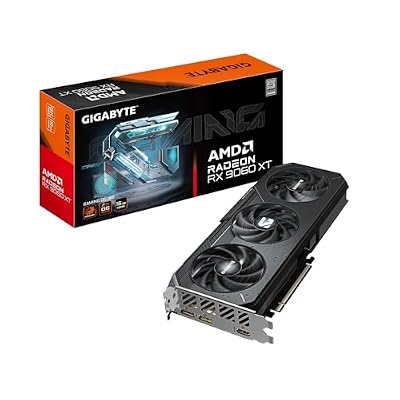
GIGABYTE Radeon RX 9060 XT Gaming OC 16G Graphics Card, PCIe 5.0, 16GB GDDR6, GV-R9060XTGAMING OC-16GD Video Card



As an Amazon Associate we earn from qualifying purchases. Product prices and availability are accurate as of the date/time indicated.
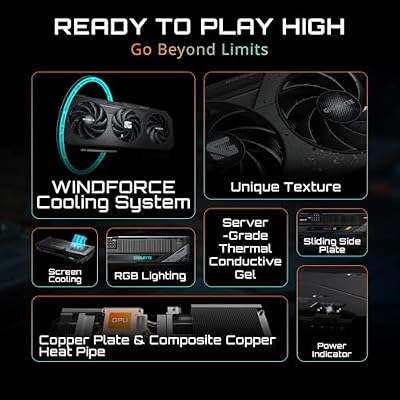
The GIGABYTE Radeon RX 9060 XT Gaming OC is the AMD value pick for ray tracing, and the only Radeon card on the list. It pairs a current-generation Radeon GPU with a generous 16GB of GDDR6 over a PCIe 5.0 interface, AMD’s ray-accelerator hardware, and support for FSR upscaling and frame generation, all under a Gaming OC triple-fan cooler. At around $459 it is a compelling 16GB option for ray-traced gaming on a sensible budget.
This is the card for the gamer who wants modern ray tracing with plenty of VRAM without paying flagship prices, and who prefers the AMD ecosystem. The 16GB frame buffer is a real strength for ray tracing and high textures at 1080p and 1440p, FSR frame generation helps recover the performance ray tracing costs, and the Gaming OC cooling keeps it running quietly. While NVIDIA’s RT cores still tend to lead in the heaviest path-traced titles, the RX 9060 XT’s 16GB and value make it a smart mainstream ray tracing buy.
Pros: Generous 16GB GDDR6, modern Radeon ray accelerators, FSR frame generation, PCIe 5.0, strong value.
Cons: AMD RT typically trails NVIDIA in the heaviest path-traced games.
3. MSI Gaming GeForce RTX 3060 12GB GDDR6, PCIe 4

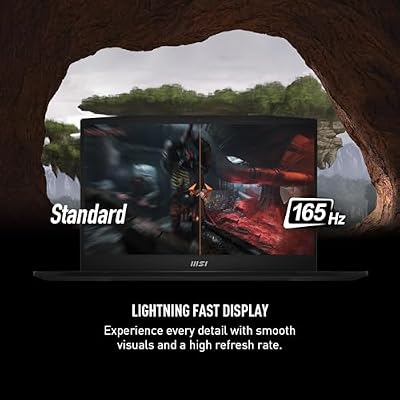
msi Katana 15 15.6” 165Hz QHD Gaming Laptop: Intel Core i7-13620H, NVIDIA Geforce RTX 4070, 16GB DDR5, 1TB NVMe SSD, Cooler Boost 5, Win 11: Black B13VGK-2000US



As an Amazon Associate we earn from qualifying purchases. Product prices and availability are accurate as of the date/time indicated.
The MSI Gaming RTX 3060 12GB is the affordable RT pick with standout VRAM. It pairs NVIDIA’s second-generation RT cores with a notably generous 12GB of GDDR6 on a 192-bit bus, plus DLSS support, all under MSI’s dual Torx fan cooler. At around $399 it remains a popular way to get genuine ray tracing hardware backed by more memory than many pricier cards offer.
This is the card for the 1080p gamer who wants to enable ray tracing without overspending, and who values VRAM headroom. The RT cores let you turn on ray-traced effects in supported games, DLSS helps recover the frame rate that ray tracing consumes, and the 12GB buffer is comfortably more than the 8GB on many rivals — useful for RT frame buffers and high textures. For accessible ray tracing with room to spare on memory, the RTX 3060 12GB is a sensible, well-rounded pick.
Pros: Second-gen RT cores, generous 12GB GDDR6, DLSS support, dual-fan cooling, fair price.
Cons: Older architecture; lacks the newest DLSS frame-generation features.
4. ASUS Dual GeForce RTX 3060 12GB GDDR6 LHR, RGB

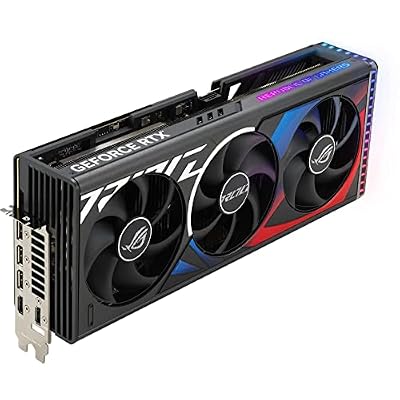
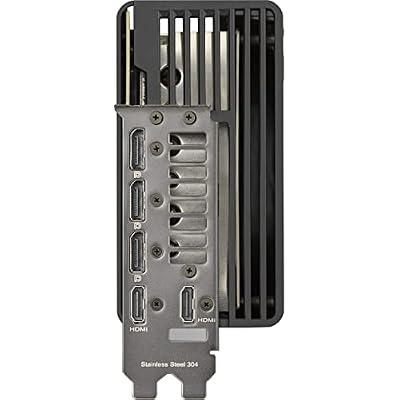
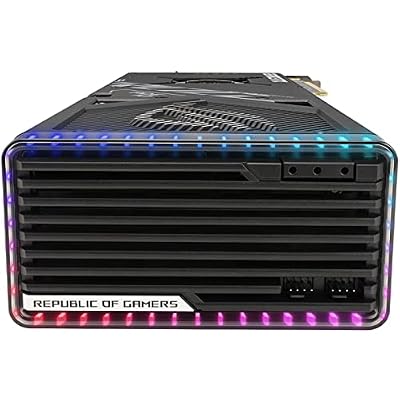
ASUS ROG Strix GeForce RTX 4090 OC Edition Gaming Graphics Card (PCIe 4.0, 24GB GDDR6X, HDMI 2.1a, DisplayPort 1.4a), 3 Year Warranty



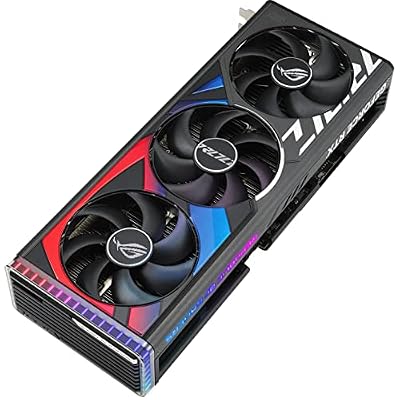

As an Amazon Associate we earn from qualifying purchases. Product prices and availability are accurate as of the date/time indicated.
The ASUS Dual RTX 3060 12GB is the compact, understated take on the same capable 12GB RT platform. It uses the same RTX 3060 GPU with second-generation RT cores, 12GB of GDDR6 and DLSS support, wrapped in ASUS’s short, dual-fan Dual cooler with a touch of RGB. It is a clean, space-conscious card for smaller builds, and a strong alternative to the MSI model at a similar tier.
This is the pick for the builder who wants accessible ray tracing and 12GB of VRAM in a more compact card that fits tighter cases. The RT cores enable ray-traced effects in supported titles, DLSS offsets the performance hit, and the 12GB buffer gives welcome memory headroom for RT and high textures at 1080p. The dual-fan Dual cooler keeps things short and tidy. For a neat, 12GB ray tracing card that slots cleanly into a mainstream gaming PC, the ASUS Dual is a tidy choice.
Pros: Second-gen RT cores, 12GB GDDR6, DLSS, compact dual-fan design for smaller builds.
Cons: Same older architecture; no newest-gen frame generation.
5. MSI Gaming GeForce RTX 4060 8GB GDDR6, HDMI/DP

MSI GeForce RTX 4060 Ventus 2X Black 8G OC Gaming Graphics Card - 8GB GDDR6X, PCI Express Gen 4, 128-bit, 3X DP v 1.4a, HDMI 2.1a (Supports 4K & 8K HDR)

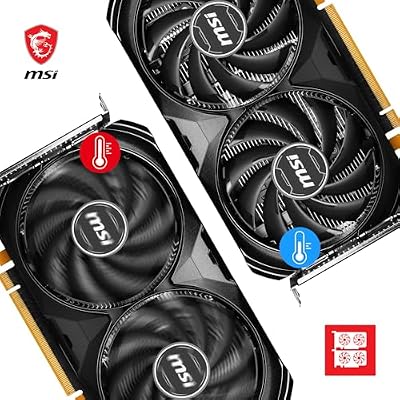
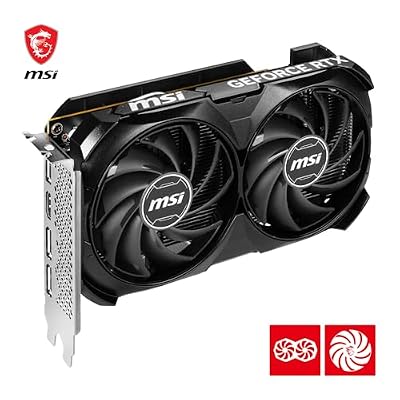


As an Amazon Associate we earn from qualifying purchases. Product prices and availability are accurate as of the date/time indicated.
The MSI Gaming RTX 4060 8GB is the efficient entry pick for modern ray tracing. It brings NVIDIA’s newer Ada-generation RT cores and, crucially, support for DLSS 3 Frame Generation — the AI feature that inserts generated frames to lift performance — in a low-power 8GB card. At around $371 it is the most affordable card here and a smart way to access current-generation RT features.
This is the card for the 1080p gamer who wants up-to-date ray tracing technology and excellent efficiency over raw memory capacity. The newer RT cores handle ray-traced effects well at 1080p, and DLSS 3 Frame Generation is the headline tool that makes ray tracing far more playable on a card in this class. The trade-off is the 8GB frame buffer, which is adequate at 1080p but tighter than the 12GB and 16GB cards here for the heaviest RT and texture loads. For efficient, modern entry-level ray tracing, the RTX 4060 fits well.
Pros: Newer Ada RT cores, DLSS 3 Frame Generation, very efficient, lowest price here.
Cons: Only 8GB VRAM — tight for heavy ray tracing and high-res textures.
6. NVIDIA RTX PRO 4000 SFF Blackwell 24GB GDDR7 ECC, PCIe 5.0

NVIDIA RTX PRO 4000 SFF Blackwell 24GB GDDR7 ECC - PCIe 5.0x8, 4X mDP 2.1b, Low-Profile Dual-Slot AI Workstation GPU Retail


As an Amazon Associate we earn from qualifying purchases. Product prices and availability are accurate as of the date/time indicated.
Rounding out the list is the NVIDIA RTX PRO 4000 SFF Blackwell, and it is important to be clear about what it is: a professional workstation card, not a gaming graphics card. It pairs latest-generation Blackwell RT cores with a huge 24GB of GDDR7 ECC memory in a small-form-factor, low-profile design over PCIe 5.0. At around $2,049 it is the most expensive board here and is built for pros, not players.
We include it because it is a genuine ray tracing powerhouse for the right user — but that user is a creator or professional, not a gamer chasing value. Its strengths are ray-traced rendering, 3D content creation, visualization and compute workloads, where the latest RT cores, the enormous 24GB ECC frame buffer and the compact low-profile form factor for small workstations all matter. For pure gaming you would get far more frames per dollar from the consumer RTX and Radeon cards above. Choose this only if your ray tracing is professional rendering and visualization rather than play.
Pros: Latest Blackwell RT cores, massive 24GB GDDR7 ECC, compact low-profile workstation form factor.
Cons: Workstation card, not a gaming GPU — poor value for gamers and priced accordingly.
How to Choose a Ray Tracing GPU
Start with the RT hardware itself, because ray tracing lives or dies on it. Dedicated RT cores accelerate the ray-intersection maths that ray tracing depends on, and newer generations handle it far more efficiently. The RTX 4060 and the RTX 5080 here use newer NVIDIA architectures, the RTX 3060 cards use an earlier RT generation, and the Radeon RX 9060 XT uses AMD’s ray accelerators. All can do ray tracing, but the newer and more numerous the RT cores, the better the heaviest path-traced games will run, so weigh the generation against the price.
Upscaling and frame generation are just as important as the RT cores, because ray tracing is expensive and these AI features are how you get the performance back. NVIDIA’s DLSS and AMD’s FSR render at a lower internal resolution and reconstruct a sharp image, while frame generation inserts additional frames to raise the frame rate. The RTX 4060’s DLSS 3 Frame Generation and the RX 9060 XT’s FSR are exactly the tools that make ray tracing playable in their class, so treat strong upscaling support as a core requirement, not a bonus.
VRAM is the third pillar, and it is easy to underestimate. Ray tracing and high-resolution textures both inflate the frame buffer, so a card can run out of memory before it runs out of raw power. That is why the 12GB on the RTX 3060 cards and the 16GB on the RX 9060 XT and RTX 5080 are genuine advantages, while the RTX 4060’s 8GB, though fine at 1080p, is tighter for heavy RT. Match your VRAM to your resolution and texture ambitions: more memory buys you longevity as games and ray tracing keep getting hungrier.
Finally, match the class of card to your goal and budget, and be honest about what you are buying. For mainstream 1080p ray tracing, the RTX 4060 or an RTX 3060 12GB make sense; for more headroom and VRAM, the RX 9060 XT; for flagship RT, the RTX 5080. The RTX PRO 4000 is a workstation card for professional rendering — superb at ray tracing, but the wrong tool for gaming value. Decide your resolution, prioritise RT-core generation, upscaling support and VRAM in that order, and pick the card on this list that fits how you actually game or create.
Frequently Asked Questions
What makes a GPU good at ray tracing?
Three things working together: dedicated RT cores that accelerate the ray maths, AI upscaling and frame generation (NVIDIA DLSS or AMD FSR) to recover the performance ray tracing costs, and enough VRAM to hold the larger frame buffers ray tracing and high textures need. A card strong in all three — newer RT cores, modern frame generation and ample memory — will handle ray tracing far better than one that leans on raw power alone.
How much VRAM do I need for ray tracing?
More than for the same game without ray tracing, because RT and high-resolution textures both enlarge the frame buffer. For 1080p the 8GB on the RTX 4060 is workable, but 12GB like the RTX 3060 cards or 16GB like the RX 9060 XT and RTX 5080 gives valuable headroom and future-proofing as games grow hungrier. If you plan to keep a card for years and push ray tracing hard, favour the cards with more memory.
Is the RTX PRO 4000 a good gaming card for ray tracing?
No — it is a professional workstation card, not a gaming GPU. It has excellent ray tracing hardware and a huge 24GB ECC frame buffer, which suits professional rendering, 3D content creation and visualization, but it is priced for pros and offers poor value for gaming. For ray-traced gaming you will get far more frames per dollar from the consumer RTX or Radeon cards on this list.
Do AMD Radeon cards do ray tracing as well as NVIDIA?
AMD Radeon cards like the RX 9060 XT include ray-accelerator hardware and support FSR upscaling and frame generation, so they handle ray tracing capably — especially at 1080p and 1440p, and with the bonus of a generous 16GB frame buffer here. In the heaviest path-traced titles NVIDIA’s RT cores and DLSS still tend to lead, so if maxed-out path tracing is your priority an RTX card has the edge, while the Radeon offers strong value and VRAM.
Related Guides
- Best GPUs for Gaming
- Best GPUs for 4K Gaming
- Best GPUs for 1440p Gaming
- Best Pre-Built Gaming PCs
- Best Power Supplies for Your GPU
- Best PC Cases for Airflow
Affiliate Disclosure: As an Amazon Associate, we earn from qualifying purchases. If you click a link and make a purchase, we may earn a small commission at no extra cost to you. Prices and availability are accurate as of publication and may change.