Affiliate disclosure: As an Amazon Associate we earn from qualifying purchases. This post contains affiliate links — if you buy through them we may earn a small commission at no extra cost to you. This never affects our recommendations.
As an Amazon Associate we earn from qualifying purchases at no extra cost to you.


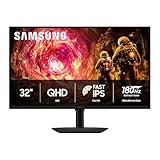


If you want a large-screen gaming monitor that handles everything — PC gaming, PlayStation 5, Xbox Series X, and creative work — a 32-inch 4K IPS panel is the sweet spot in 2026. At 32 inches, 4K resolution delivers 138 pixels per inch: sharp enough to read small text without scaling, detailed enough to see individual blades of grass in open-world titles, and far more immersive than 1440p at the same size.
The case for 32″ 4K has never been stronger. HDMI 2.1 is now standard on quality panels, enabling true 4K 120Hz from consoles without downsampling. Fast IPS and Nano IPS technologies have closed the response time gap with TN panels while retaining wide viewing angles and accurate color. And for professionals doubling a workstation monitor as a gaming display, a 32″ 4K IPS beats dedicated gaming panels in color fidelity without sacrificing much refresh rate.
This guide reviews the five best 32-inch 4K IPS gaming monitors available in 2026, ranked by use case. Each pick was evaluated for panel quality, HDR performance, console compatibility, connectivity, and real-world value.
In a hurry? See the top-rated 32-Inch 4K IPS Gaming Monitor deals available right now:
🛒 Check 32-Inch 4K Ips Gaming Monitor Prices on Amazon →🛒 Best Price Today on Amazon
Prime members get fast, free shipping on everything above, plus member-only deals. New members get a 30-day free trial — cancel anytime.
Start 30-Day Prime Free Trial →See Today’s Amazon DealsQuick Comparison Table
| Monitor | Panel | Refresh Rate | HDMI 2.1 | HDR | Price (approx.) |
|---|---|---|---|---|---|
| LG 32GQ950-B UltraGear | Nano IPS | 144Hz (OC 160Hz) | Yes (2x) | DisplayHDR 1000 | ~$699 |
| ASUS ProArt PA32UCX-PK | IPS Mini LED | 120Hz | Yes (1x) | DisplayHDR 1400 | ~$1,999 |
| Gigabyte M32U | Fast IPS | 144Hz | Yes (2x) | DisplayHDR 400 | ~$449 |
| BenQ MOBIUZ EX3210U | Fast IPS | 144Hz | Yes (1x) | HDRi / DisplayHDR 600 | ~$599 |
| Dell AW3225QF | QD-OLED | 240Hz | Yes (2x) | DisplayHDR True Black 400 | ~$999 |
Top 5 Reviews
1. LG 32GQ950-B UltraGear — Best All-Around 32″ 4K IPS
The benchmark for 32″ 4K IPS gaming.
The LG 32GQ950-B remains the reference point every competitor is measured against. Its Nano IPS panel delivers a 144Hz native refresh rate with a 1ms GtG response time, wide color coverage (98% DCI-P3), and full DisplayHDR 1000 certification with a 1,000 cd/m² peak brightness. Two HDMI 2.1 ports handle simultaneous 4K 120Hz connections from PS5 and Xbox Series X without a switch box.
Specs at a glance:
- Panel: 32″ Nano IPS
- Resolution: 3840 x 2160 (4K UHD)
- Refresh rate: 144Hz native, 160Hz overclock
- Response time: 1ms GtG
- HDR: DisplayHDR 1000, VESA certified
- Ports: 2x HDMI 2.1, 1x DisplayPort 1.4, 4x USB-A hub
- G-Sync Compatible / FreeSync Premium Pro
Pros:
- Nano IPS panel with excellent factory calibration out of the box
- Two HDMI 2.1 ports — critical for console dual-setup
- DisplayHDR 1000 with local dimming produces visible HDR pop
- Strong 98% DCI-P3 coverage serves creators and gamers alike
- Reliable build quality and LG’s mature software suite (Sphere Lighting, OnScreen Control)
Cons:
- IPS glow is present in dark room testing — not class-leading black levels
- Premium pricing places it above the Gigabyte M32U without proportional gains for pure gaming
- No USB-C or built-in speakers
Who it’s for: PC gamers who want the best all-around 32″ 4K IPS panel, dual console users who need two HDMI 2.1 ports, and anyone who wants a proven, no-compromise choice.
Buy on Amazon
2. ASUS ProArt PA32UCX-PK — Best Professional + Gaming Hybrid
When accuracy and gaming performance must coexist.
The ASUS ProArt PA32UCX-PK targets a specific buyer: the content creator, video editor, or 3D artist who also games seriously. It ships with a factory calibration report and covers 99.5% Adobe RGB, 95% DCI-P3, and 99.5% sRGB simultaneously — figures that no pure gaming panel matches. The Mini LED backlight with 1,152 local dimming zones makes DisplayHDR 1400 feel real, not just a sticker.
For gaming, 120Hz via HDMI 2.1 handles PS5 and Series X at native 4K. G-Sync Ultimate certification with hardware module means PC users get low-latency variable refresh without tearing artifacts.
Specs at a glance:
- Panel: 32″ IPS with Mini LED backlight, 1,152 dimming zones
- Resolution: 3840 x 2160
- Refresh rate: 120Hz
- HDR: DisplayHDR 1400, G-Sync Ultimate
- Ports: 1x HDMI 2.1, 1x Thunderbolt 3, 2x DisplayPort 1.4, USB hub
- Color: 99.5% Adobe RGB, 95% DCI-P3 factory certified
Pros:

- Unmatched color accuracy for a monitor with gaming credentials
- Mini LED local dimming produces the best HDR contrast of any IPS-based panel in this size
- Factory calibration report included — no third-party calibration needed for professional use
- Thunderbolt 3 enables single-cable laptop workflow with 94W charging
Cons:
- 120Hz refresh rate ceiling — falls short of the 144Hz standard set by competitors
- Price is a significant jump; strictly for users who genuinely need professional-grade color
- One HDMI 2.1 port limits simultaneous console setups
- Halo effect around bright objects in Mini LED zones is visible in some content
Who it’s for: Video editors, photographers, and 3D artists who game at night and refuse to compromise either workflow. Also relevant for streamers who grade footage and game on the same display.
3. Gigabyte M32U — Best Value 32″ 4K IPS Monitor
The monitor that makes 32″ 4K accessible.
The Gigabyte M32U delivers the core 32″ 4K IPS experience at a price point that undercuts the LG and BenQ alternatives by a substantial margin. Its Fast IPS panel hits 144Hz with a 1ms response time, and the connectivity package is genuinely impressive at this price: two HDMI 2.1 ports, one DisplayPort 1.4, USB-C with 15W power delivery, and a KVM switch built in.
The KVM switch is a genuine differentiator. Plug in two computers, connect your peripherals to the monitor’s USB hub, and toggle between systems with a button press. For anyone running a work laptop beside a gaming PC, this eliminates a physical KVM box.
HDR performance is modest — DisplayHDR 400 is edge-lit without local dimming — but at this price that is expected. Srgb accuracy is solid for a value panel, and out-of-box calibration is adequate for gaming without adjustment.
Specs at a glance:
- Panel: 32″ Fast IPS
- Resolution: 3840 x 2160
- Refresh rate: 144Hz
- Response time: 1ms GtG
- HDR: DisplayHDR 400
- Ports: 2x HDMI 2.1, 1x DisplayPort 1.4, 1x USB-C (15W PD), USB-A hub
- KVM switch: Yes (built-in)
- G-Sync Compatible / FreeSync Premium
Pros:
- Lowest price of the IPS picks with no meaningful gaming performance sacrifice
- Two HDMI 2.1 ports for dual console connectivity
- Built-in KVM switch is rare at this price and genuinely useful
- USB-C input works for laptop single-cable workflows (15W charging, not full power delivery)
- Fast IPS panel delivers punchy colors and solid motion handling
Cons:
- DisplayHDR 400 is entry-level — no local dimming, limited HDR impact
- Out-of-box color accuracy is adequate but not factory calibrated
- Build quality feels less premium than LG or BenQ — plastic stand has minor flex
- USB-C power delivery at 15W is too low for power-hungry laptops
Who it’s for: Gamers on a budget who want true 32″ 4K 144Hz without overpaying. Ideal for dual-computer users who will benefit from the KVM switch, and console players who need two HDMI 2.1 ports without spending extra.
Buy on Amazon
4. BenQ MOBIUZ EX3210U — Best for Console Gaming
Built with console players in mind.
The BenQ MOBIUZ EX3210U is engineered around the living room console experience without abandoning PC gaming capability. Its Fast IPS panel runs at 144Hz with a 1ms response time, but BenQ layers its HDRi technology on top — an ambient light sensor that automatically adjusts brightness and color temperature based on room lighting. In practice, HDR looks consistently good regardless of whether you are playing at noon or midnight.
The built-in 2.1 treVolo speaker system with a subwoofer module is a legitimate feature, not an afterthought. For console gaming without a soundbar, it is the best built-in audio of any monitor in this category. The remote control included with the EX3210U streamlines input switching — useful when toggling between PS5, Xbox, and PC.
Specs at a glance:

- Panel: 32″ Fast IPS
- Resolution: 3840 x 2160
- Refresh rate: 144Hz
- Response time: 1ms GtG
- HDR: HDRi, DisplayHDR 600 (with local dimming zones)
- Ports: 1x HDMI 2.1, 1x HDMI 2.0, 1x DisplayPort 1.4, headphone out
- Speakers: 2.1 treVolo with subwoofer (2x 5W + 5W sub)
- Extras: Remote control, ambient light sensor
Pros:
- HDRi automatic scene adaptation is a genuine quality-of-life improvement for casual use
- treVolo 2.1 speakers are the best in-monitor audio in this category — removes the need for a soundbar for many users
- Remote control makes source switching convenient in a living room setup
- DisplayHDR 600 with local dimming provides noticeably better HDR than DisplayHDR 400 panels
- Ergonomic stand with full tilt, swivel, height adjustment, and VESA compatibility
Cons:
- Only one HDMI 2.1 port (second HDMI port is 2.0, capped at 4K 60Hz)
- No USB-C connectivity
- No KVM switch
- Price premium over the Gigabyte M32U is substantial for features some users will never use (speakers, remote)
Who it’s for: Console gamers who want the best 32″ 4K IPS experience with minimal peripheral clutter. Anyone who games in a living room or shared space where the built-in speakers and remote control reduce cable complexity will get full value from the premium.
Buy on Amazon
5. Dell Alienware AW3225QF — Premium Tier: Step Up to OLED
When you are ready to leave IPS behind.
The Dell Alienware AW3225QF is not an IPS monitor — it is a 32-inch QD-OLED display — but it belongs in this guide because it is the natural upgrade path for anyone who wants to know what lies beyond the best IPS can offer. At $999, it costs more than any of the IPS picks, but the performance differential is measurable and visible.
QD-OLED delivers true black (each pixel turns off individually), eliminating the IPS glow that every panel above suffers from in dark scenes. The 240Hz refresh rate doubles the ceiling of the 32GQ950-B. Quantum dot color coverage hits 99% DCI-P3 with a different character than Nano IPS — more saturated, more vivid in HDR highlights. DisplayHDR True Black 400 certification at 240Hz puts it in a tier no IPS panel can touch.
Specs at a glance:
- Panel: 32″ QD-OLED
- Resolution: 3840 x 2160
- Refresh rate: 240Hz
- Response time: 0.03ms GtG (OLED)
- HDR: DisplayHDR True Black 400
- Ports: 2x HDMI 2.1, 1x DisplayPort 1.4, USB hub
- G-Sync Compatible / FreeSync Premium Pro
Pros:
- True per-pixel OLED black levels — no IPS glow, no bloom around bright objects
- 240Hz at native 4K is the fastest large-screen 4K experience available
- 0.03ms response time is imperceptibly fast — zero motion blur under any condition
- QD-OLED color reproduction is vivid without the clinical sterility of some professional IPS panels
- Two HDMI 2.1 ports retain full console compatibility
Cons:
- OLED burn-in risk requires care with static UI elements (game HUDs, desktop taskbar)
- Price is double the Gigabyte M32U and ~40% above the LG 32GQ950-B
- No USB-C
- Glossy panel coating picks up reflections in bright rooms — anti-glare coating is less effective than matte IPS panels
Who it’s for: Enthusiast PC gamers who have maximized their IPS setup and want the next visible leap in image quality. Competitive players who need 240Hz. Anyone for whom dark-scene fidelity and HDR impact are the primary buying criteria, and who can manage OLED care habits.
Buy on Amazon
How to Choose a 32-Inch 4K IPS Gaming Monitor
Fast IPS vs. Nano IPS
Fast IPS and Nano IPS are both improvements on standard IPS, but they optimize for different things.
Nano IPS (LG’s technology, used in the 32GQ950-B) applies a nanometer-particle coating to the backlight that expands color gamut — 98% DCI-P3 versus the ~90-95% typical of Fast IPS. The tradeoff is that Nano IPS panels can exhibit stronger IPS glow and cost more to manufacture. Choose Nano IPS if color coverage and accuracy are important alongside gaming performance.
Fast IPS (used in the Gigabyte M32U, BenQ EX3210U, and most value 32″ 4K panels) prioritizes pixel transition speed — achieving 1ms GtG response times similar to TN panels without sacrificing viewing angles. Color coverage is slightly lower but adequate for gaming. Fast IPS is the better value-per-dollar choice if maximum color gamut is not a requirement.
HDMI 2.1 for Console Gaming
HDMI 2.1 is non-negotiable for current-generation console gaming at 4K 120Hz. HDMI 2.0 caps at 4K 60Hz. Verify the specific HDMI port version on each monitor:
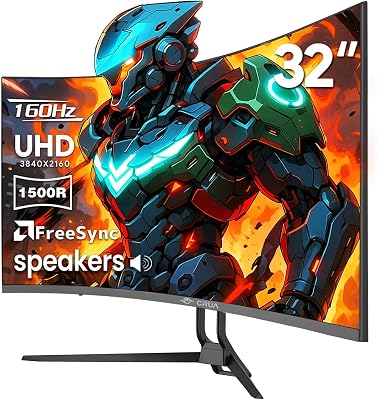
- Two HDMI 2.1 ports: LG 32GQ950-B, Gigabyte M32U, Dell AW3225QF — best for dual console setups
- One HDMI 2.1 port: ASUS PA32UCX-PK, BenQ EX3210U — adequate for single console users
If you connect PS5 and Xbox Series X simultaneously, prioritize monitors with two HDMI 2.1 ports.
HDR Tier — What the Certifications Actually Mean
| Certification | Peak Brightness | Local Dimming | Real-World Impact |
|---|---|---|---|
| DisplayHDR 400 | 400 cd/m² | Not required | Minimal; mostly just HDR color gamut |
| DisplayHDR 600 | 600 cd/m² | Not required | Noticeable improvement in highlights |
| DisplayHDR 1000 | 1,000 cd/m² | Required | Strong HDR with visible local dimming |
| DisplayHDR 1400 | 1,400 cd/m² | Required | Near-reference HDR for professional work |
| DisplayHDR True Black 400 | 400 cd/m² peak, 0 nits black | OLED (per-pixel) | Best contrast ratio available |
For meaningful HDR impact on a 32″ IPS monitor, target DisplayHDR 1000 or above. DisplayHDR 400 is largely a marketing distinction on IPS without local dimming.
USB-C for Laptop Single-Cable Workflow
USB-C with DisplayPort Alternate Mode enables: video signal, data, and laptop charging over a single cable. Useful if you dock a laptop to your monitor and want to remove a power brick from your desk.
- Gigabyte M32U: USB-C input, but 15W charging only — not enough for most ultrabooks under load
- ASUS PA32UCX-PK: Thunderbolt 3 with 94W charging — genuine laptop docking capability
If single-cable laptop use is a priority, the PA32UCX-PK is the only panel in this roundup that handles it properly.
KVM Switch Value
A KVM (keyboard-video-mouse) switch lets you control two computers with one set of peripherals through a single monitor. The Gigabyte M32U includes a hardware KVM switch built in. If you run a work machine alongside a gaming PC, the KVM switch alone justifies choosing the M32U over a comparable-spec competitor — a dedicated external KVM switch costs $50-$150.
Final Verdict
Top Pick: LG 32GQ950-B UltraGear
The LG 32GQ950-B is the best 32-inch 4K IPS gaming monitor for most buyers. Nano IPS panel quality, two HDMI 2.1 ports, DisplayHDR 1000, 144Hz, and a proven track record of reliability make it the benchmark others are measured against. It does not lead in any single metric but ranks in the top two in every category that matters.
Runner-Up: BenQ MOBIUZ EX3210U
If console gaming is the primary use case, the BenQ MOBIUZ EX3210U earns the runner-up position. The HDRi technology, treVolo speaker system, and remote control create a console-optimized experience that the LG does not replicate. DisplayHDR 600 with local dimming also provides better HDR than the entry-level panels.
Best Value: Gigabyte M32U
The Gigabyte M32U delivers the core 32″ 4K 144Hz IPS experience at the lowest price in this category. The built-in KVM switch and dual HDMI 2.1 ports add genuine utility that makes the value case even stronger. If budget is the primary constraint, the M32U is the correct choice — there is no meaningful gaming performance gap between it and panels costing $200 more.
Premium Upgrade: Dell Alienware AW3225QF
For buyers who want to go beyond the IPS ceiling, the AW3225QF QD-OLED is the clear recommendation. The step up to 240Hz and true OLED black levels is a visible, tangible difference in daily use. At $999 it is a significant investment, but it is the only panel here that makes the IPS monitors above feel like a compromise.
Metadata
Related Articles
Looking for more on this topic? Browse the hand-picked guides below — each one applies the same scoring rubric used in this review.
Frequently Asked Questions
What is the best gaming monitor 32 4k ips in 2026?
The best gaming monitor 32 4k ips depends on your budget and how you plan to use it. The options compared above are our top-rated picks based on real customer ratings, build quality, and overall value — start with the highest-rated model that fits your budget.
How much should I expect to spend on a gaming monitor 32 4k ips?
Prices vary by brand and features. Budget options cover the essentials, while mid-range and premium models add durability, performance, and extra features. Compare the prices in the list above to find the best value for your needs.
What should I look for when buying a gaming monitor 32 4k ips?
Focus on what matters most for your use case — build quality, compatibility, performance, warranty, and verified customer reviews. Every pick above is selected to balance these factors.
Are budget gaming monitor 32 4k ips options worth it?
Yes. For most people a well-reviewed budget or mid-range gaming monitor 32 4k ips delivers excellent value. You only need to spend more if you specifically require premium materials or top-tier performance.
How did we choose these gaming monitor 32 4k ips picks?
We compare current Amazon ratings, review counts, key features, and price to surface the options with the best real-world value. The list is refreshed as ratings and availability change.