- Top Pick: GIGABYTE GeForce RTX 5050 WINDFORCE OC 8G Graphics Card, 8GB 128-bit GDDR6, PCIe 5.0, WINDFORCE Cooling System, GV-N5050WF2OC-8GD Video Card
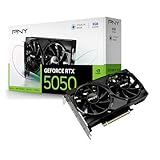
- Best Value: PNY NVIDIA GeForce RTX™ 5050 Dual-Fan Graphics Card
- Premium Choice: GIGABYTE GeForce RTX 5060 WINDFORCE OC 8G Graphics Card, Cooling System, 8GB 128-bit GDDR7, PCIe 5.0, Manufactured by NVIDIA, DisplayPort & HDMI – Video Output Interface, GV-N5060WF2OC-8GD Video Card
The GIGABYTE GeForce RTX 5050 WINDFORCE OC 8G holds a notable position: it is the most affordable way into NVIDIA’s current generation of graphics cards. Built on the new Blackwell architecture, it brings the headline feature of the latest GeForce line — DLSS 4 with Multi Frame Generation — down to an entry-level price of around $290. It is also a compact card, which widens the range of systems it suits. This GIGABYTE RTX 5050 review covers the specifications, performance, upscaling and value.
- GIGABYTE RTX 5050 at a Glance
- Architecture and Key Specifications
- Gaming Performance and Target Resolution
- Upscaling and Frame Generation
- Cooling, Power and Physical Fit
- Who Is the GIGABYTE RTX 5050 For?
- Pros and Cons
- Is the GIGABYTE RTX 5050 Worth It?
- Frequently Asked Questions
- More Graphics Card Reviews
- Related Articles
- Related Articles
- Related Guides

GIGABYTE GeForce RTX 5050 WINDFORCE OC 8G Graphics Card, 8GB 128-bit GDDR6, PCIe 5.0, WINDFORCE Cooling System, GV-N5050WF2OC-8GD Video Card


As an Amazon Associate we earn from qualifying purchases. Product prices and availability are accurate as of the date/time indicated.
🛒 Best Price Today on Amazon
Prime members get fast, free shipping on everything above, plus member-only deals. New members get a 30-day free trial — cancel anytime.
As an Amazon Associate we earn from qualifying purchases.





GIGABYTE RTX 5050 at a Glance
| Component | Specification |
|---|---|
| GPU | NVIDIA GeForce RTX 5050 |
| Architecture | NVIDIA Blackwell |
| Video memory | 8GB GDDR6 |
| Memory interface | 128-bit |
| Boost clock | Around 2587 MHz |
| Interface | PCIe 5.0 |
| Display outputs | DisplayPort, HDMI |
| Cooler | Compact dual-fan WINDFORCE, around 7.8 inches long |
| Price | Around $290 |
Architecture and Key Specifications
The RTX 5050 is built on NVIDIA’s Blackwell architecture, the foundation of the current GeForce generation. That is the most important fact about this card: although it sits at the entry level, it is a current-generation part and therefore inherits the architectural features of the latest line, most notably the upscaling and frame-generation capabilities discussed below. It pairs 8GB of GDDR6 memory with a 128-bit memory interface, an entry-level configuration in keeping with its position.
GIGABYTE’s WINDFORCE OC version keeps things compact and sensible. The boost clock runs at around 2587 MHz, the card uses a fast PCIe 5.0 interface, and the cooler is a compact dual-fan WINDFORCE design roughly 7.8 inches long. The short length is a deliberate strength, allowing the RTX 5050 to fit into small and pre-built systems. It is an entry-level card built around modern foundations and a practical, space-conscious design.
Gaming Performance and Target Resolution
The RTX 5050 is a current-generation entry-level card aimed at 1080p gaming, and 1080p is the resolution at which it should be judged. In esports and competitive titles it is comfortably capable, driving the smooth frame rates that suit fast multiplayer play. For mainstream and lighter games at 1080p, a good-looking and enjoyable experience is well within reach.
Modern AAA titles ask more of an entry-level card. The RTX 5050 can run them at 1080p, but in the most demanding games you should expect to choose sensible settings and to treat the 8GB memory buffer as a real consideration. Where the RTX 5050 has a distinct advantage over older entry-level cards is in its current-generation feature set — and in particular its upscaling toolkit, which can meaningfully extend its reach in supported titles. As a modern 1080p entry point, it does its job well.
Upscaling and Frame Generation
The RTX 5050 supports DLSS 4 with Multi Frame Generation. As a Blackwell-architecture card, it belongs to the current GeForce generation, and DLSS 4 and its Multi Frame Generation feature are exclusive to that generation. This is the single most important reason to choose an RTX 5050 over an older entry-level card, and it is worth understanding what it offers.
DLSS Super Resolution reconstructs a lower internal resolution to your target resolution, recovering performance with little loss of image quality. DLSS 4 Multi Frame Generation goes further, generating multiple additional frames to lift on-screen smoothness substantially in supported games. On an entry-level card, this technology is genuinely transformative — it allows the modest RTX 5050 to feel far smoother in demanding, DLSS 4-supported titles than its raw specifications alone would suggest. For a budget buyer, access to the current generation’s flagship upscaling feature is the RTX 5050’s defining appeal.
Cooling, Power and Physical Fit
The RTX 5050’s compact form is a real practical advantage. GIGABYTE’s WINDFORCE cooler is a dual-fan design at roughly 7.8 inches long, short enough to fit comfortably into small cases, small-form-factor builds and many pre-built systems that cannot accept a longer card. For anyone upgrading an off-the-shelf desktop, this compactness removes a frequent obstacle.
As an entry-level card, the RTX 5050 is relatively modest in its power draw, placing limited strain on a power supply and suiting systems with mid-range PSUs. The compact WINDFORCE cooler is well matched to the heat the card produces, keeping temperatures and noise sensible during gaming. The combination of a short length and undemanding power requirements makes the RTX 5050 one of the easier current-generation cards to drop into an existing budget system.
Who Is the GIGABYTE RTX 5050 For?
The GIGABYTE RTX 5050 WINDFORCE OC is for the budget builder who wants a current-generation graphics card rather than an older part — specifically, someone who wants access to DLSS 4 and Multi Frame Generation at the lowest possible price. If you play at 1080p, value modern features and a current warranty, and may be working with a compact case, the RTX 5050 is a sensible and forward-looking choice.
It is not the card for buyers who want high settings in the heaviest games, who game above 1080p, or who want strong performance without leaning on upscaling — those needs point to a more powerful card. But for a buyer who wants the cheapest way into the current generation, with its DLSS 4 advantage, the compact and modern RTX 5050 fills that role cleanly.
Pros and Cons
Pros: The most affordable current-generation RTX card; supports DLSS 4 with Multi Frame Generation; compact WINDFORCE design fits small and pre-built systems; modern Blackwell architecture and PCIe 5.0; current-generation warranty and driver support.
Cons: Entry-level raw performance; 8GB of memory on a 128-bit interface is modest; best kept to 1080p; in the most demanding games it leans on upscaling to feel its smoothest.
Is the GIGABYTE RTX 5050 Worth It?
At around $290 the GIGABYTE GeForce RTX 5050 WINDFORCE OC 8G is worth it for the buyer who specifically wants a current-generation card at an entry-level price. Its core appeal is clear: it is the cheapest route to DLSS 4 and Multi Frame Generation, and that modern upscaling toolkit gives it a meaningful advantage over older budget cards in supported titles.
If your budget can stretch to a more powerful current-generation card, you will gain noticeably more raw performance. But if you want the lowest-cost entry into the current generation, with its forward-looking feature set, the RTX 5050 makes good sense. GIGABYTE’s compact, well-cooled WINDFORCE is a sensible way to buy it, and it earns a recommendation within its entry-level brief.
Frequently Asked Questions
Is the GIGABYTE RTX 5050 good for 1080p gaming?
Yes. The RTX 5050 is a current-generation entry-level card aimed at 1080p. It handles esports and lighter games comfortably and runs modern AAA titles at 1080p with sensible settings.
Does the RTX 5050 support DLSS 4?
Yes. The RTX 5050 is built on NVIDIA’s Blackwell architecture, so it supports DLSS 4 with Multi Frame Generation, the current generation’s flagship upscaling feature.
Is the GIGABYTE RTX 5050 a compact card?
Yes. The WINDFORCE OC version is a compact dual-fan card around 7.8 inches long, short enough to fit small cases, small-form-factor builds and many pre-built desktops.
Why choose the RTX 5050 over an older budget card?
Its main advantage is DLSS 4 with Multi Frame Generation, a current-generation feature that can substantially lift smoothness in supported games and that older entry-level cards do not offer.
More Graphics Card Reviews
- GIGABYTE GeForce RTX 5060 Gaming OC 8G Review
- ASRock Radeon RX 7700 XT Challenger 12GB Review
- GIGABYTE Radeon RX 9060 XT Gaming OC 16G Review
- MSI GeForce RTX 5060 Ti 16G Shadow 2X OC Review
- PowerColor Radeon RX 7800 XT 16GB Review
- XFX Swift Radeon RX 9070 OC Review
- MSI GeForce RTX 5070 Ventus 3X OC 12G Review
- GIGABYTE Radeon RX 9070 XT Gaming OC 16G Review
Affiliate Disclosure: As an Amazon Associate, we earn from qualifying purchases. If you click a link and make a purchase, we may earn a small commission at no extra cost to you. Prices and availability are accurate as of publication and may change.
Related Articles
Looking for more on this topic? Browse the hand-picked guides below — each one applies the same scoring rubric used in this review.