- Top Pick: GIGABYTE Radeon RX 9070 XT Gaming OC 16G Graphics Card, PCIe 5.0, 16GB GDDR6, GV-R9070XTGAMING OC-16GD Video Card
- Best Value: Gigabyte Radeon RX 9070 XT Gaming OC 16G Graphics Card – 16 GB GDDR6, 256 Bit, PCI-E 5.0, 3060 MHz Core Frequency, 2 x DisplayPort, 2 x HDMI, GV-R9070XTGAMING OC-16GD
- Premium Choice: GIGABYTE Gaming Radeon RX 9070 GRE 12GB GDDR6 PCI Express 5.0 ATX Graphics Card GV-R907GREGAMING OC-12GD
The GIGABYTE Radeon RX 9070 XT Gaming OC 16G is AMD’s high-end card of the current generation, built for strong 4K gaming. Based on the RDNA 4 architecture, it pairs a high boost clock with a full 16GB memory buffer and the latest FSR 4 upscaling, and GIGABYTE’s WINDFORCE cooling keeps it composed. At around $740 it is positioned for the 4K gamer who wants AMD’s modern high-end performance. This GIGABYTE RX 9070 XT review covers the specifications, performance, upscaling and value.
- GIGABYTE RX 9070 XT at a Glance
- Architecture and Key Specifications
- Gaming Performance and Target Resolution
- Upscaling and Frame Generation
- Cooling, Power and Physical Fit
- Who Is the GIGABYTE RX 9070 XT For?
- Pros and Cons
- Is the GIGABYTE RX 9070 XT Worth It?
- Frequently Asked Questions
- More Graphics Card Reviews
- Related Articles
- Related Articles

GIGABYTE Radeon RX 9070 XT Gaming OC 16G Graphics Card, PCIe 5.0, 16GB GDDR6, GV-R9070XTGAMING OC-16GD Video Card


As an Amazon Associate we earn from qualifying purchases. Product prices and availability are accurate as of the date/time indicated.
🛒 Best Price Today on Amazon
Prime members get fast, free shipping on everything above, plus member-only deals. New members get a 30-day free trial — cancel anytime.
GIGABYTE RX 9070 XT at a Glance
| Component | Specification |
|---|---|
| GPU | AMD Radeon RX 9070 XT |
| Architecture | AMD RDNA 4 |
| Video memory | 16GB GDDR6 |
| Memory interface | 256-bit class |
| Boost clock | Around 3060 MHz |
| Interface | PCIe 5.0 |
| Display outputs | DisplayPort, HDMI |
| Cooler | WINDFORCE cooling with Hawk Fan and RGB |
| Price | Around $740 |
Architecture and Key Specifications
The RX 9070 XT is built on AMD’s RDNA 4 architecture, and it is the high-end card of the current Radeon generation. Its specification sheet is well suited to demanding gaming: a full 16GB of GDDR6 memory on a wide memory interface, giving the card both the capacity and the bandwidth that 4K gaming requires. One figure stands out — a high boost clock around 3060 MHz, which speaks to the strong clock speeds RDNA 4 is able to reach.
As an Amazon Associate we earn from qualifying purchases at no extra cost to you.


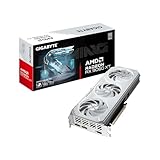


GIGABYTE’s Gaming OC version is a well-equipped implementation, using the company’s WINDFORCE cooling with a Hawk Fan design and RGB lighting. The combination of a high boost clock, a generous 16GB buffer, a current-generation architecture and serious cooling gives the RX 9070 XT the makings of a capable high-end card. It is AMD’s modern answer for the 4K gamer who wants strong performance with a full memory buffer.
Gaming Performance and Target Resolution
The RX 9070 XT is built for strong 4K gaming, and 4K is the resolution at which it should be judged. At 4K it delivers a genuinely good experience in modern AAA titles, and its full 16GB memory buffer is a real asset — 4K gaming places heavy demands on video memory, and 16GB gives the card the capacity to handle demanding modern textures at the resolution comfortably.
At 1440p it is, naturally, a very strong performer, with ample headroom for high refresh rates, making it an excellent choice for a fast 1440p monitor as well as a 4K one. In esports and competitive games it has performance to spare at any sensible resolution. The most demanding 4K titles will still benefit from sensible settings or upscaling, but as a high-end card built around RDNA 4, the RX 9070 XT is well judged for the gamer who wants strong 4K performance.
Upscaling and Frame Generation
The RX 9070 XT uses AMD’s FSR technology — FidelityFX Super Resolution — rather than NVIDIA’s DLSS, and as an RDNA 4 card it supports the latest FSR 4. This is an important point: FSR 4 is AMD’s newest upscaling generation, and it is tied to the RDNA 4 architecture, so the RX 9070 XT benefits from AMD’s most advanced image-reconstruction technology.
FSR 4 renders a game at a lower internal resolution and reconstructs it to your target resolution, recovering performance with an improved focus on image quality over earlier FSR versions. For a high-end card aimed at 4K, having access to AMD’s latest upscaling is genuinely valuable — it is the natural tool for stretching performance in the most demanding 4K titles, and it extends the card’s reach in supported games. Combined with the full 16GB memory buffer, the modern FSR 4 toolkit is central to the RX 9070 XT’s 4K credentials.
Cooling, Power and Physical Fit
GIGABYTE’s WINDFORCE cooling keeps the RX 9070 XT composed under the load of high-end 4K gaming, using a Hawk Fan design and finished with RGB lighting for buyers who want their build to have visual character. The cooling is matched to the heat a high-end RDNA 4 card produces, keeping temperatures and noise sensible during extended sessions. As a substantial high-end card, it is worth checking its length against the clearance in your case before purchase.
As a high-end card, the RX 9070 XT has a real power requirement that buyers should plan for with a capable, good-quality power supply. Anyone pairing it with an older or low-wattage PSU should check the card’s recommendations carefully and ensure their unit has the wattage and connectors required. For a system with a suitable power supply this presents no obstacle, and the WINDFORCE cooling keeps the card running composed once installed.
Who Is the GIGABYTE RX 9070 XT For?
The GIGABYTE RX 9070 XT Gaming OC is for the gamer who wants strong 4K performance from AMD’s current generation. If you game at 4K, want the reassurance of a full 16GB memory buffer for the resolution’s heavy memory demands, and value AMD’s latest FSR 4 upscaling and modern RDNA 4 architecture, the RX 9070 XT is a well-judged high-end choice. It is equally an excellent card for a high-refresh 1440p setup.
It is less suited to buyers on a tighter budget, who should look to a mid-range card, and to those who specifically prefer NVIDIA’s DLSS ecosystem. But for the core high-end use case — strong 4K gaming with a full memory buffer — the RX 9070 XT is AMD’s compelling current-generation answer, pairing high clock speeds with a modern feature set.
Pros and Cons
Pros: Strong 4K gaming performance; full 16GB memory buffer for the resolution’s heavy demands; high boost clock around 3060 MHz; modern RDNA 4 architecture; supports the latest FSR 4 upscaling; WINDFORCE cooling with Hawk Fan and RGB.
Cons: A substantial card that needs case clearance; a real high-end power requirement that calls for a capable PSU; buyers committed to NVIDIA’s DLSS ecosystem will look elsewhere.
Is the GIGABYTE RX 9070 XT Worth It?
At around $740 the GIGABYTE Radeon RX 9070 XT Gaming OC 16G is worth it for the gamer who wants strong 4K performance from AMD’s current generation. Its full 16GB memory buffer is well suited to the heavy memory demands of 4K, its high boost clock speaks to RDNA 4’s strong clock speeds, and access to the latest FSR 4 upscaling rounds out a capable high-end feature set.
If you are on a tighter budget, a mid-range card is the better path, and buyers committed to DLSS will prefer an NVIDIA option. But for a buyer focused on strong 4K gaming with AMD’s modern high-end hardware, the RX 9070 XT makes good sense, and GIGABYTE’s well-cooled Gaming OC is a sound way to buy it. It earns a recommendation as an AMD 4K pick.
Frequently Asked Questions
Is the GIGABYTE RX 9070 XT good for 4K gaming?
Yes. The RX 9070 XT is built for strong 4K gaming and delivers a genuinely good experience in modern AAA titles at the resolution, helped by its full 16GB memory buffer.
Does the RX 9070 XT support FSR 4?
Yes. The RX 9070 XT is built on AMD’s current RDNA 4 architecture, so it supports the latest FSR 4 upscaling.
How much memory does the RX 9070 XT have?
The RX 9070 XT has a full 16GB of GDDR6 memory, well suited to the heavy memory demands that 4K gaming places on a graphics card.
Is the RX 9070 XT a current-generation card?
Yes. It is AMD’s high-end card of the current generation, built on the RDNA 4 architecture with a high boost clock and FSR 4 support.
More Graphics Card Reviews
- MSI GeForce RTX 5070 Ti Ventus 3X OC 16G Review
- ASRock Radeon RX 7900 XT Phantom Gaming 20GB OC Review
- GIGABYTE GeForce RTX 5080 Gaming OC 16G Review
- MSI GeForce RTX 5090 Gaming Trio OC 32G Review
- MSI GeForce RTX 3050 Ventus 2X 6G OC Review
- ASRock Intel Arc A580 Challenger 8GB OC Review
- ASUS Dual GeForce RTX 4060 V2 OC Edition Review
- GIGABYTE GeForce RTX 5050 WINDFORCE OC 8G Review
Affiliate Disclosure: As an Amazon Associate, we earn from qualifying purchases. If you click a link and make a purchase, we may earn a small commission at no extra cost to you. Prices and availability are accurate as of publication and may change.
Related Articles
Looking for more on this topic? Browse the hand-picked guides below — each one applies the same scoring rubric used in this review.