- Top Pick: GIGABYTE Radeon RX 9070 XT Gaming OC 16G Graphics Card, PCIe 5.0, 16GB GDDR6, GV-R9070XTGAMING OC-16GD Video Card
- Best Value: ASUS Prime Radeon RX 9070 XT 16GB GDDR6 OC Edition Gaming Graphics Card
- Premium Choice: GIGABYTE GeForce RTX 5070 Ti Gaming OC 16G Graphics Card, 16GB 256-bit GDDR7, PCIe 5.0, WINDFORCE Cooling System, GV-N507TGAMING OC-16GD Video Card
The mid-to-high graphics card battle of 2026 comes down to two 16GB contenders: NVIDIA’s GeForce RTX 5070 Ti and AMD’s Radeon RX 9070 XT. Both are built for no-compromise 1440p gaming and very playable 4K, but they take different routes to get there and they sit at noticeably different prices. This RTX 5070 Ti vs RX 9070 XT comparison breaks down raw performance, ray tracing, upscaling, power draw, and real-world value so you can buy the right card with confidence.
As an Amazon Associate we earn from qualifying purchases at no extra cost to you.


🛒 Best Price Today on Amazon
Prime members get fast, free shipping on everything above, plus member-only deals. New members get a 30-day free trial — cancel anytime.
The Short Answer
If you mostly play rasterized games at 1440p and want the most frames per dollar, the RX 9070 XT is the value pick. If ray tracing, DLSS 4 Multi Frame Generation, and the widest game and creative-app support matter to you, the RTX 5070 Ti is the more complete card — and you pay for it. Neither is a bad buy in 2026; your budget and your feature priorities decide the winner. If you are still weighing the whole stack, our guide to the RTX 5070 and the step-up RTX 5080 put these two cards in context.
Specs at a Glance
| Specification | RTX 5070 Ti | RX 9070 XT |
|---|---|---|
| Architecture | NVIDIA Blackwell | AMD RDNA 4 |
| Shaders | 8,960 CUDA cores | 4,096 stream processors (64 CUs) |
| VRAM | 16GB GDDR7 | 16GB GDDR6 |
| Memory bus | 256-bit | 256-bit |
| Memory bandwidth | ~896 GB/s | ~640 GB/s |
| Upscaling | DLSS 4 (Multi Frame Gen) | FSR 4 |
| Board power | 300W | 304W |
| Interface | PCIe 5.0 | PCIe 5.0 |
| Launch MSRP | $749 | $599 |
| Released | February 2025 | March 2025 |
On paper the RTX 5070 Ti holds two clear advantages: far more memory bandwidth thanks to GDDR7, and NVIDIA’s more mature ray tracing and AI feature set. The RX 9070 XT answers with a significantly lower MSRP and the same generous 16GB frame buffer, which is the headline number for anyone planning to keep a card for several years.
RTX 5070 Ti — What You’re Getting
The RTX 5070 Ti is NVIDIA’s Blackwell-generation answer for high-refresh 1440p and entry-level 4K gaming. Its 8,960 CUDA cores and 16GB of fast GDDR7 give it real headroom in demanding titles, and the 896 GB/s of bandwidth helps it hold up at 4K better than the raw shader count alone suggests. The bigger story is the software stack: fourth-generation RT cores and DLSS 4 with Multi Frame Generation let it push very high frame rates in supported games. It is the safe, do-everything choice — strong in games, strong in ray tracing, and strong in creative and AI workloads. For a full breakdown of individual models, see our best RTX 5070 Ti cards roundup and our in-depth RTX 5070 Ti review.

msi Gaming RTX 5070 Ti 16G Inspire 3X OC Plus Graphics Card (16GB GDDR7, 256-bit, Extreme Performance: 2497 MHz, DisplayPort x 3 2.1a, HDMI 2.1b, NVIDIA Blackwell Architecture)


As an Amazon Associate we earn from qualifying purchases. Product prices and availability are accurate as of the date/time indicated.
RX 9070 XT — What You’re Getting
The RX 9070 XT is the card that made AMD’s RDNA 4 generation worth paying attention to. With 64 compute units, 16GB of GDDR6, and a launch MSRP $150 below the RTX 5070 Ti, it delivers most of the rasterized performance for noticeably less money. RDNA 4 also closes much of AMD’s historic ray tracing gap — it is the biggest generational RT jump AMD has ever shipped — and FSR 4 finally moves AMD’s upscaling to a machine-learning model that looks far cleaner than older FSR versions. It is the enthusiast value play of 2026. Compare specific models in our best RX 9070 XT graphics cards guide and the wider RX 9070 XT buying guide.
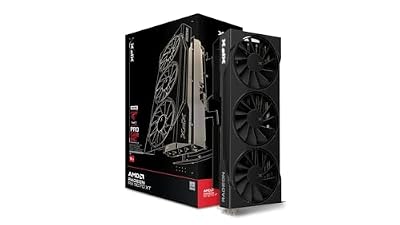
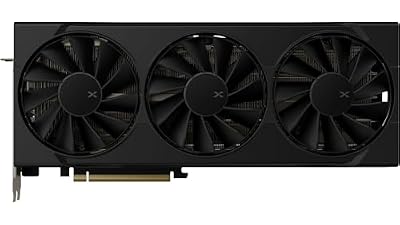
XFX Swift AMD Radeon RX 9070 XT Triple Fan Gaming Edition with 16GB GDDR6 HDMI 3xDP, RDNA 4 RX-97TSWF3B9, Graphics Card, Compatible with Desktop PCs


As an Amazon Associate we earn from qualifying purchases. Product prices and availability are accurate as of the date/time indicated.
Performance Compared
1440p Gaming
This is where the matchup is closest. Across the broad mix of modern titles that reviewers test, the two cards trade blows in rasterized 1440p gaming and usually finish within a handful of percent of each other. For pure raster — esports, competitive shooters, and most AAA games without ray tracing — you are not giving up a meaningful experience by choosing the cheaper RX 9070 XT. Both comfortably drive high-refresh 1440p monitors.
4K Gaming
Step up to 4K and the RTX 5070 Ti’s bandwidth advantage starts to show. Both cards are capable 4K performers for 60+ FPS gaming with sensible settings, but the 5070 Ti tends to hold its lead more consistently as resolution and texture detail climb. If 4K is your primary target rather than an occasional bonus, the NVIDIA card is the steadier pick.
Ray Tracing
Ray tracing remains NVIDIA’s stronghold. RDNA 4 narrows the gap dramatically compared to previous Radeon generations, and in lightly ray-traced games the difference is small. But in heavy path-traced titles the RTX 5070 Ti still pulls clearly ahead. If you intend to play the most demanding ray tracing showcases with the eye candy turned up, factor that into your decision.
DLSS 4 vs FSR 4 — The Software War
Modern GPUs are only as good as their upscaling, and this is a real differentiator. DLSS 4 is mature, widely supported across hundreds of games, and its Multi Frame Generation can multiply frame rates in titles that support it. FSR 4 is a major leap for AMD — the move to a machine-learning model finally delivers image quality that holds up well against DLSS — but it is newer and supported in fewer games today. If your library leans on the latest releases, both will serve you well; if you play a wide mix of older and newer titles, DLSS 4’s broader support is a genuine advantage for the RTX 5070 Ti.
Power, Cooling, and Efficiency
The two cards are close on power: roughly 300W for the RTX 5070 Ti and 304W for the RX 9070 XT. Both are comfortable on a quality 750W power supply, though a 850W unit gives you headroom for a power-hungry CPU and future upgrades. NVIDIA’s cards use a single 16-pin connector, while most RX 9070 XT models use two or three 8-pin connectors — make sure your PSU has the cables before you buy. Real-world cooling depends far more on the specific board partner model than on the chip, so pick a card with a triple-fan cooler if your case airflow is average.
Price and Value in 2026
Value is where the RX 9070 XT makes its strongest case. With a lower MSRP and street prices that have generally stayed closer to launch pricing, it routinely costs less than the RTX 5070 Ti while delivering comparable rasterized performance. The RTX 5070 Ti commands its premium for the feature set — DLSS 4, stronger ray tracing, better creative-app support — not for raw frames per second. Decide how much those NVIDIA extras are worth to you, because that gap is essentially what you are paying for. For a closer-priced fight, our RTX 5070 vs RX 9070 comparison covers the tier below.
Which GPU Should You Buy?
Buy the RTX 5070 Ti if…
You want the most complete card available at this tier. Choose it if you play heavy ray tracing titles, want DLSS 4 Multi Frame Generation, game at 4K as your main resolution, or use your PC for streaming, video editing, or AI work where NVIDIA’s ecosystem is still ahead. It is the lower-risk, do-everything option.
Buy the RX 9070 XT if…
You want the best rasterized performance per dollar and play primarily at 1440p. Choose it if your games are mostly competitive or non-ray-traced titles, you would rather put the $150+ savings toward a better monitor or CPU, and you are happy with FSR 4 upscaling. For most 1440p gamers, it is the smarter spend. See how it stacks up against AMD’s own lineup and read our full RX 9070 review for the tier below it.
Frequently Asked Questions
Is the RTX 5070 Ti worth the extra money over the RX 9070 XT?
It depends on what you play. If you want strong ray tracing, DLSS 4 Multi Frame Generation, and 4K as your main resolution, the premium is justified. If you game mostly at 1440p in rasterized titles, the RX 9070 XT delivers very similar performance for less, and that saving is better spent elsewhere in your build.
Do both cards have enough VRAM for 2026 games?
Yes. Both ship with 16GB, which is the comfortable sweet spot for 1440p and 4K gaming in 2026 and gives you headroom for high-resolution textures and several years of future titles. Neither card will leave you VRAM-limited at their intended resolutions.
Which card is better for streaming and content creation?
The RTX 5070 Ti. NVIDIA’s NVENC encoder and broader software support give it the edge for streaming, video editing, and AI workloads. The RX 9070 XT has improved encoders, but creators who rely on those tools daily will be better served by the NVIDIA card.
What power supply do I need for either GPU?
A good-quality 750W power supply covers most builds with either card. If you are pairing it with a high-end CPU or want headroom for future upgrades, step up to an 850W unit. Check the connector type too: the RTX 5070 Ti uses a 16-pin connector, while most RX 9070 XT models use two or three 8-pin connectors.
Affiliate Disclosure: As an Amazon Associate, we earn from qualifying purchases. This means if you click on a link and make a purchase, we may earn a small commission at no extra cost to you. Prices and availability are accurate as of publication and may change.
Related Articles
Looking for more on this topic? Browse the hand-picked guides below — each one applies the same scoring rubric used in this review.