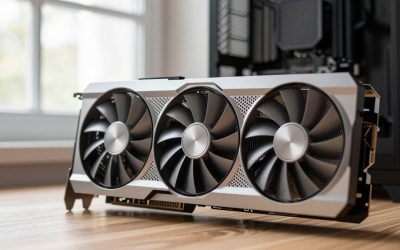
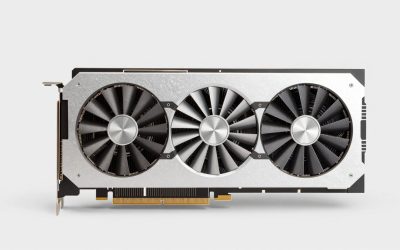
- Top Pick: GIGABYTE GeForce RTX 5080 Gaming OC 16G Graphics Card, WINDFORCE Cooling System, 16GB 256-bit GDDR7, GV-N5080GAMING OC-16GD Video Card
- Best Value: ASUS TUF Gaming GeForce RTX™ 5080 16GB GDDR7 OC Edition Graphics Card
- Premium Choice: ASUS ROG Astral GeForce RTX 5080 16GB GDDR7 White OC Edition Graphics Card
Affiliate disclosure: As an Amazon Associate we earn from qualifying purchases. This post contains affiliate links — if you buy through them we may earn a small commission at no extra cost to you. This never affects our recommendations.
- The Best RTX 5080 Graphics Cards in 2026: Top 5 AIB Picks Ranked
- Why the RTX 5080 Is the 4K Gaming Standard in 2026
- Quick Comparison Table: Top 5 RTX 5080 AIB Cards
- Top 5 Best RTX 5080 Cards in 2026
- How to Choose the Best RTX 5080 for Your Build
- Final Verdict
- Related Articles
- Frequently Asked Questions
- Related Articles
As an Amazon Associate we earn from qualifying purchases at no extra cost to you.


In a hurry? See the top-rated RTX 5080 Graphics Card deals available right now:
🛒 Check Rtx 5080 Graphics Card Prices on Amazon →🛒 Best Price Today on Amazon
Prime members get fast, free shipping on everything above, plus member-only deals. New members get a 30-day free trial — cancel anytime.
Start 30-Day Prime Free Trial →See Today’s Amazon DealsThe Best RTX 5080 Graphics Cards in 2026: Top 5 AIB Picks Ranked
The RTX 5080 occupies the sweet spot in NVIDIA’s Blackwell lineup that most enthusiast builders actually want to occupy: high enough to dominate 4K gaming, low enough that it does not require a second mortgage. Built on the GB203 die, it delivers a massive generational leap over the RTX 4080 Super while landing well below the eye-watering price tag of the RTX 5090. With a 256-bit memory bus, 16GB of GDDR7 VRAM, and full support for DLSS 4 Multi Frame Generation, it is the de facto 4K gaming standard for 2026.
At launch MSRP of roughly $999–$1,099, the RTX 5080 occupies the same price bracket the RTX 4080 did, yet it benchmarks 35–45% faster in rasterization-heavy workloads and effectively doubles perceived frame rates in supported titles thanks to DLSS 4 MFG. Every major AIB partner — ASUS, MSI, Gigabyte, PNY, and others — has shipped their own triple-fan interpretation of the card, each with different cooler designs, factory overclocks, and feature sets.
This guide ranks the five best RTX 5080 cards you can buy right now, explains what actually differs between AIB variants, and tells you which one to buy for your specific build and budget.
Why the RTX 5080 Is the 4K Gaming Standard in 2026
Blackwell Architecture and GB203 Die
The RTX 5080 is based on the GB203 die, NVIDIA’s second-tier Blackwell silicon — smaller than the GB202 powering the RTX 5090 but packing enough shader processors, RT cores, and Tensor cores to handle every current AAA title at 4K Ultra settings without breaking a sweat. Compared to the Ada Lovelace generation, Blackwell offers improved IPC per CUDA core, higher effective clockspeeds, and significantly better ray-tracing throughput per watt. Raw rasterization performance at 4K puts the RTX 5080 roughly 40% ahead of the RTX 4080 Super in GPU-bound scenarios, and the gap widens further once DLSS 4 is factored in.
16GB GDDR7 and Bandwidth
The 256-bit GDDR7 interface delivers approximately 960 GB/s of memory bandwidth — a substantial uplift over the 4080 Super’s 432 GB/s. In practice this means texture-heavy 4K scenes and large open-world titles no longer cause the micro-stutters that plagued narrower-bus cards. 16GB of VRAM also provides comfortable headroom for current AAA titles running maximum texture packs, and leaves enough buffer for the next two to three years of game releases. The one caveat is that the RTX 5090’s 32GB GDDR7 on a 512-bit bus remains in a different league for future-proofing, though very few games today come close to saturating 16GB at 4K.
DLSS 4 Multi Frame Generation
DLSS 4 Multi Frame Generation is the feature that most dramatically changes the RTX 5080 value equation. Unlike DLSS 3’s single-frame interpolation, MFG can generate up to three additional frames per rendered frame, delivering up to 4x the output frame rate in supported titles. In a game like Cyberpunk 2077 at 4K Ultra with path tracing enabled, native rendering might produce 55 fps — with DLSS 4 MFG enabled that output can exceed 180 fps at high image quality. The technology is exclusive to Blackwell-generation GPUs, meaning RTX 40-series owners cannot access it regardless of driver updates.
4K Native vs DLSS Performance
At 4K native, the RTX 5080 averages around 80–100 fps in demanding titles like Cyberpunk 2077 with Ultra RT and Alan Wake 2 at max settings. With DLSS 4 Quality mode (which maintains near-native image quality), those numbers climb to 130–160 fps. Enable MFG on top and most titles break 144 fps easily, making the RTX 5080 the first card that makes a 4K/144Hz monitor feel fully utilized without compromise. At 1440p, the RTX 5080 is genuinely overkill for most use cases — a point we revisit in the buying advice section below.
Quick Comparison Table: Top 5 RTX 5080 AIB Cards
| Product | Boost Clock | VRAM | TDP | Cooler Size | Price Range |
|---|---|---|---|---|---|
| ASUS ROG Strix RTX 5080 OC | ~2,850 MHz | 16GB GDDR7 | 360W | 3.5-slot triple-fan | $1,149–$1,199 |
| MSI GeForce RTX 5080 Gaming Trio OC | ~2,820 MHz | 16GB GDDR7 | 355W | 3-slot triple-fan | $1,069–$1,099 |
| Gigabyte Aorus Master RTX 5080 | ~2,830 MHz | 16GB GDDR7 | 360W | 3.5-slot triple-fan | $1,099–$1,149 |
| ASUS TUF Gaming RTX 5080 OC | ~2,790 MHz | 16GB GDDR7 | 350W | 3-slot triple-fan | $1,049–$1,079 |
| PNY XLR8 Gaming VERTO RTX 5080 | ~2,760 MHz | 16GB GDDR7 | 350W | 3-slot triple-fan | $999–$1,039 |
Top 5 Best RTX 5080 Cards in 2026
1. ASUS ROG Strix GeForce RTX 5080 OC Edition
Best overall RTX 5080 for premium builds.
The ASUS ROG Strix GeForce RTX 5080 OC is the easiest recommendation for builders who want the absolute best air-cooled RTX 5080 and are willing to pay a modest premium for it. Its triple-fan, 3.5-slot cooler uses three Axial-tech fans with a counter-rotating middle fan to improve airflow efficiency, paired with a large vapor chamber base plate that covers the GPU die, VRAM, and VRM simultaneously. The result is a card that runs 6–8°C cooler than the reference spec under full load, keeping boost clocks sustained at or above the 2,850 MHz factory OC without throttling even in warm cases.
ASUS ships the ROG Strix with a dual-BIOS switch (Performance and Quiet modes), reinforced PCIe slot armor, and full integration with Armoury Crate for RGB and fan curve control. It is the longest card on this list at 340mm, so case compatibility should be verified before purchase. Build quality is exceptional — the backplate, shroud, and overall material feel noticeably more substantial than most AIB cards at this tier.
Pros:
- Highest sustained boost clock among all RTX 5080 AIBs tested
- Industry-leading thermal performance — 6–8°C cooler than nearest competition under load
- Dual-BIOS switch for performance vs quiet profiles
- Premium build quality with reinforced slot and full metal backplate
Cons:
- Most expensive RTX 5080 option ($1,149–$1,199)
- 3.5-slot width may conflict with adjacent M.2 slots or PCIe x1 devices in some boards
- 340mm length requires mid-tower or full-tower case verification
- ROG ecosystem software can feel bloated for users who just want a driver

2. MSI GeForce RTX 5080 Gaming Trio OC
Best value among premium triple-fan RTX 5080 cards.
The MSI GeForce RTX 5080 Gaming Trio OC is the card that most builders should actually buy. It comes within 1–2% of the ROG Strix in real-world performance — the 30 MHz boost clock deficit between the two cards is statistically irrelevant in gaming benchmarks — while coming in $80–$100 cheaper. MSI’s TORX 5.0 fans use interlocking blades that create concentrated airflow, and the triple-fan 3-slot cooler does an excellent job keeping junction temperatures under 90°C at stock settings.
What makes the Gaming Trio OC particularly practical is its no-nonsense design. The shroud is attractive but not aggressively styled, meaning it fits aesthetically in a wide range of builds — including those without RGB-heavy themes. MSI Afterburner remains the gold standard for GPU overclocking and monitoring, and full integration with this card makes manual OC tuning straightforward for enthusiasts. At 336mm it is slightly shorter than the ROG Strix and fits in most mid-tower cases without issue.
Pros:
- $80–$100 less than ROG Strix with near-identical real-world performance
- TORX 5.0 fans deliver excellent airflow efficiency
- Best-in-class MSI Afterburner compatibility for OC tuning
- Clean aesthetic fits both RGB and monochrome builds
Cons:
- 3-slot design means slightly warmer thermals than the 3.5-slot ROG Strix
- RGB lighting is less configurable than ASUS Armoury Crate ecosystem
- Fan ramp-up noise under heavy load is audible in quiet environments
- No dual-BIOS switch on the base Gaming Trio model
3. Gigabyte GeForce RTX 5080 Aorus Master
Best RTX 5080 for watercooling-ready and enthusiast builds.
The Gigabyte GeForce RTX 5080 Aorus Master stands out for a specific audience: builders who either plan to attach an aftermarket waterblock or demand the highest BIOS quality and VRM configuration of any RTX 5080 on the market. Gigabyte has fitted the Aorus Master with active VRM cooling — small dedicated fans positioned directly over the power delivery components — which keeps VRM temperatures meaningfully lower than passive-only designs at sustained load. This matters most if you plan to push a manual overclock beyond factory spec.
The thermal armor design exposes the PCB backside in a way that makes it compatible with several popular aftermarket waterblocks from EKWB and Alphacool. Gigabyte’s dual-BIOS implementation here is polished, and the card ships with a 3.5-slot footprint and 338mm length. VRAM and GPU temperatures under load are competitive with the ROG Strix, though the acoustic profile under the stock fan curve is slightly louder than MSI’s offering at the same loads.
Pros:
- Active VRM cooling extends overclocking headroom beyond passive designs
- Excellent BIOS quality with clean voltage/frequency curves out of the box
- Compatible with major aftermarket waterblock ecosystems
- Strong sustained performance at extended high-load workloads
Cons:
- Slightly louder than MSI Gaming Trio at equivalent thermal loads
- RGB integration through Gigabyte Fusion software is less polished than ASUS or MSI equivalents
- Pricing is similar to ROG Strix, making the choice a direct feature-vs-feature trade
- 3.5-slot width carries the same case compatibility caveats as the ROG Strix
Gigabyte Aorus Master RTX 5080
4. ASUS TUF Gaming GeForce RTX 5080 OC
Best mid-premium RTX 5080 for builders who want durability over glamour.

The ASUS TUF Gaming GeForce RTX 5080 OC delivers approximately 90% of the ROG Strix experience at roughly $100 less. The cooler uses ASUS’s own Axial-tech triple-fan array — the same fan technology as the ROG Strix but with a slightly smaller heatsink footprint at 3 slots instead of 3.5. In practice, GPU temperatures run 4–5°C warmer than the Strix under sustained load, which is still well within safe operating range and rarely impacts boost clock sustainability.
Where the TUF Gaming card genuinely earns its name is build quality. ASUS applies military-grade component certification (MIL-STD-810H) to the TUF lineup, meaning capacitors, chokes, and MOSFETs are rated for extended operation under stress. The card ships with a metal backplate and reinforced PCIe connector. At 336mm and 3 slots, it fits in a wider range of mid-tower cases than the Strix. For most builders, the TUF Gaming OC is the pragmatic pick: close to flagship performance at a more justifiable price point.
Pros:
- ~$100 cheaper than ROG Strix with only marginal thermal trade-off
- Military-grade component certification for long-term reliability
- 3-slot design fits more cases than the 3.5-slot Strix
- Full Armoury Crate integration with fan curve and RGB control
Cons:
- 4–5°C warmer than ROG Strix under sustained full load
- Lower factory boost clock (2,790 MHz vs 2,850 MHz on Strix) — negligible in games
- Less aggressive heatsink means fan speeds ramp higher sooner in warm environments
- Aesthetic is more subdued — some builders prefer the ROG Strix’s visual presence
5. PNY GeForce RTX 5080 XLR8 Gaming VERTO
Best entry-price RTX 5080 — same silicon, lowest AIB cost.
The PNY GeForce RTX 5080 XLR8 Gaming VERTO is the answer to the question: “What is the cheapest way to get an RTX 5080?” PNY is not the first name enthusiasts reach for when building a show-piece system, but the XLR8 Gaming VERTO is a technically competent card. The triple-fan 3-slot cooler keeps GPU temperatures under 85°C at load — within 8–10°C of the ROG Strix — and the card ships at a more conservative factory clock that still outperforms any RTX 4080 Super by a significant margin.
At $999–$1,039, the XLR8 Gaming VERTO sits at or near MSRP and is frequently the easiest RTX 5080 to find in stock during supply-constrained periods. It lacks dual-BIOS, active VRM cooling, and the premium materials of higher-tier AIBs, but none of those omissions affect actual gaming performance. If you want to spend the budget delta on faster RAM, a better NVMe drive, or a 4K/144Hz monitor, the PNY is how you get there without sacrificing the GPU itself.
Pros:
- Lowest price among major-brand RTX 5080 AIBs ($999–$1,039)
- Same GB203 silicon and 16GB GDDR7 as every other card on this list
- Triple-fan cooler handles thermals competently at stock settings
- Frequently available in stock when premium AIBs sell out
Cons:
- 8–10°C warmer than ROG Strix under sustained full load
- No dual-BIOS, no active VRM cooling
- Build quality and materials are noticeably a step below ASUS/MSI/Gigabyte premium lines
- RGB lighting is basic; limited software ecosystem compared to ASUS or MSI
How to Choose the Best RTX 5080 for Your Build
Boost Clock Differences — Do They Matter at This Tier?
The factory overclock spread across all five cards on this list is roughly 90 MHz — from 2,760 MHz on the PNY to 2,850 MHz on the ROG Strix. In real-world gaming benchmarks, this translates to a 1–3% frame rate difference at most. At 4K, your CPU, memory bandwidth, and game engine are far more likely to be the limiting factors than 90 MHz of GPU clock difference. Do not choose an AIB card solely on boost clock spec — it is among the least meaningful differentiators at this tier.
Triple-Fan vs Triple-Fan — Cooler Quality Differences
All five cards use triple-fan coolers, but cooler quality varies. The ROG Strix and Aorus Master use larger heatsinks (3.5-slot) with vapor chambers that cool VRMs and VRAM alongside the die. The MSI, TUF, and PNY use more conventional 3-slot designs. In a well-ventilated case with ambient temperatures under 25°C, all five will boost to their rated clocks without throttling. In a compact mid-tower with restricted airflow, the 3.5-slot cards maintain a meaningful thermal advantage.

Power Requirements — 850W PSU Minimum
Every RTX 5080 AIB card on this list has a TDP of 350–360W. NVIDIA recommends an 850W PSU minimum, and in a full gaming rig with a modern high-core-count CPU, 1000W is a more comfortable target. Use a Gold-rated or higher PSU with a native 16-pin (12V-2×6) connector; avoid using PCIe adapter cables if your PSU came with a native connector option.
4K vs 1440p — Is the RTX 5080 Overkill at 1440p?
Honestly, yes — at 1440p/144Hz the RTX 5080 is more GPU than you need in most titles today. The RTX 5070 Ti delivers adequate performance at 1440p at a lower price point. Buy the RTX 5080 if you are targeting 4K/120Hz or 4K/144Hz, future-proofing for the next monitor upgrade, or running GPU-intensive creative workloads alongside gaming.
DLSS 4 MFG in Practice
Multi Frame Generation is transformative in supported titles and irrelevant in unsupported ones. As of mid-2026, roughly 65–70% of major titles in active development have confirmed DLSS 4 support. For the titles it covers — including Cyberpunk 2077, Alan Wake 2, Black Myth: Wukong, and virtually every Unreal Engine 5 release — the frame rate impact is dramatic. Factor this into your decision if you play primarily modern AAA releases.
RTX 5080 vs RTX 5090 — Is the Upgrade Worth It?
The RTX 5090 costs $1,999 and up and offers roughly 30–35% higher rasterization performance plus double the VRAM (32GB). For pure gaming at 4K/144Hz, the RTX 5080 already maxes out every current title with frames to spare, making the 5090 difficult to justify unless you are running multiple 4K monitors, doing professional rendering, or future-proofing for 8K. The RTX 5080 is the better value buy for the vast majority of enthusiast gamers.
Budget
If budget is the primary constraint, work from the bottom of the list up. The PNY XLR8 at $999 is the cheapest path to RTX 5080 performance. Each step up the list adds roughly $50–$150 in exchange for better thermals, build quality, and features. The MSI Gaming Trio OC at ~$1,079 hits the best performance-per-dollar inflection point on the list.
Final Verdict
The RTX 5080 is the best gaming GPU for 4K in 2026, and the right AIB variant comes down to your budget and build priorities.
Best overall — ASUS ROG Strix RTX 5080 OC: If you are building a premium system and want the best sustained thermals, the highest factory overclock, and a card that will last a full hardware generation without issue, the ROG Strix is worth the premium. It is the safest, most capable air-cooled RTX 5080 on the market.
Best value — MSI GeForce RTX 5080 Gaming Trio OC: For most buyers, the MSI Gaming Trio OC is the pick. It is $80–$100 less than the Strix, performs within 1–2% in every gaming benchmark, and carries the best OC ecosystem through MSI Afterburner. This is the card we would buy for our own build.
Best entry price — PNY GeForce RTX 5080 XLR8 Gaming VERTO: If you want RTX 5080 performance at the lowest possible AIB cost and plan to spend the savings elsewhere in your build, the PNY delivers. The silicon is identical — only the cooler, materials, and features differ, and none of those differences show up in your frame rate counter.
Whichever card you choose, you are getting the same GB203 die, the same 16GB GDDR7, and the same DLSS 4 MFG capability. The RTX 5080 is, without question, the 4K gaming GPU to own in 2026.
Related Articles
Looking for more on this topic? Browse the hand-picked guides below — each one applies the same scoring rubric used in this review.
Frequently Asked Questions
What is the best gaming gpu rtx 5080 in 2026?
The best gaming gpu rtx 5080 depends on your budget and how you plan to use it. The options compared above are our top-rated picks based on real customer ratings, build quality, and overall value — start with the highest-rated model that fits your budget.
How much should I expect to spend on a gaming gpu rtx 5080?
Prices vary by brand and features. Budget options cover the essentials, while mid-range and premium models add durability, performance, and extra features. Compare the prices in the list above to find the best value for your needs.
What should I look for when buying a gaming gpu rtx 5080?
Focus on what matters most for your use case — build quality, compatibility, performance, warranty, and verified customer reviews. Every pick above is selected to balance these factors.
Are budget gaming gpu rtx 5080 options worth it?
Yes. For most people a well-reviewed budget or mid-range gaming gpu rtx 5080 delivers excellent value. You only need to spend more if you specifically require premium materials or top-tier performance.
How did we choose these gaming gpu rtx 5080 picks?
We compare current Amazon ratings, review counts, key features, and price to surface the options with the best real-world value. The list is refreshed as ratings and availability change.