- Top Pick: ASRock Radeon RX 7700 XT Challenger 12GB OC Graphics Card, AMD RDNA 3 Architecture, 12GB GDDR6, 2584 MHz Boost Clock, 3X DisplayPort 2.1, 1x HDMI 2.1, Dual Fan Cooling
- Best Value: ASRock Radeon RX 7700 XT Challenger 12GB OC & PRO-750G 750W 80+ Gold PSU | High-Performance 1440p Gaming Power Combo
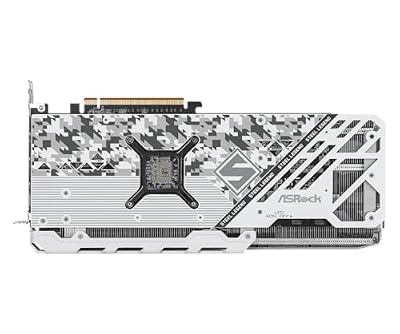
- Premium Choice: ASRock RX 7700 XT Steel Legend 12GB OC, RDNA 3, 2599MHz Boost, 12GB GDDR6 192-bit, PCIe 4.0, Triple Fan Graphics Card
The ASRock Radeon RX 7700 XT Challenger 12GB is a well-judged 1440p graphics card from AMD’s previous generation. It offers something many buyers actively want at this price: a healthy 12GB memory buffer rather than the 8GB common on competing mainstream cards. Built on AMD’s RDNA 3 architecture with mature, well-refined drivers, and priced at around $410, it makes a strong case as a value 1440p option. This ASRock RX 7700 XT review covers the specifications, performance, upscaling and value.
- ASRock RX 7700 XT at a Glance
- Architecture and Key Specifications
- Gaming Performance and Target Resolution
- Upscaling and Frame Generation
- Cooling, Power and Physical Fit
- Who Is the ASRock RX 7700 XT For?
- Pros and Cons
- Is the ASRock RX 7700 XT Worth It?
- Frequently Asked Questions
- More Graphics Card Reviews
- Related Articles
- Related Articles

ASRock Radeon RX 7800 XT Steel Legend 16GB OC Graphics Card, AMD RDNA 3 Architecture, 2520 MHz Boost Clock, 16GB GDDR6, DisplayPort 2.1, HDMI 2.1, Triple Fan Cooling


As an Amazon Associate we earn from qualifying purchases. Product prices and availability are accurate as of the date/time indicated.
🛒 Best Price Today on Amazon
Prime members get fast, free shipping on everything above, plus member-only deals. New members get a 30-day free trial — cancel anytime.
As an Amazon Associate we earn from qualifying purchases.




ASRock RX 7700 XT at a Glance
| Component | Specification |
|---|---|
| GPU | AMD Radeon RX 7700 XT |
| Architecture | AMD RDNA 3 |
| Video memory | 12GB GDDR6 (48MB Infinity Cache) |
| Memory interface | 192-bit |
| Boost clock | Up to around 2584 MHz |
| Interface | PCIe 4.0 |
| Display outputs | 3x DisplayPort 2.1, 1x HDMI 2.1 |
| Cooler | Dual-fan with 0dB silent cooling |
| Price | Around $410 |
Architecture and Key Specifications
The RX 7700 XT is built on AMD’s RDNA 3 architecture, the previous generation of Radeon graphics. Its specification sheet has a clear strength for the price: 12GB of GDDR6 memory on a 192-bit interface, backed by 48MB of AMD’s Infinity Cache. The 12GB buffer is the figure many buyers care about most, since it gives the card real headroom for modern game textures, and the Infinity Cache helps offset the memory interface by keeping frequently used data close to the GPU.
The card uses 54 compute units, AMD’s building blocks for graphics work, and boost clocks reach up to around 2584 MHz. ASRock’s Challenger version is a sensible, well-built implementation, with a dual-fan cooler that includes 0dB silent operation for quiet desktop use. Together, the generous memory, the Infinity Cache and the practical cooling make the RX 7700 XT a well-equipped card for its intended 1440p role.
Gaming Performance and Target Resolution
The RX 7700 XT is a strong 1440p card, and 1440p is the resolution at which it should be judged. In modern AAA titles at 1440p it delivers a genuinely good experience at high settings, and the 12GB memory buffer is a real asset here — it gives the card the capacity to handle demanding modern textures without running short, which is exactly where some 8GB cards begin to struggle.
In esports and competitive games it has ample headroom for high frame rates, and at 1080p it is comfortably capable for the buyer who wants very high refresh rates at that resolution. It is not primarily a 4K card, and demanding titles at 4K will ask for sensible settings, but as a 1440p performer it is well balanced. The maturity of AMD’s RDNA 3 drivers means the RX 7700 XT is a known, dependable quantity.
Upscaling and Frame Generation
The RX 7700 XT uses AMD’s FSR technology — FidelityFX Super Resolution — rather than NVIDIA’s DLSS. As an RDNA 3 card, it supports FSR 3 with Frame Generation. FSR is AMD’s image-reconstruction system: it renders a game at a lower internal resolution and reconstructs it to your target resolution, recovering performance, and FSR 3 adds a Frame Generation feature that can generate additional frames to lift smoothness in supported titles.
It is worth being precise about the technology. FSR 4, AMD’s latest upscaling generation, is tied to the newer RDNA 4 architecture; the RDNA 3-based RX 7700 XT supports FSR 3 with Frame Generation, not FSR 4. Within that scope, the toolkit is valuable: FSR 3 is supported in a wide range of games, and its Frame Generation feature helps the RX 7700 XT stay smooth in demanding titles. Buyers should value the card for the capable FSR 3 features it offers.
Cooling, Power and Physical Fit
ASRock’s Challenger cooler is a practical dual-fan design that includes 0dB silent technology, stopping the fans entirely under light loads so the card runs silently on the desktop. It is well matched to the heat the RX 7700 XT produces and keeps the card composed during extended gaming sessions. The Challenger is a mainstream-sized card, so it should fit most standard mid-tower cases comfortably, though it is always sensible to check length against your build.
Power draw is moderate for a 1440p-class card — higher than entry-level cards, but well within the capability of a good mid-range power supply. Buyers should check the card’s recommendations against their PSU, particularly with older units, but for most standard gaming systems the RX 7700 XT is straightforward to accommodate. The 0dB cooling and sensible power requirements make it an easy card to live with.
Who Is the ASRock RX 7700 XT For?
The ASRock RX 7700 XT Challenger is for the 1440p gamer who values a generous memory buffer and mature drivers at a sensible price. If you game at 1440p, want the reassurance of 12GB of memory for modern titles, and appreciate AMD’s well-refined RDNA 3 driver experience, the RX 7700 XT is a well-judged and pragmatic choice.
It is less suited to buyers focused on 4K gaming at high settings, who should look to a more powerful card, and to those who specifically want AMD’s latest FSR 4 upscaling, which is tied to the newer RDNA 4 architecture. But for the core 1440p use case, with a healthy 12GB buffer and a mature feature set, the RX 7700 XT is a strong value option that delivers exactly what its price promises.
Pros and Cons
Pros: Well-priced 1440p performance; healthy 12GB memory buffer for modern textures; 48MB Infinity Cache; mature, well-refined RDNA 3 drivers; supports FSR 3 with Frame Generation; quiet dual-fan cooler with 0dB technology.
Cons: A previous-generation card rather than current; not primarily a 4K card; supports FSR 3 rather than the newer FSR 4, which requires the RDNA 4 architecture.
Is the ASRock RX 7700 XT Worth It?
At around $410 the ASRock Radeon RX 7700 XT Challenger 12GB is worth it for the 1440p gamer who wants generous memory and mature drivers at a sensible price. Its 12GB buffer is a genuine advantage over 8GB competitors in modern titles, the Infinity Cache supports the memory interface well, and AMD’s RDNA 3 drivers are a known, dependable quantity.
If you want 4K performance or AMD’s latest FSR 4 upscaling, a newer or more powerful card is the better path. But for a buyer focused on a solid, well-equipped 1440p experience with real memory headroom, the RX 7700 XT makes good sense, and ASRock’s quiet, well-built Challenger is a sound way to buy it. It earns a recommendation as a 1440p value pick.
Frequently Asked Questions
Is the ASRock RX 7700 XT good for 1440p gaming?
Yes. The RX 7700 XT is a strong 1440p card that runs modern AAA titles well at high settings, helped by its healthy 12GB memory buffer and 48MB Infinity Cache.
Does the RX 7700 XT support FSR 4?
No. The RX 7700 XT is an RDNA 3 card and supports FSR 3 with Frame Generation. FSR 4 is tied to AMD’s newer RDNA 4 architecture.
How much memory does the RX 7700 XT have?
The RX 7700 XT has 12GB of GDDR6 memory on a 192-bit interface, backed by 48MB of Infinity Cache — a generous buffer that helps with demanding modern textures.
Is the ASRock RX 7700 XT Challenger quiet?
Yes. The Challenger uses a dual-fan cooler with 0dB silent technology, which stops the fans under light loads so the card runs silently on the desktop.
More Graphics Card Reviews
- GIGABYTE Radeon RX 9060 XT Gaming OC 16G Review
- MSI GeForce RTX 5060 Ti 16G Shadow 2X OC Review
- PowerColor Radeon RX 7800 XT 16GB Review
- XFX Swift Radeon RX 9070 OC Review
- MSI GeForce RTX 5070 Ventus 3X OC 12G Review
- GIGABYTE Radeon RX 9070 XT Gaming OC 16G Review
- MSI GeForce RTX 5070 Ti Ventus 3X OC 16G Review
- ASRock Radeon RX 7900 XT Phantom Gaming 20GB OC Review
Affiliate Disclosure: As an Amazon Associate, we earn from qualifying purchases. If you click a link and make a purchase, we may earn a small commission at no extra cost to you. Prices and availability are accurate as of publication and may change.
Related Articles
Looking for more on this topic? Browse the hand-picked guides below — each one applies the same scoring rubric used in this review.