- Top Pick: ASRock Intel Arc A580 Challenger 8GB OC Graphics Card, Intel Xe HPG Architecture, 8GB GDDR6, PCIe 4.0, Dual Fans, 0dB Silent Cooling, DisplayPort 2.0
- Best Value: ASRock Intel Arc B570 Challenger 10GB OC GDDR6 Graphics Card, 2600 MHz GPU, 19 Gbps Memory, Dual Fan, Metal Backplate, HDMI 2.1a, DisplayPort 2.1, 0dB Cooling
- Premium Choice: ASRock Intel Arc A380 Challenger ITX 6GB OC, 2250MHz GPU, 6GB GDDR6 96-bit, PCIe 4.0, Single Fan, 0dB Silent, DP 2.0, HDMI 2.0b
The ASRock Intel Arc A580 Challenger 8GB OC is one of the more interesting budget graphics cards on the market, because it comes from Intel rather than the usual two names. Priced aggressively at around $200, it offers a solid 8GB of memory, a wide memory interface and a feature set that makes it genuinely appealing to streamers and content creators as well as gamers. This ASRock Arc A580 review covers the specifications, gaming performance, the all-important upscaling and encoding story, and overall value at the budget end of the market.
- ASRock Intel Arc A580 at a Glance
- Architecture and Key Specifications
- Gaming Performance and Target Resolution
- Upscaling and Frame Generation
- Cooling, Power and Physical Fit
- Who Is the Intel Arc A580 For?
- Pros and Cons
- Is the Intel Arc A580 Worth It?
- Frequently Asked Questions
- More Graphics Card Reviews
- Related Articles
- Related Articles

ASRock Intel Arc A580 Challenger 8GB OC Graphics Card, Intel Xe HPG Architecture, 8GB GDDR6, PCIe 4.0, Dual Fans, 0dB Silent Cooling, DisplayPort 2.0


As an Amazon Associate we earn from qualifying purchases. Product prices and availability are accurate as of the date/time indicated.
🛒 Best Price Today on Amazon
Prime members get fast, free shipping on everything above, plus member-only deals. New members get a 30-day free trial — cancel anytime.
As an Amazon Associate we earn from qualifying purchases.



ASRock Intel Arc A580 at a Glance
| Component | Specification |
|---|---|
| GPU | Intel Arc A580 |
| Architecture | Intel Xe HPG (Alchemist) |
| Video memory | 8GB GDDR6 (16 Gbps) |
| Memory interface | 256-bit |
| Boost clock | Factory OC around 2000 MHz |
| Interface | PCIe 4.0 |
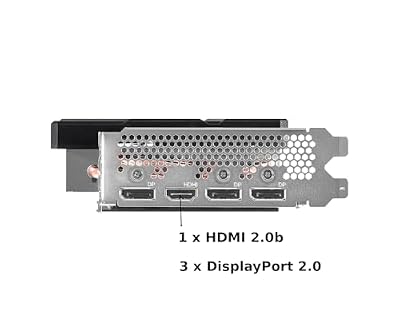
| Display outputs | 3x DisplayPort 2.0, 1x HDMI 2.1 |
| Cooler | Dual-fan with metal backplate |
| Price | Around $200 |
Architecture and Key Specifications
The Arc A580 is built on Intel’s Xe HPG architecture, the design behind Intel’s first serious generation of discrete gaming graphics cards. It is a budget part, but its specification sheet has a notable strength: a wide 256-bit memory interface paired with 8GB of GDDR6 running at 16 Gbps. That is a generous memory configuration for the price, wider than many competing budget cards, and it gives the A580 useful bandwidth to work with.
ASRock’s Challenger OC treatment lifts the boost clock to around 2000 MHz with a factory overclock and wraps the card in a sensible dual-fan cooler with a metal backplate. The 8GB buffer is the headline number for buyers wary of memory-starved budget cards, and it means the A580 has the capacity to handle modern textures at 1080p without immediately running short. For a card at this price, the fundamentals are well chosen.
Gaming Performance and Target Resolution
The Arc A580 is a budget 1080p card, and 1080p is the resolution at which it should be assessed. In modern games it is capable of a good 1080p experience, with the 8GB of memory and the wide memory interface helping it hold up in titles that punish cards with smaller buffers. For mainstream AAA games at sensible settings, and for esports titles where it has plenty of headroom, the A580 delivers smooth, enjoyable gaming on a tight budget.
Intel’s Arc graphics have matured considerably through driver updates, and the modern driver experience is far stronger than it was at launch — an important point for anyone who remembers the early reputation of these cards. The A580 is not built for high resolutions or for maxed settings in the heaviest titles; it is a 1080p card, and a good one for the money. Treat it as a solid mainstream 1080p option and it delivers exactly what its price suggests.
Upscaling and Frame Generation
The Arc A580’s upscaling technology is XeSS, Intel’s own AI-assisted image-reconstruction system. Like competing upscalers, XeSS renders a game at a lower internal resolution and reconstructs it to your target resolution, recovering performance with a modest impact on image quality. On a budget card this is a valuable tool, and XeSS is supported in a growing list of games, making it a practical way to lift frame rates in demanding titles on the A580.
The A580’s standout feature, though, is its media engine. Intel Arc cards include excellent AV1 hardware encoding, and this is a genuine advantage for streamers and content creators. AV1 is a modern, highly efficient video codec, and having strong hardware encoding for it means cleaner streams and recordings at lower bitrates. For a budget card to offer streaming-grade AV1 encoding alongside competent gaming is unusual, and it is a large part of what makes the A580 worth considering.
Cooling, Power and Physical Fit
ASRock’s Challenger cooler is a straightforward dual-fan design finished with a metal backplate that adds rigidity and a touch of quality to a budget card. It is well matched to the heat the A580 produces, keeping the card at sensible temperatures during gaming without undue noise. The Challenger is a mainstream-sized card rather than a compact one, so it is worth checking length against your case, though it should fit most standard mid-tower builds without difficulty.
Power draw is moderate for a card of this class — higher than the very smallest entry-level cards, but well within the capability of a reasonable mid-range power supply. Buyers pairing the A580 with an older or low-wattage PSU should check the recommendations, but for most standard systems it presents no real obstacle. Overall the A580 is an easy card to accommodate in a typical budget gaming build.
Who Is the Intel Arc A580 For?
The Intel Arc A580 is for the value-focused buyer who wants solid 1080p gaming and is open to looking beyond the two traditional GPU makers. It is a particularly strong choice for one group in especial: streamers and content creators on a budget, who benefit directly from the card’s excellent AV1 hardware encoding. If you record or stream gameplay and want good results without spending heavily, the A580 is unusually well suited to you.
It is less suited to buyers who want the highest frame rates, who game above 1080p, or who want a guaranteed problem-free experience in every single title — Intel’s drivers are much improved but a traditional brand may feel safer to the most cautious buyer. For mainstream 1080p gaming with a real streaming bonus, though, the A580 makes a compelling budget argument.
Pros and Cons
Pros: Aggressive budget pricing; generous 8GB of memory on a wide 256-bit interface; competent 1080p gaming; XeSS upscaling support; excellent AV1 hardware encoding for streamers and creators; solid dual-fan cooler with backplate.
Cons: Budget-tier performance only; not built for resolutions above 1080p or for maxed settings in the heaviest games; Intel’s drivers, while much improved, may still feel less familiar than the established brands.
Is the Intel Arc A580 Worth It?
At around $200 the ASRock Intel Arc A580 Challenger 8GB OC is worth it for the budget gamer who values memory capacity and, especially, for the budget streamer or creator. The combination of a solid 8GB buffer, a wide memory interface, XeSS upscaling and excellent AV1 encoding is unusual at this price, and it gives the A580 a clear identity rather than leaving it as just another cheap card.
If you only game and want a known quantity, a traditional-brand budget card is a perfectly reasonable alternative. But if the AV1 encoding speaks to how you use a PC, or if you simply want generous specifications for the money, the A580 earns its place. ASRock’s well-built Challenger is a sensible way to buy it, and the card represents genuine value at the budget end.
Frequently Asked Questions
Is the Intel Arc A580 good for 1080p gaming?
Yes. The Arc A580 is a budget 1080p card that delivers a good 1080p experience in modern games, helped by its 8GB of memory and wide 256-bit memory interface.
What upscaling technology does the Arc A580 use?
The Arc A580 uses XeSS, Intel’s AI-assisted upscaling technology. It reconstructs a lower internal resolution to your target resolution to recover performance, and is supported in a growing range of games.
Is the Intel Arc A580 good for streaming?
Yes. Intel Arc cards include excellent AV1 hardware encoding, which produces cleaner streams and recordings at lower bitrates, making the A580 a strong budget choice for streamers and creators.
How much memory does the Arc A580 have?
The Arc A580 has 8GB of GDDR6 memory running at 16 Gbps on a wide 256-bit interface, a generous configuration for a budget graphics card.
More Graphics Card Reviews
- ASUS Dual GeForce RTX 4060 V2 OC Edition Review
- GIGABYTE GeForce RTX 5050 WINDFORCE OC 8G Review
- GIGABYTE GeForce RTX 5060 Gaming OC 8G Review
- ASRock Radeon RX 7700 XT Challenger 12GB Review
- GIGABYTE Radeon RX 9060 XT Gaming OC 16G Review
- MSI GeForce RTX 5060 Ti 16G Shadow 2X OC Review
- PowerColor Radeon RX 7800 XT 16GB Review
- XFX Swift Radeon RX 9070 OC Review
Affiliate Disclosure: As an Amazon Associate, we earn from qualifying purchases. If you click a link and make a purchase, we may earn a small commission at no extra cost to you. Prices and availability are accurate as of publication and may change.
Related Articles
Looking for more on this topic? Browse the hand-picked guides below — each one applies the same scoring rubric used in this review.