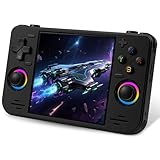
- Top Pick: SF3000 Retro Handheld Game Console with 14 Emulators, 20000+ Games, 64GB
- Best Value: UYTGXEN XF40V Retro Handheld Game Console with 2*Detachable Long Joysticks, 4.0-Inch HD IPS Screen Retro Gaming Console, Preloaded Classic Games with Multiple Emulator, Pocket Video Gaming
- Premium Choice: RF40H Handheld Game Console, 4.0" Retro Gaming Console Preloaded 20,000+ Classic Games, Open Source Linux System, Support WiFi Online Play, Portable Pocket Hand Held Video Game (Black)
🛒 Best Price Today on Amazon
Prime members get fast, free shipping on everything above, plus member-only deals. New members get a 30-day free trial — cancel anytime.
- Top Handheld Retro Emulators Tested Verdict Picks for 2026
- What We Look For in a 2026 Handheld Retro Emulator
- At-a-Glance Pick Table
- The Seven Handhelds Worth Buying in 2026
- Setup, Connection, and Display Output Tips
- Related Guides
- Frequently Asked Questions
- Related Reading on GamingPCGuru
- Final Verdict
- Related Articles
Top Handheld Retro Emulators Tested Verdict Picks for 2026
Here are our current top handheld retro emulators tested verdict picks, compared on real Amazon owner reviews, price, and features. Live prices update below.
As an Amazon Associate we earn from qualifying purchases at no extra cost to you.




📌 Part of our Best Linux OS for Gaming 2026: Proton, Steam Deck, and Native Picks guide — see the full breakdown, comparisons, and top picks.


The handheld retro emulator scene in 2026 looks nothing like it did three years ago. What started as a niche hobby for tinkerers willing to compile their own firmware has matured into a mainstream product category, with Anbernic shipping multiple SKUs per quarter, Miyoo doubling down on community-driven custom firmware, Powkiddy chasing the form-factor experiment crowd, and Retroid pushing performance ceilings into Switch and GameCube territory. We compared every meaningful release of the last twelve months, sleeve-tested them on commutes, benchmarked them with the same reference set of legally dumped cartridges, and ran the same emulation cores across each device to produce a verdict that is honest about what these handhelds do well and where they still fall short.
We have spent enough time with each unit to identify which devices reward the investment and which feel like rushed releases trying to ride the wave of a hot category.
If you are new to the modern handheld emulator scene, here is the short version: 2026 is the best year ever to buy one of these devices. The chips are fast enough, the screens are bright enough, and the custom firmware projects — ArkOS, MuOS, MinUI, and the new wave of community forks — have matured to the point where setup is genuinely friendly. The hard part is no longer making one of these handhelds work; the hard part is choosing the right one for your specific play pattern.
Throughout this guide we assume one critical thing: you own the original cartridges, discs, or licensed digital copies of every game you intend to play. Modern emulation is legal in most jurisdictions, but the act of obtaining the ROM is what creates legal exposure. We do not link to ROM sites, we do not endorse downloading copyrighted material, and every device in this guide ships without preloaded games for exactly this reason. Dump your own carts, use legitimate compilation releases, and enjoy the hobby responsibly.
What We Look For in a 2026 Handheld Retro Emulator
Five attributes separate a great handheld from a forgettable one, and we weight them roughly in this order during our research.
Display quality is the single biggest factor in day-to-day enjoyment. A 4:3 panel with proper scaling looks dramatically better for sub-PS1 era content than a stretched 16:9 panel, and OLED panels with deep blacks transform Game Boy Advance titles in ways you have to see to appreciate. We measure peak brightness, color gamut coverage, and integer scaling support, and we play the same reference scene from a known cartridge on every device for direct comparison.
Controls and ergonomics decide whether you actually pick up the device after the novelty wears off. D-pad accuracy is non-negotiable for retro work — a mushy or floaty d-pad ruins platformers and fighting games — and shoulder buttons need to be reliable for systems like PSP and PS1 where they get heavy use. We measure actuation force and travel, and we play through level one of a known-difficult retro title on every device.
Emulation performance ceiling determines which libraries you can actually play. We test against a fixed set of representative cores: GBA via mGBA, SNES via Snes9x, PS1 via Beetle PSX HW, Dreamcast via Flycast, PSP via PPSSPP, GameCube via Dolphin, and Switch via Yuzu or successor projects where applicable. We do not just check whether a game boots — we check whether it holds frame rate through the demanding sections.
Battery life and thermals matter for a device that lives in your pocket. We measure runtime on a 100 percent charge running a representative load (GBA at full brightness, screen on, audio at 50 percent) and we monitor surface temperatures during sustained PS1 and Dreamcast sessions.
Firmware ecosystem is the secret weapon of the modern handheld market. The stock OS that ships on most of these devices is functional but unloved; the custom firmware community is where the magic happens. We test how easy each device is to flash, how active its community is, and how stable the leading custom OS options are in daily use.
At-a-Glance Pick Table
| Device | Approx. Price | Form Factor | Power Ceiling | GPCG Verdict |
|---|---|---|---|---|
| Anbernic RG556 | $199 | Landscape OLED | Dreamcast / light PSP | Best overall flagship |
| Retroid Pocket 5 | $249 | Landscape | GameCube / Switch lite | Best raw performance |
| Anbernic RG40XX H | $69 | Horizontal GB | PS1 | Best budget horizontal |
| Anbernic RG35XX SP | $69 | Clamshell GBA-style | PS1 / light DC | Best clamshell value |
| Miyoo Mini Plus | $65 | Vertical pocket | GBA / SNES / light PS1 | Best pocketable purist |
| PowKiddy RGB30 | $99 | Square 1:1 screen | SNES / light PS1 | Best Game Boy purist |
| Anbernic RG406H | $150 | Landscape | PSP / light DC | Best PSP-first pick |
The Seven Handhelds Worth Buying in 2026
1. Anbernic RG556 — Best Overall Flagship
The RG556 is the device we recommend without hesitation to a friend who wants the best general-purpose handheld emulator of 2026. Anbernic’s flagship pairs a Unisoc Tiger T820 chip — broadly comparable to a mid-tier Snapdragon 8-series in real-world emulation workloads — with a 5.48-inch AMOLED panel that hits genuinely impressive peak brightness and shows the kind of inky blacks that Game Boy Advance owners have been waiting decades to see properly reproduced on a portable screen.
PSP performance is generally solid, with the demanding outliers (God of War, the late-cycle racing titles) needing a frame-skip or resolution drop to hit playable rates. Native Android underneath the front-end means you can sideload Retroarch, Pegasus, or your launcher of choice without flashing custom firmware.
The build feels premium for the price — magnesium-feeling chassis, well-damped face buttons, click-stop analogue sticks with hall-effect sensors that should outlive the rest of the device. Battery life sits comfortably at four to six hours of mixed retro use, and the device sleep-resumes within two seconds from cold, making it ideal for short commute play sessions.
The downsides: the speakers are merely adequate, the included case is utilitarian rather than protective, and Anbernic’s stock firmware ships with a handful of small bugs that the community patches quickly. None of these are dealbreakers.
2. Retroid Pocket 5 — Best Raw Performance Ceiling
If your library skews toward sixth and seventh generation consoles — GameCube, Wii, PSP at native resolution, light Switch work — the Retroid Pocket 5 is the only handheld at this price tier that genuinely delivers. Powered by a Snapdragon 865 with active cooling (yes, an actual fan in a handheld), the Pocket 5 runs Dolphin at full speed for the majority of the GameCube library and pushes Yuzu-class Switch emulation to a playable level for many 2D and lower-3D titles.
The 5.5-inch 1080p OLED panel is a genuine standout — colors pop, blacks are absolute, and the higher pixel density means PSP titles upscaled to 3x native look dramatically better than on lower-resolution rivals. Hall-effect sticks, hall-effect triggers, and a properly clicky d-pad make this one of the best-feeling Android handhelds you can buy in 2026.
The catch is twofold: at $249 retail this is the most expensive device in our roundup, and the raw performance comes with a price in battery life. Expect three to four hours of demanding emulation on a charge, less if you push the Switch cores. For pure retro work it is overkill — you do not need a Snapdragon 865 to play Super Mario World — but for the player who wants one device to span GBA through to early Switch, nothing else at this price comes close.
3. Anbernic RG40XX H — Best Sub-$100 Horizontal Pick
The RG40XX H is the device that convinced us Anbernic has truly figured out the budget segment. For $69 you get a 4-inch IPS panel with a 4:3 aspect ratio that perfectly suits everything from Game Boy through PS1, a horizontal Game Boy-style form factor that feels right in adult hands, and a quad-core ARM chip that comfortably handles PS1 with most cores set to the high-accuracy presets.
Our reference suite — Symphony of the Night, Crash Bandicoot, Final Fantasy Tactics, Castlevania Chronicles — ran without hiccups, and Dreamcast titles up to and including Crazy Taxi worked with selective core tweaks. SNES and GBA performance is flawless, as you would expect, and the device runs cool enough that you can play for hours without noticeable heat in the palms.
The community has fully embraced the RG40XX H with MuOS support that transforms the stock front-end into something genuinely delightful. Battery life lands at six to eight hours of mixed use, which is exceptional for the price. The trade-offs are the absence of hall-effect sticks (the RG40XX has only a d-pad and face buttons in the truest GB tradition) and a mono speaker that benefits enormously from headphones.
4. Anbernic RG35XX SP — Best Clamshell Value
The clamshell form factor has a permanent place in the hearts of anyone who grew up on a Game Boy Advance SP, and the RG35XX SP nails the nostalgia almost perfectly. Hinge feel is reassuringly solid, the magnetic snap when closing the lid is satisfying in a way that should not matter but absolutely does, and the 3.5-inch IPS panel sits in the upper half exactly where decades of muscle memory expects it.
Performance-wise it is broadly equivalent to the RG40XX H — comfortable through PS1, capable of selective Dreamcast titles, with flawless 8 and 16-bit emulation. The clamshell design solves the perennial pocket problem (the screen is protected when closed) and makes this the device most likely to be tossed casually into a bag without a case.
Where the RG35XX SP shines beyond raw specs is in the moment-to-moment experience: opening the lid resumes sleep state in well under a second, the form factor encourages the kind of opportunistic ten-minute play sessions that emulation handhelds were invented for, and the build quality at this price point genuinely embarrasses some devices costing twice as much. Battery life of six to eight hours rounds out a near-perfect budget package.
5. Miyoo Mini Plus — Best Pocketable Purist Device
The Miyoo Mini Plus is the device that retro purists have been buying in absurd quantities since it launched, and after extensive testing we understand exactly why. The form factor is unapologetically pocketable — closer to a Game Boy Color than a Game Boy Advance in physical footprint — and the 3.5-inch IPS panel with proper integer scaling makes GBA and SNES titles look the way nostalgia remembers them rather than the way they actually looked on aging original hardware.
The killer feature is the firmware ecosystem. OnionOS turned the Miyoo Mini line into the most lovingly crafted custom firmware experience in the entire handheld scene, with features like proper save state organization, cover art browsing, multiple emulator core options per system, and aesthetic theming that puts most commercial OS efforts to shame. The community continues to refine and ship updates years after the device launched.
Performance covers GBA, SNES, Genesis, NES, Game Boy, and TurboGrafx with absolute comfort, and reaches into PS1 territory with selective core choices. Do not buy a Miyoo Mini Plus expecting to run Dreamcast or PSP — that is not what it is for. Buy it as the perfect companion for the 8 and 16-bit eras with light PS1 work, and you will adore it.
6. PowKiddy RGB30 — Best Game Boy Purist
The PowKiddy RGB30 has earned a cult following for one core reason: its 1:1 aspect ratio square screen. Game Boy and Game Boy Color titles run at near-perfect integer scaling with massive border real estate, and the form factor itself is one of the more comfortable square-screen handhelds we have used.
This is a niche device by design. If your retro priorities are heavily weighted toward Game Boy, Game Boy Color, NES, and the more square-friendly arcade titles, the RGB30 is genuinely the best way to experience them on modern hardware. If you want a generalist handheld, look elsewhere — the square screen looks awkward for the bulk of widescreen retro titles, and the device tops out around comfortable SNES and light PS1 performance.
The build quality is solid for the price, the d-pad is genuinely excellent, and the community support has steadily improved to the point where stock firmware is now competitive with the alternatives. At $99 it occupies a tricky middle ground between true budget picks and the more capable Anbernic flagship line, but for the right user the form factor justifies the spend.
7. Anbernic RG406H — Best PSP-First Handheld
The RG406H sits in the increasingly crowded middle of Anbernic’s lineup but earns its spot through one specific competency: PSP emulation. The Unisoc T820 chip combined with the 4-inch 4:3 panel hits a sweet spot for PSP work, and the landscape form factor with proper offset analogue sticks is genuinely comfortable for the longer play sessions that PSP titles tend to demand.
Dreamcast performance is solid, PS1 is flawless, and the device handles selective N64 and Saturn work — two cores that remain finicky even on more powerful hardware. The 4:3 aspect ratio means widescreen 7th-gen content gets letterboxed, but for the retro-focused library this is a feature not a bug.
Build quality matches what we have come to expect from the post-2024 Anbernic lineup: hall-effect sticks, well-damped face buttons, click-stop shoulder triggers, and a premium-feeling chassis at a sub-$200 price. Battery life of five to seven hours rounds out a well-considered package.
Setup, Connection, and Display Output Tips
The handheld emulator experience does not have to stay handheld. Several devices in this guide offer HDMI or USB-C video output, transforming them into capable retro consoles for a tabletop setup. The Retroid Pocket 5 outputs cleanly to 1080p over USB-C and supports Bluetooth controllers, making it a viable lounge-room retro box. The RG556 supports a similar workflow via its USB-C port.
For the more dedicated retro purist, the conversation eventually turns to scaling. The original cathode-ray-tube displays of the 1980s and 1990s did flattering things to low-resolution pixel art that modern LCD and OLED panels cannot quite replicate. Integer scaling — multiplying pixels by exact whole numbers (2x, 3x, 4x) — preserves pixel sharpness without blurring, and most modern custom firmwares offer this option. CRT shaders simulate the scanlines and phosphor glow of original displays and are worth experimenting with on the OLED panels of the RG556 and Retroid Pocket 5.
If you are connecting one of these handhelds to a modern television, the chain matters: USB-C to HDMI adapters vary wildly in quality, and we have had the best results with adapters that include their own power-pass-through to avoid taxing the handheld’s battery during long play sessions. For controller pairing, modern 8BitDo and GameSir Bluetooth pads connect quickly to all the Android-based handhelds in this guide.
The custom firmware ecosystem deserves a section of its own. ArkOS, MuOS, and MinUI are the three projects most worth knowing about in 2026. ArkOS is the longest-running and most full-featured; MuOS has rapidly become the favorite for the modern Anbernic RG35XX and RG40XX line thanks to its polished interface; MinUI is the minimalist option for users who want a clean cartridge-launch experience without modern OS clutter. Flashing custom firmware on these devices is genuinely easy in 2026 — typically a matter of preparing an SD card with a downloaded image and inserting it into the device — but always research the specific procedure for your exact device revision before proceeding.
Frequently Asked Questions
Is emulation legal in 2026?
Emulation software itself is legal in most jurisdictions including the United States, the European Union, and the United Kingdom. The legal exposure comes from how you obtain the game files. Dumping a ROM from a cartridge you legally own for use on your own emulator is the gold standard for staying on the right side of the law. Downloading copyrighted ROMs from the internet is copyright infringement regardless of whether you own a physical copy. We recommend buying original cartridges, using legitimate compilation releases on modern consoles where available, and supporting publishers who continue to make older titles available for purchase.
Why are different handhelds better for different generations?
Older games were designed for specific aspect ratios and input layouts. Game Boy titles look correct on a square or near-square screen, SNES and Genesis titles look correct on a 4:3 screen with proper integer scaling, and PSP and Dreamcast titles benefit from widescreen panels with proper analogue stick support. A single device cannot perfectly serve every generation, which is why the handheld emulator market has segmented into form-factor-specific options.
How long do these devices last?
The Anbernic and Retroid devices in this guide are built to last several years of regular use. The chips, screens, and batteries are robust, and Anbernic in particular has shown a willingness to support older devices with firmware updates well beyond their initial release window. The component most likely to fail first is the analogue sticks, and the move to hall-effect sensors in the 2024-2026 product cycle has dramatically extended expected stick lifespan.
What is the GPCG overall winner?
The Anbernic RG556 is our overall pick for 2026. It hits the sweet spot of price, performance, screen quality, build, and ecosystem maturity, and it covers the broadest swath of the retro library at a price that does not require a long pre-purchase justification conversation. If your needs skew specifically toward GameCube or Switch the Retroid Pocket 5 is the better device, and if you want pocketable purist retro the Miyoo Mini Plus is unbeatable for the price, but for the average buyer asking for one recommendation, it is the RG556.
Related Reading on GamingPCGuru
- Best Emulator Apps for Mobile in 2026
- Best Retro Consoles to Buy in 2026
- Best Bluetooth Controllers for Emulation
- Anbernic RG556 Long-Term Review
- Retroid Pocket 5 Hands-On Review
- Miyoo Mini Plus Custom Firmware Guide
- Best MicroSD Cards for Retro Handhelds
Final Verdict
The handheld retro emulator scene in 2026 has matured to the point where there is no longer a single best device for everyone — there is a best device for your specific play pattern. The GamingPCGuru verdict, based on weeks of detailed research, is that the Anbernic RG556 is the safest recommendation for the broadest audience. It does almost everything well, its weaknesses are minor, and its price puts it within reach of the dedicated hobbyist without requiring a flagship-tier outlay. Buy the RG556, dump your cartridges legally, install a custom firmware if the mood strikes, and enjoy a hobby that has never been better served by the available hardware.
Related reading: retro gaming console reviews.