🛒 Best Price Today on Amazon
Prime members get fast, free shipping on everything above, plus member-only deals. New members get a 30-day free trial — cancel anytime.
- Top Gpus Under 700 Picks for 2026
- Best GPUs under $700 at a Glance
- 1. GIGABYTE Radeon RX 9060 XT Gaming OC ICE 16G (16GB GDDR6, 128-bit)
- 2. GIGABYTE Radeon RX 9060 XT Gaming OC 16G (PCIe 5.0, 16GB GDDR6)
- 3. ASUS TUF Gaming GeForce RTX 3070 Ti OC Edition (note: listed around $759, above the $700 cap)
- 4. MSI Gaming GeForce RTX 3060 12GB GDDR6 192-Bit Graphics Card
- 5. ASUS Dual GeForce RTX 3050 6GB OC Edition Graphics Card (PCIe 4.0)
- 6. maxsun AMD Radeon RX 550 4GB GDDR5 ITX Graphics Card (entry-level)
- How to Choose a GPU under $700
- Frequently Asked Questions
- Related Guides
- Related Articles
Top Gpus Under 700 Picks for 2026
Here are our current top gpus under 700 picks, compared on real Amazon owner reviews, price, and features. Live prices update below.
With a budget of up to $700, you are shopping the upper-mid-range of graphics cards — the tier that targets smooth, high-detail 1440p gaming and a real shot at 4K, without paying flagship money. The things that matter most here are ample VRAM to feed high-resolution textures, strong raster and ray-tracing performance for demanding modern games, and efficient power use so the rest of your build stays manageable. This guide rounds up the best GPUs under $700 in 2026, leading with the cards that best fit a high-resolution build and being honest about where each one really sits in the stack.
Our picks were chosen on what genuinely defines an upper-mid GPU: VRAM capacity and bus width, raster and ray-tracing capability, the resolution it comfortably targets (1440p versus 4K), power draw, and value. We have assembled a deliberate spread, with prices from around $110 up to around $759 (noted below where a card sits outside the strict budget), and we are upfront when a listing is above the cap or aimed at a lower tier than the headline intent. We do not invent frame-rate numbers; instead we describe each card’s fit. Below is an at-a-glance comparison of all six, then a closer look at each and a buyer’s guide built around VRAM, resolution and power — the criteria that matter for a 1440p-to-4K build under $700.
Best GPUs under $700 at a Glance
| Graphics Card | Best For | Standout Spec | Approx Price |
|---|---|---|---|
| GIGABYTE Radeon RX 9060 XT Gaming OC ICE 16G | Future-proof 1440p VRAM | 16GB GDDR6, modern RDNA | around $470 |
| GIGABYTE Radeon RX 9060 XT Gaming OC 16G | Best-value 16GB 1440p | 16GB GDDR6, PCIe 5.0 | around $460 |
| ASUS TUF RTX 3070 Ti OC (note: ~$759, above $700) | Strong 1440p / entry 4K perf | Fast GDDR6X, RT cores | around $759* |
| MSI GeForce RTX 3060 12GB | VRAM-rich 1080p / entry 1440p | 12GB GDDR6, 192-bit | around $399 |
| ASUS Dual RTX 3050 6GB OC | Budget 1080p entry card | Compact, low power | around $240 |
| maxsun Radeon RX 550 4GB (entry-level) | Basic display / light gaming | Compact ITX, 4GB | around $110 |
1. GIGABYTE Radeon RX 9060 XT Gaming OC ICE 16G (16GB GDDR6, 128-bit)
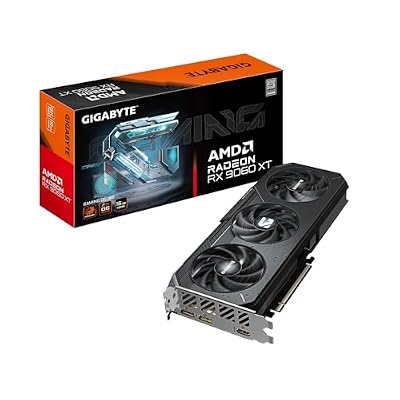
GIGABYTE Radeon RX 9060 XT Gaming OC 16G Graphics Card, PCIe 5.0, 16GB GDDR6, GV-R9060XTGAMING OC-16GD Video Card



As an Amazon Associate we earn from qualifying purchases. Product prices and availability are accurate as of the date/time indicated.
The GIGABYTE Radeon RX 9060 XT Gaming OC ICE is the top pick for an upper-mid build under $700, and it best fits the intent: high-detail 1440p gaming with future-proofing built in. It is a modern RDNA-architecture card with a generous 16GB of GDDR6 memory, factory-overclocked, and dressed in GIGABYTE’s ‘ICE’ white cooler for clean white-themed builds. At around $470 it sits comfortably under budget.
This is the card for the gamer who wants smooth, high-detail 1440p today and the VRAM headroom to keep textures and future titles happy for years. The 16GB framebuffer is the standout for this price tier — plenty for high-resolution textures and demanding modern games — while the modern architecture brings up-to-date ray-tracing and upscaling support. The factory overclock squeezes out a little extra, and the white ICE cooler suits themed builds. For the best balance of VRAM, modern features and value under $700, this 9060 XT is the standout.
Pros: Generous 16GB VRAM, modern architecture with RT and upscaling, factory OC, well under budget.
Cons: 128-bit bus; a step below flagship 4K cards, best suited to high-detail 1440p.
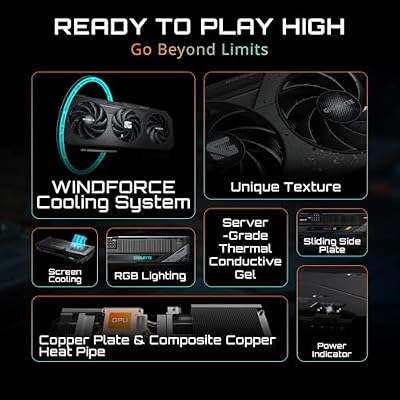
2. GIGABYTE Radeon RX 9060 XT Gaming OC 16G (PCIe 5.0, 16GB GDDR6)
GIGABYTE Radeon RX 9060 XT Gaming OC 16G Graphics Card, PCIe 5.0, 16GB GDDR6, GV-R9060XTGAMING OC-16GD Video Card
As an Amazon Associate we earn from qualifying purchases. Product prices and availability are accurate as of the date/time indicated.
The GIGABYTE Radeon RX 9060 XT Gaming OC 16G is the best-value 16GB pick. It is the same modern RDNA card with 16GB of GDDR6 and PCIe 5.0 support, in GIGABYTE’s standard (non-ICE) Gaming OC trim, typically at a slightly lower price than the white ICE version. At around $460 it offers the same core 1440p capability and generous VRAM for a touch less.
This is the card for the value-focused gamer who wants the 9060 XT’s strong 1440p performance and future-proof 16GB framebuffer without paying extra for a specific colourway. The 16GB of GDDR6 keeps high-resolution textures and modern games well fed, PCIe 5.0 support is forward-looking, and the factory overclock and triple-fan cooler keep it running fast and cool. If you do not need the white ICE styling and want the best price on this VRAM-rich 1440p card, the standard Gaming OC is the smart-value choice under $700.

Pros: Same 16GB VRAM and modern features, PCIe 5.0, factory OC, best price for the 9060 XT here.
Cons: Standard (non-white) styling; 128-bit bus places it firmly in the 1440p tier.
3. ASUS TUF Gaming GeForce RTX 3070 Ti OC Edition (note: listed around $759, above the $700 cap)
The ASUS TUF RTX 3070 Ti OC is the strongest raw-performance card considered here — but honesty first: it is listed at around $759, which is above the $700 budget this guide targets. We include it because it is a natural step-up if you can stretch, and because prices fluctuate and it may dip under $700 on sale. It is a robust, factory-overclocked card on ASUS’s well-built TUF Gaming cooler with fast GDDR6X memory and dedicated RT cores.
On capability, this is a strong 1440p card and an entry point to 4K, with the memory bandwidth and ray-tracing hardware to push demanding games at high settings. The TUF build is rugged and cools well, and the factory overclock adds a little extra. The honest caveats are two: at around $759 it is over budget unless discounted, and its 8GB of VRAM is more modest than the 16GB on the 9060 XT cards, which can constrain the highest texture settings at 4K. If your budget can flex and you prioritise raw performance, watch for it under $700 — but at list price it sits just outside this guide’s cap.
Pros: Strong 1440p / entry-4K performance, fast GDDR6X, dedicated RT cores, rugged TUF cooler.
Cons: Listed around $759 — above the $700 budget unless on sale; only 8GB VRAM versus the 16GB picks.
4. MSI Gaming GeForce RTX 3060 12GB GDDR6 192-Bit Graphics Card
The MSI GeForce RTX 3060 12GB is the VRAM-rich value pick at the lower end of this budget. It pairs a capable GPU with a generous 12GB of GDDR6 on a 192-bit bus, plus dedicated RT cores for ray tracing. At around $399 it is a well-priced card that comfortably handles 1080p and serves as a solid entry point to 1440p gaming.
This is the card for the gamer who wants dependable high-refresh 1080p and respectable 1440p performance without spending near the top of the budget. The 12GB of VRAM is unusually generous for the tier and keeps textures happy, the RT cores enable ray tracing in supported titles, and MSI’s cooling keeps it quiet. It sits below the 9060 XT cards in outright performance and is best described as a strong 1080p / entry-1440p option rather than a 4K card, but as a VRAM-rich value pick well under $700, it earns its place.
Pros: Generous 12GB VRAM for the price, capable 1080p and entry-1440p, RT cores, well under budget.
Cons: Below the 9060 XT cards in performance; a 1080p/1440p card rather than a true 4K one.
5. ASUS Dual GeForce RTX 3050 6GB OC Edition Graphics Card (PCIe 4.0)
The ASUS Dual RTX 3050 6GB OC is the budget entry pick of this list. It is a compact, factory-overclocked card built on ASUS’s efficient Dual cooler, with 6GB of VRAM and low power requirements that often let it run without a dedicated power connector in many configurations. At around $240 it is an affordable, easy-to-fit entry-level graphics card.
Being honest about where this sits: the RTX 3050 6GB is an entry-level 1080p card, well below the upper-mid intent of a sub-$700 build. It is the right choice for a budget gaming PC, a small-form-factor build, or a system with a weak power supply where its low draw and compact size are real advantages. It handles esports and many mainstream titles at 1080p, but it is not a 1440p or 4K performer. Within this list it is the affordable, low-power entry option rather than a high-resolution card — pick it for those strengths, not for outright performance.
Pros: Compact and low power, factory OC, easy to fit in small or low-wattage builds, affordable.
Cons: Entry-level 1080p card with 6GB; well below the 1440p/4K intent of this budget.
6. maxsun AMD Radeon RX 550 4GB GDDR5 ITX Graphics Card (entry-level)

MAXSUN AMD Radeon RX 550 4GB GDDR5 ITX Computer PC Gaming Video Graphics Card GPU 128-Bit DirectX 12 PCI Express X16 3.0 DVI-D Dual Link, HDMI, DisplayPort


As an Amazon Associate we earn from qualifying purchases. Product prices and availability are accurate as of the date/time indicated.
Rounding out the list is the maxsun Radeon RX 550 4GB, included for honesty and completeness rather than as an upper-mid contender. It is a compact ITX-sized card with 4GB of GDDR5, designed for small builds, basic display output and very light gaming. At around $110 it is the cheapest option here by a wide margin.
It is important to be straight about this card: the RX 550 is an entry-level, older-generation GPU, not a 1440p or 4K gaming card, and it sits far outside the upper-mid performance tier this guide is really about. Its genuine uses are as a basic graphics output for a build that needs a discrete card, a low-power ITX system, a multi-monitor productivity setup, or very light and older games at modest settings. As an inexpensive, compact display-and-light-gaming card it does that job, but anyone shopping with a $700 budget for high-resolution gaming should look to the cards higher up this list.

Pros: Very cheap, compact ITX size, low power, fine for basic display output and light/older games.
Cons: Entry-level with 4GB GDDR5; not a 1440p/4K gaming card and far below this budget’s intent.
How to Choose a GPU under $700
With up to $700 to spend, you are shopping the upper-mid-range, and VRAM should be near the top of your checklist. Modern high-resolution textures and demanding games consume a lot of memory, so a card with a generous framebuffer ages better. The 16GB on the GIGABYTE RX 9060 XT cards is the standout here for future-proofing 1440p, while 12GB on the RTX 3060 is still healthy for 1080p and entry 1440p. Be wary of pairing a high-resolution target with only 8GB or less, as on the RTX 3070 Ti or the entry cards, where VRAM can become the limit before raw power does.
Match the card to the resolution you actually play at, and be realistic about the tier. A sub-$700 budget buys excellent 1440p gaming and an entry into 4K — the 9060 XT cards and the RTX 3070 Ti (if you can stretch past its ~$759 list price) fit that brief. The RTX 3060 is better framed as a strong 1080p / entry-1440p card, while the RTX 3050 6GB and especially the RX 550 4GB are entry-level 1080p-and-below options that sit well outside the high-resolution intent. Decide your target resolution first, then pick a card that genuinely delivers it rather than one that only shares the price bracket.
Ray tracing, upscaling and architecture matter for longevity. Newer cards like the RX 9060 XT bring up-to-date ray-tracing hardware and the latest upscaling support, which extends how long a card stays capable in modern titles; the RTX 30-series cards here include RT cores and DLSS support too. Upscaling in particular can make higher resolutions and ray tracing far more playable, so a card with current-generation features will generally serve a 1440p-to-4K build better over time than an older or entry-level part.
Finally, weigh power, physical size and honest value. Check that your power supply has the wattage and connectors your chosen card needs — the upper-mid cards draw more than the compact RTX 3050 or RX 550 — and confirm the card physically fits your case. Then judge value clearly: the 9060 XT 16G cards offer the best blend of VRAM, modern features and price under $700, the RTX 3070 Ti is a performance step-up only if its list price drops or you can stretch above budget, and the entry cards are for budget or specialised builds rather than high-resolution gaming. Set your resolution target, prioritise VRAM and modern features, confirm power and fit, and pick the GPU on this list that genuinely matches your build.
Frequently Asked Questions
What is the best GPU under $700 for 1440p gaming?
The GIGABYTE Radeon RX 9060 XT 16G cards are the standout choice for 1440p under $700. Their generous 16GB of VRAM, modern architecture with current ray-tracing and upscaling support, and roughly $460 to $470 price make them well-rounded, future-proof picks for high-detail 1440p — with budget to spare below the cap. They best fit the upper-mid intent of a sub-$700 high-resolution build.
How much VRAM do I need for 1440p and 4K gaming?
For high-detail 1440p, aim for at least 12GB, and 16GB — as on the RX 9060 XT cards — gives valuable headroom for future titles and 4K textures. Modern games are increasingly VRAM-hungry, so a card with only 8GB, like the RTX 3070 Ti here, can hit memory limits at higher settings even when its raw power is strong. When you target high resolutions, treat a generous framebuffer as a priority, not an afterthought.
Why is the RTX 3070 Ti listed if it costs more than $700?
Honesty matters: the ASUS TUF RTX 3070 Ti is listed at around $759, which is above this guide’s $700 cap. We include it as a performance step-up for buyers who can stretch, and because prices fluctuate — it may drop under $700 on sale. It offers strong 1440p and entry-4K performance, but note its 8GB of VRAM is more modest than the 16GB on the 9060 XT cards. At list price it sits just outside the budget.
Are the RTX 3050 and RX 550 good choices for a $700 build?
Not for high-resolution gaming. The ASUS RTX 3050 6GB is an entry-level 1080p card, and the maxsun RX 550 4GB is an entry-level part best suited to basic display output and light or older games. Both sit well below the 1440p/4K intent of a sub-$700 build. They are worth considering only for budget, small-form-factor or low-power systems — if high-resolution gaming is your goal, choose one of the upper-mid cards higher on this list.
Related Guides
- Best GPUs for Your Build
- Best 4K Monitors
- Best Gaming Monitors
- Best Power Supplies
- Best Gaming PCs
- Best Budget Gaming Setup
Affiliate Disclosure: As an Amazon Associate, we earn from qualifying purchases. If you click a link and make a purchase, we may earn a small commission at no extra cost to you. Prices and availability are accurate as of publication and may change.