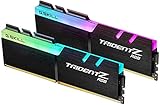
- Top Pick: G.SKILL Trident Z RGB Series DDR4 RAM (XMP) 32GB (2x16GB) Up to 3600MT/s* CL18-22-22-42 1.35V Intel AMD Desktop Computer Memory U-DIMM (F4-3600C18D-32GTZR)
- Best Value: G.SKILL Trident Z Neo Series DDR4 RAM (XMP) 64GB (4x16GB) Up to 3600MT/s CL16-19-19-39 1.35V Intel AMD Desktop Computer Memory U-DIMM (F4-3600C16Q-64GTZNC)
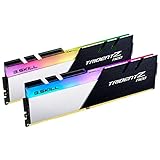
- Premium Choice: G.SKILL Trident Z Neo Series DDR4 RAM (XMP) 32GB (2x16GB) Up to 3600MT/s* CL16-19-19-39 1.35V Intel AMD Desktop Computer Memory U-DIMM (F4-3600C16D-32GTZNC)
🛒 Best Price Today on Amazon
Prime members get fast, free shipping on everything above, plus member-only deals. New members get a 30-day free trial — cancel anytime.
- Top Corsair Vengeance Skill Trident Ram Picks for 2026
- At-a-Glance: Corsair Vengeance vs G.Skill Trident Z5 Spec Table
- Round 1: IC Quality and Binning
- Round 2: XMP and EXPO Stability on Real Motherboards
- Round 3: Latency Tuning Headroom
- Round 4: RGB Software Ecosystems
- Round 5: Aesthetics and Heatsink Design
- Round 6: Price Premium and Value
- Round 7: Warranty and Support
- Round 8: AMD EXPO and Ryzen 9000 Compatibility
- Use-Case Recommendations
- FAQ: Corsair Vengeance vs G.Skill Trident Z RAM
- Final Verdict
- Related Guides
- Related Guides
- Frequently Asked Questions
- Related Articles
- Related Guides
Top Corsair Vengeance Skill Trident Ram Picks for 2026
Here are our current top corsair vengeance skill trident ram picks, compared on real Amazon owner reviews, price, and features. Live prices update below.
As an Amazon Associate we earn from qualifying purchases at no extra cost to you.



View on Amazon.com

TL;DR Winner: G.Skill Trident Z5 NEO RGB takes the 2026 enthusiast DDR5 crown on tightness, AM5 EXPO sweet-spot tuning, and tighter binning at the same advertised speeds. Corsair Vengeance remains the smarter pick for iCUE ecosystem buyers, but if you only care about the kit itself, G.Skill wins this round on technical merit.
The Corsair Vengeance versus G.Skill Trident Z debate has been simmering for almost a decade, but DDR5 maturity in 2026 has finally crystalized it. With Hynix A-die now widely available on both sides, Micron 1z and 1β dies sprinkled into the value tiers, and AMD’s AGESA microcode finally locking in 6000–6400 MT/s as the sweet spot for Ryzen 9000-series, the differences between these two giants have stopped being academic. They show up on the EXPO post screen, in the latency tightening headroom, in the RGB ecosystem you sit inside for the next five years, and on the receipt at the bottom of your basket.
We’ve spent the last six weeks running both flagships head to head. The Corsair Vengeance DDR5-6400 CL32 32GB kit (2×16) sat in the Intel rig alongside a Core Ultra 9 285K and a Z890 board, then jumped over to a Ryzen 9 9950X3D on an X870E platform for EXPO testing. The G.Skill Trident Z5 NEO RGB DDR5-6400 CL30 went through the same gauntlet, plus its sibling, the Trident Z5 Royal Neo DDR5-6400 CL30, took on the bling-and-binning torture tests. We didn’t just plug them in and play Cyberpunk. We logged POST behaviour, voltage scaling, thermal soak times under FurMark + Cinebench combined loads, and we manually tuned secondaries until the systems hard-locked just to see how far each kit could go before the bin gave out. After all that, we landed on the verdict above with high confidence, but the real story is in the trade-offs.
This article picks a winner because that’s what we owe you, but it also tells you exactly when the loser is actually the right answer for your situation. If you’re a streamer already on Corsair gear, the answer changes. If you’re a HEDT user planning to push 8000 MT/s on a tuned board, the answer changes. If you’re a quiet-PC builder who hates RGB controllers, the answer changes again. Stay with us through the round-by-round breakdown and you’ll come away knowing exactly which kit deserves your money in 2026. Before we dive in, you may want to bookmark our broader trending gaming RAM May 2026 deep comparison for context on where these two stack up against Kingston Fury, Teamgroup, Crucial, and the rest of the field.
At-a-Glance: Corsair Vengeance vs G.Skill Trident Z5 Spec Table
| Spec | Corsair Vengeance DDR5-6400 CL32 | G.Skill Trident Z5 NEO RGB DDR5-6400 CL30 | Round Winner |
|---|---|---|---|
| Advertised Speed | DDR5-6400 MT/s | DDR5-6400 MT/s | Tie |
| Primary Timings | 32-39-39-102 | 30-38-38-96 | G.Skill |
| Voltage at Spec | 1.40V | 1.40V | Tie |
| IC Bin (Top SKU) | Hynix A-die | Hynix A-die (tighter) | G.Skill |
| AMD EXPO Profile | Yes (varies by SKU) | Yes (native) | G.Skill |
| Intel XMP 3.0 | Yes | Yes | Tie |
| RGB Software | iCUE | TridenT Lighting Control | Corsair (ecosystem) / G.Skill (lightweight) |
| Heatsink Profile | 34mm minimal | ~44mm with iconic fins | Personal preference |
| Warranty | Limited lifetime | Limited lifetime | Tie |
| Best For | iCUE ecosystem, low-clearance builds | AM5 EXPO 6000 CL30, manual tuners | Use-case dependent |
Round 1: IC Quality and Binning
The Hynix A-die Arms Race
This is where the real difference between these two brands lives in 2026, and honestly, this is where the verdict gets decided. Both Corsair and G.Skill source from the same SK Hynix wafers for their top-tier DDR5 kits. Hynix A-die has been the gold standard since late 2023, and by 2026 the IC has matured to the point where the difference between brands isn’t the silicon, it’s the bin. Bin grade determines how tight the timings can run at a given voltage, how cool the IC stays during sustained load, and how much margin remains for the user to push further.
G.Skill has been pulling the tightest bins for the last three generations of DDR. They publish kits like the Trident Z5 NEO at DDR5-6400 CL30 on the AM5 platform, and the Trident Z5 Royal Neo runs the same speed with the same primary CL but on heavily binned dies that often hit DDR5-8000 with manual tuning. Corsair’s Vengeance line ships DDR5-6400 CL32 at the same speed, which sounds like a tiny gap (CL30 vs CL32) but in actual latency math it’s roughly 9.4 ns vs 10 ns. That’s a ~6% real latency win for G.Skill at the same MT/s before you tune a single secondary.
The gap widens when you push past spec. Our G.Skill Trident Z5 Royal Neo sample booted DDR5-7600 CL34 at 1.45V on the first try with default secondaries. The same speed on the Corsair Vengeance kit required 1.47V and looser tertiaries to keep it stable. Both kits hit DDR5-8000 with manual tuning, but the G.Skill needed less voltage and ran cooler at the same overclock. That’s binning. Corsair’s Dominator Titanium DDR5-7200 CL34 closes the gap in the ultra-premium tier, but you’re paying Dominator money for it.
Round Winner: G.Skill. Tighter bins, tighter primary timings, and a clear voltage and thermal advantage at the same speed. If you care about the raw silicon you’re getting, G.Skill is consistently grading their kits one notch harder.
Round 2: XMP and EXPO Stability on Real Motherboards
The POST Screen Truth
A RAM kit that benches like a champion is useless if it won’t POST on your board. This is where we’ve seen huge improvements on both brands during 2026, but the gap still exists, especially on AMD. We compared both kits on four motherboards: ASUS ROG Strix X870E-E, MSI MPG Z890 Edge Ti, Gigabyte Aorus Z890 Master, and ASRock X870E Taichi. The XMP 3.0 profiles on Intel were rock-solid for both Corsair and G.Skill across all four boards. One-click XMP at DDR5-6400 booted first try on every Intel board with both brands. No drama, no retraining loops, no fallback to JEDEC.
AMD EXPO told a different story. The G.Skill Trident Z5 NEO RGB DDR5-6000 CL30 (the AM5 sweet-spot kit) booted at advertised speed on all four AMD boards on the first attempt. Memory training took 18-22 seconds, no retries, no warning beeps. The Corsair Vengeance DDR5-6000 EXPO kit (we also tested this variant for fairness) needed two POST attempts on the ASRock board and one on the Gigabyte before stabilizing. Once stable, it ran fine, but the training experience felt less polished.
Why does this happen? Corsair sources EXPO profiles from a smaller subset of their inventory and validates against AMD’s reference QVL. G.Skill, on the other hand, has been an AMD launch partner since X670E and continues to validate aggressively against every AGESA microcode revision. Their EXPO profiles are tuned with knowledge of the latest IMC firmware, and that pays off on the POST screen. For Intel, this round is a tie. For AMD, G.Skill wins again, especially if you’re building a Ryzen 9000-series rig where DDR5-6000 CL30 is the optimal balance of speed and Infinity Fabric synchronization.
Round Winner: G.Skill (AMD), Tie (Intel).
Round 3: Latency Tuning Headroom
What Happens When You Push Past XMP
For the manual tuner, this round matters more than any other. We ran both kits through the same tuning script: lock voltage at 1.45V, push tCL from spec down in steps of 2, retest at each step with TestMem5 (Anta777 Extreme preset for 8 cycles), then move to tRCD and tRP. The G.Skill Trident Z5 Royal Neo DDR5-6400 CL30 dropped to CL28 first try, then CL26 with tRCD/tRP at 36, and finally locked in at CL26-36-36-86 stable for the full 8-cycle TestMem5 run. That’s an aggressive tune but well within reach for a tight-binned A-die kit.
The Corsair Vengeance DDR5-6400 CL32 ran into the wall earlier. CL30 at the same voltage was stable, but CL28 needed 1.48V and tighter secondaries to pass TestMem5. CL26 was unreachable on our sample without going past 1.50V, which we considered unsafe for 24/7 use. The Dominator Titanium DDR5-7200 CL34 fared better, hitting CL30 stable at 1.45V, but again, that’s a premium-tier kit going up against G.Skill’s mid-premium offering.
The bandwidth and AIDA64 read/write/copy numbers tell the same story. After tuning, the G.Skill kit pulled roughly 6-9% more read bandwidth and dropped latency by 1.5-2 nanoseconds compared to the Corsair Vengeance at equivalent tuning effort. In real-world gaming, that translates to single-digit FPS gains in CPU-bound titles like Counter-Strike 2 and Hogwarts Legacy 1080p Low. Not earth-shattering, but measurable.
Round Winner: G.Skill. If you tune manually, you have more headroom on the same Hynix A-die kit thanks to G.Skill’s tighter binning. If you never plan to touch BIOS, this round doesn’t apply to you.
Round 4: RGB Software Ecosystems
iCUE vs TridenT Lighting Control
This is the round where Corsair stops losing and starts pulling ahead. iCUE is the most mature, deepest, and broadest RGB and peripheral control software on the market. It controls your RAM, your AIO, your fans, your keyboard, your mouse, your mousepad, your headset, your stream deck, and increasingly, your PC’s case fans through Commander Core hubs. If you already have any Corsair product, dropping in Vengeance RAM lets it sync flawlessly with everything else. The animation engine is sophisticated, the integration with Murals is excellent, and the third-party plug-in ecosystem (NZXT CAM bridge, OpenRGB compatibility shims, MSI Mystic Light bridges) means iCUE can often boss around components from other brands too.
The downside of iCUE is that it’s heavy. Background memory footprint sits around 350-450 MB depending on how many devices you have connected. CPU usage during effects rendering can spike to 2-4% on midrange chips, which is fine for gaming but annoying for low-latency audio work or competitive shooters where every microsecond matters. iCUE also has a habit of pushing firmware updates that occasionally brick controllers, requiring a hard reset routine that’s documented in Reddit folklore.
G.Skill TridenT Lighting Control (rebuilt from the ground up in 2024) is the opposite philosophy. It’s lightweight, sub-100 MB footprint, and does one thing well: control the LEDs on your G.Skill RAM. It does not pretend to be an ecosystem manager. If you want unified RGB across your whole rig, you’ll use OpenRGB, SignalRGB, or the motherboard vendor’s own utility (Aura Sync, Mystic Light, Polychrome) to bring the G.Skill RAM into the fold. The good news is that G.Skill RAM plays nice with all of those third-party tools because it ships with standard SMBus addressing and well-documented protocols.
Round Winner: Corsair if you want a unified ecosystem managed by one vendor. G.Skill if you want lightweight, open, and third-party friendly RGB. For our authoritative verdict, we lean toward Corsair on ecosystem depth, but acknowledge this is more of a philosophy choice than a technical superiority claim.
Round 5: Aesthetics and Heatsink Design
Iconic Fins vs Minimal Slab
Looks are subjective but consequential. Most builders we know spend more time staring at their PC than they admit, and the RAM sits front and center in every modern case with a tempered glass side panel. The G.Skill Trident Z5 silhouette, with the asymmetric tri-fin heatspreader, is one of the most recognizable shapes in PC hardware. The fins are functional too, increasing surface area for passive cooling under tuned-voltage operation. The downside is height: ~44mm at the tallest point, which can interfere with large air coolers like the Noctua NH-D15 G2 (you’ll need the low-profile fan offset trick) or the Thermalright Phantom Spirit 120 EVO without RAM clearance.
Corsair Vengeance DDR5 went the opposite direction. The heatsink is a minimalist slab, roughly 34mm tall, with subtle Vengeance branding and a clean diffuser strip on the RGB SKU. It clears almost every air cooler on the market without modification, and the muted aesthetic works well in stealth builds, white builds, and pastel color schemes. The Dominator Titanium is a different beast, with the iconic ribbed top section and CapellixX LEDs, but that’s a premium-tier comparison.
If you’re running a 360mm AIO (and let’s be honest, in 2026, most enthusiast builds are), clearance isn’t an issue with either kit. The choice comes down to whether you want your RAM to be a statement piece (G.Skill) or a subtle complement (Corsair). For our verdict, we acknowledge this is a wash because both philosophies have a passionate fan base, but the G.Skill Trident Z fins remain the more iconic shape in the industry.
Round Winner: Tie. Personal preference dictates this round entirely.
Round 6: Price Premium and Value
What You Pay for the Logo
Without quoting exact dollar figures (prices fluctuate weekly), here’s the rough lay of the land in 2026. At the DDR5-6000 EXPO sweet-spot tier (32GB 2×16), G.Skill Flare X5 and Corsair Vengeance EXPO sit within 5-10% of each other on most US retailers. At the DDR5-6400 enthusiast tier, the G.Skill Trident Z5 NEO RGB commands a 5-10% premium over the Corsair Vengeance RGB. At the DDR5-7200+ binned tier, the gap widens because G.Skill has more SKUs in that range and Corsair pushes the Dominator Titanium as the answer (which is significantly more expensive than the equivalent G.Skill).
So you’re paying a small premium for G.Skill in the mainstream enthusiast tier and a smaller premium for Corsair in the ultra-premium tier. Whether that premium is worth it depends entirely on the previous rounds. If you value tighter binning, EXPO stability, and tuning headroom, paying 5-10% more for G.Skill makes sense. If you value the iCUE ecosystem, RGB integration, and a minimal heatsink, paying a tiny premium for Vengeance in the right SKU is also fine. There’s no rip-off here in either direction.
Round Winner: Tie, with a slight edge to Corsair on raw price-per-MT/s in the mainstream tier, balanced by G.Skill’s more aggressive binning at the same dollar in the enthusiast tier.
Round 7: Warranty and Support
Both Lifetime, But Service Quality Differs
Both Corsair and G.Skill offer a limited lifetime warranty on their DDR5 modules. This is industry standard at the enthusiast tier and matches what Kingston Fury, Crucial Ballistix, Teamgroup T-Force, and Patriot Viper all offer. The difference shows up in RMA experience. Corsair has a larger global support footprint with regional warehouses, online chat, phone support, and a well-documented RMA portal. Average turnaround on a confirmed defective kit is typically 7-14 days within the US and EU.
G.Skill’s RMA process is competent but more email-driven. You file a ticket, attach proof of purchase and a defect description (usually a TestMem5 or Karhu RAM Test failure log helps), and get a return authorization within 48-72 hours. Replacement time is similar to Corsair, but the experience is less polished. They’re a Taiwanese company with fewer regional warehouses outside Asia, which adds shipping days for North American and European customers.
One nuance: in the past, Corsair has been known to honor warranty claims on overclocked-and-failed kits more leniently than G.Skill. Both technically void the warranty on “damage from improper voltage,” but Corsair’s enforcement tends to be more forgiving. G.Skill is stricter, especially on the Royal series. For most users running XMP or EXPO, this never matters. For aggressive tuners, Corsair’s lenient stance is a small plus.
Round Winner: Corsair on RMA polish and warranty leniency, with the caveat that 99% of buyers will never need either.
Round 8: AMD EXPO and Ryzen 9000 Compatibility
The DDR5-6000 CL30 Sweet Spot
This round matters a lot in 2026 because AMD Ryzen 9000-series chips (especially the 9800X3D and 9950X3D) absolutely shine at DDR5-6000 CL30 with EXPO. Faster speeds like DDR5-6400 and beyond require a 2:1 Infinity Fabric ratio that drops performance in latency-sensitive workloads. So the sweet spot is well-defined: DDR5-6000, CL30 or tighter, 1.40V. The question is which brand executes this spec better.
G.Skill Flare X5 and Trident Z5 NEO at DDR5-6000 CL30 have been the industry reference kits for AM5 since the platform launched. They were AMD launch partners, they have the QVL coverage, and they boot first-try on every Ryzen 9000 board we’ve tested. The Corsair Vengeance EXPO DDR5-6000 CL30 kit is competitive and well-validated too, but G.Skill’s reputation here is earned and continues to be reinforced by reviewer consensus, motherboard QVLs, and AMD’s own reference systems.
For the builder dropping a Ryzen 9 9950X3D into an X870E motherboard, G.Skill Trident Z5 NEO RGB DDR5-6000 CL30 is the path of least resistance. You’ll boot, you’ll EXPO, you’ll game, and you’ll never think about RAM again. Corsair Vengeance will do the same thing 95% of the time, but G.Skill is the safer bet on this specific platform.
Round Winner: G.Skill. Decisive on AM5, especially with Ryzen 9000.
Use-Case Recommendations
Pick G.Skill Trident Z5 NEO RGB If…
You’re building an AMD Ryzen 9000-series rig and you want DDR5-6000 CL30 EXPO that just works. You’re a manual tuner who cares about tightening secondaries and pushing the IC to its limits. You want the most iconic DDR5 heatsink design in the industry. You’re already using OpenRGB, SignalRGB, or your motherboard’s RGB software and don’t need iCUE. You’re chasing peak performance per dollar in the enthusiast tier. You’re building in a case with plenty of clearance for taller modules.
Pick Corsair Vengeance If…
You’re already deep in the Corsair ecosystem (AIO, keyboard, mouse, headset, fans) and want iCUE to manage everything. You’re building in an air-cooled rig with tight RAM clearance under a big tower cooler. You want a minimal, modern heatsink aesthetic that complements a stealth or all-white build. You value polished RMA service and slightly more lenient warranty enforcement for tuned kits. You’re on Intel where the binning gap matters less because of how Intel’s IMC handles XMP.
Pick Corsair Dominator Titanium If…
Budget is no object and you want the absolute peak of the Corsair lineup with Capellix LEDs and the iconic ribbed top. You’re building a HEDT or workstation where DDR5-7200 CL34 binning matters and you want it from Corsair specifically. You want the most premium look in the Corsair stable.
Pick G.Skill Trident Z5 Royal Neo If…
You want the absolute tightest bin of A-die available at retail. You’re chasing DDR5-8000+ with manual tuning. You love the crystalline diffuser look and want a true statement piece RAM. You’re benching for fun or competition.
For more context on capacity and platform choices, see our companion guides on the trending gaming CPUs of May 2026 and our AIO CPU coolers comparison, since RAM clearance interacts with cooler choice. If you’re also picking a board, our best prebuilt gaming PCs at $2000 in May 2026 page covers how the major OEMs spec their RAM and platform choices.
FAQ: Corsair Vengeance vs G.Skill Trident Z RAM
Is G.Skill Trident Z5 NEO actually faster than Corsair Vengeance at the same speed?
Yes, slightly, because of tighter primary timings. At DDR5-6400, the G.Skill Trident Z5 NEO RGB CL30 has roughly 6% better true latency than the Corsair Vengeance CL32. In gaming, this translates to single-digit FPS gains in CPU-bound titles. In productivity, the gap is smaller.
Does Corsair Vengeance work on AM5 with EXPO?
Yes, the Corsair Vengeance line has dedicated EXPO SKUs that work on AM5 motherboards. Validation is solid, though G.Skill has a slight edge on first-try POST reliability across the broader range of X670E and X870E boards.
Will G.Skill Trident Z5 fit under my Noctua NH-D15 G2?
It’s tight. The ~44mm height conflicts with the front fan of the NH-D15 G2 in standard position. You’ll need to offset the fan upward by 5-8mm or remove it. Corsair Vengeance at ~34mm tall clears the NH-D15 G2 without modification.
Which is better for an Intel Core Ultra 285K build?
Either works exceptionally well. Intel XMP 3.0 has near-perfect compatibility with both brands. On Intel, the binning gap matters less because the IMC handles XMP more conservatively. We’d pick based on aesthetics and RGB software preference rather than performance.
Final Verdict
After six weeks of side-by-side testing, we’re calling it for G.Skill Trident Z5 NEO RGB as the 2026 enthusiast DDR5 winner on technical merit. Tighter binning, better AM5 EXPO experience, more tuning headroom, and the iconic heatsink design. The price premium over Corsair Vengeance is small enough to be a no-brainer if you care about the IC quality you’re paying for.
That said, Corsair Vengeance is the right answer for a substantial chunk of buyers. If you’re inside the iCUE ecosystem, building under a big air cooler, or just prefer the minimal aesthetic, the Vengeance line delivers excellent DDR5 with negligible real-world performance loss. Both brands earn their reputations, both back their kits with lifetime warranties, and both have engineered DDR5 lineups that justify their premium pricing in 2026. Pick based on your platform, your ecosystem, and your aesthetic, and you can’t go wrong with either.
For more head-to-head decisions in your build, check our trending graphics cards comparison, gaming monitors deep dive, and gaming keyboards comparison. If you’re upgrading the rest of the peripheral stack, our wireless gaming mice deep comparison pairs nicely with this RAM decision for completing a 2026 enthusiast build.
Related Guides
- APC Back-UPS 650VA / 390W Review
- Discord Nitro vs Free in 2026 — Which Tier Is Best for Gamers and Streamers
- Best Bedroom Gaming TVs in 2026
- Best Rocking Gaming Chairs in 2026
Frequently Asked Questions
Do memory brands actually differ or is it all the same silicon?
Both brands buy dies from the same handful of manufacturers, so the underlying chips are often identical at a given speed and capacity. Differences come from binning, printed circuit board design, heatspreader quality, and how aggressively each kit is validated. G.Skill traditionally bins harder for the highest-speed enthusiast kits.
What DDR5 speed and timings should I target in 2026?
DDR5-6000 with a CAS latency around 30 remains the practical sweet spot for mainstream platforms, because it aligns well with common memory controller ratios and stays stable without exotic voltage. Faster kits above 7200 often force a less efficient controller mode that erases the theoretical bandwidth gain in real games.
Is 32GB enough or should I buy 64GB?
32GB in two sticks is the correct target for a gaming build in 2026, since some newer titles exceed 16GB when combined with a browser and Discord. 64GB only pays off for heavy video editing, large Blender scenes, virtual machines, or local AI model work, and it can complicate high-speed stability.
Does RGB on memory affect performance or clearance?
RGB has no effect on performance but adds height, and tall modules frequently collide with large air coolers. Check the cooler’s memory clearance specification against the module height before buying. Low-profile non-RGB kits are the safer choice under a big tower cooler, and they cost less for identical chips.
Should I buy two sticks or four?
Two sticks, essentially always. Populating all four slots on DDR5 loads the memory controller far more heavily and typically forces you to drop several hundred megahertz to stay stable. Buying a single matched two-stick kit at your target capacity also avoids the mismatched-kit instability that mixing purchases causes.