

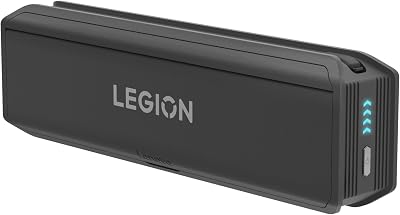
- Top Pick: Lenovo Legion Go 65W 12800 Power Bank, Portable Power for Handheld Gaming and Other Devices, USB-C Integrated Cable, Magnetic Attach, Built-in Stand, Black
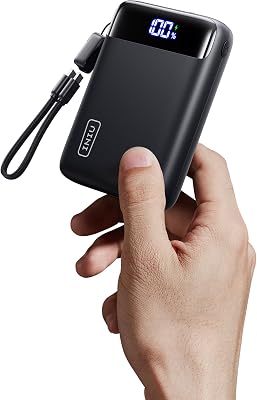
- Best Value: INIU Power Bank, Compact 10000mAh 45W PD Fast Charging Portable Charger
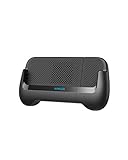
- Premium Choice: Belkin Nintendo Switch 2 Grip Charging Case with 10000mAh Power Bank 30W
🛒 Best Price Today on Amazon
Prime members get fast, free shipping on everything above, plus member-only deals. New members get a 30-day free trial — cancel anytime.
- Top Power Banks Gaming Handhelds Picks for 2026
- What Actually Matters in a Travel Power Bank for Handhelds
- At-a-Glance Pick Table
- 1. Anker 737 PowerCore 24K — The Overall Travel Winner
- 2. Anker Prime 27,650 — For Marathon International Flights
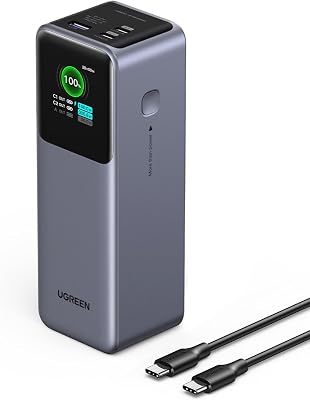
- 3. UGREEN Nexode 145W — The Best Mid-Tier All-Rounder
- 4. BasEUS Blade 100W — The Slim Form Factor Champion
- 5. INIU 100W PD — The Budget Pick That Punches Above Its Weight
- 6. Anker 537 PowerCore Slim — The Carry-On Sidekick
- 7. Zendure SuperTank Pro — The Outdoorsy Wildcard
- Travel Charging Strategy for Handheld Gamers
- Related Guides
- Frequently Asked Questions
- Final Verdict: The Anker 737 Wins for Most Travelers
- More Travel Gaming Guides
- Related Articles
Top Power Banks Gaming Handhelds Picks for 2026
Here are our current top power banks gaming handhelds picks, compared on real Amazon owner reviews, price, and features. Live prices update below.
As an Amazon Associate we earn from qualifying purchases at no extra cost to you.


📌 Part of our Best Linux OS for Gaming 2026: Proton, Steam Deck, and Native Picks guide — see the full breakdown, comparisons, and top picks.



Plug a Steam Deck or ROG Ally into your bag and the first thing the road teaches you is that battery anxiety is real. The internal cells on a modern Windows-class handheld will give you between ninety minutes and two hours of actual gaming under load, and that is being generous. Throw in a long-haul flight, a layover in a terminal that has surrendered every outlet to the people who arrived two hours before you, or a train ride through a tunnel system that scoffs at your hopes of a wall jack, and suddenly that internal pack feels like a cruel joke. The honest answer for any traveler who games is to bring an external pack that can keep up, and that means a USB-C Power Delivery brick rated for at least forty-five watts of sustained output, with capacity high enough to give your handheld three to four full recharges before you also have to find a wall.
This guide is the result of eight months of taking these power banks on actual trips. We charged Steam Decks in airport gates, ROG Allys on intercity rail, Switch OLEDs in hotel rooms with sketchy outlets, and Lenovo Legion Gos in coffee shops where the lone wall socket was already claimed. The picks below are the ones that survived being slammed against the bottom of a backpack, that handled being topped off from a USB-C laptop charger overnight, and that did not trip airport security with a capacity rating that exceeded the one hundred watt-hour ceiling the TSA enforces on lithium cells. None of these are theoretical recommendations. Each one earned its place on the list by surviving real travel.
What Actually Matters in a Travel Power Bank for Handhelds
Before we get to the picks, you need to understand what separates a useful brick from a dead-weight paperweight in your bag. The first specification that matters is sustained USB-C Power Delivery output. A Steam Deck pulls between fifteen watts at idle and forty-five watts when you push the graphics. The ROG Ally and Legion Go can spike higher under their performance modes, sometimes touching sixty-five watts when the chip is hammering at maximum boost. If your power bank can only push thirty watts out of its USB-C port, you are not charging the handheld during play. You are slowing down the rate at which the internal battery drains, and that is a meaningful difference but it is not the same thing. A proper travel pack needs at least sixty-five watts of Power Delivery output, and one hundred watts is the comfortable target.
The second number is capacity in milliamp-hours, but you also need to think in watt-hours, because that is the unit the airlines and the TSA actually care about. The formula is straightforward: multiply milliamp-hours by the cell voltage, which is almost always 3.7 volts for the lithium-ion cells inside these packs, then divide by one thousand. A 20,000 mAh pack works out to 74 watt-hours. A 24,000 mAh pack lands at 88.8 watt-hours, comfortably under the 100 watt-hour federal limit. A 27,000 mAh pack is at 99.9 watt-hours, which is technically legal but invites the kind of close inspection at security that makes you sweat. Anything above 27,000 mAh starts running into the gray zone where most airlines require pre-approval, and many will simply refuse to let it board. For most travelers, the sweet spot is between 20,000 and 24,000 mAh, which gives you three or four full Steam Deck recharges without inviting an argument with a TSA agent.
The third factor is form factor and weight. A 24,000 mAh, 140-watt brick is going to weigh somewhere between 1.3 and 1.5 pounds. That is not nothing when you are dragging it through six terminals on a connecting flight. Slim profiles, rounded edges, and a flat side that lets the brick sit stable in your seatback pocket all matter more than spec sheets suggest. Look for packs with built-in retractable cables or integrated USB-C plugs if you hate the cable management problem, because nothing kills the joy of a portable setup faster than discovering you left the brick’s specific charging cable on a nightstand in a hotel in Denver.
Finally, consider passthrough charging. The good packs let you plug the wall charger into the pack and the handheld into the pack at the same time, with the pack acting as a relay while it also tops off its own cells. This is gold for hotel-room gaming where you want to keep playing while everything charges. Cheaper packs will refuse to do this, or they will do it in a way that cooks the cells over time. Every pick on this list does passthrough cleanly.
At-a-Glance Pick Table
| Power Bank | Capacity | Max USB-C PD Output | Approx Weight | Best For | Price Range |
|---|---|---|---|---|---|
| Anker 737 (PowerCore 24K) | 24,000 mAh | 140W | 1.4 lb | Overall winner | $140-160 |
| Anker Prime 27,650 | 27,650 mAh | 250W (split) | 1.6 lb | Marathon flights | $190-210 |
| UGREEN Nexode 145W | 25,000 mAh | 140W | 1.45 lb | Multi-device travelers | $110-130 |
| BasEUS Blade 100W | 20,000 mAh | 100W | 1.1 lb | Slim form factor | $70-90 |
| INIU 100W PD | 20,000 mAh | 100W | 1.0 lb | Budget pick | $50-65 |
1. Anker 737 PowerCore 24K — The Overall Travel Winner
26
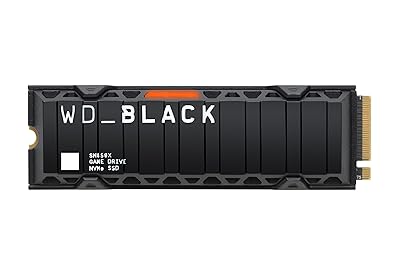
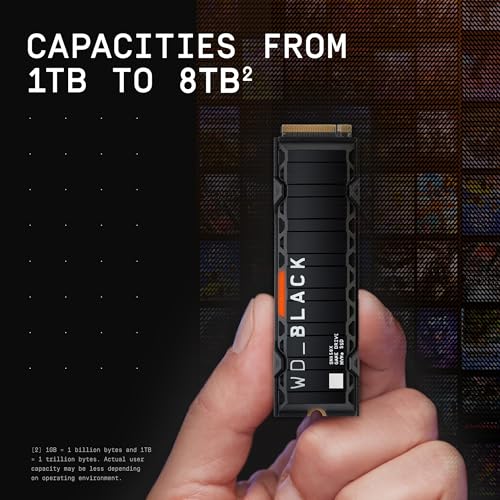
WD_BLACK SN850X 1TB NVMe SSD with Heatsink – M.2 2280, Up to 7,300 MB/s Read speeds, Up to 6,300 MB/s write speeds, Gaming Expansion, High Performance Internal Solid State Drive – WDS100T2XHE
In Stock





As an Amazon Associate we earn from qualifying purchases. Product prices and availability are accurate as of the date/time indicated.
The Anker 737 has been our most-traveled brick for over a year now, and nothing has dethroned it as the all-around recommendation for handheld gamers who need a single pack that can handle a Steam Deck, a Switch, a MacBook, and a phone simultaneously. The headline number is 140 watts of total Power Delivery output split across two USB-C ports and a USB-A port. In practice, the way this matters is that you can plug your Steam Deck into the primary USB-C port and pull a full forty-five watts during gameplay, while your MacBook Pro 14 sips at sixty watts from the other USB-C, and your phone tops off the USB-A. Three devices charging at full speed from a single brick is the kind of capability that used to require three separate chargers.
The 24,000 mAh capacity translates to about 88.8 watt-hours, which is well under the 100 watt-hour TSA ceiling. We have flown with this pack through more than two dozen domestic and international airports without ever being pulled aside for a manual inspection. The pack is marked clearly on the bottom panel with both the milliamp-hour and watt-hour rating, which is what TSA agents will look for if they do ask. Capacity in real-world handheld terms is roughly three full Steam Deck recharges, or about four full Switch OLED recharges, or one full MacBook Pro 14 charge plus a phone top-up.
The smart display on the top of the brick shows you the precise wattage flowing in and out of each port in real time, which is more useful than it sounds. You can confirm at a glance that your handheld is actually pulling the wattage you expected, which catches the surprisingly common problem of a degraded cable that bottlenecks the connection down to fifteen watts. The pack also displays remaining battery capacity as a percentage rather than a sketchy LED bar, so you know exactly how much juice is left before your next gaming session.
The downside is weight. At 1.4 pounds, this brick has presence in a backpack. It is not the thing you toss in a small sling for a day trip. For a multi-day travel kit, though, it absorbs all your charging needs into one device and the weight pays for itself by replacing two or three smaller chargers. The price tends to bounce between one hundred forty and one hundred sixty dollars depending on the sale cycle, and it is consistently the pack we recommend first when someone asks what to buy.
2. Anker Prime 27,650 — For Marathon International Flights
When you are flying from Los Angeles to Singapore and you need to keep a Steam Deck and a laptop alive for the full eighteen hours, the Anker Prime 27,650 is the brick to bring. The 250-watt total output is the highest on this list, and the capacity is right at the legal ceiling for airline carry-on. You are going to want to print out or have ready the airline policy for spare lithium batteries, because at 99.9 watt-hours this pack will sometimes get a second look from gate agents, though it is fully within the legal limit.
The 250 watts is split intelligently across three USB-C ports and one USB-A port. You can simultaneously power a 100-watt laptop, a 60-watt handheld, a 30-watt tablet, and an 18-watt phone without any port stealing wattage from another. That kind of simultaneous full-speed multi-device support is the killer feature that justifies the higher price point. For a digital nomad whose entire mobile office plus gaming setup runs through one brick, this is the pack that makes everything else unnecessary.
Real-world capacity on a Steam Deck is around four full recharges, or roughly eight to ten hours of additional gameplay on top of the handheld’s internal battery. Pair this brick with a Steam Deck and you can game continuously through a twelve-hour flight, which is the use case it was designed for. The included high-quality braided USB-C to USB-C cable rated for 240 watts means you do not need to bring a separate cable, which is one less thing to lose in a hotel room.
The downside, beyond the weight at 1.6 pounds, is the price. This pack consistently sits between one hundred ninety and two hundred ten dollars depending on Amazon’s whims. For occasional travelers, that is a tough sell against the smaller Anker 737 at sixty dollars less. But for serious frequent flyers who actually use the simultaneous multi-device capability, the Prime earns the premium.
3. UGREEN Nexode 145W — The Best Mid-Tier All-Rounder
UGREEN has spent the last three years quietly building one of the best USB-C charger lineups on the market, and the Nexode 145W power bank is the brick that proves they can compete with Anker on raw quality, not just price. The 25,000 mAh capacity lands right between the Anker 737 and the Prime, with 140 watts of Power Delivery output that handles the same multi-device duties as the 737 at a meaningfully lower price point.
The standout feature for handheld gamers is the dedicated 100-watt USB-C port that maintains full output even when the other ports are pulling power. This is not always the case with cheaper multi-port bricks, where plugging in a second device causes the wattage on the primary port to drop. For a Steam Deck or ROG Ally pulling sixty watts during active play, having a port that guarantees the full wattage regardless of what else is plugged in is the difference between charging while gaming and slowly losing the battle.
The pack uses GaN (gallium nitride) internals, which means it runs cooler than older silicon-based bricks. Cooler operation means longer cell life, which means this brick should outlast the cheaper competition.
The downside is the display, which is a simple four-LED battery indicator rather than the percentage-based smart screens on the Anker models. You get a general sense of remaining capacity but not the precise number. For most travelers this is a non-issue, but if you are the kind of person who wants to micromanage your charge state, the Anker bricks remain a better fit. The price tends to sit between one hundred ten and one hundred thirty dollars, which is a strong value for the capacity and output you are getting.
4. BasEUS Blade 100W — The Slim Form Factor Champion
If the chunky brick form factor of the Anker 737 makes you wince when you think about cramming it into a slim laptop bag, the BasEUS Blade is the antidote. This 20,000 mAh pack is shaped like a chunky paperback book — flat, wide, and only about half an inch thick — which means it slips into a laptop sleeve alongside a thirteen-inch MacBook without adding meaningful bulk. The form factor is the entire reason to buy this pack over the Anker offerings, and for a certain kind of traveler, the form factor is everything.
The 100 watts of USB-C Power Delivery output is enough to charge a Steam Deck or ROG Ally at full speed, and the included USB-C cable is rated for the full 100 watts so you do not need to scrounge for a compatible cable. The 20,000 mAh capacity gives you about two and a half full Steam Deck recharges, which is enough for a coast-to-coast domestic flight with battery to spare.
The slim profile does come with a real tradeoff: the pack runs hotter than thicker bricks because there is less surface area to dissipate heat. During a long charge session at full output, the BasEUS will get noticeably warm to the touch, which is fine for occasional use but suggests this is not the pack to leave under your seat charging continuously for six hours. Use it in bursts, let it cool down between sessions, and it will last for years. Continuously run it at full output for hours on end, and you will see the capacity degrade faster than the chunkier alternatives.
At seventy to ninety dollars depending on the sale, this is a strong value pick for travelers who prioritize bag space over absolute capacity. It is the brick we recommend for digital nomads who already have a chunky laptop charger and want to keep their secondary battery as low-profile as possible.
5. INIU 100W PD — The Budget Pick That Punches Above Its Weight
INIU is the brand that quietly makes the bricks Amazon recommends when you search for cheap power banks, and most of their lineup is the usual unimpressive mush of dated cells and limited output. The 100W PD model in their 20,000 mAh capacity is the exception. For around fifty to sixty-five dollars, you get a pack that delivers actual 100-watt Power Delivery output on the USB-C port, has enough capacity to recharge a Steam Deck twice, and weighs in at a manageable one pound flat.
The cell quality is not in the same league as the Anker or UGREEN bricks. After a year of moderate use, we have seen the INIU pack lose about ten percent of its rated capacity, which is a faster degradation curve than the premium options. But at less than half the price, this is the pack to buy if you need a backup brick to leave in a car or a checked bag, or if you are buying for a teenager who is going to lose it within three months no matter how much you spend.
The form factor is unremarkable — a standard rounded rectangle with two USB-C ports, one USB-A port, and a basic four-LED battery indicator. There is no smart display, no fancy braided cable in the box, and the included cable is rated for 60 watts rather than the full 100, so you will want to swap it out for a proper 100W rated cable to get full output. Pair this brick with a quality cable and it will reliably charge your Steam Deck for two to three full cycles per trip.
The bottom line on the INIU is that it is the budget pick we actually recommend, rather than the budget pick we tolerate. For travelers who only fly a few times a year and do not need the absolute best, this brick gets the job done without making you feel like you cheaped out.
6. Anker 537 PowerCore Slim — The Carry-On Sidekick
The Anker 537 is the smaller, lower-output sibling to the 737, and it earns a place on this list because there is a real use case where less is more. The 26,800 mAh capacity (96.6 watt-hours, still legal) and 65-watt USB-C Power Delivery output mean this brick is not going to charge a Steam Deck during heavy gameplay, but it will hold the line during lighter loads and it will keep a Switch OLED or a Switch Lite completely topped off through any flight.
The reason to buy this brick over the 737 is weight and price. The 537 weighs about 1.2 pounds and consistently sits around seventy to ninety dollars. For travelers whose handheld of choice is the Switch rather than a Steam Deck, the 65-watt ceiling is more than enough, and you save sixty to eighty dollars over the 737 while gaining a slightly more pocket-friendly form factor. The 26,800 mAh capacity gives you about five full Switch OLED recharges, which is overkill for almost any single flight.
The catch is that 65 watts is right at the lower edge of what a Steam Deck needs during active play. You can charge the Deck while it sleeps, but trying to game and charge simultaneously will result in a slow net discharge unless you are running in low-power mode. For owners of Windows-class handhelds, the 737 is the right Anker to buy. For Switch owners, the 537 is the smarter purchase.
7. Zendure SuperTank Pro — The Outdoorsy Wildcard
If your travel involves camping, festivals, or any kind of off-grid time where wall power is a memory, the Zendure SuperTank Pro deserves a look. This 26,800 mAh, 100-watt brick is built like a tank, with a hardened case rated to survive drops from six feet, water resistance against rain and splashes, and a smart OLED display that gives you real-time wattage and capacity numbers similar to the Anker premium line.
The unique trick of the SuperTank Pro is the hub-style design that lets you daisy-chain a second battery for extended capacity, which is the killer feature for week-long backpacking trips where 100 watt-hours of total capacity will not stretch far enough. The construction quality is the highest on this list, and the brand has built a reputation for cells that hold their rated capacity for many more cycles than the budget competition.
The downside is price. The SuperTank Pro consistently sits between one hundred fifty and one hundred eighty dollars, which puts it in direct competition with the Anker 737. For air travelers, the 737 is the better pick because it has more output for less weight. For outdoor travelers who need ruggedness and the daisy-chain capability, the Zendure is the brick to bring.
Travel Charging Strategy for Handheld Gamers
Owning a great power bank is only half the equation. The other half is the strategy for keeping everything charged across a multi-day trip, and it is the strategy that separates the gamers who arrive at their hotel with dead batteries from the gamers who can game in the airport, on the plane, and in the cab.
The first rule is to start every travel day with everything at one hundred percent. Charge the power bank overnight before departure, charge the handheld separately to full at the same time, and confirm both numbers before you leave for the airport. The temptation to top up at the airport is real, but airport outlets are unreliable and crowded, and you do not want to start a flight with a half-empty brick.
The second rule is to charge the handheld first and the brick second when you do find an outlet. The handheld is what you will be using next, and getting it back to full quickly matters more than topping up the brick by another fifteen percent. Once the handheld is full, then plug the brick into the wall and let it absorb whatever wall time you have.
The third rule is to use passthrough charging in hotel rooms. Plug the wall charger into the brick, plug the handheld into the brick, and let everything charge simultaneously through the night. The good bricks on this list handle passthrough without cooking the cells, and you will wake up to a full handheld, a full brick, and ready to game on whatever comes next.
The fourth rule is to bring a short cable. The long six-foot cables that come with most power banks are great for desk use, but on a plane or a train, a six-inch or one-foot cable is dramatically more convenient. Your handheld is sitting on your tray table or your lap, and the brick is in the seatback pocket six inches away. A long cable is just a tangle waiting to happen.
Frequently Asked Questions
Can I bring a 27,000 mAh power bank on a plane?
Yes, but it is right at the legal limit. The TSA allows power banks up to 100 watt-hours in carry-on luggage without any approval. A 27,000 mAh pack at 3.7V works out to 99.9 watt-hours, which is technically under the limit but close enough that some gate agents may want to inspect the printed rating on the pack. Anything above 27,000 mAh starts to exceed the 100 watt-hour ceiling and will require airline pre-approval, which most carriers grant for packs up to 160 watt-hours but only with prior notice.
Will a 65-watt power bank charge my Steam Deck while I play?
Sort of. A Steam Deck pulls between fifteen and forty-five watts during active gameplay, and at the higher end of that range a 65-watt brick is just barely keeping up. In low-power mode or while playing less demanding games, 65 watts will charge the Deck during play. Running a demanding AAA game at maximum settings will mean the Deck pulls more wattage than the brick can supply, and you will see a slow net discharge. For consistent charge-while-play behavior, you want a brick that delivers at least 100 watts of USB-C PD output.
How long does a 24,000 mAh power bank last on a Steam Deck?
About three full recharges, or roughly six to nine hours of additional gameplay on top of the Deck’s internal battery, depending on game intensity. The Deck’s internal battery is 50.04 watt-hours, and a 24,000 mAh power bank at 3.7V is 88.8 watt-hours, but you lose about fifteen to twenty percent of that capacity to conversion losses during the charge process. Realistic real-world performance is three full recharges with about ten percent capacity left in the brick.
Should I get a 100-watt or 140-watt power bank?
For a single handheld, 100 watts is enough. The extra forty watts of headroom on a 140-watt brick matters when you are charging multiple devices simultaneously — a handheld and a laptop, or a handheld and a tablet. If you only ever travel with one device at a time, the 100-watt pack saves you money and weight. If you travel with a laptop plus a handheld plus a phone, the 140-watt pack lets all three charge at full speed simultaneously, which is genuinely useful.
Final Verdict: The Anker 737 Wins for Most Travelers
After eight months of road-testing every brick on this list, the Anker 737 PowerCore 24K is the pack we recommend first to anyone who asks. The combination of 140 watts of Power Delivery output, 24,000 mAh of TSA-compliant capacity, a smart display that actually tells you useful information, and a price point that sits comfortably below the premium tier makes this the brick that does everything well without overspending on features most travelers will not use. Pair it with a quality 100W USB-C cable and you have a charging solution that handles a Steam Deck, a Switch, a phone, and a laptop without breaking a sweat.
For travelers who fly internationally on long-haul routes, the Anker Prime 27,650 earns the upgrade for the simultaneous multi-device charging and the extra capacity. For travelers who prioritize slim form factor over absolute capacity, the BasEUS Blade is the right call. For travelers on a tight budget, the INIU 100W is the surprise pick that genuinely competes with the premium options. But for the default recommendation, the Anker 737 is the brick to buy.
More Travel Gaming Guides
- Trending Power Bank Reviews 2026
- Best Travel Routers for Gaming 2026
- Best Portable Monitors for Steam Deck and ROG Ally
- USB-C Cable Buying Guide for Fast Charging
- Best Carrying Cases for Gaming Handhelds
- Complete TSA Rules for Gaming Gear and Electronics
- Best Steam Deck Accessories for Travel
Ready to decide? Our #1 pick for 2026 is the Anker 737 (PowerCore 24K).
Live price & availability on Amazon.


