Real-time strategy is the genre retro handhelds were never designed for, and any list that pretends otherwise is selling you something. The genre was built around a mouse: drag-selecting twenty units, snapping to the minimap, firing hotkeys without looking down. No D-pad replaces that. But a narrower, honest version of RTS does work on a handheld in 2026, through native Android ports rebuilt for touch and through the DOS and console ports of the classics. This guide ranks the five standard handhelds by how well they serve that narrower version, and it is blunt about where the genre stops working.
As an Amazon Associate, we earn from qualifying purchases.
Quick Answer
Start from the honest answer: no retro handheld makes RTS feel like a mouse and keyboard, but touchscreen Android models make the native ports genuinely playable. The AYN Thor Pro leads for its power and dual screens, the Retroid Pocket 5 is the balanced pick, and the Anbernic RG406H covers the DOS and PlayStation ports. Linux handhelds without touchscreens are the wrong tool here.
The Honest Baseline: Three Ways RTS Reaches a Handheld
Everything playable in this genre on a retro handheld arrives by one of three routes, and the route matters more than the hardware. The first route is native Android ports. Feral Interactive rebuilt ROME: Total War, Company of Heroes, and Tropico for touchscreens, with tap-to-select, pinch zoom, and interfaces redrawn for fingers. Independent studios went further: Rusted Warfare is a full base-building RTS designed for touch from the start, and Iron Marines and Bad North translate real-time tactics into short, deliberate missions. These are real games, not compromises, but the catalog is short and mostly single-player.
The second route is emulation of versions that were themselves compromises. The DOS originals of Dune II, Warcraft II, and Command and Conquer run in DOSBox, and the PlayStation received its own ports of Command and Conquer, Red Alert, and Warcraft II: The Dark Saga, all rebalanced around a controller. StarCraft even reached the Nintendo 64. These games play slowly and forgivingly by modern standards, which is exactly why they survive the move to a small screen and a stick-driven cursor.
The third route is the one that does not work: modern PC RTS. Anything that assumes control groups, an actions-per-minute above casual levels, or a 27-inch minimap belongs on a handheld PC or a desktop. No pick below changes that, and the buying advice in this guide is about routes one and two only.
AYN Thor Pro: The Ceiling for Native Ports

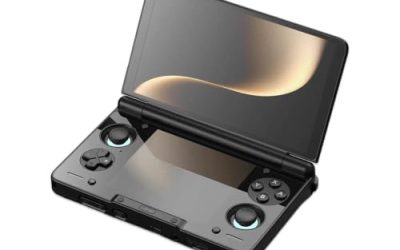
The Thor Pro is the strongest RTS handheld here because the genre’s best route, native Android ports, scales with exactly what it has most of: processing power and screen. The Snapdragon 8 Gen 2 runs Company of Heroes and ROME: Total War at their full settings, and the 6.31-inch main display gives campaign maps room to breathe, so unit icons and resource counters stay legible without constant zooming. The second screen earns its keep in an unexpected way: it holds a guide, a build order, or a messaging app while the campaign runs above, which suits a genre full of downtime between attacks.
Specs
- Main display: 6.31-inch OLED, 1920 by 1080, 120Hz touchscreen
- Secondary display: 3.92-inch OLED touchscreen
- Processor: Qualcomm Snapdragon 8 Gen 2
- Memory: 12 GB RAM, 256 GB storage plus microSD slot
- Battery: 6,000 mAh
- Controls: dual hall effect analog sticks, D-pad, analog triggers
- System: Android
Choose it if native ports are your main route and you want them at their best. Skip it if your RTS interest is purely the DOS and PlayStation classics, where its power buys nothing.
Retroid Pocket 5: The Balanced Touch Pick
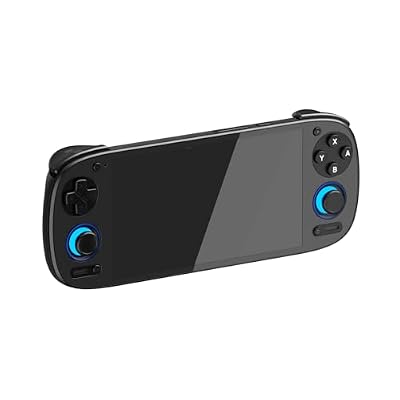
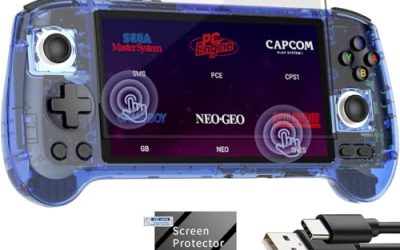
The Pocket 5 covers both working routes in one flat, travel-friendly body. Its Snapdragon 865 is the established floor for the Feral ports, running ROME: Total War and Company of Heroes smoothly, and the 5.5-inch AMOLED touchscreen is large enough for tap selection to feel precise rather than fiddly. For the emulation route, the same chip is far more than DOSBox or PlayStation ports require, so a mixed library of native ports and classics lives comfortably on one device.
Specs
- Display: 5.5-inch AMOLED touchscreen, 1920 x 1080
- Processor: Qualcomm Snapdragon 865
- Memory and storage: 8 GB RAM, 128 GB internal, microSD expansion
- Operating system: Android 13
- Battery: 5,000 mAh
- Weight: 280 g
Choose it as the default if you want one handheld for both routes. Skip it if you play in long couch sessions where a wider, gripped body would suit you better.
Retroid Pocket Flip 2: The Same Power, Folded Shut

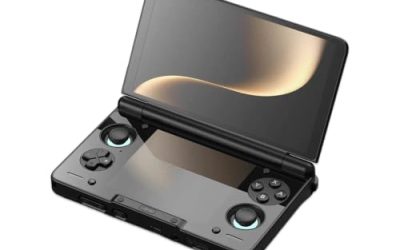
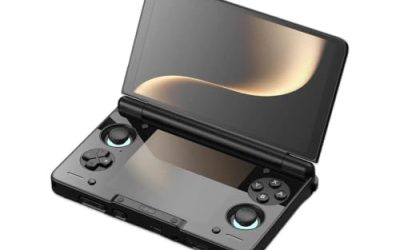
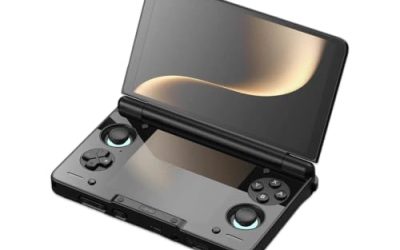
The Flip 2 matches the Pocket 5 chip for chip, so everything said about the Feral ports and DOSBox applies unchanged. The difference is the clamshell: the screen folds away protected, which matters for a genre played in short bursts between other things, and the slightly chunkier base sits more stably when you tap at a map on a train table or desk edge. Touch precision is identical, since the panel is the same 5.5-inch AMOLED.
Specs
- Display: 5.5-inch AMOLED touchscreen, 1920 x 1080
- Processor: Qualcomm Snapdragon 865
- Memory and storage: 8 GB RAM, 128 GB internal storage, microSD expansion
- Battery: 5,000 mAh
- Operating system: Android 13
- Controls: Hall effect sticks, active cooling
Choose it if you travel with your handheld loose in a bag. Skip it if you dislike hinges on principle; the Pocket 5 offers the same performance in a slab.
Anbernic RG556: Built for the Slow Route

The RG556 is the pick for players whose RTS means long, unhurried campaigns against the computer. Its Unisoc T820 runs the lighter native ports such as Rusted Warfare and Iron Marines without trouble, and it emulates the DOS and PlayStation catalog at full speed. What it adds over the Retroid models is endurance and comfort: the 5,500 mAh battery is the largest in this class, and the wide grips suit the genre’s habit of parking on one map for an hour. Demanding ports like Company of Heroes ask for lowered settings here, which is the honest price of the chip.
Specs
- Display: 5.48-inch AMOLED touchscreen, 1920 x 1080
- Processor: Unisoc T820
- Memory and storage: 8 GB RAM, 128 GB internal, microSD expansion up to 2 TB
- Operating system: Android 13
- Battery: 5,500 mAh
- Controls: Hall effect joysticks and triggers
Choose it for campaign play at home. Skip it if Company of Heroes at full settings is a firm requirement.
Anbernic RG406H: The Classics and Console Ports Pick

The RG406H makes the narrowest claim here and keeps it. Its 4-inch 4:3 screen is the native shape of the PlayStation RTS ports, so Command and Conquer and Warcraft II: The Dark Saga fill the display exactly as they did on a CRT, and DOSBox titles of the same era sit just as naturally. The T820 is ample for all of it. What it cannot do is the modern end of route one: the small panel makes tap selection in the Feral ports cramped, and those games were designed for wide screens.
Specs
- Display: 4-inch IPS touchscreen, 960 x 720, 4:3 aspect ratio
- Processor: Unisoc T820
- Memory and storage: 8 GB RAM, 128 GB internal storage
- Operating system: Android 13
- Controls: Hall effect sticks, analog triggers
Choose it if your RTS library ends around the turn of the century. Skip it if native Android ports are the point of the purchase.
How to Choose
Decide your route first, because it eliminates most of the list. If you want the native Android ports, a touchscreen is non-negotiable and screen size is your main comfort feature: the Thor Pro leads, the Pocket 5 and Flip 2 follow, and anything without touch input is out. If you want the classics, the question flips to screen shape, and the RG406H’s 4:3 panel shows DOS and PlayStation ports at their intended size.
Next, be honest about pace. Every game named in this guide is a campaign or skirmish experience played at your own speed. If your RTS habit involves ranked ladders, build-order timers, or multiplayer against humans, stop here and put the money toward a handheld PC with a trackpad or a desktop; no configuration of these five devices closes that gap.
Finally, treat storage as a non-issue and battery as a session question. Ports and DOS libraries are small next to modern game installs, so every pick here has room. Battery decides where you play: the RG556 for the couch, the Flip 2 for the bag.
Who Should Skip
Skip this whole category if your strategy gaming is turn-based: a tactics library is served far better by cheaper handhelds, including ones without touchscreens, and a dedicated guide on this site covers those picks. Skip it if you cannot tolerate a stick-driven cursor in emulated games, because that friction never fully disappears. Skip the Linux handhelds for this genre entirely, since the strongest of them lack the touchscreen the best route depends on. And skip every pick here if real-time strategy means StarCraft ladders or Age of Empires ranked play to you; those games assume a mouse, and pretending otherwise wastes your money.
Frequently Asked Questions
Can you really play RTS games on a retro handheld?
Yes, within limits. Native Android ports rebuilt for touch, such as ROME: Total War and Rusted Warfare, play genuinely well. Emulated DOS and PlayStation ports play at their original, slower pace. What does not transfer is fast, hotkey-driven PC RTS, and no handheld in this guide changes that.
Why is a touchscreen so important for this genre?
Because the mouse is the genre’s real controller, and a fingertip is its closest substitute. Tap selection, drag boxes, and pinch zoom in the native ports all depend on touch. A stick moving a cursor across a busy map is workable in slow classics and frustrating everywhere else.
Which classic RTS games work through emulation?
The reliable set is the DOS and console catalog: Dune II, Warcraft and Warcraft II, Command and Conquer and Red Alert in their DOS and PlayStation forms, Dune 2000, and StarCraft 64. These were designed or rebalanced for low input speeds, which is why they survive on handheld controls.
Is a handheld PC a better RTS machine?
For modern RTS, yes, and it is not close. A handheld PC runs the actual PC versions, and its trackpads approximate a mouse better than any stick. The handhelds in this guide win on size, battery life, and simplicity for the port and classics routes, not on genre coverage.
Final Verdict
Real-time strategy on a retro handheld is a narrow promise, and kept narrow, it holds. The Thor Pro is the ceiling for native touch ports, the Retroid Pocket 5 is the balanced default, the Flip 2 folds the same power shut for travel, the RG556 serves long home campaigns, and the RG406H is the honest classics machine. Buy for the route you will actually play, keep your expectations at campaign pace, and this genre has a real, if modest, home in your pocket.
Product and ASIN Reference
| Product | ASIN |
|---|---|
| AYN Thor Pro | B0FV3HKG9P |
| Retroid Pocket 5 (Black) | B0DT4G4PD2 |
| Retroid Pocket Flip 2 (SD865) | B0FDQGNNS4 |
| Anbernic RG556 (Blue) | B0FKHBVGLQ |
| Anbernic RG406H (White) | B0DNF3LD4C |