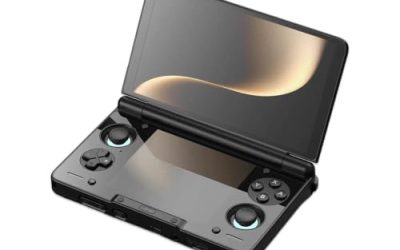
Most retro handhelds treat the shoulder triggers as simple on-off buttons. That works fine for platformers and RPGs, but a whole layer of sixth-generation games was built around pressure: squeeze gently to creep forward, press harder to brake late, feather the throttle through a corner. On a handheld with digital triggers, those games still run, yet the controls feel like a light switch where the original hardware offered a dimmer. This roundup takes the opposite approach to our per-system guides. Instead of starting from a console, it starts from one piece of hardware — a true analog trigger — and picks the five handhelds that pair it with enough power to use it well.
As an Amazon Associate, we earn from qualifying purchases.
Quick Answer
The Retroid Pocket 5 is the safest all-round pick, with hall-effect analog triggers, a Snapdragon 865 and a bright AMOLED screen. The AYN Thor Pro is the strongest option and adds a second screen for DS-style layouts. The Anbernic RG556 matches the Retroid on screen quality for less demanding budgets, the Flip 2 folds shut for travel, and the RG406H suits smaller 4:3 libraries.
Why Analog Triggers Change Which Games Feel Right
Analog triggers matter most on three systems. GameCube games lean on them constantly: Luigi’s Mansion meters its vacuum by pressure, Super Mario Sunshine sprays a light mist or a full blast depending on how far the trigger travels, and F-Zero GX rewards tiny throttle adjustments. Dreamcast racers such as Sega GT and Metropolis Street Racer expect gradual gas and brake inputs. On PlayStation 2, Gran Turismo and the later Need for Speed titles read trigger pressure for throttle control, and several action games use it for lock-on strength or weapon charge.
Digital triggers compress all of that into two states. Emulators can work around the problem with sensitivity curves or by mapping a trigger press to a fixed partial value, but the fine control the game designers assumed is simply not there. A handheld with real analog triggers reports a full range of travel, so the emulator passes pressure straight through and the game behaves the way it did on the original controller.
There is a second, quieter benefit. Analog triggers on modern handhelds are usually paired with hall-effect sensors, which read magnet position instead of wearing a physical contact track. That pairing tends to hold calibration longer and avoids the jitter that aging potentiometer triggers develop, which matters when a game is reading small differences in pressure.
The Five Picks, Compared by Trigger Hardware First
AYN Thor Pro

The Thor Pro is the most capable handheld in this group and the only dual-screen one. Its hall-effect analog triggers sit alongside hall sticks, and the Snapdragon 8 Gen 2 inside has comfortable headroom for the GameCube and PlayStation 2 libraries where pressure-sensitive controls show up most. The second screen also makes it the natural pick for anyone splitting time between trigger-heavy games and DS or 3DS titles.
Specs: Snapdragon 8 Gen 2; 6.31-inch AMOLED main screen, 1920 by 1080, 120Hz; 3.92-inch second screen; hall-effect sticks and analog triggers; active cooling; Android.
Retroid Pocket 5
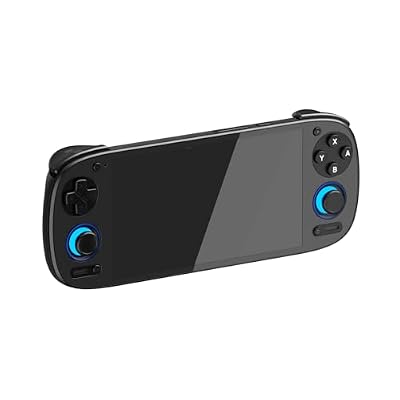
The Pocket 5 is the balanced choice. Its analog triggers use hall sensors, the Snapdragon 865 runs the GameCube and Dreamcast catalogs smoothly and handles a large share of PlayStation 2 games, and the 5.5-inch AMOLED panel is bright enough that fast games stay readable outdoors. It is the handheld to buy when you want one device that covers every trigger-dependent system without paying for flagship power you may not need.
Specs: Snapdragon 865; 5.5-inch AMOLED touchscreen, 1920 by 1080; 8GB RAM; 128GB storage; 5000mAh battery; hall-effect sticks and analog triggers; Android.
Anbernic RG556

The RG556 shares its screen size class with the Pocket 5 and uses a 5.48-inch AMOLED panel, which makes it a strong pick for Dreamcast and GameCube racing. Its Unisoc T820 chip is a step below the Snapdragon 865, so demanding PlayStation 2 racers need more settings patience, but the analog triggers themselves are properly pressure-sensitive and the wide 16:9 screen suits the era of games that use them.
Specs: Unisoc T820; 5.48-inch AMOLED touchscreen, 1920 by 1080; 8GB RAM; 128GB storage; 5500mAh battery; hall-effect sticks and analog triggers; Android.
Retroid Pocket Flip 2

The Flip 2 uses the same Snapdragon 865 platform as the Pocket 5, so its analog triggers feed the same level of GameCube, Dreamcast and PlayStation 2 performance, but the clamshell shell closes over the screen and controls. For commuters who throw a handheld into a bag every day, that built-in protection is the deciding feature, and the triggers survive the trip without being pressed by other gear.
Specs: Snapdragon 865; 5.5-inch AMOLED touchscreen, 1920 by 1080; 8GB RAM; 128GB storage; 5000mAh battery; hall-effect sticks and analog triggers; clamshell design; Android.
Anbernic RG406H

The RG406H is the compact, 4:3 option. Its Unisoc T820 and 4-inch screen will not stretch to the heaviest PlayStation 2 racers, but it covers Dreamcast and the lighter half of GameCube well, and its analog triggers make it a far better fit for those libraries than the many 4:3 handhelds with digital shoulders. Readers with a library weighted toward earlier systems, who still want proper throttle control when they step up a generation, are its audience.
Specs: Unisoc T820; 4.0-inch IPS touchscreen, 960 by 720, 4:3; 8GB RAM; 128GB storage; 5000mAh battery; hall-effect sticks and analog triggers; Android.
How to Choose
Start with the systems you actually play. If your library is mostly 8-bit and 16-bit, analog triggers add nothing and a cheaper digital-trigger handheld serves you better. If GameCube, Dreamcast or PlayStation 2 racing is a regular habit, treat analog triggers as a hard requirement and then choose on chip power: Snapdragon 8 Gen 2 for the widest PlayStation 2 coverage, Snapdragon 865 for the sweet spot, Unisoc T820 for Dreamcast and lighter GameCube play.
Check the emulator side too. On Android, Dolphin exposes analog trigger axes directly for GameCube games, and Flycast does the same for Dreamcast. In RetroArch, confirm the core reports the triggers as axes rather than buttons; a quick visit to the input test screen shows whether pressure registers as a gradient. If the readout jumps straight from zero to full, the mapping, not the hardware, needs fixing.
Screen shape is the last filter. Widescreen AMOLED panels flatter the sixth-generation libraries that use analog triggers, while the RG406H and its 4:3 panel crop or stretch those same games. Match the screen to the era you play most, and let the triggers decide the rest.
Who Should Skip These Handhelds
Skip this entire category if your library stops at the 16-bit era, because no SNES or Genesis game reads trigger pressure and the money is better spent on screen quality or a good D-pad. Skip it if you mainly play turn-based RPGs and puzzle games for the same reason. And skip the two T820 models if your goal is the heaviest PlayStation 2 racers at full speed; that workload belongs to the Snapdragon models above.
Frequently Asked Questions
Which retro systems actually need analog triggers?
GameCube, Dreamcast and PlayStation 2 benefit most. GameCube titles such as F-Zero GX and Super Mario Sunshine read trigger pressure directly, Dreamcast racers expect gradual throttle and brake input, and many PlayStation 2 driving games do the same. Earlier systems used digital shoulder buttons only.
Can emulators fix digital triggers with settings?
Partly. Sensitivity curves and fixed partial-press mappings can make a digital trigger usable, and some cores offer a dedicated light-press option. These are workarounds, though. The emulator still receives only two input states, so fine throttle control in racing games never fully matches real analog hardware.
Are hall-effect triggers better than regular analog triggers?
They read position with magnets instead of a wearing contact track, so they tend to stay accurate longer and resist the jitter and dead spots that older potentiometer triggers develop. For games that read small pressure differences, that consistency is the practical advantage, rather than any difference in the games themselves.
Do analog triggers help with racing games on older systems?
Only where the original game supported them. PS1 and Saturn racers were designed around digital buttons or specific analog controllers, so a modern analog trigger adds little there. The gains appear in the Dreamcast, GameCube and PlayStation 2 libraries, whose controllers shipped with pressure-sensitive triggers as standard.
Final Verdict
Analog triggers are a narrow feature with an outsized effect on the right library. Buy the Retroid Pocket 5 for the best balance, the AYN Thor Pro for maximum power and a second screen, the RG556 for AMOLED quality on a T820 budget, the Flip 2 for protected travel, and the RG406H when a 4:3 screen matters more than widescreen racing. Any of the five restores the pressure control that GameCube, Dreamcast and PlayStation 2 games were designed around.
Product and ASIN Reference
| Product | ASIN |
|---|---|
| AYN Thor Pro | B0FV3HKG9P |
| Retroid Pocket 5 (Black) | B0DT4G4PD2 |
| Anbernic RG556 (Blue) | B0FKHBVGLQ |
| Retroid Pocket Flip 2 (Snapdragon 865) | B0FDQGNNS4 |
| Anbernic RG406H (White) | B0DNF3LD4C |