- Top Pick: Competitive Programming 4 – Book 1: The Lower Bound of Programming Contests in the 2020s
- Best Value: Funny Computer Geek Nerd Gift Cool Computer Core Circuit T-Shirt
- Premium Choice: Assembly Programming for Beginners: A Hands-On Guide to Understanding Low-Level Code, Memory, and CPU Architecture
🛒 Best Price Today on Amazon
Prime members get fast, free shipping on everything above, plus member-only deals. New members get a 30-day free trial — cancel anytime.
- Top Programming Cpus Picks for 2026
- Best Programming CPUs at a Glance
- 1. AMD Ryzen 7 5700X 8-Core, 16-Thread Unlocked Desktop Processor
- 2. AMD Ryzen 7 5800X 8-Core, 16-Thread Unlocked Desktop Processor
- 3. AMD Ryzen 7 5700G 8-Core, 16-Thread Processor with Radeon Graphics
- 4. AMD Ryzen 5 5600G 6-Core, 12-Thread Processor with Radeon Graphics
- 5. AMD Ryzen 5 5500 6-Core, 12-Thread Unlocked Processor with Cooler
- 6. AMD Ryzen 3 3200G 4-Core Processor with Radeon Graphics
- How to Choose a CPU for Programming
- Frequently Asked Questions
- Related Guides
- Related Articles
Top Programming Cpus Picks for 2026
Here are our current top programming cpus picks, compared on real Amazon owner reviews, price, and features. Live prices update below.
As an Amazon Associate we earn from qualifying purchases at no extra cost to you.





For programming, the CPU you choose shapes how much of your day you spend waiting. Compiling a large codebase, spinning up several virtual machines, running a stack of containers, or executing a big test suite all scale with cores and threads — the more parallel work your processor can do at once, the less time you watch a progress bar. That makes core count, thread count, and the platform’s value the things developers should weigh first. This guide rounds up the best programming CPUs in 2026, focused on AMD’s well-priced Ryzen 5000-series chips that deliver excellent multi-threaded throughput for developer workloads.
Our picks were chosen on what genuinely speeds up a developer’s machine: cores and threads for parallel compiles, VMs and containers, single-core responsiveness for everyday coding, whether the chip includes integrated graphics for a display-light dev box, and overall value. We have led with the 8-core chips that compile and virtualize fastest and worked down to capable value options, with prices from around $48 up to around $248. Whether you are building a dedicated workstation, a home lab, or an affordable first dev PC, there is a fit here. Below is an at-a-glance comparison of all six, then a closer look at each and a buyer’s guide built around cores, threads, graphics and value — the criteria that actually matter for programming.
Best Programming CPUs at a Glance
| Processor | Best For | Standout Spec | Approx Price |
|---|---|---|---|
| AMD Ryzen 7 5700X | Cool, efficient 8-core dev box | 8C/16T, efficient, unlocked | around $248 |
| AMD Ryzen 7 5800X | Fastest compiles here | 8C/16T, high clocks, unlocked | around $210 |
| AMD Ryzen 7 5700G | 8-core with integrated graphics | 8C/16T, Radeon graphics | around $208 |
| AMD Ryzen 5 5600G | Value dev box, no GPU needed | 6C/12T, Radeon graphics | around $185 |
| AMD Ryzen 5 5500 | Best budget multi-core | 6C/12T, unlocked, bundled cooler | around $84 |
| AMD Ryzen 3 3200G | Entry-level coding starter | 4C, Radeon graphics | around $48 |
1. AMD Ryzen 7 5700X 8-Core, 16-Thread Unlocked Desktop Processor

As an Amazon Associate we earn from qualifying purchases. Product prices and availability are accurate as of the date/time indicated.
The AMD Ryzen 7 5700X is the pick for a cool, efficient developer workstation, and it leads this list for parallel workloads. It is an 8-core, 16-thread unlocked processor that delivers the same core count as the 5800X while running at a lower power draw, which makes it run cooler and quieter under sustained load — exactly the conditions a build server or a long compile creates. At around $248 it is the premium efficiency pick here.
For programming this is precisely the intent it serves: 16 threads chew through parallel compiles, multiple virtual machines, and stacks of containers, while the lower power envelope keeps thermals and fan noise down during the marathon builds and test runs that fill a developer’s day. The unlocked multiplier leaves room to tune if you wish, and it drops into the mature AM4 platform affordably. For a developer who wants 8 cores of throughput in a machine that stays cool and composed under continuous load, the 5700X is the standout choice.
Pros: 8 cores and 16 threads for parallel builds, efficient and cool under load, unlocked, ideal for a dev workstation.
Cons: Needs a discrete GPU (no integrated graphics); priciest chip here.
2. AMD Ryzen 7 5800X 8-Core, 16-Thread Unlocked Desktop Processor


As an Amazon Associate we earn from qualifying purchases. Product prices and availability are accurate as of the date/time indicated.
The AMD Ryzen 7 5800X is the pick for the fastest compiles on this list. It is an 8-core, 16-thread unlocked processor tuned for high clock speeds, pairing the same multi-threaded muscle as the 5700X with more aggressive frequencies for snappier single-threaded work. At around $210 it offers flagship-class 8-core developer performance at a sensible price.
For programming this chip excels where both parallel and serial speed matter: the 16 threads power through multi-threaded compiles, VMs and containers, while the higher clocks accelerate the single-threaded portions of a build, code indexing, and everyday IDE responsiveness. It runs warmer than the efficient 5700X under full load, so it pairs best with a capable cooler — fitting, since our cooler guide exists for exactly this. For a developer who wants the quickest possible compiles and the most responsive feel from an 8-core AM4 chip, the 5800X is the performance pick.

Pros: 8C/16T with high clocks for fast compiles, strong single-thread responsiveness, unlocked, excellent for heavy dev work.
Cons: Runs hot under full load and needs a good cooler; no integrated graphics.
3. AMD Ryzen 7 5700G 8-Core, 16-Thread Processor with Radeon Graphics

AMD Ryzen™ 7 5700G 8-Core, 16-Thread Desktop Processor with Radeon™ Graphics


As an Amazon Associate we earn from qualifying purchases. Product prices and availability are accurate as of the date/time indicated.
The AMD Ryzen 7 5700G is the pick for an 8-core dev box that does not need a discrete graphics card. It combines 8 cores and 16 threads with built-in Radeon integrated graphics, so it can drive your displays and handle the whole system without a separate GPU — a real advantage for a headless build server, a home lab node, or a developer machine where a graphics card is an unnecessary expense. At around $208 it bundles serious multi-core power with a complete graphics solution.
For programming this is the chip for someone who wants strong parallel throughput but no GPU in the build. The 16 threads handle compiles, virtual machines and containers capably, while the integrated Radeon graphics run your monitors and desktop without any add-in card, keeping the system simpler, cheaper and lower-power. It is ideal when GPU-accelerated work is not part of your workflow. For an 8-core developer CPU with everything needed to run displays built in, the 5700G is a uniquely practical pick.
Pros: 8C/16T with integrated Radeon graphics, no discrete GPU required, great for headless or display-light dev boxes.
Cons: Less single-thread headroom than the 5800X; iGPU is for display, not heavy graphics compute.
4. AMD Ryzen 5 5600G 6-Core, 12-Thread Processor with Radeon Graphics

AMD Ryzen™ 5 5600G 6-Core 12-Thread Desktop Processor with Radeon™ Graphics

As an Amazon Associate we earn from qualifying purchases. Product prices and availability are accurate as of the date/time indicated.
The AMD Ryzen 5 5600G is the value pick for a self-contained dev box. It pairs 6 cores and 12 threads with integrated Radeon graphics, delivering capable multi-threaded performance and the ability to run displays without a discrete GPU, all at a friendly price. At around $185 it is a smart foundation for a developer machine that does not need a graphics card.
For programming this is the chip for a developer who wants a complete, affordable system with solid parallel throughput. The 12 threads handle everyday compiles, a couple of virtual machines, and container workloads comfortably, while the integrated Radeon graphics drive your monitors and keep the build cost and complexity down. It is an excellent base for a home lab node or a first serious dev PC where you would rather spend on RAM and storage than a GPU. For value-focused programming with graphics built in, the 5600G is a well-judged pick.

Pros: 6C/12T with integrated Radeon graphics, no GPU needed, capable parallel throughput, strong value.
Cons: Fewer cores than the Ryzen 7 chips for the heaviest compiles and VM stacks.
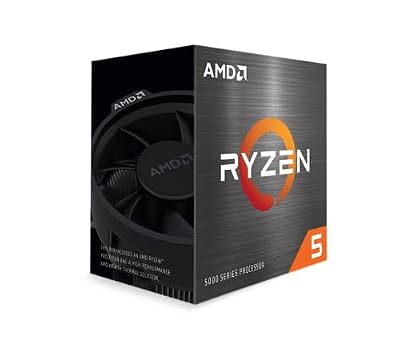
5. AMD Ryzen 5 5500 6-Core, 12-Thread Unlocked Processor with Cooler

AMD Ryzen 5 5500 6-Core, 12-Thread Unlocked Desktop Processor with Wraith Stealth Cooler


As an Amazon Associate we earn from qualifying purchases. Product prices and availability are accurate as of the date/time indicated.
The AMD Ryzen 5 5500 is the best budget multi-core pick, and it delivers remarkable developer value. It is a 6-core, 12-thread unlocked processor that ships with a Wraith Stealth cooler in the box, so you get genuine 12-thread throughput plus cooling for one low price. At around $84 it is the value champion of this list for parallel workloads.
For programming this is the chip for a developer building a capable machine on a tight budget. The 12 threads handle compiles, virtual machines and containers far better than a typical dual- or quad-core, the unlocked design leaves room to tune, and the bundled cooler means you do not need to buy one separately — money you can put toward RAM or an SSD instead. It pairs with the affordable AM4 platform for a low total cost. For the most multi-core programming performance per dollar here, the 5500 is the obvious budget standout.
Pros: 6C/12T at a budget price, unlocked, includes a cooler in the box, superb multi-core value for developers.
Cons: No integrated graphics, so it needs a discrete GPU; less raw throughput than 8-core chips.
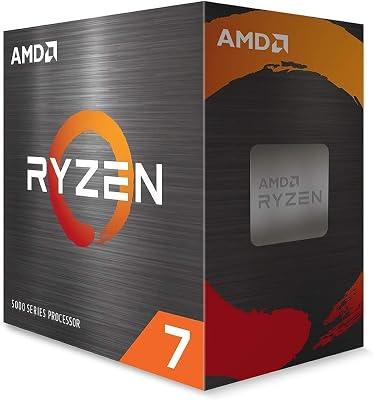
6. AMD Ryzen 3 3200G 4-Core Processor with Radeon Graphics
As an Amazon Associate we earn from qualifying purchases. Product prices and availability are accurate as of the date/time indicated.
Rounding out the list is the AMD Ryzen 3 3200G, the entry-level coding starter pick. It is a 4-core processor with integrated Radeon graphics, and at around $48 it is by far the cheapest chip here. For a beginner learning to code, a lightweight dev box, or a very tight budget, it offers a complete, affordable starting point with graphics built in.
For programming this is the chip for someone whose workloads are light — learning a language, working on small projects, web development, or scripting — rather than compiling huge codebases or running many virtual machines at once. Be honest about its limits: with 4 cores it is the least suited here to heavy parallel compiles and large VM or container stacks, where the 6- and 8-core chips pull far ahead. But the integrated graphics mean no GPU is needed, and it is an inexpensive way to get coding. As a budget entry point for lighter development, the 3200G is a sensible, low-cost close to the list.
Pros: Very affordable, integrated Radeon graphics, no GPU needed, fine for learning and light dev work.
Cons: Only 4 cores — underpowered for heavy compiles, large VM stacks or container-heavy workflows.
How to Choose a CPU for Programming
Choosing a programming CPU starts with cores and threads, because the workloads that eat a developer’s time scale with parallelism. Compiling a large codebase, running several virtual machines, spinning up containers, and executing big test suites all spread across available threads, so more cores mean less waiting. The 8-core, 16-thread chips here — the 5700X, 5800X and 5700G — are the strongest for heavy parallel work, while 6-core, 12-thread options like the 5600G and 5500 are excellent value for moderate workloads. Match the core count to how parallel and how heavy your builds really are.
Single-core performance still matters, so do not ignore clock speed. Plenty of everyday development is partly single-threaded — code indexing, parts of a compile, IDE responsiveness, and launching tools — and a chip with higher clocks like the 5800X feels snappier in those moments. The efficient 5700X trades a little peak frequency for cooler, quieter sustained operation, which suits long builds. Decide whether you value the fastest possible bursts or calm, cool throughput over marathon sessions, and weigh that against your thermal and noise preferences.
Integrated graphics are a key decision for a developer box, because not every programming machine needs a discrete GPU. Chips with built-in Radeon graphics — the 5700G, 5600G and 3200G — can drive your displays and run the whole system without a graphics card, which lowers cost, power and complexity for a build server, home lab node, or display-light workstation. The 5700X, 5800X and 5500 have no integrated graphics and require a discrete GPU. If your work is not GPU-accelerated, an APU with integrated graphics is often the smarter, cheaper foundation.
Finally, weigh the platform, cooling and budget together. These Ryzen chips use the mature, affordable AM4 platform, which keeps motherboard and memory costs reasonable so you can invest in plenty of RAM and fast storage — both of which matter enormously for development. Remember cooling too: a hot chip like the 5800X wants a capable cooler, while the 5500 bundles one in the box and the 5700X runs cool by nature. Set your budget, decide how many cores your workflow truly needs, choose whether you want integrated graphics, and pick the programming CPU on this list that fits — the right balance of threads, responsiveness and value will keep you coding instead of waiting.
Frequently Asked Questions
How many CPU cores do I need for programming?
It depends on your workloads. For heavy parallel work — compiling large codebases, running several VMs, or container-heavy development — 8-core, 16-thread chips like the Ryzen 7 5700X, 5800X or 5700G pull well ahead. For moderate development, 6-core, 12-thread chips like the 5600G and 5500 offer excellent value. Lighter coding and learning are fine on a 4-core 3200G. Match the core count to how parallel your builds actually are.
Do I need a graphics card for a programming PC?
Not always. If your development is not GPU-accelerated, a chip with integrated Radeon graphics — the 5700G, 5600G or 3200G — can drive your displays and run the whole system without a discrete GPU, saving cost and power. If you choose a chip without integrated graphics, such as the 5700X, 5800X or 5500, you will need a graphics card just to get a display. For headless build servers, an APU is especially convenient.
Is the Ryzen 7 5700X or 5800X better for development?
Both are 8-core, 16-thread chips, so they are equally strong for parallel compiles, VMs and containers. The 5800X runs at higher clocks for faster single-threaded work and the quickest compiles, but it runs hotter and needs a good cooler. The 5700X is more efficient and stays cooler and quieter under sustained load, which suits long builds. Pick the 5800X for peak speed or the 5700X for cool, composed throughput.
Is more RAM or a faster CPU more important for programming?
Both matter, and the best machine balances them. A multi-core CPU like these Ryzen chips speeds up compiles, VMs and containers, but development is also very memory-hungry — IDEs, virtual machines, containers and large projects all consume RAM. The affordable AM4 platform these chips use lets you spend on ample memory and fast storage alongside the CPU. Aim for a strong core count and plenty of RAM rather than maximising one at the expense of the other.
Related Guides
- Best CPUs for Your Build
- Best CPU Air Coolers
- Best AMD Motherboards
- Best RAM for Your Build
- Best NVMe SSDs
- Best Workstation PC Builds
Affiliate Disclosure: As an Amazon Associate, we earn from qualifying purchases. If you click a link and make a purchase, we may earn a small commission at no extra cost to you. Prices and availability are accurate as of publication and may change.