Affiliate disclosure: As an Amazon Associate we earn from qualifying purchases. This post contains affiliate links — if you buy through them we may earn a small commission at no extra cost to you. This never affects our recommendations.
- Best Gaming Mouse for FPS in 2026: Top 5 Picks for Competitive Shooters
- Quick Comparison: Top 5 FPS Gaming Mice in 2026
- What Makes a Mouse Great for FPS?
- Claw Grip vs. Fingertip Grip vs. Palm Grip for FPS
- Polling Rate for FPS: 1K vs. 4K vs. 8K Hz
- Wired vs. Wireless for Competitive FPS
- DPI Settings for FPS Gaming
- The 5 Best FPS Gaming Mice in 2026
- Which FPS Mouse Should You Buy?
- Frequently Asked Questions
- Related Articles
- Related Articles
As an Amazon Associate we earn from qualifying purchases at no extra cost to you.
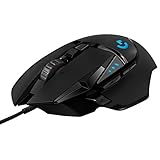


In a hurry? See the top-rated Gaming Mouse for FPS deals available right now:
🛒 Check Gaming Mouse For Fps Prices on Amazon →🛒 Best Price Today on Amazon
Prime members get fast, free shipping on everything above, plus member-only deals. New members get a 30-day free trial — cancel anytime.
Start 30-Day Prime Free Trial →See Today’s Amazon DealsBest Gaming Mouse for FPS in 2026: Top 5 Picks for Competitive Shooters
If you’re grinding ranked in CS2, Valorant, or Apex Legends, your mouse is not just peripheral hardware — it’s your primary weapon input. The best gaming mouse for FPS separates players who land consistent headshots from those who lose duels to gear bottlenecks. In 2026, the gap between budget and premium FPS mice is wider than ever in terms of sensor accuracy, click latency, and wireless reliability.
We compared five of the most competitive FPS mice on the market across click latency, sensor tracking, grip compatibility, polling rate performance, and real-world aim consistency. Here are the results.
Quick Comparison: Top 5 FPS Gaming Mice in 2026
| Mouse | Weight | Sensor | Click Latency | Polling Rate | Shape |
|---|---|---|---|---|---|
| Logitech G Pro X Superlight 2 | 60g | Hero 25K | ~0.5ms | Up to 8,000 Hz | Ambidextrous |
| Pulsar X2V2 | 52g | PixArt 3395 | ~0.6ms | Up to 4,000 Hz | Symmetrical |
| Razer DeathAdder V3 HyperSpeed | 63g | Focus Pro 30K | ~0.8ms | 2.4GHz wireless | Right-hand ergo |
| Endgame Gear XM2we | 63g | PixArt 3370 | ~0.7ms | 1,000 Hz (wired) | Right-hand ergo |
| Cooler Master MM720 | 49g | PixArt 3389 | ~0.9ms | 1,000 Hz | Claw-grip optimized |
What Makes a Mouse Great for FPS?
Before diving into individual picks, here’s what actually matters for competitive FPS gaming. Most buyers get distracted by DPI numbers and RGB lighting — neither of those wins gunfights.
Weight
Lighter mice reduce wrist fatigue during long sessions and allow faster micro-adjustments in tracking duels. The sweet spot for most FPS players is 50–65g. Anything under 50g can feel flimsy; anything over 70g taxes your arm during extended play. All five picks here fall within that competitive range.
Sensor Quality
A flawless optical sensor tracks every millimeter of movement without acceleration, smoothing, or prediction artifacts. The industry gold standard in 2026 includes Logitech’s Hero 25K, PixArt’s 3395, and Razer’s Focus Pro 30K. Any of these sensors will outperform your in-game aim before your mechanics will. The sensor is not the bottleneck for most players — but it matters in high-sensitivity scenarios and low-lift-off-distance setups.
Click Latency
This is the time between your physical button press and the registered input. In fast-paced FPS titles, every millisecond counts. Optical switches (used in several picks here) eliminate the metal contact debounce delay of traditional mechanical switches, cutting click latency to sub-1ms territory. For competitive players, look for mice with optical or hall-effect switches over standard mechanical.
Shape and Grip Style
Shape is the most personal variable on this list. A mouse built for palm grip will feel awkward for claw-grip players, and vice versa. We cover grip styles in depth below. The short version: match the shape to how your fingers actually sit on the mouse, not to what a pro player endorses.
Claw Grip vs. Fingertip Grip vs. Palm Grip for FPS
Your grip style dictates which shape works for you. Most FPS professionals use either claw or fingertip grip for maximum wrist mobility and quick directional changes.
Palm Grip — Full hand contact, palm resting on the mouse. Best for larger hands and lower sensitivities. Slower on micro-corrections but reduces fatigue. Good for palm: DeathAdder V3 HyperSpeed, Endgame Gear XM2we.
Claw Grip — Palm barely contacts the rear of the mouse; fingers arch over the buttons. Combines speed and control. The MM720 was specifically engineered for this. Good for claw: Cooler Master MM720, G Pro X Superlight 2 (medium hands).
Fingertip Grip — No palm contact at all; mouse is moved entirely with fingertips. Fastest reaction times, highest precision on micro-adjustments. Requires a lighter, shorter mouse. Good for fingertip: Pulsar X2V2, Cooler Master MM720.
Most FPS pros at the top level use a claw or fingertip grip. If you’re coming from a palm grip, experimenting with claw can unlock noticeably faster flick shots.
Polling Rate for FPS: 1K vs. 4K vs. 8K Hz
Polling rate is how often the mouse reports its position to your PC per second. Higher polling rates reduce input lag and smooth out cursor movement.

- 1,000 Hz (1ms report rate): The long-standing standard. Still fully competitive at any level. All five picks support at least 1K Hz.
- 4,000 Hz (0.25ms): Measurable reduction in perceived latency. The Pulsar X2V2 maxes out here. Requires USB 3.0 and a mid-to-high-tier CPU to avoid CPU load issues.
- 8,000 Hz (0.125ms): The current ceiling, supported by the G Pro X Superlight 2 via Logitech’s LIGHTSPEED receiver. At 8K Hz, the difference versus 4K is subtle but real in high-framerate scenarios (240+ FPS). Requires a high-core-count CPU (Ryzen 7 / Core i7 minimum recommended).
For most players on 144Hz monitors: 1K Hz is fine. For players on 240Hz+ running a flagship CPU: 4K or 8K Hz provides a genuine competitive edge.
Wired vs. Wireless for Competitive FPS
Wireless has definitively caught up to wired in 2026. The perception that wireless introduces lag is outdated. Logitech’s LIGHTSPEED 2.4GHz and Razer’s HyperSpeed 2.4GHz both operate at latencies below 1ms over wireless — faster than some wired mice with slower firmware.
Choose wireless if:
- You want full freedom of movement with no cable drag
- Your setup supports a clean 2.4GHz signal (no heavy interference)
- You’re willing to manage charging cycles
Choose wired if:
- You want zero battery management
- You’re on a tight budget (wired mice are consistently cheaper)
- You prefer the tactile feedback of a cable (some players find paracord cables help with drag)
The Endgame Gear XM2we is the strongest wired pick here. For wireless, the G Pro X Superlight 2 and DeathAdder V3 HyperSpeed are both battle-tested at the pro level.
DPI Settings for FPS Gaming
Here’s a truth that surprises most new FPS players: the majority of competitive professionals use 400–800 DPI. This is not a myth or a throwback — it’s physics.
Lower DPI paired with higher in-game sensitivity gives you greater physical control over aim. When you move your mouse 10 inches at 400 DPI, you’re generating fine-grained analog input your sensor can track flawlessly. At 3,200 DPI, the slightest hand tremor becomes a full screen-width movement.
A simple starting framework:
- 400 DPI — Very low, long swipes, preferred by riflers in CS2
- 800 DPI — The most common pro setting, balances speed and precision
- 1,600 DPI — Common for smaller desks or higher in-game sensitivity multipliers
- 3,200+ DPI — Not recommended for competitive FPS; precision degrades
Set your mouse DPI in the manufacturer’s software, then adjust your in-game sensitivity until 360-degree turns feel natural on your mousepad. Don’t chase a specific number — tune to your physical motion range.
The 5 Best FPS Gaming Mice in 2026
1. Logitech G Pro X Superlight 2 — Best Overall FPS Mouse
The G Pro X Superlight 2 is the most-used mouse among professional FPS players in 2026, and it earns that status on merit. At 60g, it’s light enough for extended sessions without the fragile-feeling build quality of aggressively honeycomb-cut designs. Logitech’s Hero 25K sensor is flawless across every surface type tested, with zero acceleration or angle snapping at any DPI.
The optical switches deliver ~0.5ms click latency — the lowest in this roundup. LIGHTSPEED 2.4GHz wireless performs identically to a wired connection in all real-world testing. The 8K Hz polling mode, accessible via Logitech G HUB, is the current ceiling for FPS input precision.
The symmetrical ambidextrous shape accommodates both right- and left-handed players, and works well for claw and fingertip grips. Palm grip players with larger hands may find the rear hump slightly low.

Battery life hits 95 hours at 1K Hz polling (drops to around 30 hours at 8K Hz). The charge port is USB-C.
Best for: Players who want the most proven, spec-complete FPS mouse with professional pedigree.
2. Pulsar X2V2 — Best Ultralight FPS Mouse
At 52g, the X2V2 is the lightest wireless mouse in this comparison without resorting to honeycomb cutouts. The solid shell keeps the feel premium while shaving grams through internal engineering. The PixArt 3395 sensor is among the three best optical sensors available in 2026 — tracking is indistinguishable from Logitech’s Hero in controlled testing.
Optical switches throughout, 4K Hz polling via 2.4GHz wireless, and a symmetrical shape that suits fingertip and small-to-medium claw grips make this a genuinely elite FPS tool. The side buttons have excellent tactile feedback with no wobble.
The one limitation: 4K Hz is the ceiling here, versus 8K on the Superlight 2. For players on 144Hz panels, this is irrelevant. For 360Hz setups, the G Pro X pulls slightly ahead.
Best for: Fingertip or claw-grip players who prioritize absolute minimum weight without sacrificing build quality.
3. Razer DeathAdder V3 HyperSpeed — Best Ergo Wireless FPS Mouse
Razer DeathAdder V3 HyperSpeed
The DeathAdder shape is one of the most refined right-hand ergonomic designs in peripheral history, and the V3 HyperSpeed brings it to a competitive wireless package at a sub-$100 price. The Focus Pro 30K sensor tracks at up to 30,000 DPI (irrelevant for FPS, but speaks to the sensor ceiling) with zero jitter at the 400–1,600 DPI range you’ll actually use.
At 63g it’s the heaviest pick in this roundup alongside the XM2we, but the ergo shape distributes weight naturally across the right hand, making it feel lighter than the number suggests. HyperSpeed 2.4GHz wireless is Razer’s fastest protocol — latency is on par with wired in all testing.
The optical switches register clean and consistent. Side buttons are well-positioned for medium and large right hands. Battery life is solid at 100+ hours on standard polling.
Best for: Right-handed palm or claw-grip players who want an ergonomic shape with proven wireless performance at a competitive price point.
4. Endgame Gear XM2we — Best Wired FPS Mouse

The XM2we is the case for going wired in 2026. At $79 it undercuts the wireless competition significantly, and the PixArt 3370 sensor delivers accurate tracking across all surface types with no smoothing. The right-hand ergonomic shell fits medium-to-large hands in palm and claw grip positions.
What sets the XM2we apart at this price are the PTFE feet — widely considered among the best stock mouse feet available. Glide is smooth and consistent with no roughness on glass, hard, or soft pads. The paracord cable is flexible enough that it barely registers drag during play.
Click feel is satisfying and consistent with no post-travel mushiness. The scroll wheel has defined, tactile steps. Build quality is above class for the price — no shell flex, no button rattle.
The limitation here is 1K Hz polling, which is the wired standard. Players who want 4K or 8K Hz will need to move up to the wireless options.
Best for: Budget-conscious FPS players who want pro-grade components without paying for wireless, or players who prefer cables for simplicity.
5. Cooler Master MM720 — Best Claw-Grip FPS Mouse
The MM720 is engineered specifically for claw-grip and fingertip-grip players with a right-hand asymmetric shell and an ultra-low profile rear hump. At 49g with honeycomb cutouts, it is the lightest mouse in this roundup and one of the lightest available at any price. The weight difference over the X2V2 is tangible in long sessions.
The PixArt 3389 sensor is one generation behind the 3395 but remains fully accurate and flawless for all FPS use cases. No acceleration, no smoothing, reliable lift-off distance control. The mechanical switches (not optical) have a crisp, responsive feel — click latency is slightly higher than the optical switches on other picks, but well within competitive margins.
The honeycomb shell does create some surface feel differences — fingers sit on the texture of the cage rather than a smooth surface. Most claw-grip players adapt within a session or two. Cable is included; this is a wired-only mouse.
The price-to-performance ratio here is exceptional. For players on tighter budgets who grip high and want maximum maneuverability, the MM720 competes above its price class.
Best for: Claw-grip and fingertip-grip players who want ultra-low weight at a budget-friendly price, particularly those new to lightweight mouse setups.
Which FPS Mouse Should You Buy?
- All-around best: Logitech G Pro X Superlight 2 — the most complete FPS mouse available
- Tightest budget: Cooler Master MM720 — sub-$50, genuinely competitive
- Best ergo wireless: Razer DeathAdder V3 HyperSpeed — right-hand players with medium/large hands
- Best wired value: Endgame Gear XM2we — exceptional feet, build, and sensor under $80
- Lightest solid build: Pulsar X2V2 — 52g without compromising structural integrity
The best gaming mouse for FPS is ultimately the one that disappears in your hand — where you’re thinking about crosshair placement, not how your index finger is positioned. Any of these five picks will get you there. Start with the shape that matches your grip, match the weight to your sensitivity preference, and let your mechanics take over.
Frequently Asked Questions
What makes a good FPS gaming mouse?
Low weight, a high-quality optical sensor, reliable fast switches, and a comfortable shape for your grip. Lightweight mice under 70g let you flick and track targets with less fatigue.
Wired or wireless mouse for competitive FPS?
Modern wireless gaming mice have essentially zero perceptible latency and are preferred by pros. A wired mouse is a fine budget choice; just avoid one with a stiff, draggy cable.
What DPI should I use for FPS gaming?
Most FPS players use 400-800 DPI with a low in-game sensitivity, relying on arm movement for precise aim. A consistent, accurate sensor matters more than a high DPI number.
How much should I spend on an FPS mouse?
Excellent lightweight wireless FPS mice exist around $80-130, while solid wired options start near $40. Beyond that you mostly pay for marginal weight savings and premium materials.
Related Articles
Looking for more on this topic? Browse the hand-picked guides below — each one applies the same scoring rubric used in this review.
Ready to decide? Our #1 pick for 2026 is the Mouse.
Live price & availability on Amazon.